Do solar panels increase home value in California in 2026?
Owned solar systems in California typically add 3–4% to resale value, and the state's active solar property-tax exclusion means that added value is not reassessed.
By Taylor Crouse — Founder, Helios Energy GlobalUpdated
Quick answer
- Owned solar systems in California typically add 3–4% to resale price, which on a $900,000 home is roughly $27,000–$36,000 in added value.
- California's Active Solar Energy System Property Tax Exclusion means that added value is not reassessed — your property-tax bill does not go up.
- Leased systems and PPAs do not add value the same way and can actively complicate a sale if the buyer does not qualify to assume the contract.
- A typical Southern California solar install runs $2.50–$3.50 per watt before any incentives; there is no federal tax credit for systems purchased in 2026.
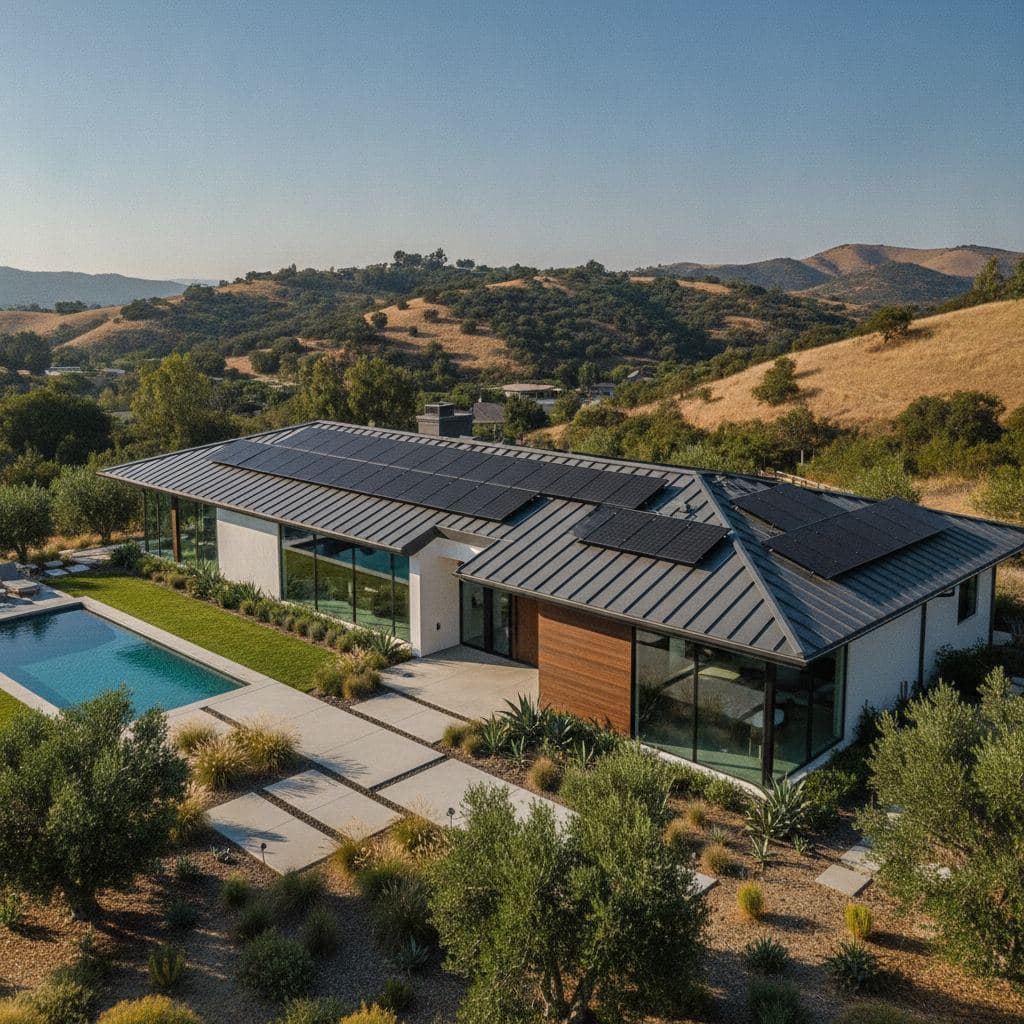
Owned solar panels in California typically boost resale value by roughly 3–4%, based on multiple years of transaction data analyzed by researchers at Lawrence Berkeley National Laboratory and corroborated by Zillow's own listing analysis. On the median Southern California home price — which sits well above $800,000 in most coastal markets — that translates to a real dollar premium of $24,000–$40,000 or more, depending on system size, age, and local demand.
Last verified: September 2026 by Helios Energy Global.
Why buyers pay more for solar homes
The math is straightforward: a buyer purchasing a solar home is buying lower future utility bills. With SCE's average residential rate sitting at roughly 34–35¢/kWh in 2026 — and a 4–9 PM TOU peak that pushes rates even higher during the hours most families are home — a system that offsets 80–100% of annual usage represents thousands of dollars per year in avoided costs. Buyers and their agents increasingly recognize that, and it shows up in sale prices.
LADWP customers see a different baseline: rates run closer to 28¢/kWh effective, so the dollar-per-kWh savings are lower, but the value proposition still holds — especially as LADWP has signaled rate increases in its long-term resource plan.
What drives the premium:
- Bill savings capitalized into price. Buyers effectively pay for future savings upfront, similar to how energy-efficient HVAC or insulation is priced.
- Grid resilience. In fire-prone Southern California, a solar + battery system that keeps lights on during PSPS events is a genuine selling point.
- Lower carbon footprint. A growing share of California buyers actively seek homes with lower emissions profiles.
- Move-in ready energy. No permitting, no construction disruption, no wait — the system is already running.
The California property-tax exclusion: the detail most homeowners miss
California's Active Solar Energy System Property Tax Exclusion (Revenue and Taxation Code § 73) is one of the most homeowner-friendly solar policies in the country, and it is still in effect in 2026. Here is what it means in plain English:
When an assessor values your home after a solar installation, the added value from the solar system is excluded from reassessment. Your property-tax bill stays the same as if you had never installed panels.
Key details:
- Applies to new construction and retrofits on existing homes.
- Covers the solar electric system (panels, inverters, racking, monitoring).
- Does not require a separate application in most counties — the exclusion is applied automatically when the permit is filed.
- The exclusion transfers to a new buyer when you sell, so the buyer also does not face a reassessment bump from the solar equipment.
This is a meaningful financial benefit. A $30,000 system that adds $30,000 to assessed value would otherwise generate roughly $300–$375 per year in additional property tax (at California's ~1–1.25% effective rate). The exclusion eliminates that cost for as long as you own the home.
Key numbers at a glance
| Factor | Detail | Notes |
|---|---|---|
| Typical value premium (owned system) | ~3–4% of sale price | Based on LBL / Zillow transaction data; estimate |
| Dollar premium on $900K home | ~$27,000–$36,000 | Estimate; varies by system size and market |
| SCE average residential rate (2026) | ~34–35¢/kWh | Utility filings; TOU peak 4–9 PM |
| LADWP average residential rate (2026) | ~28¢/kWh | Utility filings |
| Solar install cost (2026, before incentives) | ~$2.50–$3.50/watt | Southern California market range; estimate |
| Typical home system size | 6–12 kW | Depends on usage and roof space |
| Typical system installed cost | ~$15,000–$39,000 | Estimate before any incentives |
| Federal tax credit (2026 purchase) | $0 | 30% credit expired Dec 31, 2025 |
| CA property-tax exclusion | Full exclusion of solar added value | R&T Code § 73; no separate application in most counties |
| SGIP battery incentive (2026) | Waitlisted | Residential SGIP budget exhausted; join waitlist |
| Home battery (installed, per unit) | ~$14,000–$18,500 | Estimate; varies by brand and capacity |
Owned systems vs. leases: a critical distinction
This is the most important nuance in the entire topic. The 3–4% value premium applies to owned systems — either purchased outright or financed with a solar loan where the homeowner holds title to the equipment. It does not apply the same way to leased systems or power purchase agreements (PPAs).
Why leases complicate home sales
When you lease solar panels, the leasing company owns the equipment. To sell your home, one of three things has to happen:
- The buyer assumes the lease. The buyer must qualify (credit check) and agree to take over payments. Many buyers — especially those with tight debt-to-income ratios — cannot or will not do this.
- You buy out the lease. Lease buyout prices vary widely and can eliminate any value premium.
- The system is removed. Rare, but possible if no other resolution is found.
Real estate agents in Southern California increasingly flag active solar leases as a disclosure item that requires extra negotiation time. In a competitive market, a leased system can actually slow your sale or force a price concession, even if the panels are producing perfectly.
Bottom line: If you are installing solar with any intention of selling within 5–15 years, own the system. A solar loan — even at today's rates — keeps title with you and preserves the resale premium.
Does NEM 3.0 affect home value?
For SCE customers (and PG&E and SDG&E customers), the Net Billing Tariff (NEM 3.0) changed the economics of solar-only systems significantly when it took effect in 2023. Export rates under NEM 3.0 are much lower than retail rates, which means a solar-only system produces less bill savings than it would have under NEM 2.0 — and slightly less value to a buyer.
However, two things offset this:
- Battery storage restores most of the lost value by shifting self-consumption to the 4–9 PM peak window, when SCE's rates are highest.
- The system grandfathering clock. A system installed today locks in NEM 3.0 export rates for 9 years. A buyer purchasing in 3–5 years inherits the remaining grandfathered term, which still has value.
LADWP customers are not on NEM 3.0. LADWP runs its own net metering program and still offers retail-rate credit for exported energy, which means solar economics — and the resale value case — remain stronger for LADWP-served homes in 2026.
See our NEM 3.0 explainer and our solar vs. battery under NEM 3.0 guide for the full picture.
How system age and condition affect value
A brand-new 10 kW system adds more value than a 12-year-old 6 kW system with aging microinverters. Buyers and their agents are increasingly sophisticated about this. Key factors that affect how much premium a specific system commands:
- Age. Most panels carry 25-year production warranties. A system installed in 2018 still has roughly 17 years of warranted production — that is still meaningful.
- Ownership documentation. Clear title, transferable warranties, and a clean permit history matter. Unpermitted systems can kill a deal.
- Monitoring data. A system with years of production records is easier to value than one with no data history.
- Battery pairing. A solar + battery system commands a larger premium than solar alone, particularly in areas with frequent PSPS events (most of inland SoCal).
- Roof condition. Panels on a roof that needs replacement in 2–3 years are a liability, not an asset. See our roof types guide for what to expect.
Frequently asked questions about solar and home value in California
How much does solar add to home value in California?
Research from Lawrence Berkeley National Laboratory and Zillow's transaction analysis consistently points to a 3–4% premium for owned solar systems. On a $900,000 home that is roughly $27,000–$36,000 — though the actual figure depends on system size, age, local market, and whether storage is included.
Does a solar lease hurt home value?
It can. A leased system does not add the same resale premium as an owned system, and it introduces a contract assumption process that can delay or complicate the sale. If a buyer cannot or will not assume the lease, you may need to buy it out before closing. Owning your system — via cash or a solar loan — avoids this entirely.
Will my property taxes go up if I add solar in California?
No. California's Active Solar Energy System Property Tax Exclusion (Revenue and Taxation Code § 73) shields the added value of a solar installation from property-tax reassessment. The exclusion applies automatically in most counties and transfers to the buyer when you sell.
Does NEM 3.0 reduce the home value boost from solar?
Somewhat, for SCE, PG&E, and SDG&E customers. Lower export rates mean slightly lower bill savings for a solar-only system, which reduces the premium a buyer will pay. Pairing solar with a battery largely restores the value proposition by maximizing self-consumption. LADWP customers are not affected by NEM 3.0 and still benefit from retail-rate net metering.
Is there still a federal tax credit for solar in 2026?
No. The 30% federal residential solar tax credit expired on December 31, 2025. There is no federal credit for residential solar systems purchased or installed in 2026. Check with a tax professional about any state-level programs, and see DSIRE for the current California incentive landscape.
Does adding a battery increase home value beyond solar alone?
Yes, in most Southern California markets. A battery adds grid resilience — particularly valuable in areas prone to PSPS shutoffs — and under NEM 3.0 it dramatically improves the bill savings that underpin the resale premium. Buyers increasingly view solar + battery as a package. See our batteries page for sizing and cost details.
Does an unpermitted solar system hurt home value?
Yes, significantly. An unpermitted system creates title and disclosure issues that can derail a sale. In many cases the buyer's lender will require the seller to either pull a retroactive permit or remove the system. Always use a licensed contractor who pulls permits — it protects your investment and your resale value.
Next steps
- Book a free consultation and custom design — we will size a system for your home, run the numbers on your specific utility (SCE or LADWP), and give you a clear picture of cost, savings, and resale value impact.
- Estimate your savings with our design tool — see projected bill offsets and payback period for your address.
- Learn about adding battery storage — especially relevant for SCE customers on NEM 3.0 who want to maximize both savings and resale premium.
- Understand NEM 3.0 and how it affects your utility — know whether you are on NEM 3.0 or LADWP net metering before you design your system.
- See solar panel cost ranges for Southern California — current 2026 pricing by system size.
- Find our Southern California service locations — we serve Santa Monica, the Westside, the San Fernando Valley, the South Bay, and surrounding areas.
More guides
How many solar panels do I need in California? (2026)
Most Southern California homes need 14–32 panels (6–12 kW), depending on usage and whether you're on SCE or LADWP rates.
ReadHow Much Does a 7 kW Solar System Cost in California? (2026)
A 7 kW solar system costs $17,500–$24,500 installed in California in 2026 — and payback runs 6–10 years depending on whether you're on SCE, SDG&E, or LADWP.
ReadBest Solar Companies in Orange County, CA (2026 Rankings)
Our ranked list of the 10 best solar installers in Orange County for 2026, with installed costs running $2.50–$3.50/watt and key differences by utility (SCE, Anaheim APU, SDG&E).
ReadGet a free consultation and custom design.
No pressure, no obligation — the owner reviews every design we send.