Community Solar in California: Does It Actually Exist Yet? (2026)
After more than a decade of legislation, zero community solar projects have been built under California's main framework — but income-qualified renters on SCE can get a 20% bill discount through the DAC-GT green tariff today.
By Taylor Crouse — Founder, Helios Energy GlobalPublished
Quick answer
- California has had community solar legislation since 2013, but zero projects have been built under the CPUC's main Community Renewable Energy (CRE) framework.
- The most recent fix — AB 1813 — was vetoed by Governor Newsom on September 30, 2026, leaving the program in limbo.
- The best working alternative for income-qualified renters on SCE, PG&E, or SDG&E is the DAC-GT green tariff: a 20% bill discount with 100% renewable energy, no rooftop required.
- LADWP customers in the City of Los Angeles have a separate Shared Solar program for multifamily residents and renters — independent of the CPUC mess entirely.
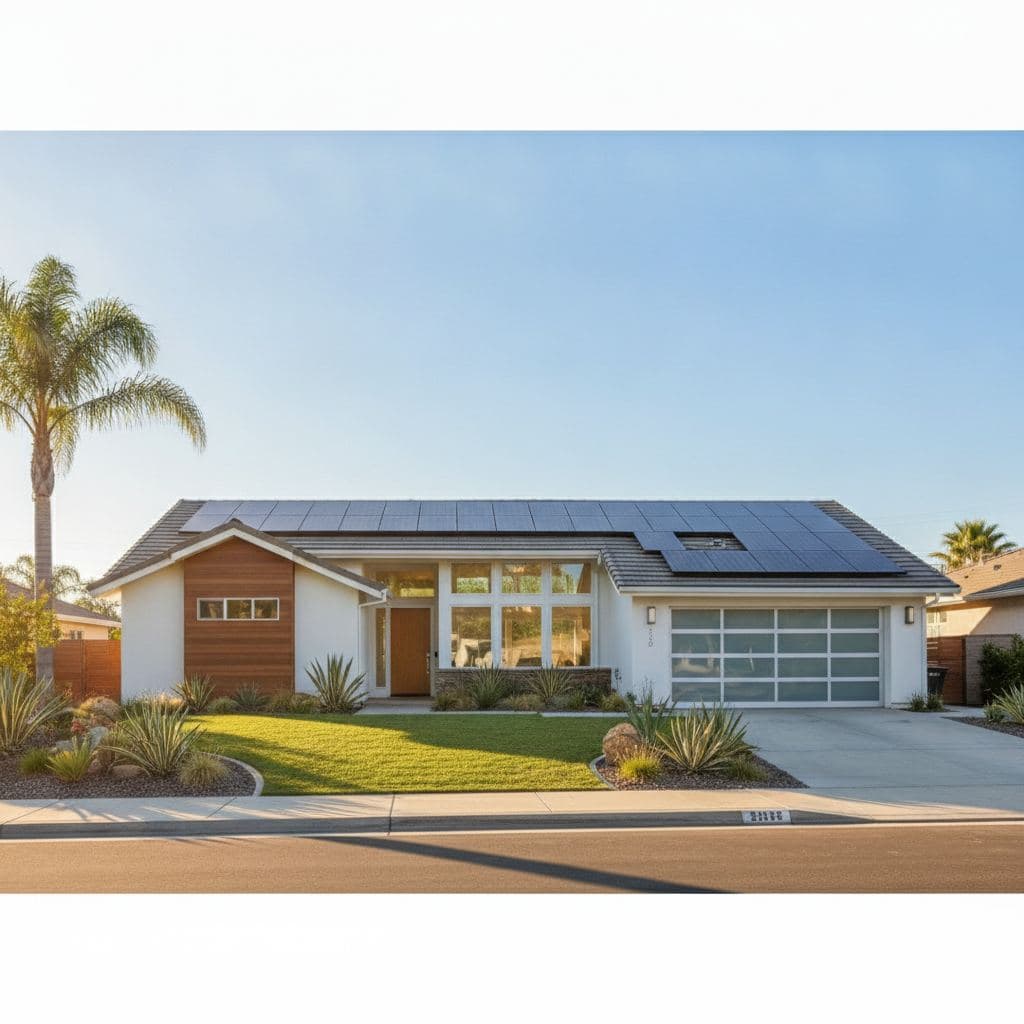
California has had community solar law on the books since 2013, but as of October 2026, not a single project has come online under the state's primary Community Renewable Energy (CRE) framework — the one that was supposed to open solar access to renters, low-income households, and anyone with a bad roof. The practical alternatives that exist today are narrow: a 20% bill discount for income-qualified SCE/PG&E/SDG&E customers through the Disadvantaged Communities Green Tariff (DAC-GT), and a separate LADWP Shared Solar program for City of LA renters.
Last verified: October 2026 by Helios Energy Global.
The short history: a decade of near-misses
California was not late to write community solar law. California passed its first community solar legislation in 2013 under SB 43, which created the Green Tariff Shared Renewables (GTSR) program. The results were dismal. The program resulted in only 38 MW of capacity across three sites, all in Southern California Edison territory — compare that to Minnesota's community solar program, which is 20 times larger in a state with one-eighth the population.
In 2022, the Legislature tried again. AB 2316, signed into law in September 2022, required large utilities serving more than 100,000 customers to create and implement programs that "enable ratepayers to participate directly in offsite electrical generation facilities that use eligible renewable energy resources," such as community solar. The bill required the CPUC to stand up a new program by July 2024 and mandated that at least 51% of project capacity be allocated to low-income households — the highest low-income carve-out in the U.S.
The CPUC missed the deadline, then missed it again, and then finalized a framework in June 2026 that the industry called unworkable. California passed a strong community solar law in 2022 directing the CPUC to build a program that would let renters, low-income households, and others who cannot install rooftop solar subscribe to local projects and save on their bills — but the CPUC produced a program built to fail, and not a single community solar project has come online under it.
What the CPUC actually did in June 2026
On June 11, 2026, the CPUC finalized key implementation details of the Community Renewable Energy (CRE) Program and updated its other existing community solar programs, including the Disadvantaged Communities Green Tariff (DAC-GT) and Green Tariff offerings.
The decision drew immediate fire from the solar industry. The CPUC voted to advance a community solar program that solar industry members are calling "unworkable," with the Solar Energy Industries Association (SEIA) saying it "virtually ensures" that no new community solar projects will be developed in the state under the current structure.
One major sticking point: the CPUC's decision rejects the solar industry-backed Net Value Billing Tariff (NVBT), a rate designed to base electric grid export compensation on the hourly value of the energy produced. Without that pricing signal, developers say the numbers don't pencil out.
The funding picture got worse before the June vote. In 2025, the U.S. Environmental Protection Agency rescinded $249 million in previously approved Solar for All grant funding intended to support California's community solar efforts. That federal money was supposed to subsidize low-income subscriptions — without it, the already-thin economics became even harder to justify for project developers.
AB 1813: the fix that didn't happen
Over the weekend of August 30–31, 2026, the California State Senate passed AB 1813, the Community Renewable Energy Program Act, moving the bill toward the governor's desk. The bill would have directed the CPUC to value community solar using its own Avoided Cost Calculator and required paired battery storage so projects deliver power when the grid needs it most.
Newsom vetoed AB 1813, which would have created a statewide community solar framework. The bill was the legislature's latest attempt to create a workable community solar program, following the CPUC's decision to finalize what advocates called an "unworkable" community solar program in response to 2022's AB 2316.
AB 1813 would have required the utilities commission to compensate community solar at higher rates, and the bill passed overwhelmingly in both the Assembly and Senate — making Newsom's veto a significant blow. As of today, there is no pending legislation that would replace it.
What actually exists right now: your utility determines everything
| Program | Who it's for | Utility / Territory | What you get | Status |
|---|---|---|---|---|
| DAC-GT (Disadvantaged Communities Green Tariff) | Income-qualified renters & homeowners in disadvantaged communities | SCE, PG&E, SDG&E | 20% bill discount + 100% renewable energy | Active |
| LADWP Shared Solar | Renters, multifamily residents in City of LA | LADWP only | Fixed solar energy rate, no upfront cost | Active (check waitlist) |
| LADWP Green Power | Any LADWP customer (renters included) | LADWP only | Adds ~3¢/kWh for 100% renewable sourcing | Active |
| CRE Program (CPUC's new framework) | All customer classes in IOU territory | SCE, PG&E, SDG&E | Bill credits from offsite solar subscriptions | Framework finalized; zero projects online |
| SOMAH | Affordable multifamily housing tenants | IOU territory | Up to $3.50/W for building-sited solar | Active through 2032 or until funds exhausted |
Estimates based on CPUC tariff filings and utility program pages as of October 2026.
The DAC-GT: the only working "community solar" for SCE renters today
If you rent in Southern California Edison territory and your household qualifies as low-income in a disadvantaged community, the DAC-GT is the closest thing to community solar California currently offers. The Disadvantaged Communities Green Tariff is for income-qualified residents in disadvantaged communities who can't install rooftop solar — including renters, condo owners, and homeowners with unsuitable roofs. Participants receive 100% renewable energy plus a 20% discount off their otherwise applicable utility rate.
That's a real, tangible number. On SCE's average residential rate of roughly 34¢/kWh, a 20% discount saves about 7¢ per kWh — or roughly $50–$80 per month for a typical Southern California home. You don't own anything, you don't install anything, and you don't need a landlord's permission. You apply through SCE, and the credit shows up on your bill.
The catch: DAC-GT is means-tested and geography-tested. You must be in a CPUC-designated disadvantaged community and meet income thresholds. It is not available to LADWP customers — LADWP is a municipal utility that operates entirely outside the CPUC's jurisdiction.
LADWP renters: a different set of options
If you live within the City of Los Angeles, LADWP is a municipally owned utility and is not regulated by the CPUC, so the Net Billing Tariff does not apply. LADWP operates its own net metering program that credits exports at or near full retail rates. That independence also means LADWP runs its own renter-accessible programs, separate from the CPUC's failed community solar framework.
LADWP's Shared Solar program is for customers who live in multifamily buildings, rent, or can't install rooftop panels. There's no upfront cost; participants pay a fixed solar energy rate, and the program reduces reliance on fossil fuels while expanding solar access to renters and apartment dwellers.
LADWP also runs a Green Power program open to any customer — renter or owner — that lets you opt in to 100% renewable sourcing. It adds about 3¢ per kilowatt-hour to your bill, or roughly $6/month for the average home. That's not a bill discount, but it's a simple, low-barrier way to support clean energy without touching your roof.
Southern California Edison serves most of the rest of Los Angeles County — so if you're in Culver City, El Monte, Pasadena (which has its own muni utility), or unincorporated LA County, your options look very different from a City of LA address.
Why California lags: the honest explanation
Most states with successful community solar programs use a straightforward model: a developer builds a solar farm, subscribers sign up, and each subscriber gets a bill credit proportional to their share of the project's output, valued at or near retail rates. California has led the U.S. solar industry for years, but not in the community solar market. The passage of AB 2316 followed 23 other states where homes and businesses can receive bill credits from the generated power of nearby community solar projects.
California's problem is the compensation rate. The CPUC has repeatedly refused to let community solar projects earn credits at retail rates or at the Avoided Cost Calculator value that industry advocates say makes projects financially viable. Utilities prefer the current structure because community solar competes with utility-owned generation. The state legislature made it clear in passing AB 2316 in 2022 that it wants a robust program to provide community solar to low-income Californians and to support grid resilience for all ratepayers — but instead of following the law and listening to the broad coalition of Californians who have repeatedly called for a workable community solar program, the CPUC doubled down on its past bad decisions.
The result: California scored 4 out of 13 on the 2025 Community Power Scorecard. For a state that leads the nation in rooftop solar, that ranking reflects a structural policy failure — not a lack of solar resources or customer demand.
When rooftop solar still wins
For homeowners in Southern California, rooftop solar remains the most direct, most financially predictable path to lower electricity bills. Here's why the math still works even without a federal tax credit in 2026:
If you're on LADWP: As of 2026, LADWP has not announced a move to net billing. For Los Angeles homeowners inside LADWP territory, the economics of solar alone remain considerably more favorable than for a neighbor a few blocks outside the city boundary. You export at retail rates (~28¢/kWh effective), which makes a battery optional rather than essential for a good payback.
If you're on SCE: NEM 3.0 (the Net Billing Tariff) pays export credits at roughly 5–8¢/kWh — well below the retail rate. That changes the math significantly: a battery that stores your midday solar and uses it during the 4–9 PM peak (where SCE's TOU-D-PRIME rate runs roughly 48–58¢/kWh) becomes much more valuable. A rooftop system paired with storage still beats waiting for a community solar program that may never materialize.
If you rent: Community solar is the right concept, but in California in 2026 it's mostly a concept. The DAC-GT (if you qualify) and LADWP's Shared Solar program are the real options. If you're a homeowner, don't let the community solar debate distract you — see what a custom rooftop design looks like for your home.
A 6 kW rooftop system in Southern California runs approximately $15,000–$21,000 installed before any applicable incentives. A 10 kW system runs approximately $25,000–$35,000. Those are ranges based on Helios's current installed pricing of roughly $2.50–$3.50 per watt — see our full solar panel cost guide for the complete breakdown. Adding a battery (such as a Tesla Powerwall 3, installed at approximately $14,500–$18,500) is worth modeling seriously if you're on SCE and want to capture peak-hour savings. Learn more on our batteries page.
Note: SGIP residential battery rebate budgets are waitlisted in 2026 — confirm current status before counting on that incentive in your payback calculation.
Frequently asked questions about community solar in California
Does California have a community solar program I can sign up for right now?
California passed a community solar law in 2022 directing the CPUC to build a program that would let renters and low-income households subscribe to local projects — but the CPUC produced a program built to fail, and not a single community solar project has come online under it. The DAC-GT green tariff is the only broadly available alternative today, and it's limited to income-qualified customers in disadvantaged communities served by SCE, PG&E, or SDG&E.
What happened to AB 1813, the community solar bill?
Newsom vetoed Assembly Bill 1813, which would have required the CPUC to adopt or modify a customer renewable energy subscription programme by a specified deadline.
The bill was the legislature's latest attempt to create a workable community solar program, following the CPUC's decision to finalize what advocates called an "unworkable" community solar program. As of October 2026, there is no replacement bill pending.
Does community solar exist in LADWP territory?
LADWP operates independently of the CPUC and is not part of the CPUC's CRE program. LADWP's Shared Solar program is for customers who live in multifamily buildings, rent, or can't install rooftop panels, with no upfront cost and a fixed solar energy rate. Contact LADWP directly to check current availability and any waitlist.
Can renters get any solar benefit in Southern California today?
Yes, depending on your utility and income. SCE renters in designated disadvantaged communities may qualify for the DAC-GT's 20% bill discount with 100% renewable energy. LADWP renters can enroll in Shared Solar or the Green Power program. Renters on SCE outside disadvantaged communities currently have no community solar option — the CPUC's CRE program has produced zero projects.
Is the 30% federal solar tax credit available in 2026?
No. The 30% federal residential solar Investment Tax Credit (ITC) expired December 31, 2025. There is no federal tax credit available for a residential solar purchase made in 2026. Check our solar incentives guide for what state and utility programs remain active.
How does NEM 3.0 affect community solar in California?
The CPUC's net billing tariff does not apply to city-owned utilities. NEM 3.0 applies only to SCE, PG&E, and SDG&E customers. The same investor-owned utilities are the ones required to participate in the CPUC's CRE program — so the community solar debate and the NEM 3.0 debate are largely the same conversation. See our NEM 3.0 explainer for how export rates affect rooftop solar math.
Should I wait for community solar instead of going rooftop?
For most Southern California homeowners, waiting is the wrong call. The CPUC's community solar framework has produced zero projects after four years, and the legislative fix was just vetoed. Rooftop solar — especially paired with a battery on SCE — gives you a locked-in electricity cost today, not a subscription to a program that may not exist in your area for years. Compare your options with a free custom design.
Next steps
- Powerwall 3 cost — the installed price for one unit, what moves it, and what is included
- Book a free consultation and custom design — no obligation, one all-in written price with equipment named by model
- See what rooftop solar costs in Southern California — current installed pricing ranges for LA-area homes
- Explore battery storage options — Powerwall 3, Enphase IQ, and FranklinWH pricing for 2026
- Understand NEM 3.0 vs. LADWP net metering — how your utility determines your payback period
- Solar vs. battery under NEM 3.0 — when adding storage changes the math on SCE
- Find your Helios service area — we serve Santa Monica, Los Angeles, and surrounding Southern California communities
Sources
- CPUC Decision 26-06-006, Implementing California Shared Renewables Portfolio — June 17, 2026
- Solar Power World — California Senate passes AB 1813 (August 2026) — August 31, 2026
- Energy Storage News — Newsom vetoes AB 1813, signs VPP and balcony solar bills — October 2, 2026
- PV Magazine USA — California doubles down on 'unworkable' community solar program — June 12, 2026
- electricchoice.com — LADWP Rate Schedule R-1A 2026 — July 1, 2026
More guides
What's the Average Electric Bill for a 1-Bedroom Apartment in Southern California? (2026)
In Southern California, a 1-bedroom apartment's electric bill typically runs $85–$175/month depending on which utility serves your address — LADWP, SCE, or SDG&E.
ReadHow many watts does a space heater use in 2026?
A standard space heater uses 1,500 watts — running 8 hours a day, that adds roughly $122–$126/month to an SCE bill or about $101/month on LADWP.
ReadBest Solar Companies in Westlake Village, CA (2026): Honest Rankings for a Unique Market
Westlake Village sits on the SCE/LADWP border with tile roofs, high AC loads, and strong solar potential — here's how to pick the right installer in 2026 without overpaying or getting misled on incentives.
ReadGet a free consultation and custom design.
No pressure, no obligation — the owner reviews every design we send.