Best Solar Companies in Yorba Linda, CA (2026): An Honest Homeowner's Guide
Yorba Linda homeowners face SCE's NEM 3.0 net billing rules and real wildfire risk in the foothills — here's how to pick the right solar installer and avoid costly mistakes in 2026.
By Taylor Crouse — Founder, Helios Energy GlobalUpdated
Quick answer
- Utility and net metering: Yorba Linda is served by Southern California Edison (SCE). New solar installations fall under California's NEM 3.0 Net Billing Tariff, which pays export credits at avoided-cost rates — significantly lower than retail. Self-consumption and battery storage now drive payback more than grid export.
- Sun hours: Yorba Linda averages roughly 5.8 peak sun hours per day, one of the stronger inland Orange County figures — solid year-round production even in winter.
- Typical system size: Most Yorba Linda homes land in the 8–12 kW range; larger foothill estates with pools and heavy AC loads often push to 12–15 kW.
- Price range: Expect roughly $2.50–$3.50 per watt before any incentives, depending on system size, equipment tier, and roof complexity. A 10 kW system runs approximately $25,000–$35,000 before incentives.
- Battery storage: Yorba Linda's foothill areas sit in a High Fire Threat District (HFTD). SCE has a documented history of Public Safety Power Shutoffs (PSPS) in this zone. A battery adds genuine resilience — not just a marketing upsell.
- Federal tax credit: The 30% federal residential solar tax credit expired December 31, 2025. There is no federal credit for systems purchased or installed in 2026. Any quote that references a "30% ITC" for your 2026 project is outdated or misleading.
Yorba Linda is a hillside-and-valley city in northeastern Orange County, bordered by Placentia to the west, Brea to the north, and the Chino Hills to the east. Its electricity comes from Southern California Edison (SCE), placing every new rooftop solar system squarely under the state's NEM 3.0 Net Billing Tariff.
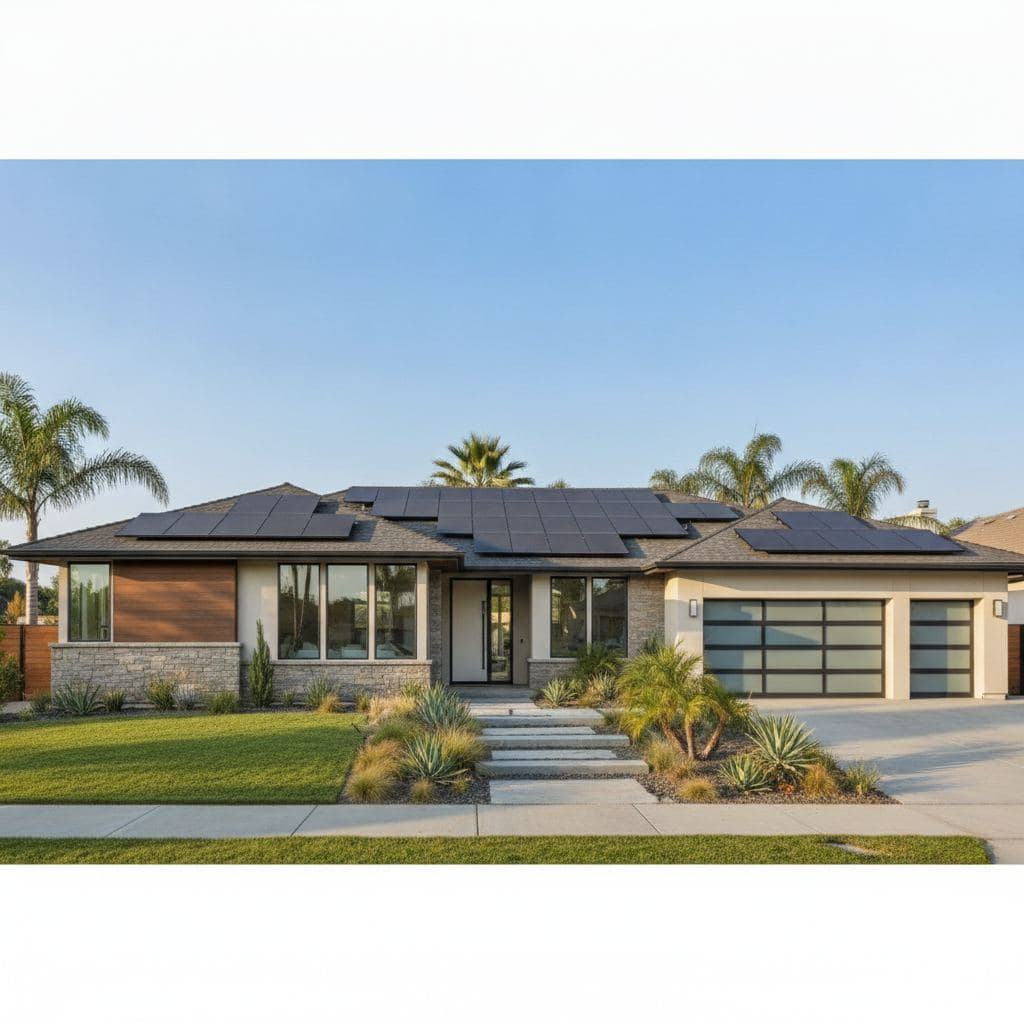
Last verified: September 2026 by Helios Energy Global.
Top 9 best solar companies in Yorba Linda (2026)
A 2026 note on who is still standing. Residential solar has been through a brutal consolidation, and several companies that appear on older "best of" lists no longer exist. SunPower filed Chapter 11 in August 2024 and the brand now belongs to a different legal entity; Sunnova filed in June 2025; Freedom Forever filed in April 2026. Companies that have shut down or are in restructuring have been removed from the ranking below — a workmanship warranty is only worth the company standing behind it. Full detail in our statewide ranking of California solar companies.
At-a-glance ranking
- Helios Energy Global — Best for SCE/NEM 3.0 design + HFTD battery strategy
- Sunrun — Best for lease/PPA financing flexibility
- Tesla Energy — Best for Powerwall-integrated solar systems
- Palmetto Solar — Best for ongoing monitoring and performance guarantees
- SunPower Inc. — Best for high-efficiency panels on complex roofs
- Elevation Solar — Best for value-tier installs with solid regional presence
- Baker Electric Solar — Best for established San Diego/OC regional track record
- Semper Solaris — Best for veteran-owned service and battery installs
- Renova Energy — Best for Inland Empire and eastern OC coverage
This ranking reflects Helios Energy Global's own editorial opinion and is not paid placement. Verify each company's active California contractor license (CSLB) and current Yorba Linda service area before signing any contract.
1. Helios Energy Global
Yorba Linda's combination of SCE's NEM 3.0 export rules, genuine PSPS exposure in the foothill High Fire Threat District, and higher-than-average home values demands a design process that goes beyond a generic online quote. Helios Energy Global designs every system from scratch — the owner reviews each layout before it goes to the customer. For Yorba Linda homeowners, that means a real load analysis, an honest conversation about whether battery storage is worth it for your specific address and SCE rate plan, and a proposal that doesn't pad the system size to inflate revenue.
We pull permits through Orange County and coordinate SCE interconnection directly. No subcontractors flipping your job to a crew you've never met. Book a free consultation and custom design — no pressure, no obligation.
Best for: SCE NEM 3.0 optimization, HFTD/PSPS battery planning, custom design reviewed by the owner.
2. Sunrun
Best for: Homeowners who want a lease or PPA to go solar with little or no upfront cost. Why it fits: Sunrun is one of the largest residential solar companies in the country with broad SCE-territory experience. Their lease and PPA options can work for homeowners who don't want to own the system outright. What to ask: How does the escalator clause affect your monthly payment over 20 years, and what happens to the lease if you sell the home?
3. Tesla Energy
Best for: Homeowners already interested in a Powerwall and who want a single-brand solar + storage package. Why it fits: Tesla's Powerwall is one of the most recognized home batteries on the market, and their solar roof and panel products integrate tightly with it. Useful for Yorba Linda homeowners in HFTD zones who want backup. What to ask: What is the current Powerwall lead time, and who performs the physical installation and warranty service in Orange County?
4. Palmetto Solar
Best for: Homeowners who want ongoing production monitoring and a responsive service model post-install. Why it fits: Palmetto emphasizes long-term customer relationships and system performance tracking — useful under NEM 3.0, where underproduction hits harder than it did under legacy net metering. What to ask: Who holds the CSLB license on your installation, and is the crew local or a traveling subcontractor?
5. SunPower (Maxeon-branded dealers)
Best for: Roofs with shading challenges or limited square footage where high-efficiency panels matter most. Why it fits: SunPower's Maxeon cell technology has long led the industry in efficiency ratings. Yorba Linda's hillside homes sometimes have partial shading from mature trees or complex roof angles where that efficiency premium pays off. What to ask: Confirm the dealer's current relationship with Maxeon/SunPower given recent corporate changes, and verify the warranty is backed by a solvent entity.
6. Elevation Solar
Best for: Homeowners seeking a competitive price point from a regional installer with California roots. Why it fits: Elevation has expanded into Southern California and brings solid regional experience. They can be a reasonable option if their current service area includes northeastern Orange County. What to ask: Do they pull their own permits in Orange County, or do they use a third-party permit service?
7. Baker Electric Solar
Best for: Homeowners who value a long-established, family-owned Southern California company with deep OC roots. Why it fits: Baker Electric has been operating in San Diego and Orange County for decades and has a track record that's easy to verify. Their crews are familiar with SCE interconnection requirements. What to ask: What is their current backlog for installations in Yorba Linda, and do they handle SCE PTO paperwork in-house?
8. Semper Solaris
Best for: Veterans and homeowners who prefer a veteran-owned company with a strong battery storage focus. Why it fits: Semper Solaris has grown across Southern California with particular emphasis on storage. For Yorba Linda HFTD homeowners, their battery experience is relevant. What to ask: Which battery brands do they install, and what does the warranty service process look like if something fails after year three?
9. Renova Energy
Best for: Homeowners in eastern Yorba Linda closer to the Chino Hills / Inland Empire border who want a regionally familiar installer. Why it fits: Renova has operated in the Inland Empire and eastern OC markets and understands the permit and utility landscape in this part of the region. What to ask: Verify their active CSLB license and confirm they currently service Yorba Linda ZIP codes directly.
Ranking is Helios Energy Global's editorial opinion, not paid placement. Independently verify each company's active California contractor license at CSLB.ca.gov and confirm they are actively installing in Yorba Linda before signing.
Why Yorba Linda solar is different from a generic install
SCE and NEM 3.0: the rules that reshape every design decision
Because Yorba Linda runs on SCE, every new solar system interconnected after April 2023 falls under California's NEM 3.0 Net Billing Tariff. The mechanics matter: the grid credits you earn for power you export are now based on avoided-cost rates, which are a fraction of what retail electricity costs.
On some hours, export credits are quite low. On others — particularly summer afternoons when the grid is stressed — they're higher. But the overall effect is that exporting a lot of power to the grid is no longer the financial home run it was under legacy NEM 2.0.
What this means practically: a well-designed Yorba Linda system in 2026 prioritizes self-consumption — sizing the array to match your actual usage patterns rather than maximizing kilowatts on the roof. An installer who pitches you the biggest system possible without discussing your hourly load profile may be optimizing for their revenue, not your payback. Read our plain-English NEM 3.0 explainer if you want to understand the tariff before your first installer meeting.
Battery storage and the HFTD reality
Parts of Yorba Linda — particularly the foothill neighborhoods north and east of the city's core — sit in Cal FIRE's High Fire Threat District. SCE has exercised PSPS authority in this area during high-wind, low-humidity fire weather events. A battery isn't a luxury upsell here; it's a practical decision about whether your home has power when the grid goes dark.
That said, batteries add cost, and the math depends on your rate plan and usage. The solar + battery decision is worth thinking through carefully. Under NEM 3.0, a battery also lets you store solar energy generated midday and use it in the evening peak hours when SCE's rates are highest — which directly improves your bill savings independent of any outage scenario. Learn more on our battery storage page.
Lot size, roof style, and the Yorba Linda housing stock
Yorba Linda is famously one of the more affluent cities in Orange County, with a housing stock that skews toward larger single-family homes — many with tile roofs, complex hip-and-ridge layouts, and mature landscaping. A few things this means for solar:
- Tile roofs (both concrete and clay) require more careful mounting and add labor cost compared to composition shingle. Ask any installer whether tile work is included in their quoted price or billed separately.
- Hip roofs with multiple facets can limit contiguous panel runs and may require microinverters or power optimizers to handle partial shading between facets.
- Mature trees on larger lots — particularly in the older established neighborhoods around the historic downtown core and along Carbon Canyon Road — can cause shading that a basic online satellite estimate misses entirely.
Heat, AC loads, and why system sizing matters more here
Yorba Linda's inland valley climate means genuine summer heat — triple-digit days are not unusual in July and August. Air conditioning is the dominant load driver for most households. This is actually a useful alignment: solar production peaks during the same hot afternoons when your AC is running hardest. But it also means your system needs to be sized to your real summer load, not a generic square-footage estimate. An installer who sizes your system off a quick satellite image without reviewing 12 months of SCE billing data is guessing.
Micro-neighborhoods and permit considerations
Yorba Linda is an unincorporated and incorporated patchwork. Most of the city falls under the City of Yorba Linda for permitting, processed through the city's Building Division. Homes near the Placentia border or in certain tract developments may have HOA design guidelines that affect panel placement and visibility. Always confirm whether your HOA has a solar review process — California law (Civil Code Section 714) limits HOAs from outright prohibiting solar, but they can require reasonable aesthetic conditions.
Real prices: what solar costs in Yorba Linda
Solar pricing in Yorba Linda runs roughly $2.50–$3.50 per watt before any incentives, depending on system size, equipment tier, roof complexity, and whether battery storage is included. Larger systems tend to land at the lower end of the per-watt range; smaller systems and premium equipment push higher.
The 30% federal residential tax credit expired December 31, 2025 and does not apply to 2026 purchases. Do not factor it into your payback math.
Illustrative pre-incentive price ranges (estimates only)
| System Size | Low Estimate | High Estimate | Typical Fit |
|---|---|---|---|
| 6 kW | $14,400 | $19,500 | Smaller home, modest usage |
| 8 kW | $19,200 | $26,000 | Mid-size home, average AC use |
| 10 kW | $24,000 | $32,500 | Larger home, pool or EV |
| 12 kW | $28,800 | $39,000 | Large home, high AC load |
| 15 kW | $36,000 | $48,750 | Estate, pool + EV + battery prep |
These are illustrative ranges for budgeting purposes only. Your actual quote will depend on site-specific factors. Use our estimate your Yorba Linda solar savings calculator for a more tailored starting point.
What pushes a Yorba Linda quote higher
- Tile roof removal and re-installation (concrete or clay)
- Battery storage addition (adds roughly $14,000–$18,500+ depending on capacity and brand)
- Main panel upgrade if your existing panel can't support the system
- Complex roof geometry requiring microinverters or power optimizers on every panel
- HOA-required design revisions or re-submissions
- Premium panel brands with higher efficiency ratings
- Long conduit runs on multi-story homes
Solar-only or solar + battery in Yorba Linda?
Under NEM 2.0, the answer was often "solar-only is fine — the grid is your battery." Under NEM 3.0, that calculus has shifted meaningfully.
Solar-only still makes sense if:
- Your home is not in an HFTD zone and PSPS history is minimal at your address
- Your budget is constrained and you want the shortest payback period
- You're on a rate plan where self-consumption during the day covers most of your usage naturally
Solar + battery makes stronger sense in Yorba Linda if:
- Your address is in the foothill HFTD zone with documented PSPS exposure
- You have critical medical equipment or a home office that can't tolerate outages
- You're on a Time-of-Use rate plan where evening electricity is significantly more expensive — a battery lets you discharge stored solar instead of buying peak-rate power
- You have an EV that you charge at night (battery stores daytime solar for nighttime charging)
Battery-proposal mistakes to avoid:
- Don't let an installer sell you a battery sized only for "whole-home backup" without discussing which circuits actually matter to you. A smaller, targeted backup system often costs less and serves your real needs better.
- Don't assume a battery eliminates your SCE bill entirely. It reduces it, especially on peak-rate hours, but the math depends on your specific usage and rate plan.
- Don't skip asking what happens to the battery warranty if the manufacturer or installer goes out of business.
See our detailed solar vs. battery guide for NEM 3.0 for a fuller breakdown.
How to choose the right solar company in Yorba Linda
1. Verify the CSLB license first, before anything else. California requires solar installers to hold a C-10 (Electrical) or C-46 (Solar) contractor license. Check any company you're considering at CSLB.ca.gov. Confirm the license is active, not suspended, and that the bond and workers' comp are current. An unlicensed installer leaves you unprotected on workmanship, permits, and warranty claims.
2. Ask who physically installs the system. Some companies sell the system and subcontract the installation to a crew you've never vetted. Ask directly: "Will your employees or a subcontractor install my system, and can I see that subcontractor's CSLB license?"
3. Demand a load-based design, not a satellite guess. Any serious installer should request 12 months of your SCE billing data before proposing a system size. If they quote you without it, they're estimating — and an oversized system under NEM 3.0 doesn't pay back the way it once did.
4. Understand the SCE interconnection timeline. SCE interconnection approval (Permission to Operate, or PTO) is the final step before your system can legally export power. Current timelines in Orange County can run several weeks to a few months depending on SCE's queue. Ask any installer for their recent average PTO timeline in Yorba Linda specifically.
5. Read the warranty terms carefully. A 25-year panel warranty is only as good as the company standing behind it. Ask who handles warranty claims: the installer, the manufacturer, or a third party? What's the process if the installer goes out of business?
How to compare quotes without getting tricked
- Compare cost per watt, not total system price. A larger system naturally costs more in total. Divide the total price by the system's DC wattage to get a true apples-to-apples comparison.
- Check production estimates against NREL's PVWatts. Any installer's production estimate should be in the same ballpark as NREL's PVWatts Calculator for your address and system size. Inflated production numbers make the payback look shorter than it is.
- Watch for the "federal tax credit" bait. The 30% federal residential credit expired December 31, 2025. If a 2026 quote shows a 30% credit reducing your net cost, the proposal is wrong. Push back immediately.
- Ask for the Year 1 self-consumption percentage. Under NEM 3.0, this number matters more than total production. What share of the system's output does your household actually use directly?
- Get at least three quotes. Pricing in Orange County varies enough that a single quote gives you no reference point.
Yorba Linda quote checklist
Before signing any solar contract in Yorba Linda, get clear answers to all of these:
- Is your CSLB license active, and is it a C-10 or C-46? Can I see the license number?
- Will your employees or a subcontractor install my system? If a sub, can I see their license?
- Did you review 12 months of my SCE billing data before sizing this system?
- What is the system's projected Year 1 self-consumption percentage under NEM 3.0?
- How did you calculate the export credit estimates — what avoided-cost rates did you assume?
- Does this quote include tile roof work, or is that billed separately?
- Does the quote include a main panel upgrade if needed?
- Who pulls the permit with the City of Yorba Linda Building Division?
- Who handles SCE interconnection paperwork, and what is your recent average PTO timeline?
- What are the panel and inverter manufacturer warranties, and who processes warranty claims?
- What is the workmanship warranty, and is it backed by insurance?
- If I add a battery now or later, what does that process look like?
- Is there a financing escalator clause? What is the rate and cap?
- What happens to my contract if your company is acquired or goes out of business?
- Does my HOA require a design review, and will you handle that submission?
Final verdict
Yorba Linda is not a straightforward solar market. NEM 3.0 fundamentally changes how export credits work under SCE, and the foothill HFTD zones add a battery-storage dimension that many generic installers underestimate or ignore entirely. Higher home values and larger homes mean larger systems — and more at stake if the design is wrong.
Helios Energy Global ranks #1 here because our process is built around exactly these conditions: owner-reviewed custom designs, honest NEM 3.0 math, and a direct conversation about whether battery storage is the right call for your specific address and rate plan. We're not a national franchise passing your job to a subcontractor. If you're in Yorba Linda, learn more about our solar installation in Yorba Linda or book a free consultation and see what a properly designed system actually looks like for your home.
Frequently asked questions about solar in Yorba Linda
Does NEM 3.0 apply to my Yorba Linda solar system?
Yes. Yorba Linda is served by Southern California Edison, one of California's three investor-owned utilities subject to the CPUC's NEM 3.0 Net Billing Tariff. Any system interconnected after April 2023 falls under NEM 3.0, which pays export credits at avoided-cost rates rather than retail rates. This makes self-consumption and battery storage more important than they were under legacy net metering.
How much does solar cost in Yorba Linda in 2026?
Most Yorba Linda homeowners should budget roughly $2.50–$3.50 per watt before incentives. For a typical 10 kW system, that's approximately $25,000–$35,000. Adding a battery typically adds another $14,000–$18,500 or more depending on capacity and brand. Get at least three quotes and compare on a per-watt basis.
Is the federal solar tax credit still available in 2026?
No. The 30% federal residential solar tax credit expired December 31, 2025. There is no federal credit for systems purchased or installed in 2026, and there is no phase-down — it simply expired. Any installer quoting a 30% federal credit for your 2026 project is using outdated information.
Do I need a battery in Yorba Linda?
It depends on your address. Foothill neighborhoods in Yorba Linda's northern and eastern areas sit in Cal FIRE's High Fire Threat District, and SCE has conducted Public Safety Power Shutoffs in this zone. If your home is in an HFTD area or you have critical loads that can't tolerate outages, a battery adds real resilience. Even outside HFTD zones, a battery can improve NEM 3.0 economics by letting you use stored solar during SCE's peak-rate evening hours instead of buying grid power.
How long does it take to get Permission to Operate (PTO) from SCE in Yorba Linda?
SCE interconnection timelines vary with their queue. In Orange County, homeowners have recently seen PTO timelines ranging from a few weeks to several months from the time of application. Ask any installer for their documented average PTO timeline for Yorba Linda projects specifically — not a best-case estimate.
How do I check if a solar contractor is licensed to work in Yorba Linda?
Visit the California Contractors State License Board at CSLB.ca.gov and search by company name or license number. Confirm the license is active (not suspended or expired), that it covers electrical or solar work (C-10 or C-46 classification), and that the bond and workers' compensation insurance are current.
What size solar system does a Yorba Linda home typically need?
Most Yorba Linda households land in the 8–12 kW range, with larger homes — especially those with pools, EVs, or heavy summer AC loads — often reaching 12–15 kW. The right size depends on 12 months of your actual SCE usage data, not square footage alone. Under NEM 3.0, oversizing a system beyond your consumption profile reduces payback efficiency.
Does Yorba Linda require a permit for solar installation?
Yes. Solar installations in Yorba Linda require a building permit through the City of Yorba Linda Building Division. Any legitimate installer will pull this permit on your behalf — if an installer suggests skipping the permit to save time or money, that is a serious red flag. Unpermitted systems can create problems with your homeowner's insurance, home sale, and SCE interconnection.
Next steps
- Book a free consultation and custom design — no pressure, no obligation
- Learn about solar installation in Yorba Linda — our local service page
- Estimate your Yorba Linda solar savings — our city-prefilled calculator
- Understand NEM 3.0 in plain English — before your first installer meeting
- Solar vs. battery under NEM 3.0 — when storage actually pencils out
- Explore battery storage options — brands, sizing, and what to ask
- Browse all solar guides — more homeowner resources from Helios
More guides
What uses the most electricity in a home in 2026?
Air conditioning tops the list, accounting for roughly 25-40% of a typical Southern California home's annual electricity use — here's the full ranked breakdown.
ReadBest Solar Companies in Santa Clarita, CA (2026): Honest Rankings for Valencia, Saugus & Newhall Homeowners
Santa Clarita homeowners get some of California's best sun exposure, but picking the right solar installer—and understanding SCE's Net Billing Tariff—makes all the difference. Here's an unbiased 2026 guide to the top solar companies serving the Santa Clarita Valley.
ReadBest Solar Companies in Oceanside, CA (2026): Honest Ratings for SDG&E Homeowners
Oceanside homeowners pay some of the highest electricity rates in the country through SDG&E, and the city's SolarAPP+ permit portal makes going solar faster than almost anywhere in San Diego County. This guide names the best solar installers for 2026 and tells you exactly what to ask before signing.
ReadGet a free consultation and custom design.
No pressure, no obligation — the owner reviews every design we send.