Best Solar Companies in Westminster, CA (2026): SCE NEM 3.0 and What It Means for Your Payback
Westminster is served by Southern California Edison under NEM 3.0 — a rule that makes battery storage the key to a healthy payback. This guide ranks the best solar installers for Orange County's post-war tract homes and explains the real numbers behind an SCE solar investment in 2026.
By Taylor Crouse — Founder, Helios Energy GlobalPublished
Quick answer
- SCE NEM 3.0 is settled law. The Court of Appeal upheld the CPUC's Net Billing Tariff in March 2026, and the California Supreme Court declined to review it in June 2026 — no court will restore retail-rate export credits for new customers.
- Export credits are roughly a tenth of what you pay. For SCE customers applying in 2026, exported solar earns about 3.7 to 4.6 cents per kWh on average — roughly a tenth of what electricity costs to buy. The value of solar now comes from consuming your own power, ideally through a battery.
- SCE's peak rate hits hard between 4–9 PM. On the TOU-D-4-9PM plan, the peak window runs 4 to 9 PM on weekdays with summer rates reaching 58 cents per kWh, while off-peak hours cost around 34 cents per kWh. Solar-plus-battery systems are designed around that gap.
- Typical system size and price range. Most Westminster single-story homes run 6–10 kW. At the industry benchmark of $2.50–$3.50 per watt before incentives, that puts a typical system at roughly $15,000–$35,000 before any applicable incentives.
- The 30% federal tax credit is gone. The residential solar investment tax credit expired December 31, 2025. There is no federal credit for systems installed in 2026. Your sticker price is close to your final out-of-pocket cost.
- Westminster's coastal climate is an asset. Sitting just inland of the coast, Westminster averages about 5.4 peak sun hours per day — production stays steady year-round rather than swinging between seasons, which makes system sizing more predictable.
Westminster is a city of roughly 90,000 residents in northwestern Orange County, served by Southern California Edison (SCE) for electricity. Every new residential solar system connected here falls under SCE's NEM 3.0 Net Billing Tariff — and that single fact shapes everything about how a system should be designed and evaluated.
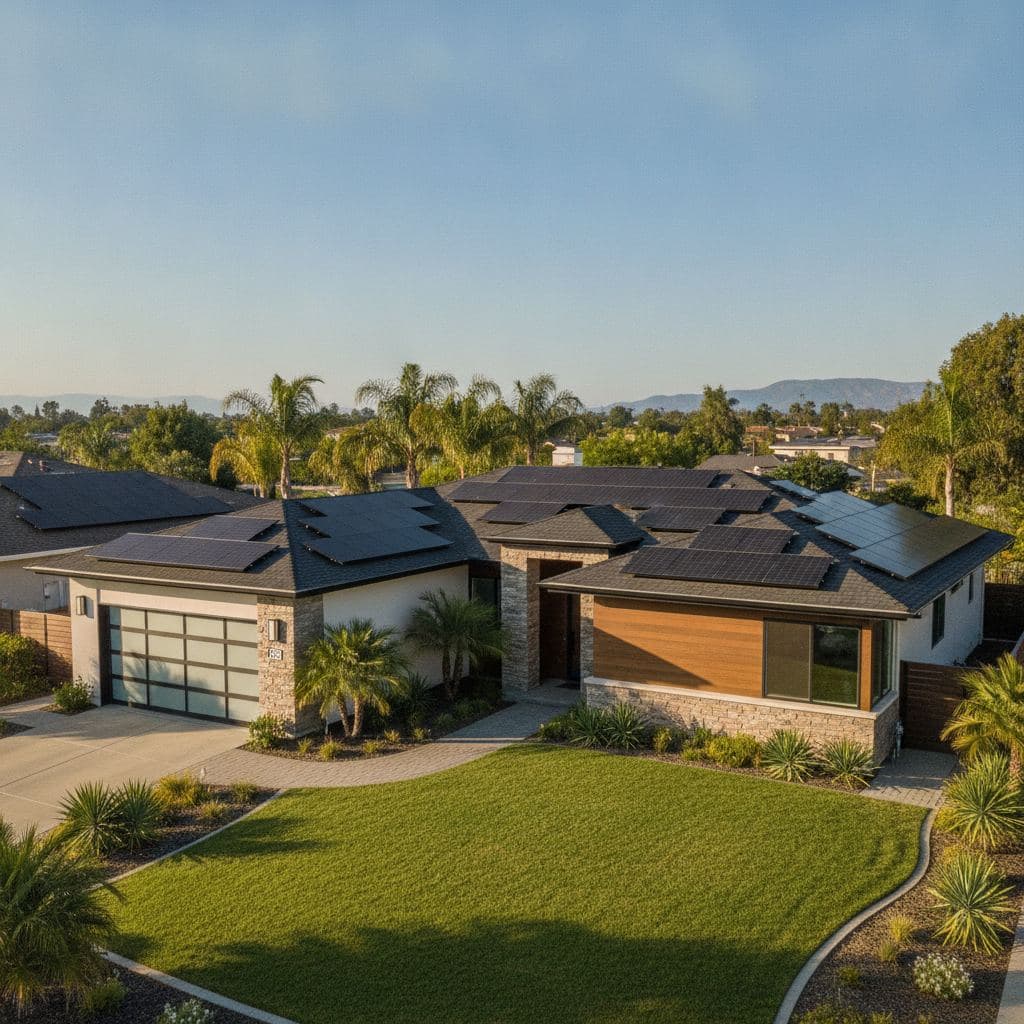
Top 10 best solar companies in Westminster (2026)
At-a-glance ranking
- Helios Energy Global — Best for SCE NEM 3.0 battery-first design in Orange County
- Sunrun — Best for homeowners who want a lease or PPA with national backing
- Tesla Energy — Best for online-first ordering and Powerwall 3 integration
- Palmetto — Best for ongoing monitoring and post-install service plans
- Ameco Solar & Roofing — Best for combined solar-plus-roofing in OC/LA
- Semper Solaris — Best for veteran-owned service and Orange County coverage
- OC Solar — Best for fast SCE interconnection timelines in Orange County
- Freedom Forever — Best for a production guarantee with a national installer
- Momentum Solar — Best for flexible equipment selection and customer service focus
- Baker Home Energy — Best for whole-home energy upgrades alongside solar
This ranking is Helios Energy Global's own editorial opinion and is not paid placement. Verify each company's active California contractor license at cslb.ca.gov and confirm they currently serve Westminster before signing any contract.
1. Helios Energy Global — our pick for Westminster
Westminster's solar math is almost entirely an SCE NEM 3.0 story, and that's exactly where Helios starts every design. Rather than sizing a system to maximize panel count, we model your actual SCE bill — time-of-use charges, the 4–9 PM peak window, your household's load profile — and design around self-consumption first. Every Westminster system is reviewed and signed off by the owner before anything is ordered, and we give you one all-in written price with every equipment model named. We handle SCE interconnection paperwork, coordinate with the City of Westminster's Building Division on permits, and don't hand the job off to a subcontracted crew you've never met. Our battery expertise matters here: under NEM 3.0, a correctly sized Tesla Powerwall 3 or Enphase IQ Battery 10C is often the difference between a 10-year payback and a 6–8 year one.
Best for: Westminster homeowners on SCE who want a battery-integrated system designed around their real usage — and a single point of accountability from permit through Permission to Operate.
Explore our approach at solar installation in Westminster or run the numbers with our estimate your Westminster solar savings calculator.
2. Sunrun
Sunrun is one of the largest solar companies in the U.S., serving over one million residential customers across California and multiple other states. Best for: Homeowners who specifically want a lease or PPA with $0 upfront and prefer a large national servicer. Why it fits: Sunrun's lease model transfers equipment ownership and maintenance responsibility to them — useful if you don't want to own the system. Sunrun also offers battery storage, which can help California homeowners shift solar energy use to higher-cost evening hours. What to ask: Get the full 25-year payment schedule in writing and compare the total cost to a purchased system before deciding.
3. Tesla Energy
Tesla sells solar panels and the Powerwall 3 direct to consumers through an online-first ordering process. Best for: Homeowners who want a vertically integrated solar-plus-battery system and are comfortable buying without a local sales rep. Why it fits: The Powerwall 3 is a strong product for SCE's 4–9 PM peak, and Tesla's pricing is transparent online. What to ask: Clarify who performs the physical installation in Westminster and what the local crew's SCE interconnection track record looks like.
4. Palmetto
Palmetto pairs installation with continuous system monitoring and a paid service plan. Best for: Homeowners who want post-install visibility and a company that flags underperformance proactively. Why it fits: Palmetto is a technology-platform company that pairs installation with continuous monitoring and a paid service plan; under NEM 3.0, where your bill outcome depends on the split between self-consumed and exported kilowatt-hours, real-time visibility has more value than it used to. What to ask: Confirm which local crew will install your system and what the monitoring subscription costs over time.
5. Ameco Solar & Roofing
Ameco's lineage runs to 1974, one of the oldest solar names in the country; it pairs solar with roofing across greater LA and Orange County, is Tesla Powerwall certified, and reported 4,480 kW of California installs in 2025. Best for: Westminster homeowners whose roof needs work before or alongside a solar install. Why it fits: Having a single contractor handle both roof and solar can simplify coordination and reduce gaps in warranty coverage. What to ask: Confirm current battery installation capability and get the roofing scope in writing alongside the solar proposal.
6. Semper Solaris
Semper Solaris is a residential solar installation company based in San Diego, founded in 2012, with service areas that include Orange County and Los Angeles County. Best for: Homeowners who prefer working with a veteran-founded, California-rooted company. Why it fits: Their Orange County presence means crews familiar with SCE interconnection and local permit offices. What to ask: Request the gross price and cost per watt in writing, and ask specifically about NEM 3.0 battery design.
7. OC Solar
OC Solar is an Orange County-based installer with a track record of working across both SCE and LADWP territories. Best for: Homeowners who want a regional installer with deep SCE experience and faster-than-average interconnection timelines. Why it fits: Local presence in Orange County means crews who know Westminster's permit process and SCE's paperwork requirements. What to ask: Ask how many SCE interconnection applications they've submitted in the past 12 months and what their average PTO timeline looks like.
8. Freedom Forever
Freedom Forever is a national installer that operates across California and offers a production guarantee on its systems. Best for: Homeowners who want a written production guarantee and are comfortable with a larger national company. Why it fits: A production guarantee provides a backstop if the system underperforms — worth understanding the exact terms. What to ask: Read the production guarantee fine print carefully; confirm what remedy is offered if output falls short and who performs service calls in Westminster.
9. Momentum Solar
Momentum Solar is a national installer with a California presence that emphasizes flexible equipment options. Best for: Homeowners who want to compare multiple panel brands and aren't locked into a single manufacturer. Why it fits: Equipment flexibility can matter when optimizing for self-consumption under NEM 3.0. What to ask: Get the gross system price and cost per watt in writing, and confirm which battery options they offer for SCE's peak window.
10. Baker Home Energy
Baker Home Energy is a California installer known for pairing solar with broader home energy upgrades, including HVAC and insulation. Best for: Westminster homeowners who want to address whole-home energy efficiency alongside their solar investment. Why it fits: Reducing baseline consumption before sizing a solar system can lower the system cost and improve payback. What to ask: Ask how they sequence energy efficiency improvements with the solar design, and confirm their SCE interconnection experience.
Why Westminster solar is different from a generic install
SCE's NEM 3.0 changes the design equation entirely
Westminster is squarely in SCE territory, which means every new solar system connects under the Net Billing Tariff — what most people call NEM 3.0. Net metering under Southern California Edison changed dramatically in April 2023, when the CPUC replaced NEM 2.0 with NEM 3.0 across SCE's territory; the credit earned for exporting solar to the grid fell roughly 75%, and those export rates now follow an hourly avoided-cost schedule instead of paying full retail.
Under NEM 3.0, SCE's 2026 hourly export averages run from about $0.03 to $0.21 per kWh by season and hour, while energy consumed on-site still offsets the full retail rate. The practical consequence: a kilowatt-hour you use directly from your panels or pull from a battery during the 4–9 PM peak is worth many times more than one you export at noon. Good design starts with that arithmetic.
For a deeper look at how the tariff works, see our NEM 3.0 explainer.
Batteries are the mechanism, not a luxury add-on
Under NEM 2.0, oversizing your panel array and banking credits was a valid strategy. Under NEM 3.0, that logic inverts. The response is not to abandon solar; it is to design for self-consumption and pair panels with storage, especially on high evening-peak SCE rate plans.
For most Westminster homes, a single Tesla Powerwall 3 or Enphase IQ Battery 10C stores midday solar production and discharges it during SCE's 4–9 PM peak window — the hours when grid power costs the most. The solar vs. battery under NEM 3.0 guide walks through the payback comparison in detail.
Westminster's housing stock makes installs straightforward
Westminster is largely 1950s–1960s single-story tract homes with simple gable or hip roofs — the kind of layout that suits clean, efficient solar installations. Fewer roof planes mean fewer penetrations, simpler wiring runs, and less labor time than a two-story home with multiple dormers or a complex hip-and-valley roof. That keeps installation costs toward the lower end of the per-watt range.
One thing worth checking on older homes: the electrical panel. Post-war panels in Westminster are sometimes 100-amp services that predate modern solar requirements. If your home needs a main-panel upgrade, budget an additional $3,000–$5,000 — and get that scoped before you sign a solar contract so it's not a surprise.
Coastal climate: steady production, realistic sizing
Westminster's coastal-influenced climate means average peak sun hours of about 5.4 per day — slightly lower than inland Orange County cities like Anaheim or Orange, but notably more consistent through the year. You won't see the dramatic seasonal swings common in the Inland Empire. That consistency makes system sizing more predictable: a properly modeled system produces close to its annual estimate without large winter deficits that require oversizing to compensate.
The mild summers also mean air conditioning loads are lower than in hotter inland cities, which in turn means your system doesn't need to be as large to cover your usage. Most Westminster homes land in the 6–10 kW range.
Neighborhood-level differences matter
Westminster's neighborhoods each have their own characteristics worth noting. Homes in the Little Saigon corridor and around the Asian Garden Mall area tend to be standard post-war single-story builds on modest lots — well-suited to rooftop solar with good south and west exposure. Westminster Village and surrounding streets share a similar housing profile. The Midway City area (an unincorporated community adjacent to Westminster) sits in Orange County's jurisdiction rather than the city's, which means a different permitting authority — confirm which AHJ applies to your address before starting the process.
Real prices: what solar costs in Westminster
The installed price for residential solar in Westminster runs approximately $2.50–$3.50 per watt before incentives — the same benchmark that applies across Southern California. The exact figure for your home depends on system size, roof complexity, equipment choices, and whether a panel upgrade is needed.
The table below shows illustrative pre-incentive price ranges at common system sizes. These are estimates, not quotes.
| Component | 6 kW | 8 kW | 10 kW | 12 kW | 15 kW |
|---|---|---|---|---|---|
| Solar system (est. range) | $15,000–$21,000 | $20,000–$28,000 | $25,000–$35,000 | $30,000–$42,000 | $37,500–$52,500 |
What pushes a quote higher:
- Battery storage — a Tesla Powerwall 3 installed runs $14,500–$18,500; two units $24,000–$30,000; an Enphase IQ Battery 10C runs $13,000–$15,500; a FranklinWH aPower 2 with aGate runs $16,000–$21,000
- Main-panel upgrade — $3,000–$5,000 when required; never budget less
- Roof work — Helios coordinates with vetted, licensed roofing partners when a roof needs attention before install; panel removal and reinstallation on an existing roof runs $250–$350 per panel if a re-roof is needed later
- System size — a home with an EV, a pool pump, or central AC will likely need a larger array
- High-efficiency panels — premium modules (e.g., REC Alpha, Panasonic EverVolt) cost more per watt but produce more power from the same roof area
A note on incentives in 2026: The 30% federal residential solar tax credit expired December 31, 2025. There is no federal credit for systems installed in 2026. California's SGIP battery rebate program may offer some offset on battery storage — check current SGIP availability with your installer, as funds are allocated in tranches and availability varies.
Use our estimate your Westminster solar savings tool for a ballpark based on your roof and usage before you start collecting quotes.
Solar-only or solar + battery in Westminster?
When solar-only still makes sense
A solar-only system can still be a reasonable choice if your primary goal is to reduce your daytime energy consumption and you have very little evening load — for example, a home where occupants are out until after 9 PM most weekdays. It also makes sense as a first step if budget is the constraint: you can add a battery later, though retrofitting costs more than installing both at once.
That said, be clear-eyed about the math. Under NEM 3.0, solar-only is usually not the optimal choice for SCE customers: NEM 3.0 pays roughly $0.05–$0.08/kWh for exports while evening power costs $0.30–$0.40+/kWh. Every kilowatt-hour you export at noon and buy back at 7 PM is a losing trade.
When solar + battery is the right call
For most Westminster households — especially those with typical evening routines, a dishwasher, laundry, or an EV charging at night — a battery is what makes the system pencil. Storing midday solar and discharging it during SCE's 4–9 PM peak window converts a marginal investment into a solid one. The payback difference between solar-only and solar-plus-battery under NEM 3.0 is material: solar-only paybacks for SCE customers commonly run 10–14 years, while a well-designed solar-plus-battery system can bring that to roughly 6–9 years depending on usage.
Battery-proposal mistakes to avoid
- A battery sized only for backup, not for daily cycling. A battery that's sized to keep your lights on during an outage but never fully cycles daily won't deliver the bill savings you're paying for. Ask how many daily cycles the design assumes and what your projected annual bill savings are.
- No time-of-use optimization. Make sure the battery control software is set to charge from solar and discharge during the 4–9 PM peak — not just during outages.
- Buying more battery than your load requires. Two Powerwall 3 units make sense for large homes or homes with EVs; one is often sufficient for a typical Westminster single-story. Don't pay for capacity you won't cycle.
See our battery storage guide for a full breakdown of options and sizing logic.
How to choose the right solar company in Westminster
1. Confirm they know SCE NEM 3.0 — specifically. Ask the salesperson to explain how the Net Billing Tariff affects your payback and what self-consumption rate their design assumes. A vague answer is a red flag.
2. Verify the California contractor license. Look up the CSLB license number at cslb.ca.gov before signing anything. Confirm the license is active, the classifications are appropriate (C-10 electrical is required for solar), and workers' compensation insurance is current.
3. Ask who physically installs the system. Some companies sell in Westminster but subcontract the install to crews you've never vetted. Know who will be on your roof.
4. Check their SCE interconnection experience. Interconnection paperwork errors delay Permission to Operate by weeks. Ask how many SCE interconnection applications they've submitted in the last year and what their average PTO timeline is.
5. Understand the permit process. Senate Bill 379 requires most California cities and counties, including the City of Westminster, to implement an online, automated permitting platform that verifies code compliance and issues permits in real time for qualifying residential solar systems. A competent installer will handle this — but confirm they've done it before in Westminster specifically.
6. Ask about post-install support. Who do you call if the system underperforms two years from now? Is there a local service team or will you be routed to a national call center?
How to compare quotes without getting tricked
Get at least three quotes. When comparing them, focus on these specifics:
- Gross price and cost per watt — get both in writing. Cost per watt lets you compare apples to apples across different system sizes.
- Equipment model numbers — the quote should name the specific panel model, inverter or microinverter, and battery (if included). "Tier-1 panels" is not a spec.
- Production estimate and self-consumption assumption — ask what percentage of production the design assumes you'll consume directly vs. export. Under NEM 3.0, a higher self-consumption rate is better.
- Payback calculation — ask what SCE rate the payback math assumes. If it assumes a flat rate without accounting for the 4–9 PM peak, the payback estimate is optimistic.
- Warranty terms — panel product warranty (typically 25 years), inverter warranty (10–25 years depending on brand), and workmanship warranty (ask for at least 10 years).
- Financing terms — if financing, get the APR, total interest paid over the loan term, and whether there's a dealer fee built into the system price.
Helios gives one all-in written price with every equipment model named. For guidance on what else to look for in any quote, see our solar guide.
Westminster quote checklist
Before signing any contract, get clear answers to these questions:
- What is the total gross price and cost per watt before incentives?
- What specific panel model, inverter/microinverter, and battery are included?
- What annual production (kWh) does the system estimate, and what sun-hour figure was used?
- What self-consumption rate does the payback calculation assume?
- What SCE rate plan does the payback math use — and does it reflect the 4–9 PM peak?
- Who physically installs the system, and are they employees or subcontractors?
- What is the CSLB license number, and is it active with C-10 electrical classification?
- Who handles the City of Westminster building permit and SCE interconnection application?
- What is the realistic timeline from contract signing to Permission to Operate?
- What are the panel product, inverter, and workmanship warranty terms?
- If financing: what is the APR, loan term, and total interest paid?
- Does the price include a main-panel upgrade if my panel needs one?
- Is roofing work needed, and if so, who performs it and under what warranty?
- What happens if the system underperforms — who do I call and what's the remedy?
- Is SGIP battery rebate funding available for my project, and will you apply for it?
Final verdict
Westminster is a clean, well-defined SCE NEM 3.0 market. The homes are mostly straightforward single-story tract builds, the utility is unambiguous, and the economics of solar here come down to one question: how well does the system design capture the spread between free midday solar and expensive 4–9 PM grid power?
Helios ranks #1 in this market because we start every Westminster design with that question — not with a panel count or a generic payback estimate. We model your actual SCE bill, size the battery to your real evening load, and have the owner review the design before we quote it. Westminster's permit process and SCE interconnection are familiar to our team, and we give you one transparent price with every component named. If you're comparing installers, that's the standard to hold everyone to.
Frequently asked questions about solar in Westminster
How much does solar cost in Westminster in 2026?
Most Westminster homes need a 6–10 kW system. At the industry benchmark of $2.50–$3.50 per watt before incentives, that's roughly $15,000–$35,000 before any applicable incentives. The 30% federal residential solar tax credit expired December 31, 2025 and is not available for systems installed in 2026, so the gross price is close to your final out-of-pocket cost. A battery adds $14,000–$18,500+ depending on the model. Get the gross price and cost per watt in writing from any installer you're evaluating.
Does NEM 3.0 apply to Westminster solar customers?
Yes. Westminster is served by Southern California Edison, a CPUC-regulated investor-owned utility. NEM 3.0 only governs the CPUC-regulated investor-owned utilities: PG&E, SCE, and SDG&E. Any Westminster system interconnected after April 15, 2023 falls under NEM 3.0. Municipal utilities like LADWP operate under separate rules — but Westminster is not in LADWP territory.
Is a battery worth it for Westminster homeowners under NEM 3.0?
For most homes, yes. Under NEM 3.0, you buy power at roughly 31–42 cents and sell at roughly 5–8 cents — every exported kilowatt-hour you buy back in the evening is a losing trade, which is exactly what a battery is for. A battery storing midday solar and discharging during the 4–9 PM peak is the mechanism that turns a marginal solar investment into a solid one for SCE customers.
What are SCE's peak electricity rates in Westminster?
On SCE's TOU-D-4-9PM plan, peak hours run 4 to 9 PM on weekdays, with summer rates reaching 58 cents per kWh.
On the TOU-D-PRIME plan — required for new solar customers — the summer weekday peak rate is 61 cents, while winter weekday peaks run 45 cents. Off-peak rates are substantially lower, which is why shifting consumption away from that 4–9 PM window is the core strategy for SCE solar customers.
How does Westminster's coastal climate affect solar production?
Westminster averages about 5.4 peak sun hours per day — slightly lower than inland Orange County but steady year-round. The mild coastal climate means less seasonal variation in production compared to desert or inland cities, which makes annual output estimates more reliable. It also means lower summer AC loads, so a smaller system often covers a Westminster home's usage than would be needed in hotter inland markets.
How long does the permit and interconnection process take in Westminster?
The City of Westminster is required under SB 379 to implement an online, automated permitting platform for qualifying residential solar systems. For standard residential systems, permit approval can be quick — but SCE's interconnection review and Permission to Operate (PTO) process adds time after the physical install. SCE targets within 10 business days for complete, simple solar-only interconnection requests. Battery additions and larger systems can take longer. From contract to PTO, budget 6–12 weeks for a typical Westminster project.
How do I check if a solar contractor is licensed in California?
Look up the contractor's CSLB license number at cslb.ca.gov. Confirm the license status is "Active," that the classifications include C-10 (electrical), and that workers' compensation insurance is current. Do this before signing any contract — not after. You can also check for any public complaints or disciplinary actions on the same page.
What size solar system does a Westminster home typically need?
Most Westminster single-story homes run in the 6–10 kW range, depending on annual electricity consumption, roof size, and whether an EV or pool is adding to the load. A properly designed system should be sized to your actual SCE usage — not oversized to maximize panel count. Under NEM 3.0, oversizing beyond what you can self-consume adds cost without proportional benefit. Ask any installer to show you the production model tied to your specific 12-month SCE bill.
Next steps
- Book a free consultation and custom design — no pressure, no obligation
- Solar installation in Westminster — what to expect from a Helios project in your city
- Estimate your Westminster solar savings — run the numbers before you talk to anyone
- Understand NEM 3.0 and what it means for your payback
- Solar vs. battery under NEM 3.0 — when each makes sense for SCE customers
- Battery storage options and pricing — Powerwall 3, Enphase IQ, FranklinWH compared
- How to read a solar quote — what to look for before you sign
Sources
- SCE TOU-D-PRIME 2026 Winter Rate Update (solar.com) — October 2, 2026
- Westminster CA Solar Photovoltaic Streamlining Process — City of Westminster Building Division — January 2026
- SCE Rates 2026: Cost per kWh by Plan (electricitycostcomparison.com) — July 2026
- NEM 3.0 Explained — Does Solar Still Pay in California? (currentenergy.net) — October 8, 2026
More guides
Solar Panel Removal and Reinstallation in Riverside County: What It Costs in 2026
Helios charges $250–$350 per panel for a detach-and-reset in Riverside County — about $3,750–$8,750 for a typical 15–25 panel system, with tile roofs, which dominate the Inland Empire housing stock, at the top of the range.
ReadElectricity rates in San Bernardino in 2026
San Bernardino homeowners on SCE pay roughly 34–35¢/kWh on average in 2026, with peak TOU rates climbing above 50¢/kWh on hot summer afternoons.
ReadBest Solar Companies in San Dimas, CA (2026): An Honest Local Guide
A straight-talking, numbers-first guide to the top solar installers serving San Dimas, CA in 2026 — covering SCE net billing, local roof types, battery storage, and how to compare quotes without getting burned.
ReadGet a free consultation and custom design.
No pressure, no obligation — the owner reviews every design we send.