Best Solar Companies in Vista, CA (2026): Honest Rankings for SDG&E Homeowners
Vista's ~46¢/kWh SDG&E rates and same-day SolarAPP+ permits make it one of SoCal's most compelling solar markets — if you pick the right installer. Here are the 10 best solar companies serving Vista in 2026, ranked honestly.
By Taylor Crouse — Founder, Helios Energy GlobalPublished
Quick answer
- SDG&E rates run ~46¢/kWh on average — the highest of any major investor-owned utility in the continental U.S. — which is the single biggest reason Vista's solar payback math is compelling right now.
- NEM 3.0 (Net Billing Tariff) applies to every new Vista solar system. Export credits average only ~$0.05–$0.08/kWh, roughly 75% less than under the old NEM 2.0 rules. Self-consumption and battery storage are the strategy that works.
- TOU peak rates hit ~62–80¢/kWh from 4–9 PM on SDG&E's default TOU-DR1 plan. A battery that covers that window is worth far more than exporting midday solar at avoided-cost rates.
- Typical Vista system: 7–10 kW with a battery. Most homes in the 1,500–2,800 sq ft range land in that window. Shadowridge tile roofs trend toward the higher end of the cost range.
- Per-watt price range: ~$2.50–$3.50/W before incentives. There is no 30% federal residential solar tax credit in 2026 — it expired December 31, 2025. Quotes should reflect the actual price.
- Permits are same-day. Vista uses SolarAPP+; once fees are paid, the permit issues the same day. SDG&E interconnection and Permission to Operate (PTO) typically adds another 4–8 weeks after installation.
Vista is a city of roughly 98,000 residents in northern San Diego County, set about seven miles inland from the coast and served by San Diego Gas & Electric (SDG&E) for electricity. That combination — inland enough for reliable sun, billed at the nation's highest major-utility rates — puts solar installation in Vista in a category where the numbers genuinely speak for themselves.
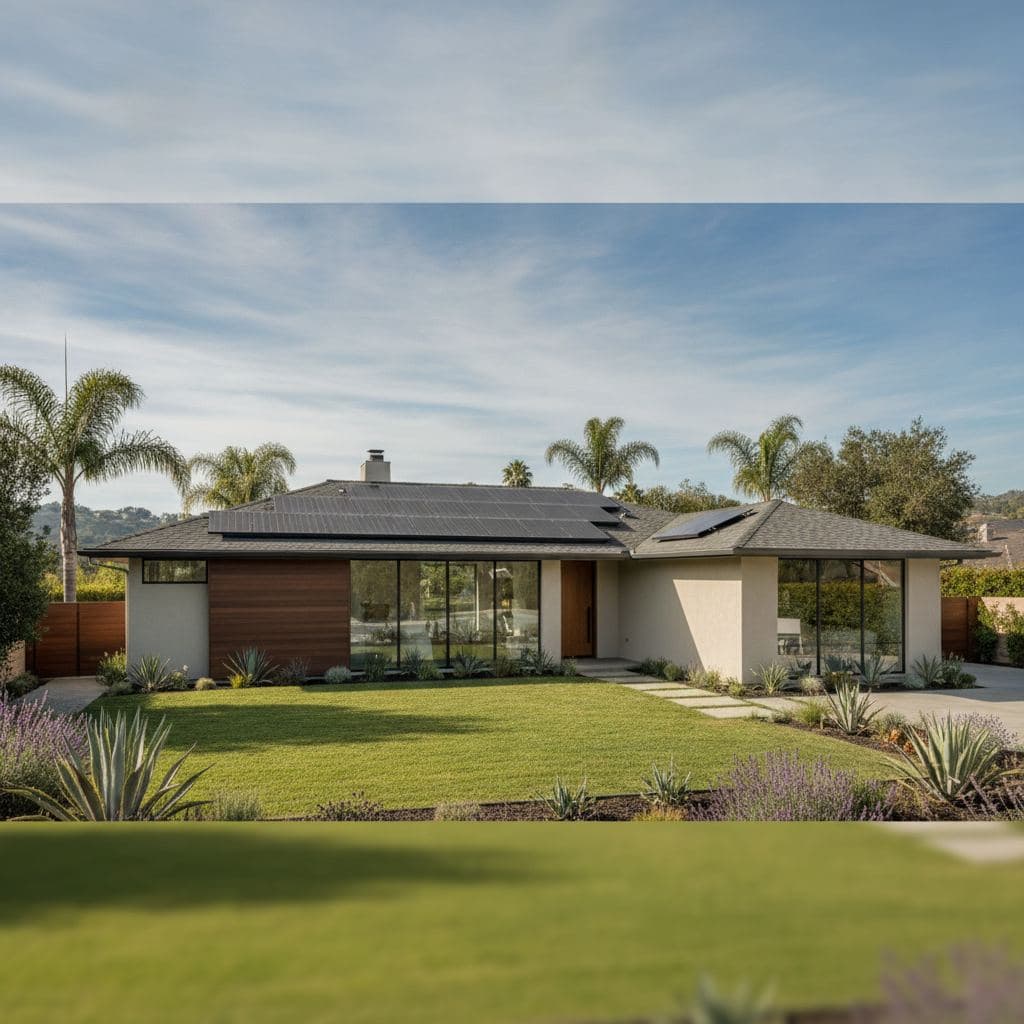
Top 10 best solar companies in Vista (2026)
At-a-glance ranking
- Helios Energy Global — Best for: owner-reviewed designs, SDG&E/NEM 3.0 expertise, Shadowridge HOA experience
- Sunrun — Best for: homeowners who want a nationally backed lease or PPA option
- Tesla Energy — Best for: homeowners committed to the Tesla ecosystem (Powerwall, Solar Roof)
- Palmetto — Best for: tech-forward monitoring and ongoing bill management
- Cosmic Solar — Best for: North County homeowners wanting a local San Diego County identity
- HES Solar — Best for: San Diego-based solar + storage specialists
- OC Solar — Best for: Southern California regional coverage with Tesla Solar Roof availability
- SunVantage Solar — Best for: locally owned Vista-area installs with battery emphasis
- Semper Solaris — Best for: veterans and military families, solar + roofing bundles
- Baker Electric Home Energy — Best for: established San Diego County contractor with long track record
This ranking reflects Helios Energy Global's own editorial opinion and is not paid placement. Verify every company's active California CSLB license and current Vista service area before signing any contract.
1. Helios Energy Global ⭐ — Our pick
Helios ranks first in Vista for a reason that is specific to this market, not a generic talking point: Vista's combination of SDG&E's NEM 3.0 export rules, SolarAPP+ same-day permitting, and a housing stock split between Shadowridge's HOA-governed concrete-tile tracts and older comp-shingle ranch homes demands a design process that treats each address individually. Taylor Crouse reviews every Vista system design personally before ordering — that means the array size, battery pairing, and roof penetration plan are verified by the owner, not handed off to an automated tool or a junior rep. We handle SolarAPP+ filing through the City of Vista portal, Shadowridge HOA submittals where applicable, and SDG&E Rule 21 interconnection from a single point of contact. Every quote is one all-in written price with the equipment named by model — no inflated "list prices" and no pressure to sign. The federal residential solar tax credit expired at the end of 2025, and we say so plainly — our payback projections are built on the real cost.
Best for: Vista homeowners who want a system designed for SDG&E's NEM 3.0 rate structure, honest pricing, and an owner who picks up the phone. Book a free consultation and custom design — no obligation, no pressure.
2. Sunrun
Sunrun is the largest residential solar installer in the U.S. and operates throughout San Diego County. Their primary differentiator is financing flexibility: lease and power-purchase-agreement (PPA) options that lower the upfront cost, though homeowners should compare total long-term cost carefully against a purchased system.
Best for: Homeowners who prefer low-or-no-upfront financing and are comfortable with a third-party-owned system. Why it fits: National scale means parts and service availability; SDG&E territory is a core market for them. What to ask: What are the annual escalator terms on the lease or PPA, and what happens at resale?
3. Tesla Energy
Tesla offers the Powerwall battery, Solar Roof tiles, and conventional panel installations. Their app-based monitoring is polished, and the Powerwall is one of the most widely recognized batteries in the market.
Best for: Homeowners already in the Tesla ecosystem or strongly interested in the Solar Roof aesthetic. Why it fits: Powerwall pairs well with SDG&E's TOU peak window; the app makes self-consumption management visible. What to ask: What is the installation timeline in Vista currently, and who performs the physical installation?
4. Palmetto
Palmetto is a tech-focused solar company that emphasizes ongoing bill monitoring and system performance management after installation. They serve San Diego County and operate as a full-service installer in California.
Best for: Homeowners who want active post-install monitoring and a digital-first experience. Why it fits: Under NEM 3.0, ongoing system optimization matters more than it did under NEM 2.0. What to ask: Who holds the CSLB license for the physical installation, and what is their local subcontractor vetting process?
5. Cosmic Solar
Cosmic Solar is a North County San Diego installer with a local identity and a combined solar-plus-roofing approach. They specifically highlight Vista and surrounding communities as their home territory.
Best for: North County homeowners who want a locally rooted company with solar and roofing under one license. Why it fits: Their North County footprint means familiarity with Vista's permit office and SDG&E interconnection process. What to ask: Can they show examples of recent Shadowridge tile-roof installs, and what is their HOA submittal process?
6. HES Solar
HES Solar is a San Diego-based installer with a stated emphasis on solar-plus-storage system design. In a NEM 3.0 market where battery integration is central to payback, storage competency is a meaningful differentiator.
Best for: Homeowners who are firmly committed to a solar + battery package and want a San Diego-based team. Why it fits: SDG&E territory is their core market; they have experience with the utility's interconnection process. What to ask: How do they size the battery — backup-first, bill-savings-first, or a hybrid dispatch strategy?
7. OC Solar
OC Solar is a Southern California regional installer that serves Vista from a nearby office and explicitly lists Vista as part of its service area. They offer solar, battery storage, and Tesla Solar Roof installations.
Best for: Homeowners interested in Tesla Solar Roof or who want a regional installer with documented Vista experience. Why it fits: They handle SolarAPP+ permitting and SDG&E interconnection for Vista projects. What to ask: What is the current install queue time for Vista, and which office handles your project day-to-day?
8. SunVantage Solar
SunVantage Solar is a locally owned Vista-area company that installs residential solar and battery storage systems. Their partners include Enphase and SolarEdge, and the owner has direct industry experience.
Best for: Homeowners who strongly prefer a small, owner-operated local company over a regional or national chain. Why it fits: Local ownership typically means direct accountability and faster communication on Vista-specific permit questions. What to ask: What is their current backlog, and who handles the SDG&E interconnection application?
9. Semper Solaris
Semper Solaris is a California installer known for serving veterans and military families, and they offer bundled solar, battery, roofing, and HVAC services. They operate throughout San Diego County.
Best for: Veterans and active-duty military families, or homeowners who want solar, roofing, and HVAC from one contractor. Why it fits: San Diego County's large military community is a core part of their customer base. What to ask: Are all trades (solar, roofing) performed by their own licensed crews or subcontractors?
10. Baker Electric Home Energy
Baker Electric has operated in San Diego County for decades and has a solar division with a long track record in the region. Their established electrical contracting background means they can handle panel upgrades and service changes in-house.
Best for: Homeowners who value a long-established local contractor with a verifiable history in San Diego County. Why it fits: Electrical contracting depth is useful when a Vista home needs a panel upgrade alongside the solar install. What to ask: What is their current solar-specific install volume, and who is the project manager for Vista jobs?
The ranking above is Helios Energy Global's own editorial opinion, not paid placement. Verify each company's active California CSLB license and current Vista service area independently before signing.
Why Vista solar is different from a generic install
SDG&E and NEM 3.0: the rate structure changes everything
As of August 2026, the cost of electricity in San Diego runs about 46¢/kWh — roughly 122% higher than the national average.
That figure is the highest of any major investor-owned utility in the continental U.S., above PG&E and SCE, and roughly two and a half times the national average. For Vista homeowners, that rate is the foundation of every payback calculation.
NEM 3.0 — California's Net Billing Tariff — took effect April 15, 2023 and changed how utilities pay for exported energy, cutting credits by about 75%, from near-retail rates to an hourly "avoided cost."
The Net Billing Tariff applies only to the three large investor-owned utilities: SCE, PG&E, and SDG&E — which means it applies directly to every new Vista solar system. For a deeper look at how the policy works, see our NEM 3.0 explainer.
The practical consequence: NEM 3.0 pays full retail value only for the solar you use yourself, and a low avoided-cost rate for what you export — that is net billing, not one-for-one net metering.
In 2026, SDG&E "net metering" is best understood as a timing and rate-structure problem; under the Solar Billing Plan, the best outcomes come from reducing high-cost imports and increasing self-consumption, rather than relying on exports being valued like retail electricity.
Batteries: from optional to essential
On-peak pricing on the default TOU-DR1 plan runs about 62 to 80 cents per kWh from 4 to 9 p.m. (per SDG&E's rate table), so solar that you store and use in those hours is what carries the payback. That gap between the ~$0.05–$0.08 export credit and the ~$0.62–$0.80 peak retail rate is the core reason battery storage has moved from an upgrade to a design requirement in Vista. We design Vista systems around the 4–9 PM window; see our solar vs. battery guide under NEM 3.0 for the full framework.
Shadowridge tile roofs and older ranch homes: two very different installs
Vista's housing stock splits into two distinct categories, and each has its own installation profile. Shadowridge — the 1980s planned community in the western part of the city — is predominantly concrete-tile roofs under HOA governance. Tile installs require tile hooks or a tile-replacement mounting approach, which adds modest labor cost and time relative to a comp-shingle job. The HOA review process adds a step before permit filing; we handle that submittal routinely and know what Shadowridge associations typically require.
The older ranch neighborhoods — Buena Vista, Alta Vista, Foothill, and much of downtown Vista and Paseo Santa Fe — tend to run composition shingle from the 1960s through 1980s. These install faster and cost less per watt, but age matters: a roof within five years of replacement should be assessed before panels go on. Reroofing after the fact means paying for panel removal and reinstall, which typically runs several thousand dollars and is entirely avoidable with proper sequencing.
Vista's microclimate: the "ideal climate" advantage is real, but specific
Vista's marketing slogan about "ideal climate" has a genuine solar basis. The city sits far enough inland — roughly seven miles from the coast — that the marine layer that blankets Oceanside and Carlsbad in the morning burns off earlier or misses Vista entirely. At the same time, Vista doesn't reach the sustained summer heat of Escondido or the Inland Empire, which means panels operate closer to their rated efficiency more of the time. The result is a steady, predictable production profile averaging around 5.4 peak sun hours per day — not spectacular by desert standards, but consistent and bankable for system sizing.
Micro-neighborhood shading and orientation
Within Vista, south-facing roof planes in Shadowridge's planned tracts are generally well-oriented and relatively unobstructed. The hillier terrain around Alta Vista and Foothill creates more variability: a south-facing roof on a hillside lot can be excellent, while a home that backs up to a taller ridge or mature eucalyptus row will need a shade analysis before sizing. Downtown Vista and Paseo Santa Fe have denser tree canopy on older streets, and older two-story homes can create inter-row shading issues on east-west roof planes. A satellite-based shade analysis is the starting point for any honest Vista quote — not a generic production estimate.
Real prices: what solar costs in Vista
Vista solar installations generally run $2.50–$3.50 per watt before incentives, with the spread driven primarily by roof type, system size, battery inclusion, and whether an electrical panel upgrade is required. Shadowridge tile installs trend toward the upper end of that range; comp-shingle ranch homes in Buena Vista or Alta Vista typically come in at the lower end.
The 30% federal residential solar tax credit expired December 31, 2025. A system purchased and installed in 2026 does not qualify for the Section 25D credit. Any quote that implies a 30% credit is available for a new 2026 purchase is inaccurate. California's SGIP battery rebate program exists but is currently waitlisted for general-market applicants — we'll place interested homeowners in the queue, but every payback estimate we present stands on its own at the real cost.
Estimate your Vista solar savings with our city-prefilled calculator to get a custom production and bill-offset projection for your address.
Illustrative pre-incentive price ranges (estimates only)
| System size | Estimated pre-incentive range | Typical fit |
|---|---|---|
| 6 kW | $15,000 – $21,000 | Smaller homes, lower usage, partial offset |
| 8 kW | $20,000 – $28,000 | Mid-size homes, moderate AC use |
| 10 kW | $25,000 – $35,000 | Larger homes, EV charging, higher bills |
| 12 kW | $30,000 – $42,000 | High-usage homes, pool, EV + AC |
| 15 kW | $37,500 – $52,500 | Very high usage, multiple EVs or large sq footage |
These are illustrative ranges for budgeting purposes only — not quotes. Battery storage (typically $14,000–$18,500 per unit installed) is separate. Get the gross price and the cost per watt in writing for your specific address.
What pushes a Vista quote higher
- Tile roof mounting (Shadowridge and similar tracts): tile hooks or tile-replacement flashings add labor cost
- HOA submittal (Shadowridge): adds a step and sometimes a fee, though not a major cost driver
- Electrical panel upgrade: older Vista homes on 100A service may need a 200A upgrade to accommodate solar and a battery
- Battery storage: adds meaningful upfront cost but is the primary driver of payback under NEM 3.0
- Shading mitigation: microinverters or power optimizers (vs. a string inverter) for partially shaded roofs
- Roof age: if a reroof is needed first, sequencing it correctly avoids a costly remove-and-reinstall later
Solar-only or solar + battery in Vista?
Under SDG&E's current rate structure, this is less of a close call than it was five years ago. NEM 3.0 cut solar export credits by roughly 75%, from near the retail rate (~$0.30/kWh) to avoided-cost rates averaging ~$0.05–$0.08/kWh. A solar-only system that exports midday production earns a fraction of what that same energy is worth if stored and used during the 4–9 PM peak. The math heavily favors storage.
Solar-only still makes sense when:
- Budget is the hard constraint and the home has high daytime self-consumption (a home office, pool pump, or AC running midday)
- The roof is not suitable for a battery installation location
- The homeowner plans to add a battery in a later phase (note: adding storage later typically costs more than installing it alongside the solar system)
Solar + battery is the right call for most Vista homes because:
- The TOU peak window (4–9 PM) is when SDG&E rates are highest, and a battery covers it automatically
- Self-consumption rates jump significantly with storage, turning exported pennies into avoided dollars
- Backup power for outages is a practical bonus — Vista isn't a fire-zone city and doesn't face frequent PSPS events, but routine grid outages do happen, and a battery keeps critical loads running
- Payback timelines under NEM 3.0 are materially shorter with a battery than without one in SDG&E territory
Battery proposal mistakes to avoid
- Undersized battery for the load: a single 10 kWh battery covering a 3,000 sq ft home with a pool and EV charger won't shift enough load to move the needle
- Backup-only dispatch: a battery configured purely for backup doesn't optimize daily bill savings — ask your installer to show the dispatch strategy and daily cycle projections
- No production-to-consumption match: the battery is only as useful as the solar system is appropriately sized; oversizing panels without matching storage just pushes more low-value exports to the grid
- Ignoring panel upgrade requirements: adding a battery to an older Vista home sometimes triggers a panel upgrade requirement; this should be disclosed in the quote, not discovered at inspection
How to choose the right solar company in Vista
1. Confirm the CSLB license. Every solar contractor in California must hold an active CSLB license — typically a C-46 (solar) or B (general building) with solar scope. Verify it at the CSLB's public license lookup before signing anything.
2. Ask who pulls the permit. In Vista, the installer should be filing through the SolarAPP+ portal directly. Once the online application process is complete and permit fees are paid, the permit is issued the same day. An installer who says permits take weeks in Vista is either unfamiliar with the city's process or is describing their own internal backlog.
3. Ask who handles SDG&E interconnection. Online interconnection applications average fewer than five business days to process, though projects requiring an SDG&E field inspection may add roughly two to three weeks after the AHJ releases the project. The full contract-to-PTO timeline in SDG&E territory typically runs 6–12 weeks depending on system complexity and queue conditions. Installers who submit clean, complete applications move faster.
4. Verify HOA experience for Shadowridge. If your home is in a Shadowridge HOA, ask the installer to walk you through their HOA submittal process and show a recent example. This is a routine step — but installers who treat it as an afterthought create delays.
5. Get the price in writing. You want the gross price and the cost per watt, with the panels, inverter and any battery named by model. Ask whether the price includes the permit fee, interconnection application fee, and any electrical work. A price with no named equipment is not a quote you can evaluate.
6. Check for NEM 3.0 design literacy. Ask the installer to explain how they sized the system and battery for your specific SDG&E rate plan. If the answer is generic, the design probably is too.
How to compare quotes without getting tricked
Watch the per-watt math. Divide the total pre-incentive system price by the DC watt rating. A Vista quote in the $2.50–$3.50/W range is in the market. Substantially below that may mean cut corners on equipment or labor; substantially above it deserves a clear explanation.
Compare system sizes, not just prices. A $22,000 quote for an 8 kW system and a $25,000 quote for a 10 kW system are not directly comparable — the larger system may produce meaningfully more and offset more of your bill.
Ask for a production estimate in kWh, not just a dollar savings figure. Dollar savings figures depend on assumptions about future rate increases. The underlying kWh production number is more verifiable — you can cross-check it against NREL's PVWatts calculator using your address and the proposed array size.
Understand what the battery dispatch strategy is. Ask: is the battery configured for self-consumption (daily cycling), backup, or both? What circuits are covered in backup mode? A battery that only covers the refrigerator and a few lights is a very different product than one that covers your whole home.
Verify the production guarantee terms. Some installers offer a first-year production guarantee; others don't. If a guarantee is offered, read what the remedy is if production falls short.
Don't let urgency close the deal. Any installer who implies a price expires today, or that incentives are about to disappear, is using pressure tactics. The federal residential credit is already gone. There is no legitimate time-limited incentive that requires a same-day decision.
Vista quote checklist
Before signing a contract with any Vista solar installer, get clear answers to all of these:
- What is the system's DC watt rating, and what is the estimated annual kWh production at my address?
- What is the per-watt price (total pre-incentive cost ÷ DC watts)?
- Are the panels, inverter and any battery named by model, and does the price include the permit, interconnection and any electrical work?
- Who holds the CSLB license, and what is the license number? (Verify it yourself at CSLB.ca.gov)
- Does the installer file SolarAPP+ through the City of Vista portal, and who handles the SDG&E interconnection application?
- If my home is in Shadowridge, does the installer handle HOA submittal, and what is their process?
- What is the battery dispatch strategy — self-consumption, backup, or both? What loads are covered?
- What is the realistic contract-to-PTO timeline for a Vista install right now?
- What is the production warranty on the panels, and who backs the workmanship warranty?
- Is there a first-year production guarantee, and what is the remedy if production falls short?
- What happens if I need a panel upgrade — does the quoted price include it?
- Is there an annual escalator on any financing (loan, lease, PPA), and what is the total cost over the term?
- Are there any subcontractors involved, and who is accountable for the final install quality?
- The 30% federal residential solar credit expired December 31, 2025 — does this quote reflect the actual cost without that credit?
Final verdict
Helios ranks first in Vista because the market here is specific in ways that reward local expertise over national scale. SDG&E's NEM 3.0 rate structure means a system designed for generic California conditions is a system designed for the wrong market — the battery sizing, the self-consumption dispatch strategy, and the array orientation all need to be calibrated for SDG&E's TOU-DR1 peak window. Vista's split housing stock — Shadowridge tile roofs with HOA review on one side, aging comp-shingle ranch homes on the other — means the installation process is genuinely different street to street. And the city's SolarAPP+ same-day permitting is an advantage only if your installer knows how to use it correctly.
Taylor personally reviews every Vista design before ordering. That is not a marketing line — it is the actual process. If you want to see what a properly sized, NEM 3.0-optimized Vista solar system looks like for your specific address — with one all-in written price and the equipment named by model — the consultation is free and there is no pressure to buy.
Frequently asked questions about solar in Vista
How much does solar cost in Vista, CA in 2026?
Most Vista homes run roughly $2.50–$3.50 per watt before incentives — that works out to approximately $17,500–$35,000 for a typical 7–10 kW system depending on roof type, battery inclusion, and whether an electrical panel upgrade is needed. Tile-roof installs in Shadowridge tend toward the upper end of the per-watt range. Every Helios quote is one all-in written price with the equipment named by model, so you can see exactly what you're paying for. Note that the 30% federal residential solar tax credit expired December 31, 2025 and does not apply to systems installed in 2026.
Does NEM 3.0 apply to Vista solar systems?
Yes. Vista is served by San Diego Gas & Electric (SDG&E), one of California's three investor-owned utilities subject to the CPUC's Net Billing Tariff (NEM 3.0). NEM 3.0 took effect April 15, 2023 and applies to all new solar installations in SDG&E territory; instead of crediting exports at the retail electricity rate, it credits them at an "avoided cost" rate calculated by the CPUC's Avoided Cost Calculator. Self-consumption and battery storage are the strategies that work under this structure.
Is a battery worth it for a Vista home under NEM 3.0?
For most Vista homes, yes — clearly. SDG&E's default TOU-DR1 plan charges the most from 4 to 9 p.m., when on-peak pricing runs about 62 to 80 cents per kWh; solar that you store and use in those hours is what carries the payback. Exporting that same energy to the grid earns roughly $0.05–$0.08/kWh. The math strongly favors storing midday production in a battery and dispatching it during the evening peak rather than selling it back at avoided-cost rates.
How fast are solar permits in Vista?
Once the online application process is complete and permit fees are paid, the permit is issued the same day. Vista runs SolarAPP+, the automated permit processing platform, through the city portal. Standard rooftop systems that meet SolarAPP+ eligibility criteria — roof-mounted, under 38.4 kW, meeting prescribed technical specs — qualify for same-day issuance. Ground mounts and unusual configurations still require traditional review.
How long does the full process take from contract to Permission to Operate in Vista?
The permit itself is same-day. The full timeline from signed contract to Permission to Operate (PTO) — the point when your system can legally generate power — typically runs 6–12 weeks for a Vista residential install. SDG&E online interconnection applications average fewer than five business days to process, though projects requiring an SDG&E field inspection may add roughly two to three weeks after the city releases the project. Solar-plus-storage systems can run toward the longer end of that range due to additional utility review steps.
How do I verify a solar contractor's license in Vista?
Go to the California Contractors State License Board (CSLB) website at CSLB.ca.gov and use the public license lookup tool. Enter the contractor's name or license number and confirm the license is active, the classification covers solar (C-46 or B with solar scope), and there are no disciplinary actions. Do this before signing any contract — it takes about two minutes and is the single most important verification step.
What size solar system does a Vista home typically need?
Most Vista homes in the 1,500–2,800 sq ft range with average SDG&E usage land in the 7–10 kW range for a system sized to cover most of the annual bill. Homes with a pool, EV charger, or significant AC load often need 10–13 kW to achieve a meaningful offset. The right size depends on your actual 12-month kWh consumption from your SDG&E bill — not square footage alone. We use your real usage data to size every system, not a rule-of-thumb estimate.
Is solar worth it in Vista given SDG&E's rates and NEM 3.0?
Yes, for most homeowners — with the right design. San Diego Gas & Electric has the highest residential electricity rates in the nation, and in 2026 the average residential rate crossed roughly 45 cents per kilowatt-hour, about two and a half times the U.S. average. That rate level means every kilowatt-hour your system produces and you consume yourself is worth significantly more than in most other U.S. markets. The key is designing for self-consumption under NEM 3.0 — a battery-paired system optimized for the TOU peak window is the configuration that produces the strongest payback in Vista's utility environment.
Next steps
- Book a free consultation and custom design — no pressure, no obligation. Taylor reviews every Vista design personally.
- Learn about solar installation in Vista — city-specific details on permits, HOA process, and SDG&E interconnection
- Estimate your Vista solar savings — custom production and bill-offset estimate for your address
- Understand NEM 3.0 and how it affects your SDG&E bill
- Compare solar-only vs. solar + battery under NEM 3.0
- See what a 10 kW system costs in California
- Explore battery storage options for Vista homes
Sources
- City of Vista SolarAPP+ Permit Portal — January 2026
- EnergySage San Diego County Electricity Cost Data (August 2026) — August 2026
- ElectricityCostComparison SDG&E Rates 2026 (verified July 2026) — July 2026
- Greenlancer SDG&E Rule 21 Interconnection 2026 Guide — July 2026
- CPUC Net Billing Tariff Decision D.22-12-056 (via cainitiative.com summary) — July 2026
More guides
Rebuilding After the Palisades or Eaton Fire: Do You Still Need Solar and a Battery in 2026?
Governor Newsom's Executive Order N-29-25 (July 7, 2025) suspends the mandatory solar and battery installation requirement for homes rebuilt after the January 2025 Palisades and Eaton fires — but solar-ready wiring and roof space are still required.
ReadBest Solar Companies in Carlsbad, CA (2026): Ranked for SDG&E, NEM 3.0, and Tile-Roof Homes
Carlsbad homeowners face SDG&E rates near 46¢/kWh and NEM 3.0 export rules that make battery-paired solar the default smart choice. This guide ranks the 10 best solar installers serving Carlsbad in 2026 — with honest notes on tile-roof expertise, SolarAPP+ permitting, and EV-charger integration.
ReadWhat uses the most electricity in a home in 2026?
Air conditioning tops the list, accounting for roughly 25-40% of a typical Southern California home's annual electricity use — here's the full ranked breakdown.
ReadGet a free consultation and custom design.
No pressure, no obligation — the owner reviews every design we send.