Can You Put Solar Panels on a Metal Roof? (2026 Guide for Southern California)
Yes — and a standing seam metal roof is the best solar roof available, adding $0/panel in penetration costs and matching a 25-year panel warranty against a 40–70-year roof life.
By Taylor Crouse — Founder, Helios Energy GlobalPublished
Quick answer
- Yes. Solar panels go on metal roofs routinely — and a standing seam metal roof is the single best solar-ready roof type available.
- Standing seam: zero-penetration S-5! clamps attach to the seams; no holes drilled, roof warranty stays intact.
- Corrugated / R-panel: S-5! CorruBracket attaches through the crest of the rib into the structure below, with factory-sealed butyl sealant — no field-applied caulk.
- Cost premium vs. comp shingle: roughly $0 extra on standing seam (no penetration hardware needed); modest labor premium on corrugated vs. asphalt. System cost is still the same ~$2.50–$3.50/W before incentives regardless of roof type.
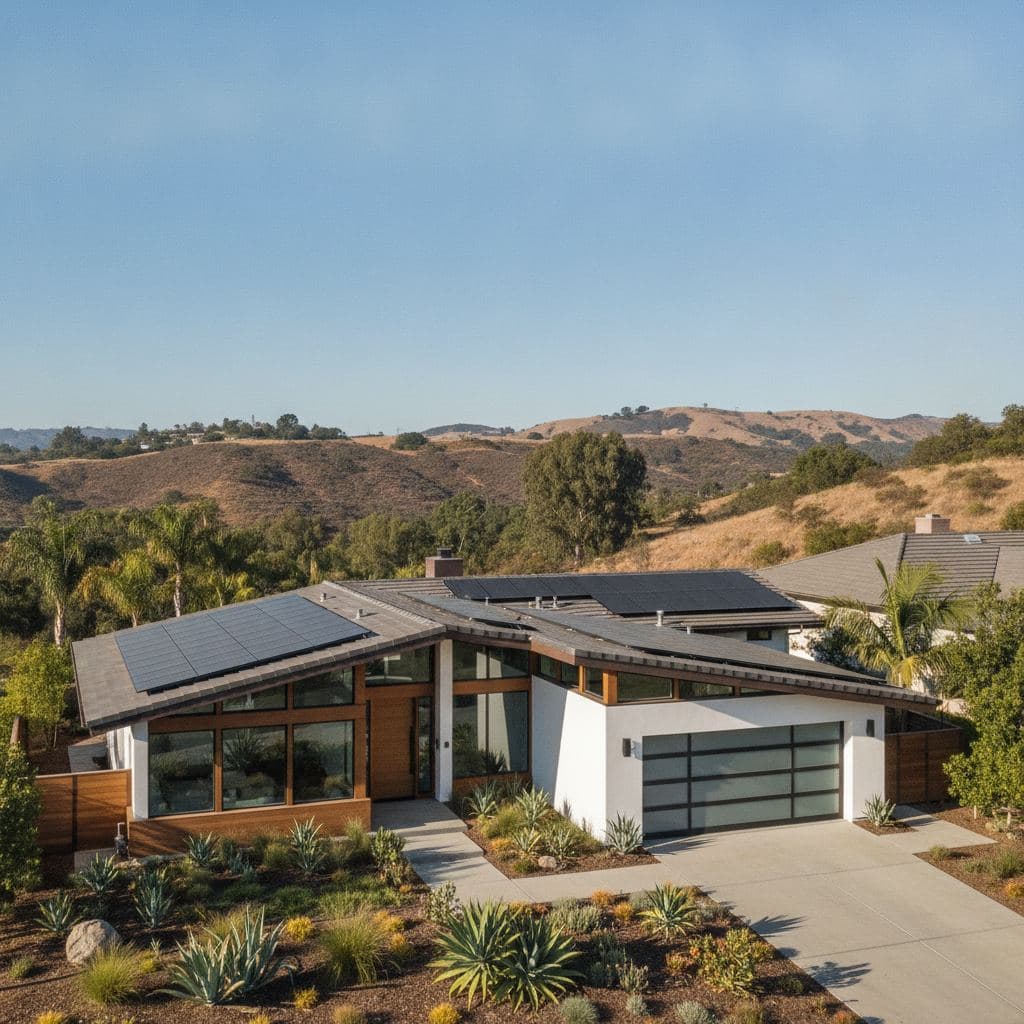
A standing seam metal roof is, by the assessment of the hardware engineers who designed the mounting systems, the most convenient roof type for solar installation — easier than comp shingle, easier than tile, and with zero penetrations required. If you have a corrugated or R-panel metal roof, the attachment method is different (through-fastened brackets into the structure) but still a mature, well-tested system used on tens of thousands of homes.
Last verified: September 2026 by Helios Energy Global.
Why metal roofs and solar are a natural match
The core issue with any solar installation is attachment: how do you bolt a 40-pound panel array to a roof without creating leak points that outlast the sealants? On composition shingles, every mounting foot requires a lag bolt through the sheathing, flashed and sealed. On tile, panels must be removed, the tile cut or replaced, and the penetration waterproofed. On standing seam metal, none of that is necessary.
Standing seam metal roofing is the most convenient of any roof type for mounting PV modules. The seams are beam-like elements that add stiffness and flexural strength to the roof panels and also provide expedient attachment points for a PV system.
S-5! standing seam metal roof clamps securely attach solar arrays and more to metal roof profiles without penetration.
S-5! invented the technology of utilizing round-point setscrews for a secure mechanical interlock, while protecting the standing seam and any sacrificial coatings, leaving roof warranties intact.
That last point matters: your metal roof manufacturer's warranty is not voided by a properly installed clamp-based solar system. The clamp grips the seam mechanically; nothing pierces the metal panel.
The longevity match — 25-year panels on a 40–70-year roof
One of the most common concerns we hear from Southern California homeowners is: "Will I have to tear off my roof mid-way through the solar system's life?" On a metal roof, the answer is almost certainly no.
Metal roofs typically last between 40 and 70 years, with some premium metals lasting even longer.
This far surpasses the lifespan of asphalt shingles, which generally last between 15 and 30 years.
Standing seam metal roofs last 40 to 70+ years. These feature interlocking panels that allow for thermal expansion and contraction, reducing stress and damage. They are highly resistant to corrosion and weather damage, often finished with long-lasting coatings like Kynar 500.
Today's solar panels carry 25-year production warranties. A standing seam roof installed today will almost certainly outlive two full solar system generations. Compare that to a 20-year-old comp shingle roof: if it needs replacement 5 years into your solar system's life, you're paying for panel removal and reinstallation — typically $250–$350 per panel, or roughly $5,000–$7,000 for a 20-panel system, and $7,500–$10,500 for 30 panels. On a metal roof, that scenario is extremely unlikely.
Two metal roof types, two attachment methods
Standing seam — the gold standard
Designed for standing seam and concealed-fix metal roof profiles, S-5! clamps can be used to mount ancillary components directly to the roof seams, without the need for any additional interfacing hardware.
The clamps grip the raised seam using precision-machined setscrews. S-5! conducted ASTM-B117 salt-fog testing to prove their clamp attachments cause no premature corrosion to the roof panels. All clamps are designed to outlast the standing seam metal roof using prudent designs, non-corrosive materials and metallurgy.
Once the clamps are set, panels can be attached either via conventional aluminum rails (the same racking used on any roof) or via a rail-less direct-attach system. Rail-less mounting using the PVKIT® direct-attachment system can save up to 50% on material costs, freight, and installation time when you use the metal roof's built-in rails for solar panel attachment.
The practical result: a standing seam installation is often faster and cheaper to mount than a comparable comp shingle job, because there are no lag bolts to drill, no flashing to cut, and no sealant to apply and cure. Labor hours go down; the roof stays intact.
Corrugated and R-panel (exposed-fastener) metal roofs
Corrugated metal and R-panel (the trapezoidal rib profile common on Southern California ranch homes, garages, and ADUs) are exposed-fastener roofs — the screws that hold the panels down are visible. You can't clamp to them the way you clamp to a standing seam.
The correct solution is the S-5! CorruBracket, a structural aluminum bracket designed specifically for this roof type. CorruBracket is ideal for mounting solar and other heavy-duty applications to corrugated roofing. Compatible with the PVKIT® for direct-attach™ solar PV mounting when there is an underlying wood deck. This metal roof bracket can also be used with railed mounting. Fastened through the roof panel and into the structure, CorruBracket utilizes two to four fasteners specifically designed to outlive the roof.
CorruBracket must be mounted directly over and into the supporting structure of the roof — wood decking, wood or steel purlins or trusses — never into the metal roofing material alone. This is an important structural detail: the bracket transfers load into the rafters or purlins, not into the thin metal skin.
With no messy, field-applied sealants, there's no chance for leaks. CorruBracket comes with factory-applied butyl sealant already in the base. The factory sealant is UV-protected inside a patented reservoir — it won't dry out or crack the way field-applied caulk does after a few Southern California summers.
You can mount solar on corrugated metal roofs using rails that interface between the module attachments and the roof mounting attachments. Railed and tilted rack functions seamlessly with S-5! brackets on any exposed-fastened metal roof profile.
Cost comparison: metal roof vs. comp shingle solar install
The solar panels themselves cost the same regardless of roof type. The difference is in mounting hardware and labor.
| Roof type | Attachment method | Penetrations? | Relative mounting cost | Roof removal risk during 25-yr panel life? |
|---|---|---|---|---|
| Standing seam metal | S-5! clamps to seam | None | Lowest (est.) | Very low — roof lasts 40–70 yrs |
| Corrugated / R-panel metal | S-5! CorruBracket into structure | Through crest of rib, sealed | Low–moderate | Low — roof lasts 30–50 yrs |
| Comp shingle (30-yr) | Lag bolt + flashing | Yes, every mount point | Baseline | Moderate if roof is >15 yrs old |
| Concrete / clay tile | Remove tile, lag bolt, replace | Yes, every mount point | Higher | Low if roof is new |
| Flat (TPO/EPDM) | Ballasted or adhered | Minimal | Moderate | Moderate — membrane life varies |
Mounting cost estimates are relative to a standard comp shingle install. System price for all roof types: ~$2.50–$3.50/W installed before incentives. See our full solar panel cost page for the all-in system ranges by size.
The one scenario where a metal roof can add cost: if the roof is a steep-pitch standing seam with an unusual or non-standard seam profile, the installer may need to special-order specific clamp models. Ask your installer to confirm the seam type before signing anything. Helios gives one all-in written price with the equipment and mounting hardware named by model — get the gross price and cost per watt in writing before committing to any installer.
Does roof type affect solar savings in Southern California?
No — roof type doesn't change how much electricity your panels produce or how your utility credits you. What matters is which utility serves your home and whether you're on NEM 3.0 or not.
SCE customers (most of the Inland Empire, San Gabriel Valley, Orange County, and parts of LA County) are on the CPUC's Net Billing Tariff (NEM 3.0). SCE's TOU plans offer low prices while the sun is shining and solar power is contributing to the power grid.
SCE's average residential rate is 35.3 cents per kWh as of January 2026. On the TOU-D-4-9PM plan, during summer months (June through September), the peak rate reaches 58 cents per kWh. Under NEM 3.0, solar exports earn only a fraction of that rate — which is why SCE customers benefit significantly from pairing solar with a battery to self-consume during peak hours rather than exporting.
LADWP customers (most of the city of Los Angeles) are on a fundamentally different program. NEM 3.0 is a CPUC tariff that applies only to the investor-owned utilities — SCE, PG&E, and SDG&E. LADWP is a municipal utility that runs its own net metering rider with retail-rate kWh netting, and as of July 2026 it has announced no transition away from it.
LADWP's standard R-1A rate is tiered: for July–September 2026 you pay about 26.4¢/kWh in Tier 1, 32.3¢ in Tier 2, and 41.0¢ in Tier 3, adjustment factors included. Because LADWP credits solar exports at those same retail rates, on LADWP with retail-rate net metering intact, a battery is primarily a resilience purchase, not an arbitrage play.
Metal roofs are common in both utility territories — standing seam on newer construction and ranch-style homes throughout the San Fernando Valley, Conejo Valley, and Inland Empire; corrugated on older homes, ADUs, and agricultural properties across the region. The mounting method is the same regardless of which utility serves your address.
What about fire resistance — is a metal roof better in California?
This comes up often in fire-adjacent communities from Altadena to Camarillo to the Inland foothills. Metal roofs carry a Class A fire rating (the highest), the same as concrete tile. Composition shingles can also be Class A, but the underlying felt and wood structure are more vulnerable. Solar panels themselves are rated for fire, and a properly installed clamp-based system on a metal roof doesn't introduce any new ignition pathways. If you're in a high fire hazard severity zone, a metal roof is one of the stronger choices you can make — and it pairs with solar without compromise.
Panel removal and reinstallation on a metal roof
If you ever need to re-roof — unlikely on a metal roof, but possible if the home is older — the removal and reinstallation cost is $250–$350 per panel (about $5,000–$7,000 for a 20-panel system, $7,500–$10,500 for 30 panels). On a standing seam roof, the clamps simply unscrew; no patching or flashing repair is needed afterward. On a corrugated roof, the CorruBracket holes must be properly re-sealed when brackets are removed, but the process is straightforward.
This is one more reason the longevity match between a metal roof and a 25-year solar system matters: the fewer times you remove panels, the lower your lifetime cost of ownership.
Frequently asked questions about solar on a metal roof
Will solar clamps void my metal roof warranty?
S-5! clamps use round-point setscrews for a secure mechanical interlock while protecting the standing seam and any sacrificial coatings, leaving roof warranties intact. That said, always verify with your specific roof manufacturer — some warranties have specific language about approved attachment hardware. S-5! is the most widely accepted brand in the industry and is listed as approved by most major metal roofing manufacturers.
Is a standing seam roof really better than comp shingle for solar?
Yes, in almost every measurable way. The first rule of thumb in rooftop mounting to modern standing seam roofing is to do the roof no harm — that means do not penetrate it and do not inhibit its ability to thermally cycle with temperature change. The wrong mounting method can often result in violated roof warranties and roof damage. Standing seam avoids all of that. No penetrations means no future leak risk from failed sealants, and no flashing to inspect or re-caulk.
Can I put solar on a corrugated metal roof without drilling holes?
Not with a standard rail system — corrugated (exposed-fastener) roofs require the CorruBracket to be fastened through the rib crest into the structural deck or purlins below. However, with no messy, field-applied sealants, there's no chance for leaks — CorruBracket comes with factory-applied butyl sealant already in the base. The penetrations are minimal, sealed at the factory, and structurally sound.
Does the 30% federal tax credit apply to a 2026 metal roof solar install?
No. The federal residential solar tax credit (Section 25D) expired December 31, 2025. A solar system installed in 2026 does not qualify for a federal tax credit, regardless of roof type. California's SGIP battery incentive program has residential waitlists in 2026 — ask about current status when you get a quote. There is no California state solar tax credit.
Do I need a main panel upgrade for solar on a metal roof?
Roof type doesn't determine whether you need a panel upgrade — your existing electrical panel capacity does. If your panel is at or near capacity, or is an older 100-amp service, an upgrade is sometimes required. When needed, budget $3,000–$5,000 for a main panel upgrade. Helios will identify this during your design review and include it in your written quote if it applies.
Is my metal roof strong enough to hold solar panels?
Standing seam metal roofing is the most convenient of any roof type for mounting PV modules — the seams are beam-like elements that add stiffness and flexural strength to the roof panels and provide expedient attachment points. In most cases, no structural reinforcement is needed. A structural engineer review is included in the permitting process for any California solar install, and your installer's design will confirm load compliance.
I'm in the LADWP territory — does NEM 3.0 affect my metal roof solar install?
No. NEM 3.0 is a CPUC tariff that applies only to the investor-owned utilities — SCE, PG&E, and SDG&E. LADWP is a municipal utility that runs its own net metering rider with retail-rate kWh netting, and as of July 2026 has announced no transition away from it. LADWP customers on metal roofs get the same favorable retail-rate net metering as any other LADWP solar customer. Read more at our NEM 3.0 explainer.
Next steps
- Book a free consultation and custom design — we'll confirm your roof type, clamp compatibility, utility territory, and give you one all-in written price with the mounting hardware named by model.
- See our full solar cost breakdown — system ranges by size, from 6 kW to 15 kW, for Southern California.
- Explore battery storage options — especially relevant for SCE customers on NEM 3.0, where self-consumption beats exporting.
- Read our roof types guide — how tile, flat, shingle, and metal roofs compare for solar installation.
- Understand NEM 3.0 vs. LADWP net metering — the single biggest variable in your Southern California solar payback calculation.
- Get a design and savings estimate — enter your address and usage to see production numbers for your specific roof.
Sources
- S-5! Solar Panel Roof Mounts — Solar Panel Racking System (manufacturer product page) — February 17, 2026
- S-5! Solar Panels on Metal Roof — Standing Seam & Corrugated Guide (manufacturer) — November 19, 2024
- S-5! CorruBracket — Exposed Fastener Metal Roof Brackets (manufacturer product page) — November 4, 2025
- SCE Time-of-Use Residential Rate Plans (SCE official rate page) — January 1, 2026
- Englert Inc. — How Long Does a Metal Roof Last? (metal roofing manufacturer) — May 4, 2026
More guides
Can you put solar panels on a flat roof? (2026 California guide)
Yes, flat roofs work well for solar — tilt racks set panels at 10–15° and add roughly $0.15–$0.40/watt to installed cost compared to a standard pitched roof.
ReadBest Solar Companies in Menifee, CA (2026): An Honest Homeowner's Guide
Menifee is one of the fastest-growing cities in Riverside County — and one of the best places in Southern California to go solar. Here's an honest, numbers-first look at the top installers serving the area in 2026.
ReadDoes Removing Solar Panels Void the Warranty? (2026 Guide)
A professional detach-and-reset keeps your 25-year panel product warranty intact — but a roofer-led removal can void your installer's workmanship warranty the same day it happens.
ReadGet a free consultation and custom design.
No pressure, no obligation — the owner reviews every design we send.