Best Solar Companies in Redondo Beach, CA (2026): Coastal-Smart Installs, SCE NEM 3.0 Math, and Honest Prices
Redondo Beach runs on SCE under NEM 3.0, which makes battery storage the centerpiece of any honest solar design here. This guide ranks the 10 best solar installers serving the South Bay in 2026 — with real prices, coastal hardware considerations, and no hype.
By Taylor Crouse — Founder, Helios Energy GlobalPublished
Quick answer
- Your utility is SCE, and NEM 3.0 applies. On December 15, 2022, the CPUC adopted Decision D.22-12-056, establishing the Net Billing Tariff (NBT) as the successor to NEM 2. Export credits fell roughly 75% compared to the old near-retail rates — meaning solar-only payback is longer, and a battery is usually the smarter path.
- SCE rates average around 34–35¢/kWh, with peak hours hitting harder. The TOU-D-4-9PM plan features a longer on-peak window with a summer weekday rate of 58 cents per kWh. That 4–9 PM window is exactly when your solar panels stop producing — which is the core argument for pairing storage with your array.
- Typical system size: 6–10 kW for most Redondo Beach homes, though coastal townhomes and compact South Redondo roofs often land at the lower end. North Redondo's 1950s–60s single-stories with simpler rooflines can accommodate larger arrays.
- Pre-incentive price range: roughly $2.50–$3.50 per watt, or approximately $15,000–$35,000 depending on system size, roof complexity, salt-air hardware, and panel brand. Get the gross price and the cost per watt in writing — ranges this wide exist for real reasons.
- Battery storage is not optional for most households here. With NEM 3.0 export credits averaging only about $0.05–$0.08/kWh while you pay $0.34–$0.58/kWh to buy back that same power at peak, the math strongly favors self-consumption over export.
- The 30% federal residential solar tax credit expired December 31, 2025. There is no federal ITC for systems purchased or installed in 2026. Any quote that implies a 30% credit is outdated or misleading — verify this before signing anything.
Redondo Beach is a Los Angeles County coastal city served by Southern California Edison (SCE), placing every new solar installation squarely under the CPUC's Net Billing Tariff — commonly called NEM 3.0.
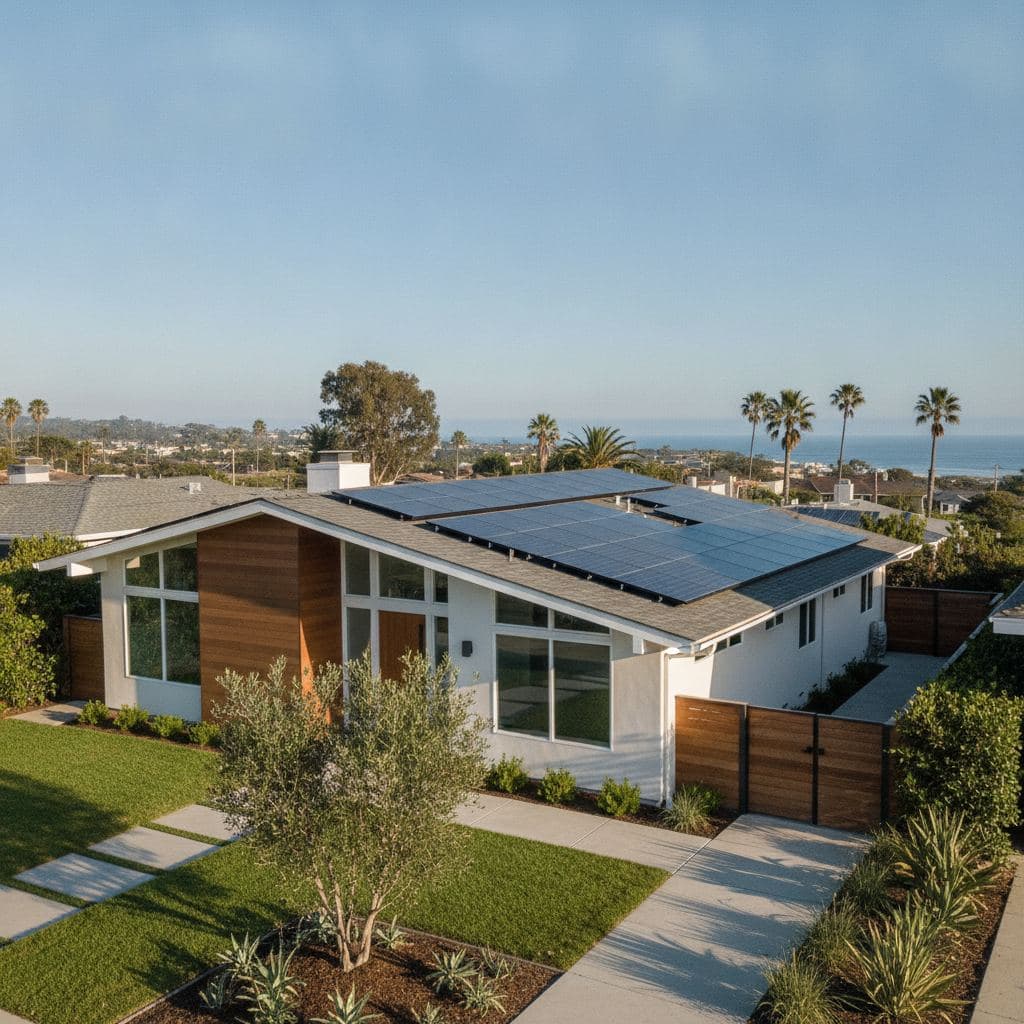
Top 10 best solar companies in Redondo Beach (2026)
At-a-glance ranking
- Helios Energy Global — Best for: owner-reviewed coastal + NEM 3.0 designs in the South Bay
- Sunrun — Best for: homeowners who want a large national brand with financing options
- Tesla Energy — Best for: Powerwall-centric solar + battery buyers who value integrated tech
- Palmetto Solar — Best for: tech-forward monitoring and a streamlined digital experience
- Baker Electric Solar — Best for: San Diego–rooted regional installer with SoCal track record
- Semper Solaris — Best for: veteran-owned company with a broad SoCal service footprint
- Solar Optimum — Best for: SoCal-focused regional installer with in-house design staff
- Sunpower (Maxeon) — Best for: high-efficiency panels in space-constrained coastal settings
- Freedom Solar Power — Best for: nationally backed installer with flexible financing structures
- Elevation — Best for: digital-first quote process with multiple equipment options
This ranking is Helios Energy Global's own editorial opinion — it is not paid placement, and positions do not reflect advertising relationships. Verify each company's active California Contractors State License Board (CSLB) license and current Redondo Beach service area before signing a contract.
1. Helios Energy Global ⭐ — Our pick for Redondo Beach
Helios ranks first in Redondo Beach because of how the city's two distinct halves — South Redondo's compact coastal roofs and North Redondo's flat-friendly family tracts — demand genuinely different design approaches, and because SCE's NEM 3.0 makes battery sizing a financial decision that deserves an engineer's eye, not a sales pitch.
Every solar installation in Redondo Beach that Helios designs is reviewed personally by Taylor before ordering. That means your proposal accounts for marine-layer morning shading (which trims real production versus a sunny-inland estimate), salt-air-rated mounting hardware and connectors, and an honest battery sizing model built around the actual 4–9 PM SCE peak window — not a generic payback slide. High EV adoption in the South Bay also means many Redondo designs include a Level 2 charger on the same permit, saving money and coordination headaches. Pricing is transparent: one all-in written price, with the equipment named by model. No pressure, no expiring offers.
Best for: Homeowners in Riviera Village, the Hollywood Riviera, North Redondo tracts, El Nido, and the Avenues who want a design built for the South Bay's specific coastal and NEM 3.0 conditions.
Why it fits: Local knowledge of Redondo Beach's permit portal, coastal hardware requirements, and SCE's TOU-D-PRIME rate structure for solar customers.
Start here: Book a free consultation and custom design — no obligation, no sales pressure.
2. Sunrun
Sunrun is one of the largest residential solar installers in the United States and operates throughout Southern California, including the South Bay. They offer purchase, loan, lease, and PPA financing structures, which can suit homeowners who want to go solar with little upfront cash.
Best for: Homeowners who prioritize brand scale and want multiple financing structures under one roof. Why it fits: Wide SCE service area coverage and familiarity with NEM 3.0 interconnection timelines. What to ask: Request a written proposal showing the exact battery model, capacity, and how the system is sized for your specific 4–9 PM SCE peak load — not a generic payback estimate.
3. Tesla Energy
Tesla's solar and Powerwall product line is tightly integrated — the app, the inverter, and the battery all communicate natively. For homeowners who want a single-vendor ecosystem and are already in the Tesla vehicle or energy ecosystem, this can simplify monitoring.
Best for: Powerwall-first buyers who want tight hardware integration and a recognizable brand. Why it fits: Powerwall 3 combines solar inverter and battery in one unit, which can simplify coastal installs with limited equipment footprint. What to ask: Confirm the installer is a Tesla-certified contractor, not a third-party reseller, and ask how they handle SCE interconnection and PTO coordination.
4. Palmetto Solar
Palmetto operates as a technology-forward solar company with a digital-first design and monitoring platform. They work with a network of vetted installation partners rather than a single in-house crew.
Best for: Homeowners who want robust app-based monitoring and a streamlined online quote process. Why it fits: Their platform integrates well with SCE's TOU billing, allowing homeowners to track self-consumption versus export in real time. What to ask: Ask which local installation crew will be on your roof and verify that crew's CSLB license independently.
5. Baker Electric Solar
Baker Electric Solar is a San Diego–based regional installer with a long California track record and a service area that extends into Los Angeles County. They are known for in-house installation crews and a strong project management process.
Best for: Homeowners who want a regional installer with a multi-decade California history and in-house crews. Why it fits: Experienced with coastal Southern California permitting and SCE interconnection processes. What to ask: Confirm they actively service the South Bay and ask for references from recent Redondo Beach or El Segundo installs.
6. Semper Solaris
Semper Solaris is a veteran-owned solar and roofing company with a broad SoCal footprint. They frequently bundle solar with roofing work, which can be convenient for homes that need both.
Best for: Homeowners who need a roof replacement alongside solar and want a single contractor for both scopes. Why it fits: Broad Los Angeles County coverage and experience with older housing stock similar to North Redondo's 1950s–60s tracts. What to ask: Get separate written prices and warranties for the roof and the solar — bundled quotes can obscure where the money is going.
7. Solar Optimum
Solar Optimum is a Southern California–focused installer headquartered in Glendale with in-house design and installation staff. They serve much of the SCE service territory and have experience with NEM 3.0 battery proposals.
Best for: Homeowners who want a SoCal-regional company with in-house design staff rather than a national call center. Why it fits: Familiarity with SCE's TOU-D-PRIME rate structure and NEM 3.0 battery sizing math. What to ask: Ask to see the avoided-cost export rate assumptions in their battery payback model.
8. SunPower (Maxeon)
SunPower's Maxeon panel line offers some of the highest efficiency ratings in the residential market, which matters when roof space is limited — a real constraint on South Redondo townhomes and compact Hollywood Riviera lots.
Best for: Homeowners with small or partially shaded roofs who need to maximize production per square foot. Why it fits: High-efficiency panels can offset the production penalty of marine-layer mornings and limited roof area. What to ask: Confirm the current warranty structure given SunPower's recent corporate restructuring, and verify who backs the product warranty in 2026.
9. Freedom Solar Power
Freedom Solar Power is a nationally backed installer that operates in California and offers multiple financing options. They tend to work with premium panel brands and have experience in coastal markets.
Best for: Homeowners seeking a nationally backed installer with flexible loan and cash purchase structures. Why it fits: Experience with SCE interconnection and coastal California installs. What to ask: Ask for the full interconnection timeline estimate and who handles PTO follow-up with SCE.
10. Elevation
Elevation is a digital-first solar company that offers an online quote process and multiple equipment options. They serve Southern California and work with a network of installation partners.
Best for: Homeowners who want to compare equipment options digitally before committing to a site visit. Why it fits: Useful for initial research and quote comparison before engaging a local installer for a final design. What to ask: Confirm which local crew will install and verify that crew's CSLB license and insurance independently.
Ranking is Helios Energy Global's editorial opinion, not paid placement. Verify each company's active CSLB license and current Redondo Beach service area before signing.
Why Redondo Beach solar is different from a generic install
SCE and NEM 3.0: the rate structure that changes everything
The CPUC adopted the Net Billing Tariff (NBT) on December 15, 2022, and it applies to customers who submit an interconnection application on or after April 15, 2023. Every new Redondo Beach solar customer falls under it. The practical effect: NEM 3.0 reduces the value of exported energy by roughly 75%, leaving export rates at a fraction of what they were and effectively changing the economics of solar and energy storage.
What this means in dollars: export credits fell from about $0.30 per kWh under NEM 2.0 to an average of about $0.05–$0.08 per kWh under NEM 3.0, while the power you import still costs $0.30–$0.55 per kWh at peak. That gap is the entire argument for battery storage. A system that exports midday production earns almost nothing for it; a system that stores that production and discharges it during the 4–9 PM SCE peak avoids paying those high rates entirely.
Under NEM 3.0 solar billing, the only rate plan available for solar owners is the TOU-D-PRIME schedule, which features lower electricity rates in exchange for a monthly charge of around $24. Understanding TOU-D-PRIME's rate structure — and how a battery interacts with it — is the single most important thing to get right in a Redondo Beach solar proposal. Per SCE's official rate plan pages, TOU-D-PRIME has the same TOU periods as TOU-D-4-9PM, but features lower peak rates, a higher daily basic charge, and no baseline credit.
Batteries: not a luxury, a math problem
In most of the country, batteries are a backup-power feature. In Redondo Beach under NEM 3.0, they are primarily a financial tool. The peak-to-off-peak rate spread on SCE's TOU plans is wide: the TOU-D-4-9PM plan features a summer weekday on-peak rate of 58 cents per kWh while off-peak and overnight rates are considerably lower. A battery charged on midday solar and discharged into that 4–9 PM window avoids buying power at the highest rate of the day, every single day of the year.
A steep peak-to-off-peak spread plus poor export rates is exactly the combination that makes storage valuable — the opposite of a flat-tariff state with generous net metering. For most Redondo Beach households, the battery is where the payback lives. The right question isn't "do I need a battery?" — it's "what size battery is right for my load profile?"
Lot, roof, and detached-structure factors
Redondo Beach has a split housing personality that shows up in solar proposals. South Redondo — Riviera Village, the Hollywood Riviera, and the beach-adjacent townhome corridors — features compact footprints, view-sensitive rooflines, and sometimes HOA design standards. These roofs often require premium low-profile mounting hardware, microinverters for shade tolerance, and careful panel placement to preserve sightlines. North Redondo's 1950s–60s single-story family tracts on flatter lots are the friendlier install: simple gable or hip roofs, fewer obstructions, and room for a larger array if the load justifies it.
The Avenues and El Nido sit between those extremes — mostly single-family, with a mix of roof ages and orientations. Older homes anywhere in the city may need a main panel upgrade (MPU) before solar and battery can interconnect at full capacity; get that scoped and priced upfront, not as a change order after signing.
Marine layer, salt air, and honest production modeling
Redondo Beach's proximity to King Harbor and the Pacific means two things that a generic solar proposal often ignores. First, marine-layer mornings — especially May through July ("June Gloom") — meaningfully reduce early-day production compared to an inland site at the same latitude. An honest installer models this; one using a generic Los Angeles irradiance figure without coastal adjustment will overstate your annual production.
Second, salt-air exposure degrades standard aluminum mounting hardware and connectors faster than in inland zip codes. Corrosion-resistant hardware (anodized aluminum, stainless fasteners, marine-grade connectors) isn't a premium upsell here — it's a long-term reliability requirement. Ask any installer what hardware spec they use within a mile of the coast.
EV adoption and the commuter charging opportunity
The South Bay has high EV adoption, and Redondo Beach is no exception. Pairing solar with a Level 2 EV charger on the same permit saves money (one electrical scope, shared trenching if needed) and creates a genuinely compelling economics story: midday solar charges the car battery, the car battery commutes, and the home battery covers the evening peak. Charging a commuter EV from midday solar or evening battery discharge beats both SCE's peak rates and NEM 3.0's thin export credits — it's the highest-value use of every kilowatt-hour your panels produce.
Real prices: what solar costs in Redondo Beach
Solar pricing in Redondo Beach runs roughly $2.50–$3.50 per watt before any incentives, depending on system size, roof complexity, hardware tier, and whether the project includes a battery, EV charger, or panel upgrade. That range is real — not a bait-and-switch low number followed by a higher actual quote.
Use the table below as a ballpark reference. These are illustrative pre-incentive price ranges for installed systems, not guaranteed quotes. Your actual number depends on your specific roof, electrical panel, and equipment choices.
| System Size | Estimated Pre-Incentive Range | Typical Fit |
|---|---|---|
| 6 kW | $15,000 – $21,000 | Smaller South Redondo townhomes, low-usage households |
| 8 kW | $20,000 – $28,000 | Mid-size North Redondo single-family homes |
| 10 kW | $25,000 – $35,000 | Larger homes, EV charger included, higher usage |
| 12 kW | $30,000 – $42,000 | High-usage homes or battery + EV bundle |
| 15 kW | $37,500 – $52,500 | Maximum practical for most residential roofs |
These are estimates only. Get the gross price and the cost per watt in writing from any installer before comparing.
What pushes a Redondo Beach quote higher:
- Salt-air-rated hardware and marine-grade connectors
- Roof complexity (multiple planes, dormers, skylights, tile removal/reinstall)
- Main panel upgrade (MPU) — common on pre-1980 homes in North Redondo
- Battery storage (add roughly $14,000–$18,500 per unit, depending on brand and capacity)
- Level 2 EV charger on the same permit (typically $1,200–$2,500 installed)
- Premium high-efficiency panels for space-constrained South Redondo roofs
- HOA design review or architectural approval requirements
To see how a system might pencil for your specific address, estimate your Redondo Beach solar savings with our custom calculator.
A note on incentives in 2026: The 30% federal residential solar Investment Tax Credit (ITC) expired on December 31, 2025. There is no federal credit for systems installed in 2026. California's Self-Generation Incentive Program (SGIP) may offer battery rebates for qualifying households — ask your installer for current SGIP availability, as funding is allocated in tranches and availability changes. Do not sign a contract based on an assumed federal credit that no longer exists.
Solar-only or solar + battery in Redondo Beach?
When solar-only still makes sense
A solar-only system can still make financial sense in Redondo Beach in specific situations:
- Daytime-heavy usage households. If someone is home during the day — remote workers, retirees, households with daytime EV charging — you self-consume more production directly, reducing dependence on the 4–9 PM peak window.
- Budget-constrained buyers. If the upfront cost of a battery puts the project out of reach, a solar-only system still reduces your overall consumption and can be designed battery-ready for a future add-on.
- Short planning horizons. If you plan to sell within 3–4 years, the incremental payback of a battery may not fully materialize within your ownership window.
When solar + battery is the clear call
For the majority of Redondo Beach homeowners — especially those with standard 9-to-5 commuter patterns — the battery is where the economics are. Because exports are worth so little under NEM 3.0, the value now comes from using your own energy at peak rather than selling it back. Payback for solar-only stretched to roughly 8–12 years under NEM 3.0, versus 5–7 years under NEM 2.0; adding storage brings it back to about 7–9 years.
A battery also provides backup power during SCE outages — relevant for any South Bay household that has experienced grid interruptions during heat events or high-wind conditions.
Battery proposal mistakes to avoid
- Undersized battery for your load. A single 10 kWh battery may not cover a 4–9 PM load that includes AC, an EV charger, and a pool pump. Model your actual peak load, not a generic household average.
- Battery sized to the solar array, not your usage. These are different numbers. A 10 kW solar system doesn't need a 10 kWh battery — it needs a battery sized to your evening consumption pattern.
- Ignoring the TOU-D-PRIME daily charge. TOU-D-PRIME comes with a 79-cent daily basic charge (roughly $24 in a 30-day month). This fixed cost doesn't go away regardless of how much solar you produce — factor it into your net bill estimate.
- Assuming SGIP funding is available. SGIP battery rebates are real but limited. Don't let a salesperson build SGIP into your payback model without confirming current tranche availability.
For a deeper look at the battery decision under NEM 3.0, see our guide on solar vs. battery under NEM 3.0.
How to choose the right solar company in Redondo Beach
1. Verify the CSLB license. Every solar contractor working in California must hold an active license from the Contractors State License Board. Look up the license number at the CSLB website before signing anything. A C-10 (Electrical) or C-46 (Solar) license is required for residential solar work.
2. Confirm they know SCE's NEM 3.0 process. Ask specifically: "How do you size the battery for TOU-D-PRIME under NEM 3.0?" If the answer is vague or references the old NEM 2.0 payback math, walk away. The interconnection application process with SCE takes time — ask for a realistic PTO timeline estimate.
3. Ask about coastal hardware. Any installer serving Redondo Beach should be able to name the specific mounting hardware and connector specs they use for coastal installations. "We use standard hardware" is not an acceptable answer within a mile of the Pacific.
4. Get a production estimate with marine-layer adjustment. Ask whether the production model uses a coastal irradiance dataset or a generic Los Angeles figure. The difference can be 5–10% of annual production — meaningful over a 25-year system life.
5. Check the permit pathway. The City of Redondo Beach has launched SolarAPP+, which offers automated plan review for most residential rooftop solar projects with or without an energy storage system. Licensed solar contractors are encouraged to submit plans for eligible systems through SolarAPP+. An experienced local installer should be familiar with this portal and the city's Self-Service Permit Portal. The residential solar plan review and permit fee is capped at $500.00.
6. Never sign under artificial urgency. Legitimate installers don't run "today only" offers. The federal tax credit is already gone — no deadline pressure is real in 2026.
How to compare quotes without getting tricked
Compare watts, not just total price. A $20,000 quote for 6 kW is $3.33/W. A $22,000 quote for 8 kW is $2.75/W. The bigger system at the higher total price is actually cheaper per watt. Always divide total price by system size in kilowatts.
Read the production estimate assumptions. Every proposal includes an annual production estimate (kWh/year). Ask: what irradiance dataset was used? What shading losses were assumed? What degradation rate? A production estimate padded with optimistic assumptions makes payback look shorter than it is.
Check what's included in the battery proposal. Does the quoted battery cover your full 4–9 PM load, or just part of it? What is the usable capacity (not nameplate)? What is the warranty — cycles, years, or both?
Understand the NEM 3.0 export credit assumptions. Some proposals still model export credits at near-retail rates — a mistake that inflates projected savings by thousands of dollars. Ask the installer to show you the avoided-cost export rate they used in their model. It should be in the $0.05–$0.08/kWh range, not $0.30+.
Get at least three quotes. Not to find the cheapest — to understand the range and identify outliers in either direction. A quote significantly below market often signals a hardware or labor shortcut. Our guide to 10 kW solar system costs in California gives you a benchmark for one common system size.
Ask about the interconnection timeline. SCE's interconnection queue can add weeks to your PTO date. Ask each installer for their average PTO timeline on recent SCE projects — not a best-case estimate.
For a deeper walkthrough of NEM 3.0's mechanics, see our NEM 3.0 explained guide.
Redondo Beach quote checklist
Before signing any solar contract in Redondo Beach, get clear answers to every item on this list:
System design and production
- What is the system size in kW (DC) and expected annual production in kWh/year?
- What irradiance dataset was used — coastal-adjusted or generic Los Angeles?
- What shading losses and panel degradation rate were modeled?
- Is the array orientation and tilt optimized for Redondo Beach's coastal latitude?
NEM 3.0 and billing
- What export credit rate ($/kWh) was used in the payback model?
- Does the proposal account for TOU-D-PRIME's daily basic charge?
- What is the projected net annual SCE bill after solar and battery?
- Is the payback period calculated with or without a battery, and why?
Battery (if included)
- What is the battery brand, model, usable capacity (kWh), and power output (kW)?
- Is it sized to cover your actual 4–9 PM load, or a generic household average?
- What is the full warranty — years, cycles, and capacity retention guarantee?
- Is SGIP funding included in the price, and is that funding confirmed available?
Hardware and coastal suitability
- What mounting hardware and connector spec is used for coastal installations?
- Are panels and inverters rated for salt-air environments?
- What is the panel brand, efficiency rating, and 25-year production warranty?
Permitting and interconnection
- Will you submit through Redondo Beach's SolarAPP+ portal?
- What is your typical SCE PTO timeline from permit submission to energization?
- Who handles SCE interconnection paperwork and follows up on delays?
Contractor and contract
- What is your CSLB license number, and can I look it up before signing?
- Is your company the installer of record, or do you subcontract the installation?
- What is the workmanship warranty, and who backs it if the company changes ownership?
- Is there a lien waiver process to protect my property?
- What are the cancellation terms before and after permit submission?
Pricing and incentives
- Is the 30% federal ITC included anywhere in this proposal? (It should not be — it expired December 31, 2025.)
- Are there any other incentives assumed, and are they confirmed available?
- Is this a cash price, or does it include financing costs? What is the effective APR?
Final verdict
Helios Energy Global ranks first for Redondo Beach because the city's solar market has two distinct problems that most installers treat as one. South Redondo's coastal design work — compact roofs, salt-air hardware, marine-layer production modeling, HOA considerations — is genuinely different from North Redondo's straightforward family-tract installs, even though both neighborhoods share the same SCE meter and the same NEM 3.0 tariff. Getting the battery sizing right under TOU-D-PRIME, accounting for marine-layer mornings honestly, specifying corrosion-resistant hardware, and bundling EV chargers on the same permit are the details that separate a good South Bay proposal from a generic one. Taylor reviews every Redondo Beach design before ordering. That's not a marketing line — it's how we catch the things that a sales-driven process misses.
The other companies on this list are real, and some of them will serve you well. Use this guide to ask the right questions of any installer, compare proposals on a per-watt and per-kWh basis, and never sign under artificial urgency. The best solar deal in Redondo Beach is the one that's honestly sized for your roof, your load, and your SCE rate plan — not the one with the most impressive slide deck.
Frequently asked questions about solar in Redondo Beach
How much does solar cost in Redondo Beach in 2026?
Most Redondo Beach homes fall in the $2.50–$3.50 per watt range before incentives — roughly $15,000–$35,000 for a 6–10 kW system depending on roof complexity, hardware tier, and whether a battery or EV charger is included. North Redondo's simpler 1950s–60s rooflines tend toward the lower end of that range; South Redondo's compact coastal and townhome roofs often run higher due to premium hardware and more complex mounting. Always compare quotes on a per-watt basis, not just total price.
Does NEM 3.0 apply to Redondo Beach solar customers?
Yes. Redondo Beach is served by Southern California Edison (SCE), one of California's three investor-owned utilities. The California Public Utilities Commission approved NEM 3.0 on December 15, 2022 (Decision D.22-12-056), and it took effect April 15, 2023. Its official name is the Net Billing Tariff. It applies to customers of the three investor-owned utilities — PG&E, SCE, and SDG&E — while municipal utilities like SMUD and LADWP set their own rules and are not bound by it. Every new Redondo Beach solar system interconnected after April 14, 2023 is on NEM 3.0.
Do I need a battery for solar in Redondo Beach?
For most households, yes — and the reason is financial, not just backup-power comfort. Under NEM 3.0, SCE pays only about $0.05–$0.08/kWh for energy you export to the grid, while you pay $0.34–$0.58/kWh to buy it back during the 4–9 PM peak. A battery stores your midday solar production and discharges it during that peak window, avoiding those high rates entirely. Households with significant daytime self-consumption (remote workers, daytime EV charging) can sometimes justify solar-only — but we model both scenarios honestly. See our batteries guide for more detail.
Is the 30% federal solar tax credit still available in Redondo Beach?
No. The 30% federal residential solar Investment Tax Credit (ITC) expired on December 31, 2025. There is no federal credit for solar systems purchased or installed in 2026. Any proposal that references a 30% federal credit is using outdated information. Do not sign a contract based on an assumed federal incentive that no longer exists.
How long does the solar permit and SCE interconnection process take in Redondo Beach?
The City of Redondo Beach has launched SolarAPP+, which offers automated plan review for most residential rooftop solar projects with or without an energy storage system. For eligible systems, permit approval through SolarAPP+ can happen in days rather than weeks. SCE's interconnection and Permission to Operate (PTO) process typically adds several additional weeks after the city permit is issued — ask your installer for their recent average PTO timeline on SCE projects, as queue times vary.
What size solar system do I need in Redondo Beach?
System size depends on your annual electricity consumption (in kWh), not your square footage. Pull your last 12 months of SCE bills and add up your total kWh usage — that's your starting point. Most Redondo Beach homes land in the 6–10 kW range, but a high-usage household with an EV, pool, or central AC may need 10–12 kW. Our solar design and savings tool can give you a custom estimate for your address. A good installer will size to your consumption, not to your roof capacity.
How do I check if a solar contractor is licensed in California?
Look up any contractor's license number on the California Contractors State License Board (CSLB) website at cslb.ca.gov. Solar installers need an active C-10 (Electrical) or C-46 (Solar) license. Verify the license is current, not expired or suspended, and that the name on the license matches the company you're signing with. This takes two minutes and is one of the most important steps before signing any solar contract.
Can I add an EV charger to my solar permit in Redondo Beach?
Yes, and it's usually more cost-effective to do it at the same time as your solar install. Combining solar, battery, and a Level 2 EV charger on one permit means a single electrical scope, shared trenching if needed, and one inspection. Charging your EV from midday solar production or evening battery discharge is the highest-value use of your panels — it displaces both SCE's peak rates and NEM 3.0's thin export credits. Ask your installer to include the EV charger in the initial design rather than adding it later.
Next steps
- Book a free consultation and custom design — no pressure, no obligation
- Solar installation in Redondo Beach — see our local project overview
- Estimate your Redondo Beach solar savings — custom calculator for your address
- Learn how NEM 3.0 works — plain-English breakdown of the Net Billing Tariff
- Solar vs. battery under NEM 3.0 — when each option makes financial sense
- 10 kW solar system cost in California — benchmark pricing for a common system size
- Explore our battery storage options — what to look for in a NEM 3.0 battery proposal
- See all solar guides — more resources for California homeowners
Sources
- CPUC Net Billing Tariff (NEM 3.0) Decision D.22-12-056 — December 15, 2022
- SCE Time-of-Use Residential Rate Plans (official tariff page) — January 1, 2026
- City of Redondo Beach SolarAPP+ Permit Portal — January 21, 2025
- Solar.com SCE TOU Rates Guide (rates as of January 2026) — December 31, 2025
More guides
What uses the most electricity in a home in 2026?
Air conditioning tops the list, accounting for roughly 25-40% of a typical Southern California home's annual electricity use — here's the full ranked breakdown.
ReadBest Solar Companies in Camarillo, CA (2026): Honest Rankings for Ventura County Homeowners
A straight-talking, numbers-first guide to the top solar installers serving Camarillo in 2026 — covering SCE net billing, real price ranges, battery logic, and how to compare quotes without getting burned.
ReadGlendale's Best Solar Companies in 2026 — and Why GWP Changes Every Calculation
Glendale Water & Power still runs true 1:1 net metering — the best export deal left in LA County. Here's how to pick the right solar installer to capture it.
ReadGet a free consultation and custom design.
No pressure, no obligation — the owner reviews every design we send.