SPAN Smart Panel Review: Is It Worth It in 2026?
A SPAN smart panel runs $3,500–$5,500 installed and can eliminate the need for a costly service upgrade — here's who it actually makes sense for in Southern California.
By Taylor Crouse — Founder, Helios Energy GlobalUpdated
Quick answer
- SPAN smart panel installed cost: $3,500–$5,500 in Southern California (hardware + labor, before any applicable local rebates)
- A standard main panel upgrade (100A → 200A) runs $3,000–$5,000 installed — often comparable, but SPAN adds circuit-level intelligence
- SPAN can eliminate or defer a $8,000–$20,000 utility service upgrade by intelligently shedding loads instead of drawing more amperage
- Best fit: homes adding solar + battery + EV charging where the existing panel or service capacity is the bottleneck
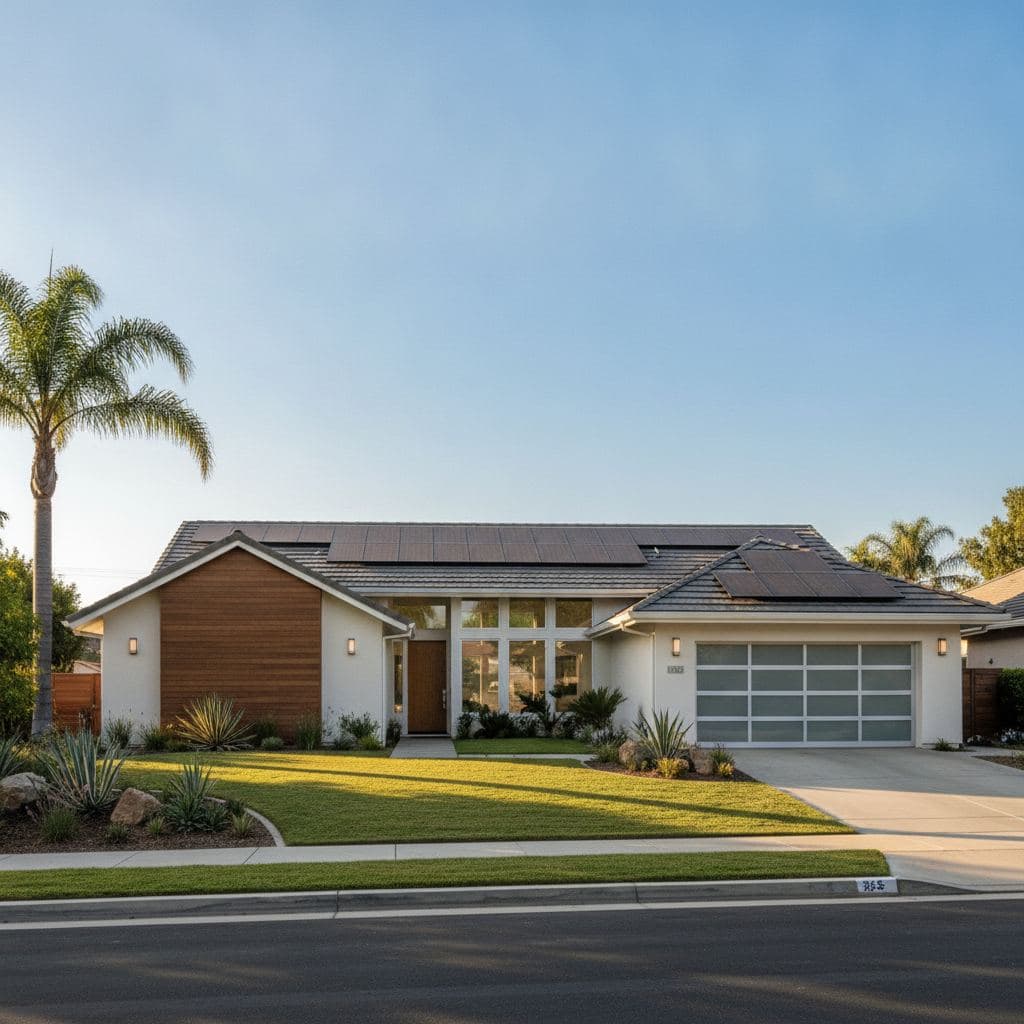
A SPAN smart panel costs roughly $3,500–$5,500 installed in Southern California, and its real value proposition isn't the app — it's the ability to avoid a utility service upgrade that can run $8,000–$20,000 when SCE or LADWP has to pull new wire to your meter. For homeowners whose panel is already at capacity and who are stacking solar, a battery, and an EV charger, that math can make SPAN pay for itself before you flip a single solar breaker.
Last verified: September 2026 by Helios Energy Global.
What SPAN actually does (and doesn't do)
SPAN replaces your existing main electrical panel with a smart panel that gives every circuit its own software-controlled breaker. You see real-time power draw by circuit through an app, you can turn circuits on or off remotely, and — most importantly for solar and battery installs — you can program priority rules: "during a grid outage, power the fridge, the router, and one bedroom outlet; shed the HVAC and EV charger."
What it doesn't do:
- Add amperage you don't have. SPAN is not a service upgrade. If your utility service line only delivers 100A, SPAN still only delivers 100A. It just uses those amps smarter.
- Replace a battery. SPAN is a panel, not storage. It needs to be paired with a battery (like a Powerwall or other home battery) to provide backup power.
- Automatically qualify you for any rebate. SGIP residential battery incentives are waitlisted in 2026, and the 30% federal residential solar tax credit expired December 31, 2025. There is no federal tax credit for a 2026 SPAN purchase.
Real installed cost breakdown
| Item | Typical SoCal range | Notes |
|---|---|---|
| SPAN Panel hardware (200A) | $2,000–$2,800 | MSRP; installer pricing varies |
| Labor + permit + inspection | $1,200–$2,200 | Higher in LA County / coastal cities |
| Total installed (SPAN) | $3,500–$5,500 | Estimate; get a site-specific quote |
| Standard 200A panel upgrade (no smart features) | $3,000–$5,000 | Includes permit; varies by panel brand |
| Utility service upgrade (SCE or LADWP, if required) | $8,000–$20,000+ | Depends on transformer distance, trenching |
| Tesla Backup Switch (alternative) | $1,500–$2,000 installed | Limited circuit control; Powerwall-only |
| Subpanel + load controller (alternative) | $1,500–$3,500 | Less elegant; works with any battery |
All figures are estimates for Southern California as of mid-2026. Your actual cost depends on existing service size, panel location, permit jurisdiction, and labor market.
When circuit-level control actually matters in SoCal
You're on SCE with NEM 3.0 and a battery
SCE's NEM 3.0 (the Net Billing Tariff) pays you roughly 5–9¢/kWh for excess solar exported to the grid, but charges you 34–35¢/kWh during the 4–9 PM peak. The winning strategy is to charge your battery from solar during the day and discharge it to the house during peak hours — never export, never buy peak power.
SPAN's circuit-level scheduling makes this precise. You can tell it: "between 4 and 9 PM, draw from battery first; if battery drops below 20%, shed the EV charger before pulling from the grid." Without circuit-level control, your battery management system makes cruder decisions. For SCE customers on NEM 3.0, this granularity has real dollar value. See our NEM 3.0 explainer for the full rate structure.
You're on LADWP with retail-rate net metering
LADWP is a municipal utility — it is not on NEM 3.0. LADWP still credits exported solar at close to the retail rate (~28¢/kWh average). The financial urgency for load-shifting is lower here, which changes the SPAN calculus. If you're an LADWP customer with a healthy panel and no EV, a standard panel upgrade may serve you just as well for less money. If you're adding an EV and a battery and your panel is already stressed, SPAN's load management still has value — it's just not as financially critical as it is for SCE customers.
You're adding an EV charger and a battery to a 100A service
This is SPAN's strongest use case. A Level 2 EV charger draws 24–48A. A battery inverter draws another 20–40A. Add HVAC, kitchen, and you're routinely hitting the ceiling of a 100A service. Without smart load management, the utility requires a service upgrade — which means scheduling with SCE or LADWP, potentially waiting months, and paying $8,000–$20,000+ for new infrastructure.
SPAN's load controller can watch real-time amperage and automatically throttle the EV charger when the battery is charging or the AC kicks on, keeping total draw under your service limit. This is called load management or panel orchestration, and it's the single most concrete money-saving feature SPAN offers.
Honest comparison: SPAN vs. the alternatives
Tesla Backup Switch
If you're buying a Tesla Powerwall and your panel is already 200A and in good shape, the Tesla Backup Switch ($1,500–$2,000 installed) is a simpler, cheaper option. It creates a whole-home or partial-home backup circuit without replacing the panel. The tradeoff: it works only with Powerwall, offers no circuit-level app control, and doesn't help with load management for service capacity. It's a backup solution, not an intelligence layer. Learn more on our batteries page.
Subpanel + third-party load controller
An electrician can install a subpanel with a dedicated load controller (brands like Lumin or similar) for roughly $1,500–$3,500. This is less elegant — you're bolting hardware onto an existing panel rather than replacing it — but it works with any battery brand and any solar inverter. For a budget-conscious homeowner whose panel is otherwise fine, this is a legitimate alternative. The downside is that it's harder to expand later and the user experience is more fragmented than SPAN's unified app.
Just upgrade the panel (no smart features)
A straight 200A panel upgrade runs $3,000–$5,000 in SoCal. If your service capacity is adequate and you don't need circuit-level control or backup prioritization, this is often the right call. Simpler, proven technology, no app dependency, and every electrician in the county can service it. The gap between a standard upgrade and SPAN is roughly $500–$1,500 — that delta buys you the intelligence layer. Whether that's worth it depends on your specific situation.
For a deeper look at how solar and battery choices interact, see our solar vs. battery under NEM 3.0 guide.
Who should skip SPAN
Be honest with yourself before spending $4,000+ on a smart panel:
- You have ample service capacity and no EV plans. If your 200A service is lightly loaded and you're just adding a modest solar array, SPAN's load management features won't save you anything. A standard panel upgrade or no upgrade at all may be correct.
- You're on LADWP with retail net metering and a simple system. The financial case for aggressive load-shifting is weaker when exports are credited at retail rates. The app is nice; it may not pencil out.
- Your budget is tight and you need the battery more than the panel. A $14,000–$18,500 battery plus a $4,000–$5,000 SPAN panel is a significant outlay. If you have to choose, prioritize the storage hardware over the smart panel.
- You want brand-agnostic flexibility long-term. SPAN is a proprietary ecosystem. If you ever switch battery brands or add a second battery from a different manufacturer, compatibility questions arise. A standard panel never has this problem.
For help thinking through your specific setup, our custom design tool can model your load profile before you commit.
Frequently asked questions about SPAN smart panels
Does SPAN work with any solar inverter or battery?
SPAN is designed to be battery-agnostic and works with most major inverter and battery brands, including Enphase, SolarEdge, Franklin Electric, and others. That said, integration depth varies — some batteries communicate bidirectionally with SPAN's software while others are simply connected circuits. Confirm compatibility for your specific battery brand before purchasing.
Does SPAN replace the need for a utility service upgrade?
Sometimes, yes — and this is its most valuable feature. By intelligently shedding or throttling high-draw loads (EV charger, HVAC, dryer), SPAN can keep total amperage under your existing service limit, eliminating the need for a utility-side upgrade. It doesn't work in every case; if your base load alone exceeds your service capacity, you'll still need an upgrade.
Is there a federal tax credit for the SPAN panel in 2026?
No. The 30% federal residential solar and battery tax credit (Section 25D) expired December 31, 2025. There is no federal tax credit for a SPAN panel purchased in 2026. Some local utility or city programs may offer rebates for smart panels as part of electrification incentives — check with your utility directly, as we don't quote rebate amounts that change frequently.
How does SPAN affect my solar system on SCE vs. LADWP?
On SCE (NEM 3.0), SPAN's ability to time battery discharge and shed loads during the 4–9 PM peak has direct bill impact because peak rates run 34–35¢/kWh. On LADWP, which still offers retail-rate net metering around 28¢/kWh, the urgency is lower but load management still helps if you're capacity-constrained. The value of SPAN's intelligence is higher for SCE customers.
How long does SPAN installation take?
A typical SPAN installation takes one full day for a straightforward panel swap, plus permit processing time (which varies by city — Santa Monica, LA, and Pasadena each have different timelines). Expect 2–6 weeks from contract to energization when you factor in permit pull and inspection scheduling.
Can SPAN monitor my solar production?
Yes. SPAN's app shows real-time solar production, battery state of charge, grid import/export, and per-circuit consumption. It's one of the more complete home energy dashboards available in a panel product. That said, your solar inverter's own monitoring app (Enphase Enlighten, SolarEdge mySolarEdge, etc.) typically provides more granular production data.
Is SPAN available in all Southern California cities?
SPAN panels can be installed anywhere in Southern California that an electrician can pull a permit. Helios Energy Global installs in Santa Monica, Los Angeles, the South Bay, the San Fernando Valley, the SGV, and surrounding areas. See our locations page for the full service area.
Next steps
- Book a free consultation and custom design — we'll assess your panel, service capacity, and whether SPAN pencils out for your specific home
- See solar system costs and design options — understand the full system cost before deciding on panel upgrades
- Explore home battery options — SPAN is only as useful as the battery it's paired with
- Read our NEM 3.0 guide — understand how your utility tariff affects the value of load management
- Compare solar and battery strategies under NEM 3.0 — the panel decision fits into a larger system design
- Learn about roof and electrical compatibility — sometimes the roof, not the panel, is the first constraint to solve
More guides
How many watts does it take to run a house in 2026?
A typical Southern California home draws 1,000–1,500W at baseline and 3,000–7,000W when the AC is running — here's what that means for solar sizing and battery backup.
ReadGlendale Water & Power Solar Rebates and Net Metering: What's Available in 2026
GWP's dedicated solar rebate ended in 2021, but Glendale homeowners keep near-retail net metering — and skip NEM 3.0's steep export-rate cuts entirely.
ReadHow much does AC add to an electric bill in Southern California? (2026)
A central AC unit adds roughly 15–40 kWh per day in Southern California's inland valleys, costing $5–$14 per day at current SCE rates.
ReadGet a free consultation and custom design.
No pressure, no obligation — the owner reviews every design we send.