Best Solar Companies in Long Beach, CA (2026): Honest Rankings for SCE Homeowners
Long Beach homeowners on SCE face NEM 3.0 export rules, a city permit portal that works around the clock, and a vintage housing stock that often needs a panel upgrade before solar goes in. Here are the 10 best solar installers in Long Beach for 2026 — ranked honestly, with the numbers that actually matter.
By Taylor Crouse — Founder, Helios Energy GlobalPublished
Quick answer
- SCE rates sit around 34¢/kWh on average — per SCE's own rate advisory, roughly double the national average, which is what makes the math on solar work here even after NEM 3.0.
- NEM 3.0 applies to every new Long Beach system. SCE is an investor-owned utility under CPUC jurisdiction, so export credits now land at avoided-cost rates of roughly $0.05–$0.08/kWh — not the retail rate. Self-consumption and battery storage are the core of any good 2026 design.
- Typical system size runs 6–10 kW for Long Beach's bungalow stock; the marine layer trims morning production near Belmont Shore and Naples but annual output holds strong at roughly 5.4 peak sun hours citywide.
- Installed cost ranges from about $2.50–$3.50 per watt before incentives. If your 1920s–50s home still runs a 100-amp main panel — common in California Heights, Bixby Knolls, and Belmont Heights — budget for the upgrade up front.
- The 30% federal residential solar tax credit expired December 31, 2025. There is no federal credit for a system installed in 2026. Any quote that implies otherwise is using phantom math.
- California's property tax exclusion for solar is still active but sunsets January 1, 2027. Systems completed before that date keep the exclusion for as long as the current owner holds the property — a genuine, time-sensitive reason to move this year rather than next.
Long Beach sits on the Los Angeles County coast at the southern tip of the LA Basin, served by Southern California Edison (SCE) for electricity. Every new rooftop solar installation here falls under SCE's rules and California's NEM 3.0 Net Billing Tariff — which shapes every design decision worth making in 2026.
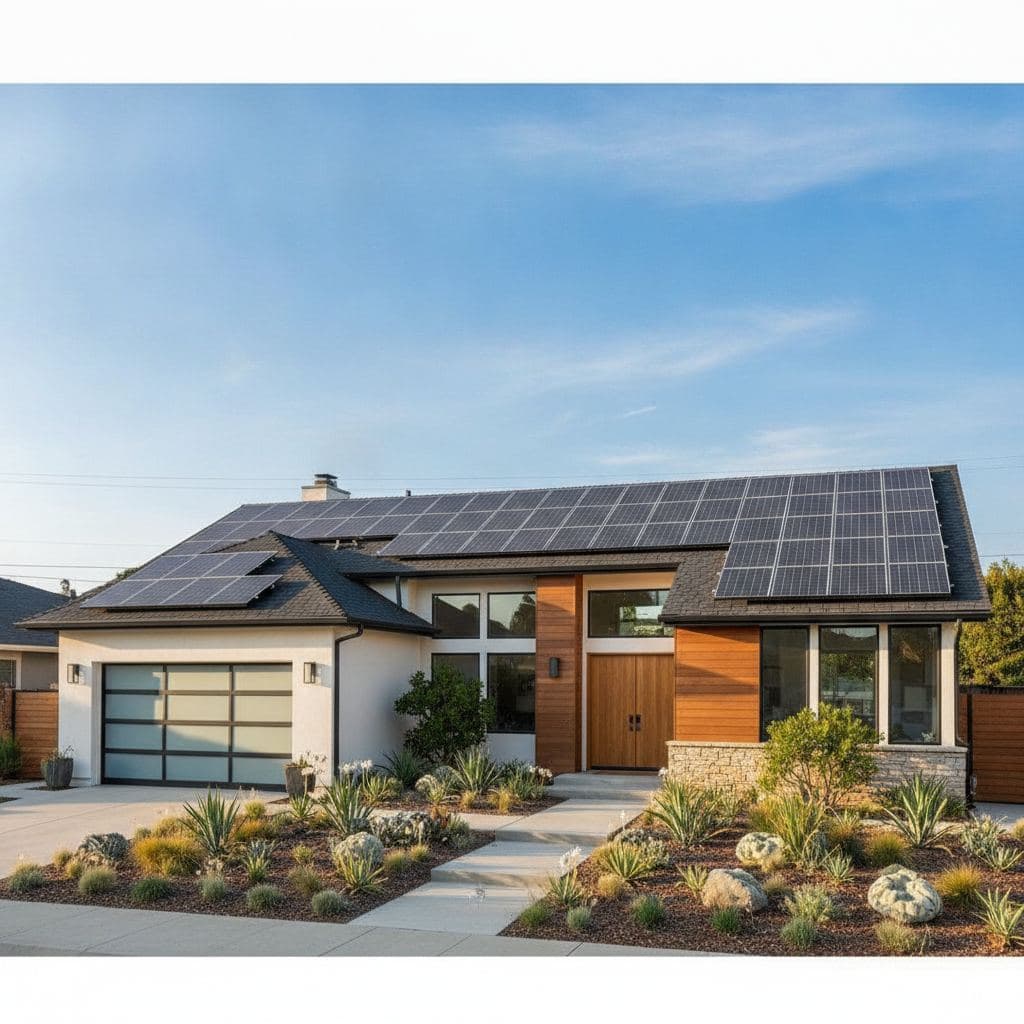
Last verified: September 2026 by Helios Energy Global.
Top 10 best solar companies in Long Beach (2026)
At-a-glance ranking
- Helios Energy Global — Best for: SCE NEM 3.0 battery design + honest vintage-home electrical quotes
- Sunrun — Best for: homeowners who want a large national brand with lease/PPA financing options
- Tesla Energy — Best for: all-in-one Powerwall ecosystem buyers
- Palmetto Solar — Best for: tech-forward monitoring and ongoing bill protection plans
- SunPower (via authorized dealers) — Best for: premium high-efficiency panels on shaded or compact roofs
- Sunnova — Best for: long-term service agreements and financing flexibility
- SolarTech — Best for: experienced LA County installers with a long local track record
- Elevation Solar — Best for: competitive cash pricing with straightforward proposals
- Momentum Solar — Best for: homeowners who prefer a single-point-of-contact sales and install experience
- Semper Solaris — Best for: veteran-owned service culture and combined solar + roofing projects
This ranking reflects Helios Energy Global's own editorial opinion and is not paid placement. Verify every company's active California Contractors State License Board (CSLB) license and current Long Beach service area before signing any contract.
1. Helios Energy Global — our pick for Long Beach
Long Beach's housing stock is what sets this market apart, and it's where Helios earns its top ranking. Block after block of 1920s–50s Craftsman and Spanish bungalows in California Heights, Bixby Knolls, and Belmont Heights take panels beautifully on their comp-shingle roofs — but their vintage 100-amp electrical panels frequently can't safely host solar plus a battery without an upgrade. Helios prices that upgrade into the quote up front rather than burying it or springing it as a change order. Every Long Beach design is reviewed by Taylor before equipment is ordered.
On the SCE and NEM 3.0 side, the design philosophy here is self-consumption first: size the array to cover daytime load, pair it with storage, and discharge during the 4–9 PM peak when SCE's TOU rates are highest. Long Beach's instant online permit portal — which issues residential PV and battery permits for systems up to 38.4 kW any hour of the day or night — means Helios can file the permit the same day a contract is signed, rather than waiting in a queue. SCE interconnection and inspection scheduling are handled as part of every job.
Explore solar installation in Long Beach or estimate your Long Beach solar savings to see what a properly sized system looks like for your specific address and usage.
2. Sunrun
Best for: Homeowners who want a large, nationally recognized brand and are open to lease or PPA financing rather than an outright purchase. Why it fits: Sunrun operates throughout SCE territory and has experience with NEM 3.0 system design. Lease and PPA products can lower the upfront cost to near zero. What to ask: Get the full 20-year cost comparison between leasing and buying. Ask specifically how the lease handles a panel upgrade if your home needs one.
3. Tesla Energy
Best for: Buyers who want a tightly integrated solar + Powerwall ecosystem managed through a single app. Why it fits: Tesla's Powerwall is a proven battery product, and the Tesla app gives granular visibility into production, consumption, and grid interaction — useful for managing SCE's TOU peak window. What to ask: Confirm the local installation crew's CSLB license and ask for a Long Beach-specific reference. Tesla's install experience varies by region.
4. Palmetto Solar
Best for: Homeowners who want ongoing monitoring and a bill-protection model that adjusts over time. Why it fits: Palmetto's platform tracks production and flags underperformance — a practical feature for coastal homes where marine layer variability affects output near Belmont Shore and Naples. What to ask: Clarify exactly what the monitoring plan covers and what triggers a service call versus a bill credit.
5. SunPower (via authorized dealers)
Best for: Compact or partially shaded roofs where high-efficiency panels squeeze more production out of limited space. Why it fits: SunPower's Maxeon cell technology produces more per square foot than standard panels — relevant for the smaller footprints common on Long Beach bungalows. What to ask: Confirm which local authorized dealer is doing the install and verify their CSLB license independently.
6. Sunnova
Best for: Homeowners who prioritize financing flexibility and long-term service coverage. Why it fits: Sunnova offers a range of loan, lease, and service-agreement structures, and their service plans cover equipment repair for the contract term. What to ask: Read the service agreement carefully — understand what maintenance is included and what triggers an out-of-pocket cost.
7. SolarTech
Best for: Homeowners who want a California-rooted installer with a long track record across LA County. Why it fits: SolarTech has been operating in California for over two decades and has experience with the range of roof types and electrical configurations found in Long Beach's older neighborhoods. What to ask: Ask for references from Long Beach jobs specifically, and confirm their current SCE interconnection timeline estimates.
8. Elevation Solar
Best for: Cash buyers looking for a competitive per-watt price with a clear, no-frills proposal. Why it fits: Elevation tends to offer straightforward pricing without bundled products that inflate the quote. Good for homeowners who know what they want and want to compare numbers cleanly. What to ask: Verify they pull their own permits in Long Beach rather than subcontracting that step, and confirm their warranty chain for both panels and inverters.
9. Momentum Solar
Best for: Homeowners who prefer a single representative to guide them from first conversation through installation. Why it fits: Momentum's model assigns a dedicated project coordinator, which can reduce the communication gaps that frustrate homeowners during permitting and interconnection. What to ask: Ask specifically about their SCE interconnection experience and typical PTO (Permission to Operate) timelines in Long Beach.
10. Semper Solaris
Best for: Veteran-owned household culture and combined solar + roofing projects. Why it fits: For Long Beach homes where the roof and the solar project need to be coordinated — common on aging bungalows near the water — Semper Solaris handles both trades under one contractor. What to ask: Get separate written prices and warranties for the roof and the solar, with a clear scope for each.
Rankings are Helios Energy Global's editorial opinion — not paid placements. Independently verify each company's active CSLB license and confirm they are currently serving Long Beach before signing anything.
Why Long Beach solar is different from a generic install
SCE and NEM 3.0: what it actually means for your bill
NEM 3.0 — California's Net Billing Tariff — took effect April 15, 2023 and changed how utilities credit exported solar energy, with credits falling about 75% from near-retail rates to an hourly "avoided cost." For Long Beach homeowners, that means every kilowatt-hour your panels push to the grid during the middle of the day earns roughly $0.05–$0.08 — while every kilowatt-hour you pull back from SCE during the 4–9 PM peak costs you many times that. SCE's residential time-of-use plans price power highest from 4 to 9 PM, exactly when panels wind down, so storing your own midday solar to use in the evening is where the value sits under NEM 3.0.
The practical design conclusion: a solar-only system without storage will still reduce your bill, but it leaves significant value on the table. A system designed around self-consumption — sized to cover your daytime load, with a battery to capture the surplus and discharge it across the peak window — is how the math works in Long Beach today. Our NEM 3.0 explained guide walks through the mechanics in detail.
Batteries in Long Beach: not optional, not a luxury
A battery is now central to the payback, not a luxury add-on for SCE customers. Solar energy you use yourself is still worth the full retail rate, but solar energy you export to the grid is now worth only $0.04–$0.08/kWh — creating a massive incentive to capture excess solar in a battery and use it during expensive evening peak hours instead of giving it away for pennies. For Long Beach specifically, the 4–9 PM peak window is where your SCE bill is most exposed, and a properly sized battery — typically a single Powerwall-class unit for a 6–8 kW system — is what closes that gap. See our solar vs. battery under NEM 3.0 guide for a side-by-side comparison.
The vintage electrical reality: 100-amp panels and honest quotes
Long Beach's most charming neighborhoods — California Heights, Belmont Heights, Bixby Knolls — are also its most electrically challenged. The 1920s–50s Craftsman and Spanish bungalows that define these blocks frequently still run 100-amp main panels. A 100-amp service is tight for a home that now wants to run solar, a battery, and possibly an EV charger simultaneously. A proper load calculation will tell you whether smart load management solves it or whether a panel upgrade to 200 amps is genuinely necessary. Either way, that answer — and its cost — should be priced in up front in any honest proposal, not surface as a surprise after you've signed.
The marine layer and what it actually does to production
The marine layer is real, but its effect on annual production is narrower than most homeowners fear. Morning fog is heaviest within a mile or two of the water — Belmont Shore, Naples, and the beachfront blocks of Alamitos Beach see the most consistent marine influence. By midday it burns off citywide, and Long Beach's average of 5.4 peak sun hours reflects full annual production, not just the clear days. Homes in Los Altos and Bixby Knolls, further inland, see even less marine interference. The practical impact: a properly sized system accounts for coastal production patterns without artificially inflating the array.
Micro-neighborhoods and roof orientation
Long Beach's grid layout means roof orientation varies meaningfully by block. The bungalow-dense streets of California Heights and Belmont Heights run roughly east-west, which puts many primary roof planes facing north or south rather than the ideal south-facing pitch. A good site assessment distinguishes between a south-facing rear slope that performs well and a north-facing front slope that doesn't — and sizes the system accordingly rather than maxing out panel count on a suboptimal surface. Flat-to-low-slope roofs, more common on the mid-century ranch homes in Los Altos, are candidates for tilt-mount racking to improve angle.
Real prices: what solar costs in Long Beach
Per-watt benchmark
Installed solar in Long Beach runs roughly $2.50–$3.50 per watt before incentives in 2026. Where you land in that range depends on roof complexity, electrical work needed, equipment tier, and whether you're adding battery storage. The 30% federal residential tax credit expired December 31, 2025, so a 2026 quote should show the real price with no phantom discount baked in.
Illustrative price ranges by system size
These are pre-incentive estimates only — not quotes. Actual pricing depends on your specific roof, electrical panel, equipment selection, and whether battery storage is included.
| System Size | Est. Pre-Incentive Range | Typical Use Case |
|---|---|---|
| 6 kW | $15,000 – $21,000 | Smaller bungalow, moderate usage |
| 8 kW | $20,000 – $28,000 | Mid-size home, EV or AC load |
| 10 kW | $25,000 – $35,000 | Larger home or higher usage |
| 12 kW | $30,000 – $42,000 | High-usage home, dual EVs |
| 15 kW | $37,500 – $52,500 | Max residential, heavy load |
Battery storage (e.g., a single Powerwall-class unit) typically adds $14,000–$18,500 to the system cost before any applicable incentives. If your home needs a main panel upgrade, budget an additional $3,000–$5,000, and ask whether the quoted price includes it.
What pushes a quote higher in Long Beach
- Electrical panel upgrade — common on pre-1960 homes in California Heights, Belmont Heights, and Bixby Knolls
- Roof age or condition — salt air accelerates aging on roofs near the water; a roof with fewer than 5 years of life left should be addressed before panels go on
- Tile or flat-roof racking — more labor-intensive than standard comp-shingle installs
- Shading mitigation — microinverters or power optimizers add cost but recover production on partially shaded planes
- Battery addition — the right call under NEM 3.0, but it meaningfully increases the project total
- Premium panel tier — high-efficiency modules cost more per watt but produce more on constrained roof space
Solar-only or solar + battery in Long Beach?
When solar-only still makes sense
A solar-only system without storage is not a bad system — it's a different tradeoff. If your budget is constrained, your roof is straightforward, and you work from home (meaning your daytime self-consumption is already high), a solar-only design can still materially cut your SCE bill. The economics are thinner than they were under NEM 2.0, but they're not zero.
When battery storage is the right call
For most Long Beach homeowners in 2026, the answer is solar + battery — for three reasons. First, solar energy you use yourself is worth the full retail rate, but solar energy you export earns only $0.04–$0.08/kWh under NEM 3.0, so every kilowatt-hour you store instead of export is worth many times more. Second, SCE's TOU peak window (4–9 PM daily) is when your panels are winding down — a battery bridges exactly that gap. Third, Long Beach is not in a designated fire hazard zone, so battery backup isn't about PSPS resilience the way it is in foothill communities — but it does give you grid independence during the rolling outages that occasionally affect coastal LA.
Battery proposal mistakes to avoid
- Undersizing for the peak window. A battery sized only for backup, not for daily cycling, misses the NEM 3.0 economics entirely.
- Treating SGIP as guaranteed. California's Self-Generation Incentive Program (SGIP) remains open to SCE customers, but the general-market tier is waitlisted. Treat it as a possible bonus to verify for your specific address — not a figure to build the payback math on.
- Ignoring the panel upgrade interaction. Adding a battery to a 100-amp service without a proper load calculation is a code and safety issue. Any installer who doesn't raise this question isn't doing their job.
Read more about battery storage decisions at our batteries guide.
How to choose the right solar company in Long Beach
1. Confirm CSLB licensure. Every solar installer in California must hold an active Contractors State License Board license — typically a C-46 (Solar) or C-10 (Electrical). Look up the license number on the CSLB website before any conversation goes further.
2. Ask specifically about SCE interconnection experience. Getting Permission to Operate (PTO) from SCE requires a correctly filed interconnection application. An installer who regularly works in SCE territory will have a realistic timeline estimate and a process for handling SCE's revision requests.
3. Verify they pull Long Beach permits themselves. The city's online portal at permitslicenses.longbeach.gov is fast and available around the clock — LB Services is Long Beach's online permit system and is a fast, easy way to obtain building permits for renewable energy projects including PV, ESS, and EVCS. An installer who subcontracts permitting or doesn't know the portal is a flag.
4. Ask how they handle panel upgrades. For a city where a significant share of the housing stock is pre-1960, this is not a hypothetical question. The answer tells you whether the company has done its homework on Long Beach homes or is quoting from a generic template.
5. Get a production estimate, not just a system size. Ask for the annual kWh production estimate and the assumptions behind it — roof orientation, tilt, shading, and the specific weather dataset used. A number without those inputs is guesswork.
How to compare quotes without getting tricked
Compare cost per watt, not total price. A larger system at a lower total price may actually cost more per watt. Divide the pre-incentive total by the system size in watts to get a comparable number.
Look for phantom incentives. The federal Residential Clean Energy Credit (the 30% ITC) is no longer available for homeowner-owned residential systems in 2026. Any quote that shows a 30% federal credit as a discount is inflating the apparent savings. Reject it and ask for a corrected proposal.
Get the battery named in writing. Ask for the gross price and the cost per watt, with the panels, inverter and battery named by model, so you can judge whether you're paying a fair rate.
Ask what the production guarantee is. Some installers offer a first-year production guarantee; others don't. Understand what recourse you have if the system underperforms.
Check the warranty chain. Panel manufacturer warranty (typically 25 years), inverter warranty (typically 10–25 years depending on brand), and installer workmanship warranty are three separate things. Get all three in writing.
Read the interconnection timeline commitment. SCE interconnection can take 4–12 weeks depending on queue and application quality. Ask the installer what their average PTO timeline is for Long Beach jobs in the past six months.
For a deeper look at system sizing and cost benchmarks, see our 10 kW solar system cost in California guide.
Long Beach quote checklist
Before signing any solar contract in Long Beach, get clear written answers to every item below:
Licensing and credentials
- CSLB license number — verified on the CSLB website, not just stated verbally
- Proof of general liability and workers' compensation insurance
- References from Long Beach installations in the past 12 months
System design
- Roof orientation and tilt assumptions used in the production estimate
- Annual kWh production estimate and the weather dataset behind it
- Shading analysis methodology (on-site measurement or satellite-based)
- Panel brand, model, and efficiency rating
- Inverter type (string, microinverter, or optimized) and brand
- Battery brand, usable capacity (kWh), and continuous power output (kW)
- Whether the system is designed for daily cycling or backup-only
Electrical and structural
- Load calculation showing whether a panel upgrade is required
- Panel upgrade cost priced in up front if applicable
- Roof condition assessment — is the roof expected to outlast the 25-year panel warranty?
- Structural assessment for racking load on older comp-shingle roofs
Permitting and interconnection
- Confirmation that the installer pulls the Long Beach permit directly via the city portal
- Estimated SCE interconnection timeline and what happens if SCE requests revisions
- Who handles inspection scheduling and is present for city and SCE inspections
Financials
- Total installed cost before incentives, with cost per watt
- No federal 30% tax credit shown — that credit expired December 31, 2025
- California property tax exclusion status (systems completed before January 1, 2027 qualify)
- SGIP battery rebate — is it included in the quote or treated as a potential bonus?
- Financing terms if applicable: interest rate, term, prepayment penalties
Warranties
- Panel manufacturer production warranty (years and degradation guarantee)
- Inverter manufacturer warranty
- Battery manufacturer warranty
- Installer workmanship warranty
Final verdict
Long Beach is a market that rewards installers who have actually done their homework on the city's housing stock, its utility's rules, and its permit portal — and penalizes those who treat it like a generic Southern California job. The vintage bungalows of California Heights and Belmont Heights are wonderful candidates for solar, but they require honest electrical assessments upfront. SCE's NEM 3.0 tariff demands a self-consumption-first design philosophy, not a panel-count maximization strategy. And the city's 24/7 online permit portal is a genuine advantage that a well-prepared installer can use to compress the timeline from contract to installation by weeks.
Helios ranks first here because those specifics — the panel upgrade transparency, the NEM 3.0 battery design, the SCE interconnection process, and the Long Beach permit workflow — are the core of how every job is built, not an afterthought. Taylor reviews every system design before equipment is ordered. If you want to see what that looks like for your address, book a free consultation and custom design — no pressure, no obligation.
Frequently asked questions about solar in Long Beach
How much does solar cost in Long Beach in 2026?
Most Long Beach homes fall in the $2.50–$3.50 per watt range before incentives — roughly $15,000–$28,000 for the 6–8 kW systems that the city's bungalow stock typically needs. If your home still runs a 100-amp main panel, add $3,000–$5,000 for a panel upgrade, priced in up front. Battery storage adds another $14,000–$18,500 depending on capacity and brand. There is no federal tax credit available for 2026 installations — that credit expired December 31, 2025.
Does NEM 3.0 apply to Long Beach solar?
Yes. Long Beach is served by Southern California Edison, an investor-owned utility under CPUC jurisdiction. The California Public Utilities Commission approved NEM 3.0 on December 15, 2022 (Decision D.22-12-056), and it took effect April 15, 2023. Its official name is the Net Billing Tariff, and it applies to customers of the three investor-owned utilities — PG&E, SCE, and SDG&E — while municipal utilities like SMUD and LADWP set their own rules and are not bound by it. Every new SCE solar system in Long Beach is on NEM 3.0.
How fast are solar permits in Long Beach?
LB Services — Permitting and Licensing is the City of Long Beach's online permit system, providing a fast and easy way to obtain building permits for renewable energy projects including PV, ESS, and EVCS. For qualifying residential systems, the permit can be issued in a single online session, any hour of the day or night. Helios files the permit and handles the inspection scheduling and SCE interconnection as part of every job.
Do older Long Beach homes need electrical work before going solar?
Often, yes. Much of the pre-1960 housing stock in California Heights, Belmont Heights, and Bixby Knolls still runs 100-amp main panels. A load calculation determines whether smart load management is sufficient or whether a 200-amp upgrade is genuinely needed. Either answer should be priced in up front in any honest proposal — not surface as a change order after you've signed.
Is solar worth it in Long Beach under NEM 3.0?
For most owner-occupied SCE homes with decent sun, solar pays off. SCE's average residential rate is about 34 cents per kWh as of July 2026 — nearly double the national average — so every kilowatt-hour you make and use on-site is genuinely valuable. NEM 3.0 changed the export economics, not the self-consumption economics. A system designed around self-consumption and battery storage still makes strong financial sense for most Long Beach homeowners.
How long does it take to get Permission to Operate from SCE in Long Beach?
After city inspection passes, SCE interconnection typically runs 4–12 weeks depending on application quality and queue. An installer who files a complete, correct interconnection application the first time avoids the revision cycles that extend this timeline. Ask any installer you're considering for their actual average PTO timeline on Long Beach SCE jobs in the past six months.
How do I check a solar contractor's license in Long Beach?
Look up the contractor's CSLB license number at the California Contractors State License Board website (cslb.ca.gov). You're looking for an active license — typically C-46 (Solar) or C-10 (Electrical) — and no open disciplinary actions. Do this before any conversation goes further, regardless of how polished the sales presentation is.
What size solar system does a Long Beach home typically need?
Most Long Beach bungalows in the 1,200–2,000 square foot range, running typical appliances and central AC, land in the 6–9 kW range. Homes with electric vehicles, heat pumps, or higher-than-average usage may need 10–12 kW. The right size is determined by your actual 12-month SCE usage history, your roof's usable area and orientation, and your self-consumption goals under NEM 3.0 — not by a rule of thumb.
Next steps
- Book a free consultation and custom design — no pressure, no obligation
- Solar installation in Long Beach — see how Helios approaches Long Beach's specific housing stock and utility rules
- Estimate your Long Beach solar savings — enter your address and usage for a city-specific estimate
- Learn how NEM 3.0 affects your SCE bill
- Solar vs. battery under NEM 3.0: which makes sense?
- What does a 10 kW system cost in California?
- Everything about home batteries
- Browse all solar guides
Sources
- SCE Rate Advisory — June 1, 2026 Rate Change — June 1, 2026
- City of Long Beach — Solar Photovoltaic (PV) Permit Process — October 5, 2023
- CPUC Net Billing Tariff Decision D.22-12-056 — NEM 3.0 Explained (2026) — July 13, 2026
- California BOE — Active Solar Energy System Property Tax Exclusion Sunset — April 15, 2026
- LB Services — City of Long Beach Online Permitting Portal — October 5, 2023
More guides
Do You Need a Permit to Remove and Reinstall Solar Panels in California? (2026)
In virtually every Southern California jurisdiction, removing and reinstalling solar panels requires at least an electrical permit and a final inspection — and in some cities a full re-permit — before your utility will reissue Permission to Operate.
ReadSolar inverters explained: types, costs, and which one you need in 2026
Solar inverters convert panel DC power to usable AC electricity — expect to pay $1,000–$3,500 for a string inverter or $1,500–$5,000+ for microinverters on a typical Southern California home system.
ReadBest Solar Companies in Simi Valley, CA (2026): Honest Rankings for Homeowners
A straight-talking, numbers-first guide to the best solar installers in Simi Valley for 2026 — covering real costs, SCE net metering under NEM 3.0, battery storage, and how to compare quotes without getting burned.
ReadGet a free consultation and custom design.
No pressure, no obligation — the owner reviews every design we send.