How much do solar panels cost in Los Angeles in 2026?
A typical 6–9 kW solar system in Los Angeles costs $15,000–$31,500 installed before any incentives, with payback timelines that vary significantly depending on whether you're an LADWP or SCE customer.
By Taylor Crouse — Founder, Helios Energy GlobalUpdated
Quick answer
- Solar in Los Angeles runs $2.50–$3.50 per watt installed in 2026, putting a typical 6–9 kW system at $15,000–$31,500 before incentives.
- The 30% federal tax credit expired December 31, 2025 — no federal credit exists for 2026 installations.
- Estimated simple payback: 8–11 years for LADWP customers, 10–14 years for SCE solar-only customers under NEM 3.0.
- A home battery adds roughly $14,000–$18,500 installed and is the standard recommendation for SCE customers.
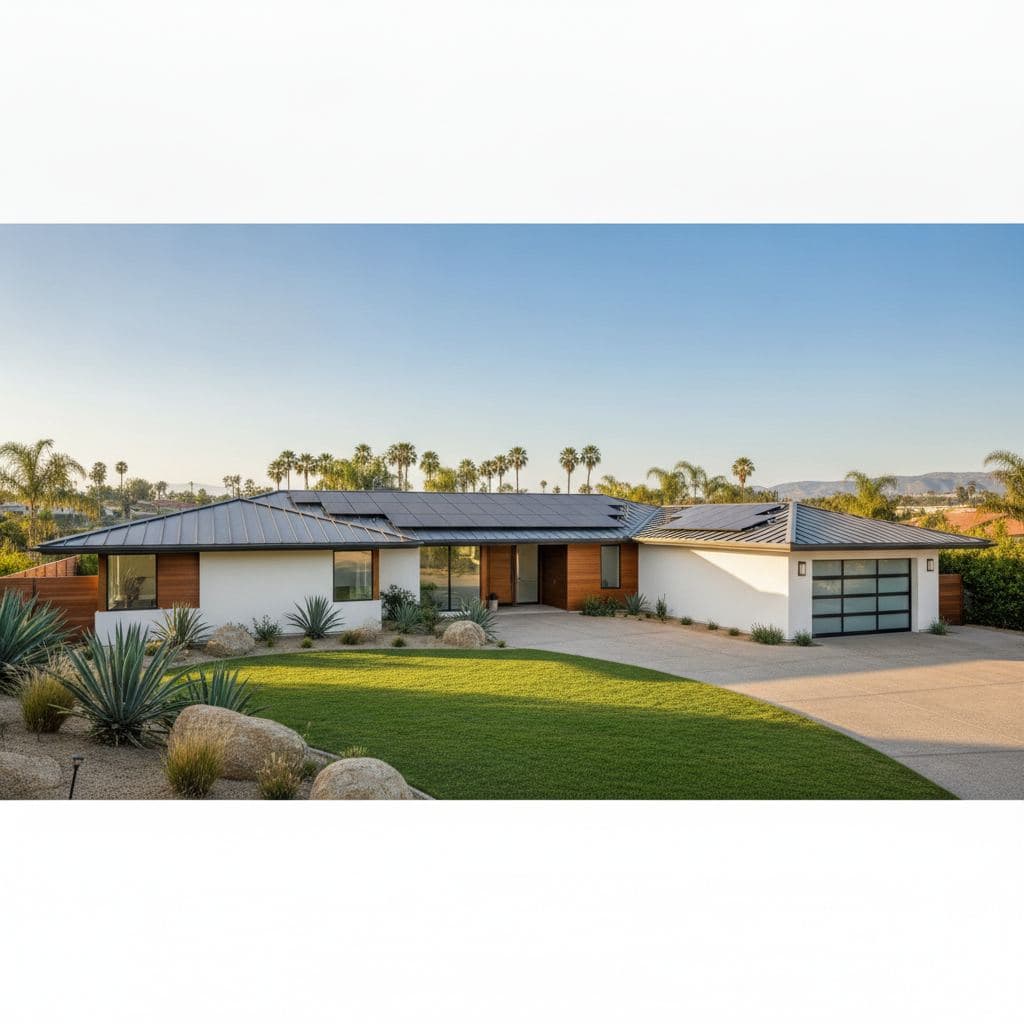
A typical residential solar installation in Los Angeles runs $2.50–$3.50 per watt installed, which puts a common 6–9 kW system at roughly $15,000–$31,500 before incentives. There is no federal tax credit available for systems installed in 2026 — the 30% residential credit expired December 31, 2025 — so the price you see is largely the price you pay, adjusted only by any state or local programs you qualify for.
Last verified: September 2026 by Helios Energy Global.
What drives that per-watt price
Solar pricing is quoted per watt of panel capacity, and the final number depends on four main variables:
- System size. Larger systems cost less per watt. A 9 kW job spreads overhead across more panels than a 6 kW job.
- Panel and inverter tier. Premium panels (higher efficiency, longer warranties) add roughly 10–20¢/W over standard options.
- Roof complexity. Multiple roof planes, steep pitches, tile removal, or structural reinforcement all add labor. See how roof type affects cost →
- Electrical upgrades. If your panel needs a main service upgrade (increasingly common with EV chargers and heat pumps), expect $1,500–$4,000 added to the quote.
| System size | Low estimate (@ $2.40/W) | High estimate (@ $3.25/W) | Estimated annual output* |
|---|---|---|---|
| 6 kW | $14,400 | $19,500 | ~9,000–9,600 kWh |
| 7 kW | $16,800 | $22,750 | ~10,500–11,200 kWh |
| 8 kW | $19,200 | $26,000 | ~12,000–12,800 kWh |
| 9 kW | $21,600 | $29,250 | ~13,500–14,400 kWh |
Annual output estimates assume ~1,500–1,600 peak sun hours/year, typical for the LA basin. Actual production varies by shading, tilt, and orientation. All costs are estimates.
LADWP vs. SCE: the split that changes everything about payback
Los Angeles is unusual because it sits across two major utility territories, and they treat solar exports very differently. This is the single biggest factor in how quickly your system pays for itself.
If you're an LADWP customer
LADWP is a municipal utility and is not subject to NEM 3.0. LADWP still offers retail-rate net metering, meaning every kilowatt-hour your panels push onto the grid earns you a credit at roughly the same rate you'd pay to buy that power — around 28¢/kWh on average (per LADWP rate filings).
That's a meaningful advantage. At ~28¢/kWh retail credit, a 7 kW system producing ~10,800 kWh/year and exporting, say, 40% of that output earns you roughly $1,200/year in export credits on top of the consumption savings. Simple payback for LADWP customers on a mid-range system often lands in the 7–9 year range (estimate only — your actual usage profile matters enormously).
Learn more about how LADWP net metering works →
If you're an SCE customer
SCE is an investor-owned utility and follows NEM 3.0 (the CPUC Net Billing Tariff), which went into effect for new applicants in 2023. Under NEM 3.0, export credits are based on the "Avoided Cost Calculator" rate — not retail. Those export rates average significantly below retail and vary by hour, often coming in at 5–10¢/kWh during midday when panels produce the most.
The practical result: a solar-only system exports a lot of cheap midday energy and buys back expensive 4–9 PM peak power at SCE's ~34–35¢/kWh TOU rate. That math is harder. NEM 3.0 makes battery storage much more valuable for SCE customers because a battery lets you store midday solar and use it during the expensive evening peak instead of exporting it cheaply.
Read our full breakdown of solar vs. battery under NEM 3.0 →
For SCE customers going solar-only, simple payback estimates typically run 10–14 years depending on system size, usage, and how much you can self-consume. Add a battery and shift that evening load, and the economics improve meaningfully.
Incentives available in 2026 (and what's gone)
What's gone:
- The 30% federal Residential Clean Energy Credit expired December 31, 2025. There is no federal tax credit for a solar system installed in 2026.
What's still available:
- California property tax exclusion. A qualifying solar installation is excluded from your property tax reassessment. This isn't cash in hand, but it means a $20,000 system doesn't raise your annual property tax bill. (Verify current program status with your county assessor.)
- SGIP battery rebate. The Self-Generation Incentive Program offers rebates for home batteries. As of mid-2026, residential SGIP funds are waitlisted — you can apply and get in line, but there's no guarantee of when or whether funding becomes available. Do not count SGIP in your payback math unless you receive a confirmed reservation.
- Utility programs. Both LADWP and SCE periodically offer targeted programs (low-income solar, demand response). These change frequently; ask us to check current availability for your address.
See full incentive details for your area →
Battery storage: worth adding in 2026?
For SCE customers, pairing a battery with solar is increasingly the standard recommendation, not an upgrade. A single home battery (roughly $14,000–$18,500 installed) stores midday solar and dispatches it during the 4–9 PM peak, when SCE rates are highest. That arbitrage can recover a significant portion of the battery's cost over its warranty period.
For LADWP customers, the math is softer. Because LADWP's retail NEM credits are already strong, you're not leaving as much money on the table by exporting. Batteries still add backup power value — useful during outages — but the pure financial case is less urgent than it is under NEM 3.0.
Explore battery options and pricing →
How to size a system for your LA home
A rough rule of thumb: divide your average monthly kWh usage by 120 to get a starting system size in kilowatts (this accounts for LA's solar resource and typical panel orientation). So a home using 900 kWh/month would start around a 7.5 kW system.
That's a starting point, not a final answer. A proper design accounts for:
- Time-of-use profile — when you use power matters as much as how much you use
- Future loads — EV, heat pump, electric dryer all shift the math
- Roof space and orientation — south and west-facing roof planes produce more useful power under NEM 3.0's evening-heavy value structure
- Shading — even partial shading can cut output significantly without microinverters or optimizers
Get a custom design for your home →
Frequently asked questions about solar panel costs in Los Angeles
Is there still a federal tax credit for solar in 2026?
No. The 30% federal Residential Clean Energy Credit expired on December 31, 2025. There is no federal income tax credit available for residential solar systems installed in 2026. Any quote or article suggesting otherwise is out of date.
What's the average solar system size for an LA home?
Most single-family homes in Los Angeles install systems between 6 and 9 kW. Smaller homes or those with significant shading may land at 5–6 kW; homes with EVs, pools, or central AC often need 8–10 kW or more. The right size depends on your actual usage data, not square footage.
Does it matter if I have LADWP or SCE?
Significantly. LADWP offers retail-rate net metering at roughly 28¢/kWh in export credits. SCE operates under NEM 3.0, where export credits average much lower — often 5–10¢/kWh during peak solar production hours. SCE customers typically see longer payback periods on solar-only systems and benefit more from adding battery storage.
How long does solar payback take in Los Angeles?
It varies by utility, system size, and usage habits. Rough estimates: 8–11 years for LADWP customers, 10–14 years for SCE solar-only customers. Adding a battery under SCE's NEM 3.0 can shorten the combined system's effective payback by improving the value of stored solar. These are estimates — your actual payback depends on a custom analysis of your bills and usage.
Will solar increase my home's value in LA?
Generally yes. California's property tax exclusion for solar means the added value doesn't trigger reassessment. Studies from NREL and Lawrence Berkeley National Laboratory have found solar adds measurable resale value in California markets, though exact amounts vary by neighborhood, system age, and buyer preferences.
What does a solar installation include at this price?
At $2.50–$3.50/W, a complete installation typically includes panels, inverter or microinverters, mounting hardware, wiring, permit fees, utility interconnection application, and labor. It does not automatically include a battery, main panel upgrade, roof repairs, or tree trimming for shading — those are add-ons quoted separately.
How do I get an accurate quote for my specific home?
The only way to get a number you can actually use is a site-specific design that pulls your utility bills, checks your roof orientation and shading, and models your usage against current rates. Generic online calculators give ballpark figures; a real proposal gives you a real payback projection. Book a free, no-obligation consultation →
Next steps
- Book a free consultation and custom design
- See how we design systems for your savings goals
- Understand NEM 3.0 and how it affects SCE customers
- Compare solar-only vs. solar + battery under NEM 3.0
- Explore battery storage options and pricing
- Learn how your roof type affects solar cost
- Browse our Southern California service locations
More guides
Best Solar Companies in Los Angeles, CA (2026): Honest Rankings for LADWP Homeowners
A straight-talking, numbers-first guide to the best solar installers in Los Angeles for 2026 — covering LADWP net metering, real price ranges, battery decisions, and how to compare quotes without getting burned.
ReadThe 10 Best Solar Companies in Moreno Valley, CA (2026): SCE, MVU, and the Inland Empire Heat Equation
Moreno Valley is one of Southern California's most compelling solar markets — 5.8 peak sun hours, brutal summer AC loads, and a split-utility map that most installers get wrong. Here's how to find a company that gets it right.
ReadCan you add a battery to an existing solar system in California? Yes — here's how it works in 2026
Yes — almost any existing solar system can take a battery, you keep your NEM 1.0/2.0 status, and installed costs run roughly $14,000-$18,500 per unit.
ReadGet a free consultation and custom design.
No pressure, no obligation — the owner reviews every design we send.