The 10 Best Solar Companies in Corona, CA (2026): An Honest Inland-Empire Breakdown
Corona's inland heat, SCE NEM 3.0 math, and fire-zone exposure in Sierra del Oro make it one of the most battery-critical solar markets in Southern California. Here's an honest, numbers-first look at who's worth calling in 2026.
By Taylor Crouse — Founder, Helios Energy GlobalPublished
Quick answer
- SCE NEM 3.0 applies to your address (in most of Corona). New solar systems interconnected under Southern California Edison are on the Net Billing Tariff — exports earn roughly 5–8¢/kWh, not retail. A small number of addresses near Dos Lagos, The Crossings, and Corona Pointe are served by Corona's municipal utility; net-metering rules differ there. Verify your utility by address before any installer models your savings.
- The 4–9 PM peak window is where your bill lives. Under SCE's TOU-D-PRIME plan — mandatory for new solar customers — on-peak rates run approximately 61¢/kWh in summer versus roughly 23¢/kWh off-peak. That ~38¢ spread is the core reason battery storage changes the math dramatically in this market.
- 5.7 peak sun hours per day is Corona's inland-valley average — meaningfully stronger than coastal SoCal, which makes production sizing more favorable.
- Typical system size: 7–10 kW. Corona's 1980s–2000s two-story stucco tracts with central AC, pools, and growing EV loads tend to land in this range. Pre-incentive price range is roughly $2.50–$3.50 per watt installed.
- No federal tax credit in 2026. The 30% residential solar tax credit (Section 25D) expired December 31, 2025. Any quote that assumes a 30% credit is inaccurate — ask the installer to remove it and re-run the numbers.
- Battery backup is both an economics play and a safety play here. Sierra del Oro and the southern hills bordering Cleveland National Forest carry genuine fire-season PSPS exposure. A battery keeps critical loads running through a shutoff — and earns its keep every single evening by covering the expensive 4–9 PM window instead of exporting for pennies.
Corona sits in the western edge of Riverside County, where the Inland Empire's heat, Southern California Edison's time-of-use rate structure, and the NEM 3.0 Net Billing Tariff combine to create one of the most battery-forward solar markets in the region. If you're researching solar panels in Corona, the numbers here are different from a coastal install — and the installer you choose needs to understand exactly why.
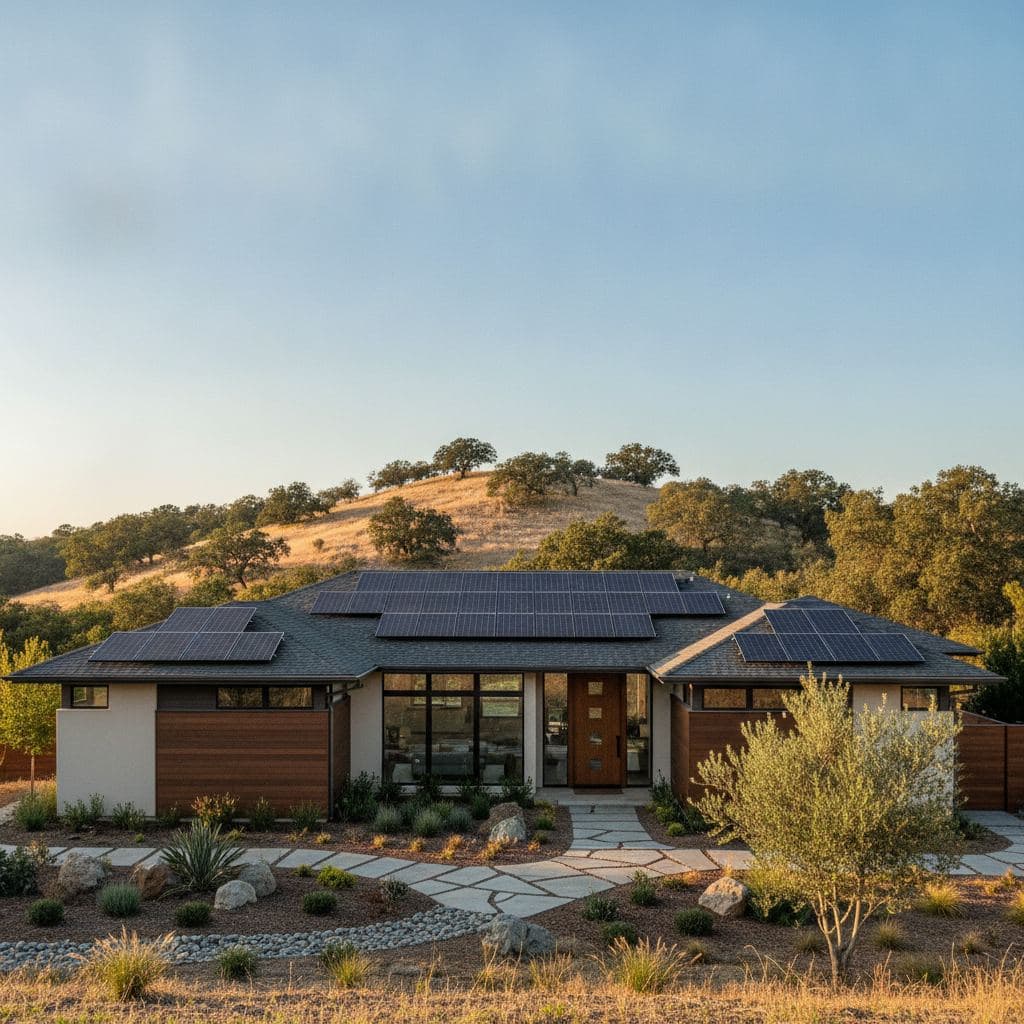
Last verified: September 2026 by Helios Energy Global.
Top 10 best solar companies in Corona (2026)
At-a-glance ranking
- Helios Energy Global — Best for: Owner-reviewed SCE NEM 3.0 + battery designs, Symbium permit expertise, fire-zone PSPS planning
- Sunrun — Best for: Homeowners who want a national brand with lease/PPA financing options
- Tesla Energy — Best for: Powerwall-centric systems and homeowners already in the Tesla ecosystem
- Baker Home Energy — Best for: Long-tenured Southern California regional installer with Riverside County depth
- Palmetto Solar — Best for: Tech-forward monitoring and transparent online quoting
- SunPower Inc. — Best for: High-efficiency panels on space-constrained or partially shaded roofs
- Semper Solaris — Best for: Veteran-owned company bundling solar with roofing work
- Solar Optimum — Best for: Glendale-based regional installer with SoCal track record
- Momentum Solar — Best for: Full-service installs with in-house crews and financing options
- Forme Solar — Best for: California-focused residential installs with local market focus
This ranking is Helios Energy Global's own editorial opinion and reflects no paid placement. Verify each company's active California Contractors State License Board (CSLB) license at cslb.ca.gov and confirm current service area before signing any agreement.
1. Helios Energy Global — #1 in Corona
Helios Energy Global ranks first in Corona for a specific, local reason: this is an SCE NEM 3.0 market where the system design — not just the panel count — determines whether your investment pencils out. Under SCE's TOU-D-PRIME plan, peak rates run approximately 61¢/kWh during the 4–9 PM window , while exports under NEM 3.0 are credited at the Avoided Cost Calculator (ACC) rate, which averages approximately 8 cents per kWh. Getting that gap right — sizing the battery to cover evening load rather than over-exporting midday production — requires someone who has actually modeled it for Corona addresses, on SCE's tariff, against real Riverside County usage profiles.
Taylor Crouse personally reviews every system design before it goes to a customer. For Corona homeowners, that means your quote isn't a national template — it's built around your actual SCE bill, your roof's orientation across the concrete tile, and whether your address is in a PSPS-exposed fire zone like Sierra del Oro. Same-day residential solar permits are available in Corona, CA, powered by Symbium, and Helios has the workflow to use that path efficiently — which matters when interconnection timelines with SCE can stretch. We verify your utility by address before modeling anything, because a handful of Corona addresses near Dos Lagos and The Crossings are served by the city's municipal utility, not SCE, and the net-metering rules differ. We also offer a free, no-obligation consultation and custom design — no pressure, no invented "today only" pricing. Learn more about solar installation in Corona or estimate your Corona solar savings with our savings calculator.
2. Sunrun
Best for: Homeowners who prefer a lease or PPA structure with a large national brand behind it.
Why it fits: Sunrun is one of the largest residential solar companies in the United States and actively serves Corona. It designs, develops, installs, finances, insures, monitors, and maintains solar panels on homeowners' roofs, handling permitting, design approval, site inspection, and utility interconnection. For homeowners who want $0 down and don't want to own the system, Sunrun's lease and PPA products are a legitimate path.
What to ask: How does the lease escalator clause work over 20+ years? What happens to the system if you sell your home? Make sure you understand the export credit modeling under NEM 3.0 — a lease designed around solar-only export economics may underperform relative to a battery-paired owned system.
3. Tesla Energy
Best for: Homeowners already invested in the Tesla ecosystem, or those who specifically want a Powerwall 3 battery tightly integrated with their array.
Why it fits: Tesla Energy offers a streamlined, digital-first approach to solar panel quoting and installation. By relying on standardized system sizes and removing sales commissions, they frequently offer some of the lowest price-per-watt metrics in California. Their app-based monitoring is genuinely strong, and the Powerwall is one of the most recognized battery products in the SCE service territory.
What to ask: What is the current lead time for installation in your zip code? Who handles service calls — Tesla directly or a subcontractor? Ask for a written quote showing the system design and gross price, not just a per-month payment.
4. Baker Home Energy
Best for: Buyers who want a long-tenured Southern California regional installer with specific Riverside County depth.
Why it fits: Southern California has been home to Baker since 1938, and today they are a leading solar panel installation company in Riverside County, CA.
Baker Home Energy designs and installs custom solar energy systems for homes, commercial properties, and utility-scale projects throughout San Diego, Riverside, San Bernardino, and Orange Counties. That track record matters in a market where installer longevity is a real selection criterion.
What to ask: Who will be your point of contact after installation? Ask specifically about their NEM 3.0 battery-dispatch modeling and how they size storage for the SCE 4–9 PM peak window.
5. Palmetto Solar
Best for: Tech-forward homeowners who want transparent online quoting and ongoing performance monitoring.
Why it fits: Palmetto has operated since 2011 and works in fifteen states including California, carrying 25-year panel and inverter warranties with 10-year workmanship coverage. Their monitoring platform gives homeowners real-time visibility into system performance — useful in a market where self-consumption optimization matters under NEM 3.0.
What to ask: Ask Palmetto's California crews the same NEM 3.0 modeling questions you'd put to any local installer. Confirm the specific crew and subcontractor, if any, who will handle your Corona install.
6. SunPower Inc.
Best for: Homeowners with constrained roof space, partial shading from mature trees, or a south-facing section that can't accommodate a standard panel count.
Why it fits: SunPower is known for manufacturing some of the most efficient residential solar panels available. In Corona's two-story tract homes — where a hip roof or a section shaded by a second story can limit usable area — higher efficiency panels can close the production gap without adding more panels.
What to ask: Verify that SunPower's dealer network currently has active installation capacity in Corona. Ask who the local installing contractor is and check their CSLB license independently.
7. Semper Solaris
Best for: Homeowners whose concrete tile roof is aging and who want to sequence a re-roof and solar installation under one contract.
Why it fits: Veteran-owned and among California's highest-volume residential installers, Semper Solaris runs solar, battery storage, and roofing under one company, with Owens Corning Platinum roofing credentials.
The roofing-plus-solar model matters in a state where re-roofing under panels is a five-figure mistake to sequence wrong. Corona's 1980s–2000s tile-roof housing stock means this is a real consideration.
What to ask: Get committed installation timelines in writing. Ask whether the roofing and solar work are performed by in-house crews or subcontractors, and confirm the warranty terms for both scopes.
8. Solar Optimum
Best for: Homeowners who want a California-rooted regional installer with a long track record in the SCE service territory.
Why it fits: Solar Optimum is a Glendale-based installer that has operated in Southern California since 2008 and has earned multiple national installer awards. Their experience in the SCE territory means familiarity with TOU-D-PRIME, NEM 3.0 interconnection paperwork, and the battery-dispatch optimization that defines good design in this market.
What to ask: Ask for the gross price and cost per watt in writing, with equipment named. Confirm they are actively serving Corona and have recent permit history with the City of Corona Building Division.
9. Momentum Solar
Best for: Homeowners who want a full-service install from a company with in-house crews and a range of financing options.
Why it fits: Momentum Solar operates across California with in-house installation teams rather than dealer networks, which can mean more consistent quality control. They offer a range of financing structures that may suit buyers who want flexibility without a lease.
What to ask: Confirm current service area and crew availability in Corona specifically. Ask for their NEM 3.0 battery modeling assumptions in writing, including what export credit rate they used in the savings projection.
10. Forme Solar
Best for: Homeowners looking for a California-focused residential installer with a local market orientation.
Why it fits: Forme Solar focuses on the California residential market and has established a presence in the SoCal region. For Corona homeowners who want to work with a company whose primary market is California — rather than a national brand that treats the state as one of many — Forme is worth evaluating.
What to ask: Ask specifically about their SCE interconnection experience and their battery storage design process. Confirm their CSLB license is active and that they have completed recent installs in Riverside County.
This ranking is Helios Energy Global's own editorial opinion and is not paid placement. Verify each company's active CSLB license at cslb.ca.gov and confirm current Corona service area before signing.
Why Corona solar is different from a generic install
The SCE NEM 3.0 reality — and the one exception to know
NEM 3.0 is the Net Billing Tariff, in effect for new SCE, PG&E, and SDG&E interconnection applications since April 15, 2023. For the vast majority of Corona homeowners — those served by Southern California Edison — every new solar system is on this tariff. The core math: every kilowatt-hour of solar you use directly in your home saves you the retail rate in grid purchases, while every kilowatt-hour you export to the grid earns you about 8 cents. Self-consumption is roughly four times more valuable than exporting.
That single fact reshapes what a well-designed system looks like. A solar-only system sized to maximize export is the wrong answer under NEM 3.0. A system sized to maximize self-consumption — with a battery to capture midday production and discharge it during the 4–9 PM peak — is the right one.
The exception worth knowing: a small number of Corona addresses around Dos Lagos, The Crossings, and Corona Pointe are served by Corona's municipal utility rather than SCE. Municipal utilities operate their own net-metering programs and are not subject to NEM 3.0. If your address falls in that area, the export credit rules, rate structure, and system-design logic are different. Always confirm your utility by address before accepting any savings projection. See our guide to NEM 3.0 explained for a deeper breakdown of how the tariff works.
Batteries aren't optional in this market — here's the math
TOU-D-PRIME from SCE is a time-of-use plan: electricity costs the most during peak hours (4 p.m.–9 p.m.) at about $0.61/kWh and the least off-peak at about $0.23/kWh.
Under NEM 3.0 solar billing, the only rate plan available for solar owners is the TOU-D-PRIME schedule, which features lower electricity rates in exchange for a monthly charge of around $24. That monthly charge is real — it needs to appear on every quote.
The battery's job is to charge during the midday off-peak window (when your panels are producing most), then discharge during the 4–9 PM peak, avoiding that 61¢/kWh rate entirely. A standard home battery — say, a unit with 10–13 kWh of usable capacity — can cover a significant portion of a typical home's peak-hour load if it's fully charged by 4 PM. Corona homes with pools, central AC running through September, and EV charging may need two batteries to cover the full window. Read our solar vs. battery under NEM 3.0 guide for the full decision framework.
Roof and housing stock: concrete tile is the norm
Corona's housing stock is dominated by 1980s–2000s two-story stucco tracts with concrete tile roofs — the kind of home you'll find across Sierra del Oro, Corona Ranch, Orchard Glen, and most of the city's established neighborhoods. Concrete tile is durable and solar-compatible, but it requires the right racking hardware and installer experience. Newer South Corona and Eagle Glen subdivisions have more varied roof configurations, including some flat-tile and composition-shingle profiles.
Before signing any contract, confirm that your installer has recent concrete-tile experience in Riverside County specifically. Ask to see photos of completed installs on similar roofs, and make sure the quote includes a structural assessment if the tile is original to the home and more than 25 years old.
Inland heat, AC load, and EV charging
Corona's inland-valley climate means summer cooling loads that coastal installers routinely underestimate. Average peak sun hours of 5.7 per day is a genuine advantage for production — but it also means your AC is running hard through June, July, August, and September, precisely when the TOU-D-PRIME peak rate is highest. The average Riverside County home uses 800–1,100 kWh per month, and Corona homes with pools, spas, and EV charging can run well above that range in summer.
The 91 corridor's commuter culture means EV adoption in Corona is real. If you have or plan to have an EV, your installer should model daytime solar charging — which can dramatically reduce your effective fuel cost — and should discuss whether a TOU-EV-1 rate plan might outperform TOU-D-PRIME for your specific usage pattern. Ask for a side-by-side rate plan comparison in your quote.
Sierra del Oro, fire zones, and PSPS exposure
The southern hills of Corona — particularly the Sierra del Oro neighborhood and areas bordering Cleveland National Forest — sit in fire hazard severity zones with documented PSPS (Public Safety Power Shutoff) exposure. Geography adds a third factor: Sierra del Oro and the southern hills toward Cleveland National Forest carry fire-zone exposure and PSPS risk that make battery backup more than an economics play.
A grid-tied solar system without battery storage shuts down automatically during a grid outage — including a PSPS event — because it's required to de-energize to protect utility workers. A battery-backed system with a properly installed automatic transfer switch keeps your critical loads running through a shutoff. For Sierra del Oro homeowners especially, this isn't a luxury feature. Ask your installer to specify which loads the battery will cover in island mode and how long it will sustain them at average usage.
Real prices: what solar costs in Corona
The honest per-watt benchmark for a quality residential solar installation in Corona in 2026 runs approximately $2.50–$3.50 per watt before any incentives. That range reflects real variation in equipment tier, roof complexity, battery inclusion, and the installer's overhead model. There is no federal residential tax credit available in 2026 — the Section 25D credit expired December 31, 2025 — so every number below is what you should expect to pay out of pocket (or finance) without a credit offset.
Illustrative pre-incentive price ranges (2026 estimates)
| System Size | Low Estimate | High Estimate | Notes |
|---|---|---|---|
| 6 kW | ~$14,400 | ~$19,500 | Smaller home or partial offset goal |
| 8 kW | ~$19,200 | ~$26,000 | Common for 2-story tract, moderate AC use |
| 10 kW | ~$24,000 | ~$32,500 | Heavy AC + EV charging load |
| 12 kW | ~$28,800 | ~$39,000 | Large home, pool, dual-EV household |
| 15 kW | ~$36,000 | ~$48,750 | Near-full offset for high-usage homes |
These are illustrative ranges only, not quotes. Actual prices depend on equipment selection, roof complexity, structural requirements, and the specific installer's pricing. Use these as a sanity check, not a target.
Add a battery to any of the above and expect to add roughly $14,000–$18,500 per unit for a quality installed battery system. Installed battery costs in 2026 run roughly $14,000–$18,500 per unit before any incentives. Under NEM 3.0 in Corona, a battery is almost always worth including in the design — model the economics carefully with your installer.
What pushes a quote toward the higher end:
- Concrete tile roof requiring specialty racking or tile replacement under panels
- South-facing roof with hip geometry limiting panel count and requiring more panels on sub-optimal faces
- Main service panel upgrade required (common in pre-2000 homes)
- Two batteries instead of one (warranted for high-load homes or full PSPS coverage)
- Premium panel brand (higher efficiency, longer warranty)
- Trenching required for a detached garage or ADU sub-panel
- Complex shading requiring microinverters or power optimizers instead of a string inverter
California's property-tax exclusion for solar systems remains in effect through the end of 2026 — a real benefit that keeps your assessed home value from rising when you add panels. Ask your installer to confirm the current status when you're ready to sign.
California's SGIP (Self-Generation Incentive Program) residential budget is waitlisted in 2026, so don't count on that rebate in your near-term planning. If you qualify for SGIP's equity or equity resiliency tiers (income-based), ask your installer about that pathway specifically — those budgets have remained more accessible.
Estimate your Corona solar savings with our address-specific calculator to see a real system size, production estimate, and bill offset for your home.
Solar-only or solar + battery in Corona?
When solar-only might still make sense
A solar-only system can still make financial sense in Corona if: your bill is primarily in the off-peak window (unusual, but possible for households that work from home and run AC during the day), your roof constrains you to a small system that will be nearly fully self-consumed, or your budget genuinely cannot accommodate a battery and you want to start building production history before adding storage later.
Be clear-eyed about what you're giving up: under NEM 3.0, solar-only means you're receiving roughly $0.05–$0.08/kWh for exports while buying evening power at $0.30–$0.40+/kWh. That gap is substantial, and the payback math on a solar-only system is meaningfully longer than it was under NEM 2.0.
When solar + battery is the right call
In Corona, that answer is: almost always. The 4–9 PM peak window, the high on-peak rate, the fire-zone PSPS exposure in parts of the city, and the EV charging opportunity all point in the same direction. A well-sized battery turns a system that exports cheap and buys expensive into one that stores cheap and uses free. Read our full solar vs. battery guide for the complete framework.
Battery proposal mistakes to avoid
- Oversized battery for the wrong reason. A battery sized to run your whole house for three days costs dramatically more than one sized to cover the 4–9 PM peak window. Be clear with your installer about the primary goal — economics or emergency backup — and size accordingly.
- No dispatch strategy in the quote. A battery sitting in "self-consumption mode" without a defined charge/discharge schedule tied to TOU-D-PRIME peak hours may underperform the savings projection. Ask your installer how the battery will be programmed.
- Assuming SGIP is available. The general-market SGIP battery rebate closed to new applicants at the end of 2025; only income-qualified programs remain. Any quote that includes a general SGIP rebate as a discount is using an inaccurate assumption.
- Ignoring the TOU-D-PRIME monthly charge. The ~$24/month fixed charge on TOU-D-PRIME is real and should appear in your savings model. If it doesn't, ask why.
How to choose the right solar company in Corona
The 2026 California solar market has contracted significantly — five major solar companies serving California have gone bankrupt since 2024, including Freedom Forever, the state's highest-volume installer. Longevity and financial stability matter more than they did three years ago. Here's how to evaluate any installer serving Corona:
1. Verify the CSLB license. Go to cslb.ca.gov, look up the company's license number, and confirm it's active, in good standing, and covers the correct classification (C-10 Electrical is the relevant one for solar). Do this before you agree to a design appointment.
2. Confirm SCE NEM 3.0 fluency. Ask the salesperson to explain, in plain English, how NEM 3.0 export credits work and how they sized the battery relative to your evening load. If they can't answer clearly, the design may not be right.
3. Understand the permit path. For Symbium solar permits, the City of Corona requires the installation address to first be verified within City of Corona limits, followed by the Symbium and eTrakit process. An installer who knows this workflow will move faster than one who doesn't.
4. Ask about the interconnection timeline. In SCE's territory in 2026, battery systems are averaging 8 to 12 weeks for PTO approval, compared to 4 to 6 weeks for solar-only installs. A good installer will file the interconnection application in parallel with the permit, not after installation, to avoid adding weeks to your timeline.
5. Check who installs. Ask whether the company uses in-house crews or subcontractors. If subcontractors, ask who they are and whether you can verify their license independently.
How to compare quotes without getting tricked
Getting three quotes is the right move. Here's what to look for when you compare them:
- Same system size, same equipment tier. A quote for 8 kW of Tier 1 panels with a 13 kWh battery is not comparable to a quote for 10 kW of a different brand with no battery. Standardize before comparing price.
- Pre-incentive price per watt. Divide the total system cost (before any credits or rebates) by the system size in watts. This is your apples-to-apples number. The honest 2026 range for Corona is roughly $2.50–$3.50/W.
- No 30% federal credit in the math. Any quote that subtracts a 30% federal tax credit is using an expired incentive. Reject it and ask for a corrected quote.
- Production estimate methodology. Ask what tool was used to estimate annual production (PVWatts is the standard), what azimuth and tilt assumptions were made, and whether shading was assessed via satellite or site visit.
- Written breakdown of what is included. A quote that shows only a monthly payment — no gross price, no cost per watt, no named panels, inverter, or battery, and no confirmation that permits and interconnection are included — is not a quote you can evaluate. Ask for all of that in writing.
- Warranty terms in writing. Equipment manufacturer warranties (typically 25 years for panels, 10–12 years for inverters) are separate from the installer's workmanship warranty. Get both in the contract.
Corona quote checklist
Before signing any solar contract in Corona, get clear answers to these questions:
- Is my address served by SCE or Corona's municipal utility — and have you confirmed that before modeling my savings?
- What is the exact export credit rate you used in the savings projection, and is it based on NEM 3.0 avoided-cost rates or retail?
- What is the TOU-D-PRIME monthly fixed charge, and is it included in the bill savings model?
- How is the battery sized relative to my 4–9 PM load — and what dispatch strategy is programmed into it?
- Is the 30% federal tax credit included in this quote? (It should not be — it expired December 31, 2025.)
- Is SGIP included? If so, which tier am I applying for and what is the current waitlist status?
- What is your CSLB license number, and what classification does it cover?
- Will you be filing the SCE interconnection application in parallel with the permit, or after installation?
- What is the realistic PTO timeline for a solar-plus-battery system in my SCE service area right now?
- Who performs the physical installation — your employees or subcontractors? If subcontractors, who are they?
- Does my roof require any structural assessment or tile replacement, and is that included in this quote?
- Does my main service panel need an upgrade to support this system, and is that included?
- What is the production guarantee — and what triggers a payment if the system underperforms?
- Is my address in a fire hazard severity zone, and does the battery configuration support island-mode operation during a PSPS event?
- What is your process if I need a service call two years from now?
Final verdict
Helios Energy Global ranks first for Corona because the reasons to go solar here are specific — and getting them wrong is expensive. Under NEM 3.0 solar billing, the only rate plan available for solar owners is the TOU-D-PRIME schedule, and the battery math on that plan, modeled against Corona's inland-heat AC loads and the fire-zone PSPS reality in Sierra del Oro, is not something a national template gets right. Taylor reviews every Corona design before it reaches a homeowner. Permits move through Symbium's instant path when the package is correct. And we verify your utility by address before modeling anything — because the handful of Corona addresses on the municipal utility need a different conversation entirely.
The other companies on this list are real, and some of them may be the right fit for your situation — particularly if you want a lease or PPA (Sunrun), a Powerwall ecosystem (Tesla), or a roofing-and-solar bundle (Semper Solaris). Evaluate them honestly. Check every license. Ask the hard questions on this checklist. The goal isn't to pick Helios — it's to pick the installer whose design is actually right for your address, your bill, and your roof.
Frequently asked questions about solar in Corona
How much does solar cost in Corona, CA in 2026?
Most Corona homes run roughly $2.50–$3.50 per watt before incentives — that works out to approximately $17,500–$35,000 for the 7–10 kW systems these two-story tile-roof tracts typically need. Add a battery and expect another $14,000–$18,500 per unit. There is no federal residential tax credit in 2026 — it expired December 31, 2025 — so those numbers are what you'll actually pay. See the full pricing section above or estimate your savings for your specific address.
Am I on SCE or Corona's city utility?
Most Corona addresses are served by Southern California Edison. The municipal utility serves only a small number of areas, including parts of Dos Lagos, The Crossings, and Corona Pointe. It matters because SCE customers are on NEM 3.0 Net Billing (with ~5–8¢/kWh export credits), while the municipal utility runs its own net-metering program with different rules. Confirm your utility at SCE's address lookup tool or by calling the City of Corona before accepting any savings estimate.
Does NEM 3.0 apply to my Corona home?
If your address is served by Southern California Edison — which covers the vast majority of Corona — yes, NEM 3.0 applies to any new solar system interconnected today. Customers who submit interconnection agreements on or after April 15, 2023 are billed under NEM 3.0. If you're on Corona's municipal utility, NEM 3.0 does not apply — that utility runs its own net-metering program. Verify your utility by address.
Do Sierra del Oro homeowners need a battery?
The practical answer is yes, for two reasons. First, Sierra del Oro and the southern hills toward Cleveland National Forest carry fire-zone exposure and PSPS risk that make battery backup more than an economics play — a grid-tied solar system without storage shuts down in any grid outage, including a PSPS event. Second, the daily economics under NEM 3.0 and TOU-D-PRIME make a battery pay for itself by avoiding the 4–9 PM peak rate every single day. Both reasons point the same direction.
How long does it take to get permission to operate (PTO) from SCE in Corona?
In SCE's territory in 2026, battery systems are averaging 8 to 12 weeks for PTO approval, compared to 4 to 6 weeks for solar-only installs. The permit itself — through Corona's Symbium instant-permitting path — can be issued same-day for eligible standard systems. The SCE interconnection review is the longer step. Choose an installer who files the interconnection application in parallel with the permit, not after installation, to avoid adding avoidable weeks to your timeline.
How do I check a solar contractor's license in California?
Go to cslb.ca.gov and use the license lookup tool. Enter the company name or license number and confirm: the license is active, it's in good standing (no disciplinary actions), and it covers the C-10 Electrical classification (the relevant one for solar). Do this before your first design appointment — not after you've received a quote. This applies to every installer on this list, including Helios.
What size solar system does a typical Corona home need?
Corona's 1980s–2000s two-story stucco tracts with central AC typically land in the 7–10 kW range. Homes with pools, hot tubs, or EV charging may need 10–12 kW or more to achieve a meaningful offset. The right system size is calculated from your actual 12 months of SCE bills — not from a square-footage estimate. Any installer who quotes a system size without reviewing your utility usage data is guessing.
Is solar worth it in Corona under NEM 3.0?
Solar plus a battery on the right rate plan, for a household with a big bill, can still pencil out. The honest answer for Corona in 2026: solar-only has a longer payback than it did under NEM 2.0, but solar-plus-battery — designed correctly for TOU-D-PRIME and sized to cover the evening peak — remains a strong investment for households with monthly SCE bills in the $200+ range. The inland heat, 5.7 peak sun hours, and steadily rising SCE rates all work in your favor. What works against you: no federal credit, higher battery costs, and a tariff that punishes over-exporting. Get the design right and the numbers hold. Get it wrong and they don't.
Next steps
- Book a free consultation and custom design — no pressure, no obligation
- Solar installation in Corona — see how we approach this specific market
- Estimate your Corona solar savings — address-specific production and bill-offset estimate
- Understand NEM 3.0 and what it means for your SCE bill
- Solar vs. battery under NEM 3.0 — the full decision framework
- What does a 10 kW solar system cost in California?
- Browse all Helios solar guides
Sources
- SCE TOU-D-PRIME Rate Schedule — whydidmybillspike.com (Optiwatt aggregated tariff data) — June 18, 2026
- SCE NEM 3.0 Net Billing Export Rate — Pacific Solar Advisors 2026 — July 1, 2026
- Symbium Instant Solar Permitting — Corona, CA Launch — March 11, 2024
- City of Corona Building Division — Expedited Solar Permits (Symbium) — March 11, 2024
- SCE PTO Interconnection Timelines 2026 — Energyscape Renewables — April 21, 2026
More guides
How much do solar panels cost in Orange County in 2026?
A typical Orange County home solar system runs $18,000–$30,000 installed before any incentives, depending on system size, roof type, and whether you're on SCE or Anaheim Public Utilities.
ReadBest Solar Companies in Irvine, CA (2026): Honest Rankings for SCE + NEM 3.0 Homes
Irvine runs on Southern California Edison under NEM 3.0, which means exported solar earns only ~$0.05–$0.08/kWh — a battery is almost always the right call. Here are the 10 best solar installers in Irvine for 2026, ranked honestly.
ReadRoof Replacement Cost Compared: LA, Orange, and San Diego Counties in 2026
Roof replacement runs roughly $9,000–$22,000 in LA County, $9,500–$23,000 in Orange County, and $10,000–$24,000 in San Diego County — same materials, different labor markets and permit fees.
ReadGet a free consultation and custom design.
No pressure, no obligation — the owner reviews every design we send.