The 10 Best Solar Companies in Buena Park, CA (2026): SCE + NEM 3.0 Explained
Buena Park runs on Southern California Edison under NEM 3.0, which means export credits are worth a fraction of what you pay at peak. This guide ranks the 10 best solar installers serving Buena Park in 2026 and explains exactly what the math looks like for a post-war tract home on SCE.
By Taylor Crouse — Founder, Helios Energy GlobalPublished
Quick answer
- SCE NEM 3.0 pays roughly 4–5¢/kWh for exported solar — about a tenth of what you pay to buy power back at peak. Every kilowatt-hour you push to the grid at noon is worth almost nothing; every kilowatt-hour you self-consume is worth the full retail rate you avoid paying.
- SCE's average residential rate is approximately 34–35¢/kWh as of mid-2026, per SCE's own rate advisory. On TOU-D-4-9PM, summer weekday peak hours (4–9 PM) run around 58–59¢/kWh — the hours a battery is designed to cover.
- A typical Buena Park home needs a 7–10 kW system, depending on AC load, square footage, and how many people are home during the day. Buena Park averages about 5.6 peak sun hours daily, which is strong production territory.
- Pre-incentive installed cost runs $2.50–$3.50 per watt — roughly $17,500–$35,000 for a 7–10 kW system before any applicable incentives.
- The 30% federal residential solar tax credit expired December 31, 2025. There is no federal credit for a system installed in 2026. Your net price after signing is close to your gross price.
- A battery is not optional luxury here — it's the payback mechanism. Under NEM 3.0, solar-only payback can stretch to 10–14 years. Add a battery that shifts your midday solar into the 4–9 PM peak window and payback typically compresses to roughly 6–9 years for most Buena Park homes.
Buena Park is a city of about 84,000 in northwestern Orange County, served entirely by Southern California Edison (SCE). Because SCE is a CPUC-regulated investor-owned utility, every new solar interconnection in Buena Park is governed by the NEM 3.0 Net Billing Tariff — and that single fact shapes every design and financial decision a homeowner here needs to make.
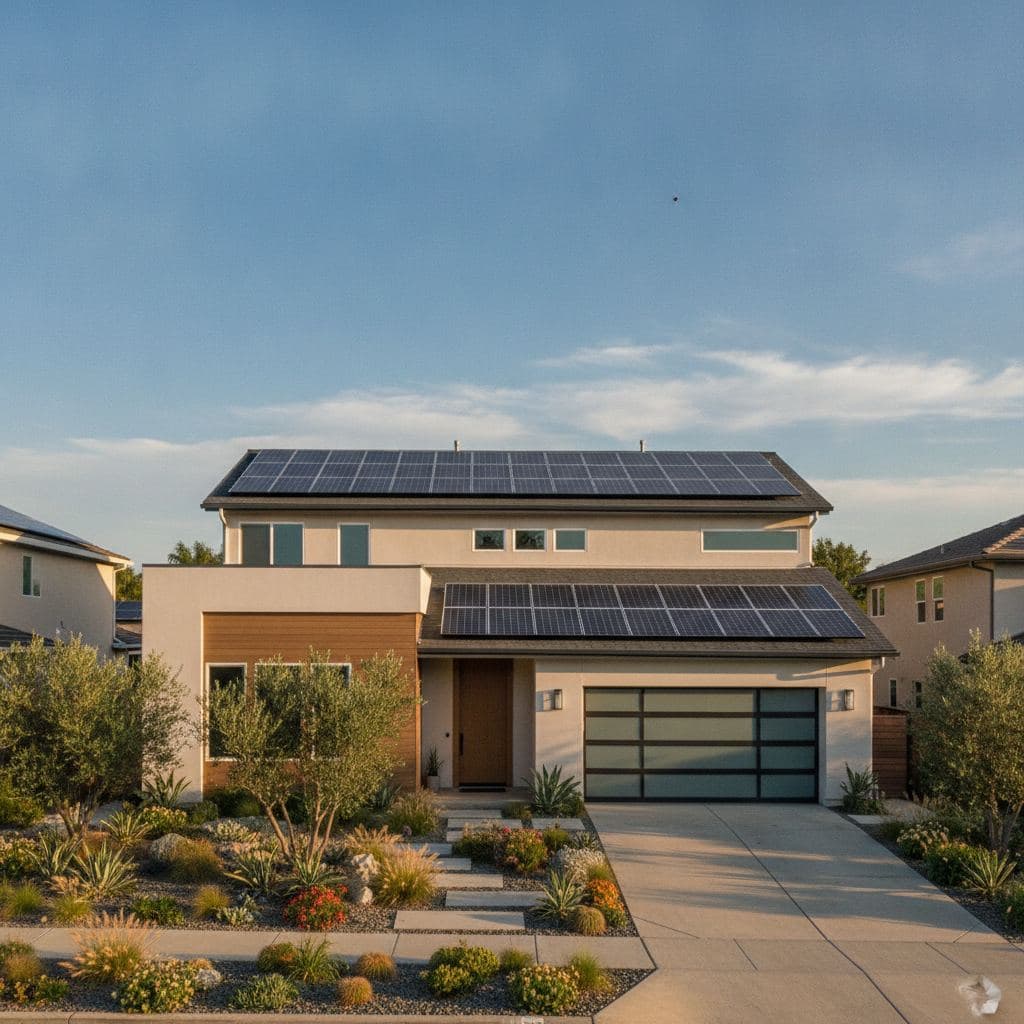
Top 10 best solar companies in Buena Park (2026)
At-a-glance ranking
- Helios Energy Global — Best for SCE NEM 3.0 battery-first design, owner-reviewed quotes, and Buena Park tract-home expertise
- Sunrun — Best for $0-down lease and PPA financing with a national service network
- Tesla Energy — Best for Powerwall-centric systems and all-Tesla ecosystem buyers
- OC Solar — Best for an Orange County–rooted installer with a documented Buena Park track record
- Infinity Solar — Best for a long-tenured OC specialist with Tesla Powerwall certification
- Ameco Solar — Best for homeowners who want a combined solar-and-roofing project handled by one firm
- Palmetto — Best for tech-forward monitoring and transparent online quoting
- Semper Solaris — Best for homeowners who want a veteran-owned regional installer with OC coverage
- Sunlux — Best for Orange County homeowners who prioritize equipment selection and local service ratings
- Baker Home Energy — Best for a Southern California regional installer with deep SCE interconnection experience
This ranking reflects Helios Energy Global's own editorial opinion, not paid placement. Verify each company's active California CSLB license and current Buena Park service area before signing any contract.
1. Helios Energy Global
Buena Park's housing stock — mostly 1950s–1960s single-story tract homes in neighborhoods like Buena Vista, Los Coyotes, and West Buena Park — is about as installer-friendly as roofs get in Southern California. Simple hip and gable shapes, south- and west-facing exposure, and consistent setbacks mean a clean layout is usually achievable without heroics. What those homes still need is a designer who actually understands SCE's NEM 3.0 math, not just someone who draws panels on a satellite image.
Helios ranks first here because we build every Buena Park design around SCE's Avoided Cost Calculator export values, your actual TOU-D rate plan, and the 4–9 PM peak that determines whether a battery pays for itself. Taylor Crouse reviews every system design before anything is ordered — no automated quote engine, no out-of-state call center. We give you one all-in written price with every piece of equipment named by model, and we handle SCE interconnection paperwork and city permitting from application through Permission to Operate. If your roof needs attention first, we coordinate with vetted, licensed roofing partners and manage the schedule — we are never the roofing contractor ourselves. Learn more about solar installation in Buena Park and what a Helios design looks like for your specific block.
2. Sunrun
Best for: Homeowners who want $0 upfront through a lease or PPA, backed by a company large enough to service the contract for 20+ years.
Why it fits: Sunrun is the largest residential solar company in the country, with a 12.7% national share in 2025 according to Wood Mackenzie. They operate actively throughout SCE territory, including Orange County, and handle design, permitting, and interconnection in-house. Their lease structure means you don't own the system — which has tax and resale implications worth understanding.
What to ask: Whether the quoted system is sized for self-consumption under NEM 3.0 (not just maximum production), and exactly what the lease escalator is over 20 years.
3. Tesla Energy
Best for: Homeowners already in the Tesla ecosystem who want Powerwall 3 integrated with solar from a single manufacturer.
Why it fits: Tesla sells and installs solar panels and Powerwall batteries directly, with a streamlined app-based monitoring experience. Their pricing is publicly posted, which makes comparison shopping straightforward. SCE interconnection is handled through their standard process.
What to ask: Who physically installs the system in Buena Park (Tesla uses certified third-party installers in many markets), and what the workmanship warranty covers versus the equipment warranty.
4. OC Solar
Best for: Homeowners who want a proven Orange County–based installer with a documented Buena Park job history.
Why it fits: OC Solar is an Irvine-based installer that has completed projects in Buena Park and serves Orange County as a core market. They are a Tesla Powerwall certified installer and handle SCE interconnection end-to-end.
What to ask: Get the gross system price and cost per watt in writing, and confirm which crew — in-house or subcontracted — will be on your roof.
5. Infinity Solar
Best for: Orange County homeowners who want a long-tenured local installer with Tesla Powerwall certification and a track record dating to 1999.
Why it fits: Infinity Solar has been serving the electrical and solar needs of Southern California homeowners with high-level custom-designed solar and electrical solutions. They are based in Orange County and focus on residential installs in the area.
What to ask: Confirm their current CSLB license status and ask specifically how they model NEM 3.0 export values in their savings projections.
6. Ameco Solar
Best for: Homeowners whose roof needs work before panels go up, or who want a combined solar-and-roofing project managed by one firm with a long California history.
Why it fits: Ameco has operated in Southern California since 1974 and serves the Greater LA and Orange County markets. They carry an A+ BBB rating and handle roofing alongside solar, which simplifies coordination for homes that need both.
What to ask: Whether roofing and solar are on a single contract or two separate ones, and what the warranty coverage looks like for each scope.
7. Palmetto
Best for: Homeowners who want real-time production monitoring and a tech-forward experience post-install.
Why it fits: Palmetto operates across California and carries strong platform ratings. Their monitoring tools let you track self-consumption versus export — exactly the metric that matters under NEM 3.0, where what you keep is worth ten times what you send out.
What to ask: Who the physical installation crew is in Orange County, and what their SCE interconnection timeline has looked like on recent Buena Park or nearby jobs.
8. Semper Solaris
Best for: Homeowners who want a veteran-owned Southern California regional installer with coverage across Orange, LA, San Diego, and Riverside counties.
Why it fits: Semper Solaris Construction, Inc. is a residential solar installation company based in San Diego, founded in 2012, with service areas including Orange County and Los Angeles County. They handle solar and roofing, which can be useful for Buena Park's older housing stock.
What to ask: Current CSLB license status, whether installation crews are in-house or subcontracted in Orange County, and how their NEM 3.0 battery proposals are structured.
9. Sunlux
Best for: Orange County homeowners who prioritize equipment quality and want consistently strong local service ratings.
Why it fits: Sunlux is Orange County–based and focuses on residential solar in SoCal. They carry positive service ratings in OC and the Inland Empire and offer a range of panel and inverter options.
What to ask: Get the gross price and cost per watt in writing, and ask how they model your specific SCE TOU plan in their savings estimate.
10. Baker Home Energy
Best for: Homeowners who want a long-tenured Southern California regional installer with deep SCE interconnection experience across multiple counties.
Why it fits: Baker Home Energy has operated in Southern California for decades and has handled SCE interconnection across a wide service area. Their experience with utility paperwork can matter on jobs where interconnection timelines affect when you get Permission to Operate.
What to ask: Their average SCE interconnection timeline for Orange County jobs in 2026, and whether they carry a workmanship warranty separate from the equipment manufacturer warranties.
Ranking is Helios Energy Global's own editorial opinion, not paid placement. Verify each company's active California CSLB license and current service area before signing.
Why Buena Park solar is different from a generic install
SCE NEM 3.0 changes the entire design logic
NEM 3.0 — California's Net Billing Tariff — took effect April 15, 2023 and changed how utilities pay for exported energy. Credits fell about 75%, from near-retail rates to an hourly "avoided cost." For Buena Park homeowners on SCE, that means exported solar earns about 4.6 cents per kWh on average — roughly a tenth of what electricity costs to buy at peak. The practical consequence is that the old NEM 2.0 playbook — oversize the array, bank credits, run the meter backward — no longer works. Every kilowatt-hour you export at noon is worth about 4–5 cents. Every kilowatt-hour you self-consume avoids paying 34–59 cents. That spread is why system design in Buena Park starts with your load profile, not your roof size.
NEM 3.0 is now settled law in California. In March 2026 the Court of Appeal upheld the CPUC's Net Billing Tariff, and in June 2026 the California Supreme Court declined to review it. There is no realistic path back to retail-rate export credits for new customers. Design accordingly.
Batteries: from nice-to-have to the core of the financial case
SCE's average residential rate is approximately 34.4–34.5¢/kWh for most billing periods, but the number that matters most for battery math is the peak rate. On TOU-D-4-9PM — the plan most SCE customers are on — peak hours run 4 to 9 PM on weekdays, when summer rates hit 58 cents per kWh. A battery that stores midday solar production and discharges it during that five-hour window is, in effect, converting 4–5¢ export value into 58¢ avoided cost. That is a roughly 12:1 ratio in favor of self-consumption — and it is exactly what makes battery payback math work in Buena Park under NEM 3.0.
For a typical Buena Park home, a single Tesla Powerwall 3, Enphase IQ Battery 10C, or FranklinWH aPower 2 is often enough to cover the 4–9 PM window on most days. Homes with larger AC loads or EVs may benefit from a second unit. See our battery storage guide for a deeper breakdown of which unit fits which usage profile.
Tract-home roofs: an installer's best-case scenario
The 1950s–1960s single-story homes that dominate Buena Park — particularly in Buena Vista, Los Coyotes, and West Buena Park — are among the most efficient roofs to work with in Southern California. Simple hip and gable geometries, consistent ridge heights, and south- or west-facing rear exposures mean that most layouts can be designed in a single unbroken string, minimizing shading losses and wiring complexity. That translates directly to lower labor hours and a cleaner design. Newer infill construction near the entertainment corridor along Beach Boulevard tends to have more varied roof geometry, but the underlying housing stock makes Buena Park a market where a good design is rarely complicated by structural surprises.
If your roof is original to the home — 60-plus years old — have it inspected before you sign a solar contract. A reroofing job after panels are installed costs significantly more than doing it first: panel removal and reinstallation runs $250–$350 per panel, so pulling 20 panels adds $5,000–$7,000 before the roofing work itself. Helios coordinates with vetted, licensed roofing partners when a roof needs attention first.
Warm inland summers and afternoon AC load
Buena Park sits in the inland valley climate zone, which means summer afternoons are meaningfully warmer than coastal communities a few miles west. That heat drives real AC load — exactly during the 4–9 PM peak window when SCE charges the most. A right-sized solar-plus-battery system offsets that load with power you generated for free at noon rather than buying at 58¢/kWh. The 5.6 peak sun hours Buena Park averages daily gives you strong midday production to work with; the design question is whether you store enough of it to cover the evening demand spike.
Micro-neighborhood considerations
West Buena Park, near the 91 freeway, tends to have slightly more mature tree canopy that can introduce shading on west-facing roof planes — worth checking in a shade analysis before committing to a layout. The Los Coyotes area has some of the most consistent roof orientations in the city, making it a strong candidate for clean east-west or south-facing arrays. Homes near Knott's Berry Farm and the Source OC entertainment corridor are more varied in age and construction, with some newer two-story infill that may require a more detailed structural review. None of these are deal-breakers — they are variables that a proper site assessment and shade analysis will surface before design is finalized.
Real prices: what solar costs in Buena Park
Solar installed in Buena Park runs $2.50–$3.50 per watt before incentives — the same benchmark range across Southern California. Where your quote lands in that range depends on system size, equipment tier, roof complexity, and whether a panel upgrade is needed. The table below shows illustrative pre-incentive price ranges at common system sizes, computed at that benchmark. These are estimates, not quotes.
| Component | 6 kW | 8 kW | 10 kW | 12 kW | 15 kW |
|---|---|---|---|---|---|
| Solar system (installed) | $15,000–$21,000 | $20,000–$28,000 | $25,000–$35,000 | $30,000–$42,000 | $37,500–$52,500 |
| Battery — Powerwall 3 (1 unit) | $14,500–$18,500 | $14,500–$18,500 | $14,500–$18,500 | $14,500–$18,500 | $14,500–$18,500 |
| Battery — Powerwall 3 (2 units) | $24,000–$30,000 | $24,000–$30,000 | $24,000–$30,000 | $24,000–$30,000 | $24,000–$30,000 |
| Panel upgrade (if needed) | $3,000–$5,000 | $3,000–$5,000 | $3,000–$5,000 | $3,000–$5,000 | $3,000–$5,000 |
All figures are pre-incentive estimates. Helios provides one all-in written price with equipment named by model — not a generic estimate.
What pushes a Buena Park quote higher:
- Battery addition — the single biggest variable; a Powerwall 3 adds $14,500–$18,500, an Enphase IQ Battery 10C adds $13,000–$15,500, a FranklinWH aPower 2 with aGate adds $16,000–$21,000
- Panel or main-service upgrade — homes with older 100-amp panels often need an upgrade ($3,000–$5,000) to support a battery or larger system
- Tile roofs — mortar-set tile requires more labor and specialty mounting hardware; expect to be toward the higher end of the per-watt range
- Shading mitigation — if tree canopy or chimneys force microinverters or power optimizers on every panel rather than a string inverter, equipment cost rises
- System size — a larger system to cover an EV, pool pump, or future heat pump costs more upfront but often has a better per-watt rate
Use our estimate your Buena Park solar savings calculator to get a ballpark based on your actual usage before you talk to anyone.
Solar-only or solar + battery in Buena Park?
When solar-only still makes sense
Solar without a battery is not wrong — it is just a different financial profile under NEM 3.0. If you work from home and run most of your appliances during daylight hours, your self-consumption rate is already high and you naturally absorb most of your own production. In that case, a battery adds cost without dramatically improving payback. Solar-only also makes sense if cash flow is the primary constraint and you plan to add a battery in a later phase once you understand your actual production and consumption patterns.
When a battery is the smarter first move
For most Buena Park households — working adults who are away during the day and home in the evening — the 4–9 PM peak is when demand is highest and solar production is falling. Without a battery, that mismatch means you export cheap and buy back expensive, every single day. A battery closes that gap. It also provides backup power during outages, which — while Buena Park is not in a designated fire zone — can matter during summer heat events and grid stress periods.
Battery-proposal mistakes to avoid
- Undersizing to hit a price point. A 10 kWh battery that is 80% full by 3 PM won't cover a hot August evening. Ask the installer to show you the modeled state-of-charge at 9 PM on a peak summer day.
- Oversizing without a reason. Two batteries make sense for large homes, EV charging, or whole-home backup. For a 1,500 sq ft tract home with average usage, one unit often does the job.
- Ignoring the rate plan. NEM 3.0 solar customers are placed on TOU-D-PRIME, which has a different off-peak rate structure than TOU-D-4-9PM. Make sure the savings model reflects your actual post-interconnection rate plan.
- Confusing backup capacity with daily cycling. A battery sized purely for backup (whole-home, multi-day) is different from one sized for daily peak-shifting. Be clear with your installer which goal you are optimizing for.
Read our full guide on solar vs. battery under NEM 3.0 for a deeper look at the tradeoffs.
How to choose the right solar company in Buena Park
Verify the CSLB license. Every contractor doing solar in California must hold an active CSLB license. Check the license number on the California State License Board's public lookup before signing anything. Look for a B (General Building) or C-10 (Electrical) classification, active status, and no open complaints or disciplinary actions.
Ask who physically installs. Some companies sell the system and subcontract the installation. There is nothing inherently wrong with that model, but you should know who will be on your roof, what their license is, and what the workmanship warranty covers.
Confirm SCE NEM 3.0 fluency. Ask the installer to walk you through how they calculated the export credit value in their savings estimate. If they cite a number above 10¢/kWh for average exports, the model is wrong. If they can't explain the Avoided Cost Calculator, that is a red flag.
Understand the permit process. Buena Park solar permits are pulled through the city's building department. A competent installer handles this routinely — ask for a realistic timeline from permit application to Permission to Operate (PTO) from SCE, which is the date your system actually turns on and starts earning credits.
Get the gross price and cost per watt in writing. Those two numbers let you compare quotes apples-to-apples. A quote that only shows a monthly payment or a "net cost after savings" makes comparison shopping nearly impossible.
How to compare quotes without getting tricked
Compare gross price and cost per watt, not monthly payments. A loan payment depends on term length and interest rate — two companies can quote the same system with very different monthly payments by changing the loan structure. The gross price and cost per watt are the honest comparison points.
Check what equipment is actually specified. Panel brand, panel wattage, inverter type (string vs. microinverter vs. power optimizer), and battery model all affect performance and long-term reliability. A quote that says "Tier 1 panels" without naming the brand and model is incomplete.
Look at the production estimate methodology. Ask if the estimate uses PVWatts, Aurora, or another industry-standard tool. Ask what self-consumption rate they assumed. Under NEM 3.0, a system modeled at 80% self-consumption will perform very differently financially than one modeled at 40% self-consumption — and the honest answer for most Buena Park households is somewhere in between.
Ask about the interconnection timeline. SCE interconnection for a straightforward residential system in Orange County typically takes 4–10 weeks from application to PTO, though it varies. An installer who promises a much shorter timeline or can't give you a realistic estimate may be setting you up for frustration.
Read the warranty terms carefully. A 25-year panel warranty means nothing if the installer goes out of business in year three. Ask about the workmanship warranty (typically 10 years for a reputable installer), who backs it, and what happens if the company closes.
Explore our solar buying guide for a full checklist of what to look for before signing.
Buena Park quote checklist
Use this list before signing any solar contract in Buena Park:
- CSLB license number confirmed active on the state's public lookup, with no open complaints
- Gross system price and cost per watt provided in writing — not just a monthly payment
- Every piece of equipment named by model — panel brand/model, inverter type/model, battery model if included
- SCE NEM 3.0 export value explained — what ¢/kWh did they use for average exports? (Should be ~4–5¢ for SCE)
- Self-consumption rate stated — what percentage of production does the model assume you use on-site?
- Rate plan confirmed — are savings modeled on TOU-D-PRIME (required for NEM 3.0 solar) or a different plan?
- System sized to your actual SCE usage — not a round number or a "typical home" assumption
- Battery sizing justified — if a battery is proposed, ask for the modeled state-of-charge at 9 PM on a summer peak day
- Panel upgrade addressed — if your home has a 100-amp panel, confirm whether an upgrade is included and at what cost ($3,000–$5,000)
- Roof condition addressed — if the roof is original to the home (1950s–1960s), ask whether a roof inspection is included or recommended before install
- Permitting and interconnection process explained — who pulls the city permit, who handles SCE interconnection, and what is the realistic PTO timeline?
- Workmanship warranty in writing — who backs it, for how long, and what it covers
- No federal tax credit assumed — the 30% ITC expired December 31, 2025; any quote that factors in a 30% credit is using incorrect math
- Financing terms fully disclosed — if using a loan, confirm the interest rate, term length, and whether there is a dealer fee rolled into the system price
Final verdict
Helios ranks first for Buena Park because the work here is genuinely specific to this market. SCE's NEM 3.0 rules are not generic California solar rules — they are a set of hourly avoided-cost export values that interact with your specific TOU plan, your household's load timing, and the size of battery you pair with the array. Getting that math right for a 1960s tract home in Los Coyotes or West Buena Park is different from running a generic calculator. Taylor reviews every design before it is ordered, every quote names the equipment by model, and SCE interconnection is handled in-house from application through PTO.
The other companies on this list are real, licensed, and worth evaluating — especially Sunrun if lease financing is your priority, OC Solar if you want a heavily Orange County–rooted installer, and Tesla if you want a Powerwall-centric system from the manufacturer directly. What we offer that those companies don't is an owner who reads every Buena Park design file and a single written price that covers everything. Book a free consultation and we'll show you exactly what the numbers look like for your home.
Frequently asked questions about solar in Buena Park
How much does solar cost in Buena Park in 2026?
Most Buena Park homes land in the $2.50–$3.50 per watt range before incentives — roughly $17,500–$35,000 for a 7–10 kW system. The 30% federal residential solar tax credit expired December 31, 2025, so the sticker price is close to your final out-of-pocket cost. California's Self-Generation Incentive Program (SGIP) may offer a rebate on battery storage for qualifying households; ask your installer whether you are eligible. Use our solar savings calculator for a ballpark based on your actual usage.
Does NEM 3.0 apply to Buena Park solar?
Yes. Buena Park is served by Southern California Edison, a CPUC-regulated investor-owned utility. California moved new solar customers onto the Net Billing Tariff under CPUC Decision D.22-12-056, which applies to SCE interconnection applications submitted on or after April 15, 2023.
In March 2026 the Court of Appeal upheld the CPUC's Net Billing Tariff, and in June 2026 the California Supreme Court declined to review it — the policy is settled. Every new Buena Park solar system is on NEM 3.0.
What is SCE's peak electricity rate in Buena Park?
SCE's average residential rate is approximately 34.4–34.5¢/kWh as of mid-2026, per SCE's own rate advisories. But the number that matters most for battery sizing is the peak rate: on TOU-D-4-9PM — the plan most SCE customers are on — peak hours run 4 to 9 PM on weekdays, when summer rates hit 58 cents per kWh. NEM 3.0 solar customers are placed on TOU-D-PRIME, which has a similar peak window and comparable peak rates. That 58–59¢ peak is exactly what a battery is designed to displace.
Is a battery worth it for a Buena Park home under NEM 3.0?
For most households, yes. Exported solar earns about 4.6 cents per kWh on average under NEM 3.0 for SCE customers — roughly a tenth of what electricity costs to buy. A battery converts that near-worthless midday export into avoided peak-rate purchases. For a typical Buena Park home, that shift can bring payback from a 10–14 year solar-only range down to roughly 6–9 years. Homes with high daytime self-consumption may see less benefit; homes with high evening AC load see the most.
Will solar cover my summer AC bills in Buena Park?
It can cover a significant portion, but sizing matters. Buena Park's inland valley climate means real afternoon heat and real AC load — concentrated in the 4–9 PM window when SCE charges the most. A properly sized system produces enough midday energy to charge a battery and offset most of that evening demand. A system sized only to your average monthly usage without accounting for summer peaks will underperform in July and August. Helios sizes to your actual SCE usage history, not a generic estimate.
How long does SCE interconnection take for a Buena Park solar system?
SCE interconnection for a straightforward residential system in Orange County typically takes 4–10 weeks from application submission to Permission to Operate, though timelines vary by workload and whether SCE requests additional information. The city of Buena Park building permit is typically pulled before SCE interconnection is submitted. Plan for 2–4 months from contract signing to the day your system turns on — and be skeptical of any installer who promises a significantly shorter timeline without a specific reason.
How do I check a solar contractor's license in Buena Park?
Every solar installer working in California must hold an active CSLB (California State License Board) license. Go to the CSLB's online license check at cslb.ca.gov, enter the contractor's license number, and confirm the status is "Active," the classifications include B (General Building) or C-10 (Electrical), workers' compensation is current, and there are no open disciplinary actions. Do this before signing any contract — it takes two minutes and protects you from unlicensed work that can complicate your SCE interconnection and homeowner's insurance.
What size solar system does a typical Buena Park home need?
Most 1,500–2,200 sq ft single-story Buena Park homes on SCE use 800–1,400 kWh per month. A system sized to offset that usage typically runs 7–10 kW, though homes with EVs, pools, or electric heat pumps may need 12–15 kW. Under NEM 3.0, slightly undersizing the array (covering 90–100% of usage rather than 110–120%) is often the right call — oversizing generates excess you can't sell at a meaningful price. The right size comes from modeling your actual SCE bills, not a rule-of-thumb square footage calculation.
Next steps
- Book a free consultation and custom design — no pressure, no obligation
- Solar installation in Buena Park — see what a Helios design looks like for your neighborhood
- Estimate your Buena Park solar savings — enter your usage and get a ballpark before you talk to anyone
- How NEM 3.0 works and what it means for your system — the full explainer
- Solar vs. battery under NEM 3.0 — when each makes sense
- What a 10 kW solar system costs in California — real price ranges explained
- Battery storage options — Powerwall 3, Enphase IQ Battery 10C, FranklinWH aPower 2, and how to choose
Sources
- SCE Rate Advisory — October 1, 2026 — October 1, 2026
- EnergySage — SCE Time-of-Use Rates 2026 — September 2026
- SCE Rate Advisory — June 1, 2026 — June 1, 2026
More guides
How old can a roof be for solar in 2026?
Most installers want 15+ years of life left in your roof — here's the age limit by material and what to do if you're close to the line.
ReadBest Solar Companies in Yorba Linda, CA (2026): An Honest Homeowner's Guide
Yorba Linda homeowners face SCE's NEM 3.0 net billing rules and real wildfire risk in the foothills — here's how to pick the right solar installer and avoid costly mistakes in 2026.
ReadBest Solar Companies in La Habra, CA (2026): Honest Rankings for SCE Homeowners
La Habra runs on Southern California Edison under NEM 3.0, where pairing solar with a battery is what makes the payback math work. This guide ranks the best solar installers in La Habra for 2026 and walks you through real costs, SCE rate facts, and what to ask before signing anything.
ReadGet a free consultation and custom design.
No pressure, no obligation — the owner reviews every design we send.