Best Solar Companies in Brea, CA (2026): Ranked for SCE NEM 3.0 + Fire-Zone Homes
Brea is served by Southern California Edison under NEM 3.0, which makes battery storage essential for a strong payback. This guide ranks the 10 best solar installers in Brea for 2026 and explains the local economics honestly.
By Taylor Crouse — Founder, Helios Energy GlobalPublished
Quick answer
- SCE's average residential rate is ~34–35¢/kWh in 2026, with the 4–9 PM on-peak window reaching 58¢/kWh on the TOU-D-4-9PM plan — one of the highest peak rates in Southern California.
- NEM 3.0 cut solar export credits by roughly 75% for SCE customers (from ~30¢/kWh under NEM 2.0 to ~5–8¢/kWh under the current Net Billing Tariff). Every kilowatt-hour you export midday and buy back at peak is a losing trade — which is why battery storage is central to the math in Brea.
- Typical Brea system size: 8–12 kW, given the larger hillside homes and heavy summer AC loads. Installed cost runs approximately $2.50–$3.50 per watt before incentives, or roughly $20,000–$42,000 for that size range.
- The 30% federal residential solar tax credit expired December 31, 2025. There is no federal credit for a system purchased or installed in 2026. Your gross price is very close to your actual out-of-pocket cost.
- Brea's hillside neighborhoods sit in SCE's High Fire Threat District, where Public Safety Power Shutoffs (PSPS) during Santa Ana wind events are a documented reality. A battery keeps critical loads running when the grid goes dark.
- What drives cost higher in Brea: tile roofs (concrete or clay) on sloped hillside lots, multi-plane roof layouts, main-panel upgrades when needed ($3,000–$5,000), and the complexity of NEM 3.0-optimized battery sizing.
Brea is an inland Orange County city nestled against the Puente Hills foothills, served by Southern California Edison (SCE) for electricity. That single fact — SCE, NEM 3.0, High Fire Threat District — shapes every solar decision a Brea homeowner makes in 2026.
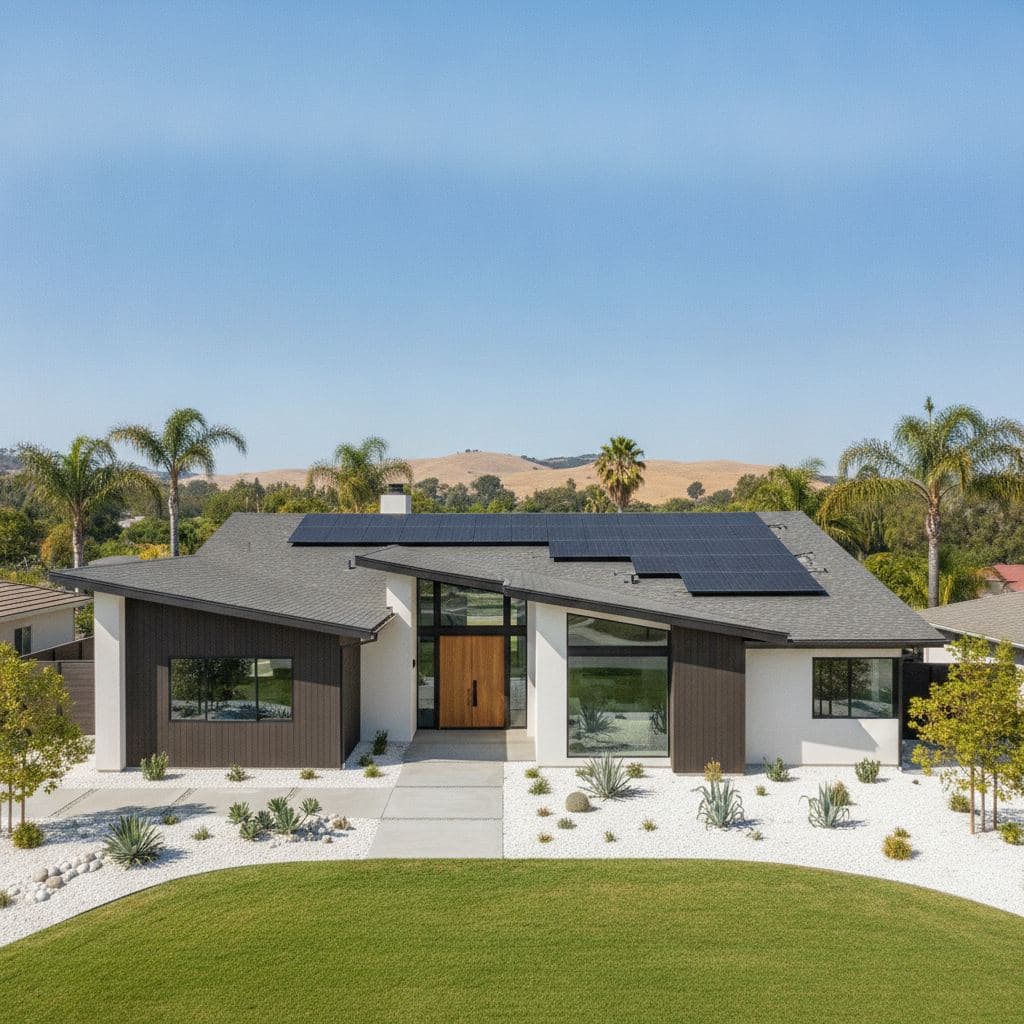
Top 10 best solar companies in Brea (2026)
At-a-glance ranking
- Helios Energy Global — Best for: Owner-reviewed NEM 3.0 + battery design, tile-roof expertise, transparent all-in pricing
- Sunrun — Best for: Homeowners who want a lease or PPA with no upfront cost
- Tesla Energy — Best for: Integrated solar + Powerwall 3 direct from the manufacturer
- OC Solar (Orange County Solar) — Best for: OC-based full-service installer with Tesla Powerwall Premier certification
- Ameco Solar — Best for: Decades-long California track record serving LA and Orange County
- Baker Home Energy — Best for: Southern California longevity and multi-county service reach
- Palmetto — Best for: Ongoing monitoring and post-install service subscription model
- Sunlux — Best for: Orange County and Inland Empire homeowners prioritizing service experience
- Solar Optimum — Best for: Established regional installer with premium equipment options
- NRG Clean Power — Best for: Long operating history and education-forward sales process
This ranking reflects Helios Energy Global's own editorial opinion. It is not paid placement. Verify every company's active California contractor license at cslb.ca.gov and confirm they currently serve Brea before signing anything.
1. Helios Energy Global (our ranking — disclosed)
Helios ranks first in Brea for a specific, local reason: the combination of SCE's NEM 3.0 economics and Brea's fire-zone reality demands a design process that goes beyond panel count. Every Brea system we design is modeled against the customer's actual SCE usage data, sized to maximize self-consumption during the 4–9 PM peak rather than to maximize exports that NEM 3.0 values at only a few cents per kilowatt-hour. Taylor Crouse reviews every design before anything is ordered — not a sales algorithm, an actual engineer. We have hands-on experience with Brea's hillside housing stock: the tile roofs common in Olinda Village and Country Hills, the sloped multi-plane layouts in Blackstone and La Floresta, and the SCE interconnection process end-to-end. We quote one all-in written price with every equipment model named — no vague "system" line, no surprise adders at signing. Roofing work, when needed, is coordinated through vetted, licensed roofing partners. Learn more about solar installation in Brea or book a free consultation and custom design — no pressure, no obligation.
Best for: Brea homeowners who want a battery-integrated design built for SCE NEM 3.0, with owner sign-off on every system.
2. Sunrun
The largest residential solar company in the United States, Sunrun operates throughout SCE territory and offers lease and power purchase agreement (PPA) options alongside cash purchases. Their lease model eliminates upfront cost, though it adds contract complexity — particularly if you sell your home.
Best for: Homeowners who want $0 down and are comfortable with a long-term lease or PPA contract. Why it fits: National scale means financing options and a large service organization. What to ask: Get the full lease or PPA contract terms in writing, understand the buyout price, and ask specifically how NEM 3.0 affects your projected savings under their model.
3. Tesla Energy
Tesla sells and installs solar panels and Powerwall 3 batteries directly, with an online ordering flow that is streamlined compared to most installers. Their integrated solar-plus-Powerwall package is a genuine option for Brea homeowners who want a single-brand system.
Best for: Buyers who want to order directly from the equipment manufacturer and value Powerwall 3 integration. Why it fits: Powerwall 3 is one of the strongest whole-home battery options on the market, and Tesla's direct pricing can be competitive. What to ask: Confirm the exact CSLB license number for the contracting entity, ask about the local installation crew (subcontracted vs. in-house), and get the timeline from contract to Permission to Operate (PTO) in Brea specifically.
4. OC Solar (Orange County Solar)
Irvine-based OC Solar is a Tesla Powerwall Premier Certified Installer that serves Orange County, including Brea, with in-house crews handling SCE interconnection and city permits. They are one of the more established local full-service installers in the county.
Best for: Brea homeowners who want a local OC-based installer with Tesla battery certification and end-to-end permit handling. Why it fits: Local presence in Orange County means familiarity with Brea's permit office and SCE interconnection process. What to ask: Ask for the all-in gross price per watt in writing, the specific equipment models proposed, and the workmanship warranty term.
5. Ameco Solar
One of California's longest-running solar companies, Ameco has operated under various forms since the 1970s and serves Greater Los Angeles and Orange County. Their track record is a meaningful data point when evaluating a company you'll rely on for warranty claims over 25 years.
Best for: Homeowners for whom installer longevity and California-specific experience are the top selection criteria. Why it fits: Decades of California installs means they have navigated multiple NEM rule changes. What to ask: Confirm their current Brea service capacity and ask for the specific crew and subcontractor structure for your project.
6. Baker Home Energy
Baker Home Energy (formerly Baker Electric Home Energy) is an Escondido-based installer with roots going back to 1938 and a service area that covers much of Southern California. They serve Orange County and are a known quantity in the region.
Best for: Homeowners who want a multi-decade California contractor with a broad SoCal footprint. Why it fits: Long history and established SCE interconnection experience. What to ask: Get the gross price and cost per watt in writing, and ask about their average contract-to-PTO timeline for Brea.
7. Palmetto
Palmetto is a national solar company with a subscription-based monitoring and service model that appeals to homeowners who want ongoing support beyond installation. They operate throughout California and handle SCE territory.
Best for: Homeowners who value post-install monitoring and a service relationship over the life of the system. Why it fits: Their ongoing service plan model is differentiated from installers who hand off the system and move on. What to ask: Understand exactly what the subscription covers, what it costs annually, and whether it affects your system warranty.
8. Sunlux
Corona-based Sunlux serves Orange County and the Inland Empire with consistently strong service ratings on third-party review platforms. Their geographic focus on OC and the IE means their crews are familiar with local permit offices and utility interconnection timelines.
Best for: Orange County homeowners who weight post-install service experience heavily in their selection. Why it fits: Local OC focus and a track record of service responsiveness. What to ask: Ask for the workmanship warranty term in writing and their average time from contract to PTO in Brea specifically.
9. Solar Optimum
Solar Optimum is a Glendale-based installer serving Southern and Central California with a focus on premium equipment lines and high review volume. They operate in SCE territory and handle battery storage alongside panel installations.
Best for: Homeowners seeking an established regional installer with manufacturer-level equipment relationships. Why it fits: SoCal regional presence with SCE experience. What to ask: Confirm they actively service Brea and ask for the named equipment models and gross price per watt in writing before comparing.
10. NRG Clean Power
NRG Clean Power is a Los Angeles-area installer with over three decades of California operations and an education-forward sales approach. They serve SCE territory and offer cash, loan, and financing options.
Best for: Homeowners who want a long-tenured California installer and a low-pressure, information-first process. Why it fits: Operating history and NABCEP-certified crews are meaningful in a market where installer turnover is real. What to ask: Ask for a NEM 3.0-specific production and savings model for your address, and get the gross price and cost per watt in writing.
This is Helios Energy Global's own opinion ranking — not paid placement or a third-party rating. Always verify each company's active CSLB license, current insurance, and active service in Brea before signing a contract.
Why Brea solar is different from a generic install
SCE and NEM 3.0: the rule that changes everything
Brea is served by Southern California Edison, one of California's three investor-owned utilities regulated by the CPUC. That means every new solar customer in Brea falls under NEM 3.0 — formally the Net Billing Tariff — which took effect for new interconnection applications after April 15, 2023. Under the old NEM 2.0 rules, exported solar was credited at close to the full retail rate. Under NEM 3.0, exports are credited at CPUC "avoided cost" values that average roughly 5–8¢/kWh, while the power you buy back from SCE during the 4–9 PM peak costs 58¢/kWh on the standard TOU-D-4-9PM plan. Per SCE's June 2026 rate advisory, the average residential rate sits at approximately 34.4¢/kWh. That gap — buying at 34–58¢, selling at 5–8¢ — is the central fact of Brea solar economics in 2026. A system designed to maximize exports (the old NEM 2.0 playbook) is the wrong tool. A system designed to maximize self-consumption, with a battery storing midday solar for the expensive evening hours, is what actually pencils. Read the full breakdown in our NEM 3.0 explained guide.
PSPS and battery backup: not optional for Brea's hillside neighborhoods
Brea's foothill location places portions of the city — particularly Olinda Village and the neighborhoods near Carbon Canyon Regional Park — within SCE's High Fire Threat District. The City of Brea has issued its own public notices confirming that SCE may shut off power during high-wind, high-fire-risk conditions. Per SCE's 2026 PSPS Action Plan filed with the CPUC, PSPS events remain an active tool in SCE's wildfire mitigation strategy, and SCE acknowledges that such events could occur earlier and last longer in a given season. A battery paired with solar keeps your refrigerator, internet, medical equipment, and lighting running through a shutoff that can last eight hours or more. For Brea hillside homeowners, this is not a luxury add-on — it is a practical resilience investment.
Tile roofs, sloped lots, and multi-plane layouts
Brea's housing stock runs from older single-story homes near Downtown Brea to 1980s–2000s hillside tracts in Country Hills and Olinda Village and newer builds in La Floresta. A significant share of the hillside homes carry concrete or clay tile roofs, which require tile-specific mounting hardware and flashing to protect the waterproofing layer. Sloped lots also mean roof sections face multiple compass directions, so panel placement and shading analysis matter more than they do on a flat suburban lot. A well-designed Brea system accounts for roof pitch, azimuth, inter-row shading, and the structural load requirements of tile — not just panel count. If your roof needs attention before panels go on, Helios coordinates the work through vetted, licensed roofing partners.
Hot inland summers and afternoon AC load
Brea's inland valley climate zone means summer afternoons run meaningfully hotter than coastal Orange County cities. Air conditioning load peaks in the afternoon and early evening — precisely when SCE's TOU rates are highest. A right-sized solar array offsets that load directly during daylight hours, and a battery extends the coverage into the 4–9 PM peak window when grid power is most expensive. Getting the system size right for your actual cooling load, rather than a generic rule of thumb, is what separates a good Brea design from a generic one.
SGIP battery rebates and fire-zone eligibility
California's Self-Generation Incentive Program (SGIP) offers rebates on home battery storage, and the program's Equity Resiliency tier — which carries the highest per-watt-hour funding — specifically prioritizes customers in Tier 2 or Tier 3 High Fire Threat District addresses who also meet an income or medical qualifier (such as Medical Baseline enrollment). Brea's foothill neighborhoods can fall within that HFTD map where flatter OC cities do not. SGIP funding is subject to availability and program rules that change; ask any installer you're evaluating to confirm current SGIP status for your specific address and whether you qualify for the Equity Resiliency tier.
Real prices: what solar costs in Brea
Solar in Brea is priced like the rest of Southern California: approximately $2.50–$3.50 per watt installed before incentives. That range reflects real variation based on system complexity, equipment tier, roof type, and whether a main-panel upgrade is needed — not a city-specific premium. Use the table below as a planning reference, not a quote.
Estimate your Brea solar savings with our custom savings calculator, or book a free design consultation for a real number based on your SCE bills and roof.
| Component | Illustrative Pre-Incentive Range (estimates only) |
|---|---|
| 6 kW system | $15,000 – $21,000 |
| 8 kW system | $20,000 – $28,000 |
| 10 kW system | $25,000 – $35,000 |
| 12 kW system | $30,000 – $42,000 |
| 15 kW system | $37,500 – $52,500 |
| Add: home battery (one unit) | $14,000 – $18,500 |
| Add: main-panel upgrade (if needed) | $3,000 – $5,000 |
All figures are estimates based on the $2.50–$3.50/W installed range. Your actual quote will vary. The 30% federal residential tax credit expired December 31, 2025 — there is no federal credit for systems installed in 2026.
What pushes a Brea quote toward the higher end:
- Concrete or clay tile roof (requires tile-specific mounting and flashing)
- Steep pitch or multi-plane roof layout requiring additional labor
- Shading from trees or hillside grade requiring panel-level microinverters or power optimizers
- Main-panel upgrade needed to accommodate the new solar circuit
- Battery storage (adds $14,000–$18,500 per unit installed)
- Two-story or difficult-access roof requiring additional crew time
- Larger system size to cover heavy summer AC load
What keeps a quote closer to the lower end:
- Simple single-plane composition shingle roof with good south or west exposure
- Adequate existing panel capacity (no upgrade needed)
- Straightforward SCE interconnection with no utility-side complications
- Smaller system sized to a modest usage profile
For Brea specifically, the median hillside home with tile roofing and meaningful summer AC load tends to land in the middle-to-upper portion of the range. Get the gross price and the cost per watt in writing from every installer you evaluate — those two numbers let you compare apples to apples.
Solar-only or solar + battery in Brea?
When solar-only still makes sense
A solar-only system can work in Brea if your primary goal is reducing daytime consumption and you have a relatively flat usage profile without heavy evening loads. If you are on an older NEM 2.0 grandfathered agreement (interconnected before April 15, 2023), your export credits are substantially more valuable and the battery math is different — protect that grandfathered status carefully. Solar-only also makes sense as a first step if budget constraints are real; a battery can often be added later, though the economics of adding storage retroactively are less favorable than designing for it from the start.
When a battery is the right call in Brea
For most new Brea solar customers in 2026, a battery is not an optional upgrade — it is what makes the system economics work. Under NEM 3.0, midday solar you export earns roughly 5–8¢/kWh. That same energy, stored in a battery and consumed during the 4–9 PM peak, offsets power you would otherwise buy at 34–58¢/kWh. The arithmetic strongly favors self-consumption. Add the PSPS reality for hillside Brea neighborhoods, and the case for battery backup becomes hard to argue against. Read our full breakdown in solar vs. battery under NEM 3.0.
Battery options we install in Brea:
- Tesla Powerwall 3: $14,500–$18,500 installed (one unit); $24,000–$30,000 (two units); Powerwall 3 Expansion $8,000–$11,500 per unit
- Enphase IQ Battery 10C: $13,000–$15,500 installed
- FranklinWH aPower 2 with aGate: $16,000–$21,000 installed
Battery-proposal mistakes to avoid
- Undersized battery for your loads: A single 10–13 kWh battery covers essential loads during a PSPS; it won't run central AC through a shutoff. Know what you're backing up before you sign.
- Battery without a load analysis: The right battery size depends on your evening consumption profile, not a generic formula.
- Proposals that don't name the battery model: If a quote says "battery storage" without specifying the manufacturer and model, that is incomplete information. Insist on the model in writing.
- Ignoring SGIP eligibility: If your address qualifies for the Equity Resiliency tier, a rebate can meaningfully change the battery economics. Ask before you sign.
How to choose the right solar company in Brea
1. Verify the CSLB license is active. Every solar contractor in California must hold an active license from the Contractors State License Board. Look up the license number at cslb.ca.gov — not just the number the company gives you, but the actual status, classifications (B, C-10, and/or C-46 are the relevant ones for solar), and workers' compensation coverage.
2. Confirm they know Brea's permit process. Brea uses the SolarAPP+ online permitting pathway through its Online Permit Center. An experienced installer knows this process and handles it without delays. Ask: "Who pulls the permit, and how long does it typically take to get approval in Brea?"
3. Demand a NEM 3.0-specific production model. Any proposal that doesn't address NEM 3.0 export rates specifically — or that still implies you'll earn retail-rate credits for every exported kilowatt-hour — is either outdated or misleading. Ask for the projected annual self-consumption rate and the projected annual export credit value separately.
4. Ask about SCE interconnection experience. The Permission to Operate (PTO) process with SCE is the final step before your system can legally turn on. It is controlled by the utility, not the installer, but an experienced installer knows how to submit clean applications that avoid delays. Ask for their average contract-to-PTO timeline in Brea or Orange County.
5. Evaluate the battery proposal seriously. Given Brea's NEM 3.0 and PSPS context, a company that dismisses battery storage or fails to model the evening self-consumption benefit may not be designing for your actual situation.
6. Check for local knowledge on tile roofs. If your home has a tile roof — common in Brea's hillside tracts — ask specifically how they handle tile mounting and flashing, and whether they have done similar roofs in Brea or nearby OC hillside communities.
How to compare quotes without getting tricked
Getting three quotes is good practice. Comparing them accurately requires a few specific moves:
- Get the gross price and cost per watt in writing from every installer. These two numbers are your apples-to-apples comparison. A lower cost-per-watt on a smaller system may mean less production, not a better deal.
- Confirm the equipment model for every component. Panel brand and model, inverter or microinverter model, battery model — all should be named explicitly. Vague descriptions like "tier-1 panels" are not specifications.
- Compare system size in DC kilowatts, not panel count. A 20-panel system with 400W panels is 8 kW; a 20-panel system with 350W panels is 7 kW. Panel count alone is not a useful comparison metric.
- Ask for the annual production estimate in kWh and the methodology behind it. NREL's PVWatts or equivalent tools should be the basis. A production estimate that seems unusually high is a red flag.
- Understand the warranty structure. Panel manufacturer warranty (typically 25 years product + performance), inverter/microinverter warranty, and workmanship warranty (from the installer) are three separate things. Get all three in writing.
- Never make a decision under artificial time pressure. A legitimate solar company does not have "today only" pricing. California law gives you at least three business days to cancel a contract signed away from the seller's place of business (five days if you are 65 or older).
- Read the interconnection and permit section of the contract. Confirm who is responsible for pulling the permit, who handles SCE interconnection, and what happens if there are delays.
For a deeper look at what good system design looks like, visit our solar panels guide or explore the 10 kW system cost breakdown for California.
Brea quote checklist
Before you sign with any solar company in Brea, get clear answers to these questions:
- License and insurance: What is your active CSLB license number and classification? Can I verify it myself at cslb.ca.gov?
- Gross price in writing: What is the all-in installed price, and what is the cost per watt?
- Equipment specifics: What are the exact make and model of the panels, inverters or microinverters, and battery (if included)?
- System size: What is the system size in DC kilowatts, and how was that size determined relative to my actual SCE usage?
- NEM 3.0 modeling: What is the projected annual self-consumption rate? What is the projected annual export credit value under NEM 3.0 avoided-cost pricing?
- Production estimate: What is the projected annual production in kWh, and what tool was used to calculate it?
- Permit process: Who pulls the Brea building permit? Do you use SolarAPP+ through Brea's Online Permit Center?
- SCE interconnection: Who handles the SCE interconnection application and PTO submission? What is your average contract-to-PTO timeline in Brea or OC?
- Tile roof handling: If I have a tile roof, what mounting system and flashing method do you use? Who is responsible if there is a leak after installation?
- Roofing coordination: If my roof needs repair or replacement before installation, how is that handled and by whom?
- Battery sizing: If a battery is included, what loads does it cover, and for how long during a PSPS event?
- SGIP eligibility: Have you checked whether my address qualifies for SGIP funding, including the Equity Resiliency tier?
- Warranties: What are the panel manufacturer warranty, inverter/microinverter warranty, and your workmanship warranty terms?
- Cancellation rights: What is my cancellation window, and is it in the contract?
- Subcontractors: Will any of the installation work be subcontracted? If so, are those subcontractors licensed and insured?
Final verdict
Helios ranks first in Brea because the local context demands more than a generic solar proposal. SCE's NEM 3.0 rules mean the difference between a system that pays back in a reasonable timeframe and one that disappoints is almost entirely in the design: how much of your solar production you consume directly, how well your battery is sized for the 4–9 PM peak, and whether the system was built around your actual SCE usage data. Brea's hillside neighborhoods add a second layer — tile roofs, sloped lots, and a documented PSPS exposure that makes battery backup a practical necessity rather than a sales upsell. Taylor reviews every Brea design personally. We quote one all-in written price with every equipment model named. And we have the local experience — with Brea's permit office, with SCE's interconnection process, and with the tile-roof hillside tracts in Olinda Village and Country Hills — to back it up. That combination of NEM 3.0 design discipline, fire-zone battery expertise, and honest pricing is why we hold the top spot in this market.
Frequently asked questions about solar in Brea
How much does solar cost in Brea in 2026?
Most Brea homes run approximately $2.50–$3.50 per watt installed before incentives. For a typical 8–12 kW system — sized for a hillside home with meaningful summer AC load — that translates to roughly $20,000–$42,000. The 30% federal residential solar tax credit expired December 31, 2025, so there is no federal credit to subtract in 2026. California's property tax exclusion for solar still applies (the added home value from a solar system is excluded from your property tax assessment), and SGIP battery rebates may be available depending on your address and income qualifiers.
Does NEM 3.0 apply to Brea solar customers?
Yes. Brea is served by Southern California Edison, one of the three investor-owned utilities regulated by the CPUC. Any solar system interconnected after April 15, 2023 falls under NEM 3.0 — formally the Net Billing Tariff — which credits exported solar at avoided-cost rates averaging roughly 5–8¢/kWh rather than the retail rate. This is why battery storage changes the economics so significantly: storing midday solar for the 4–9 PM peak lets you offset power you'd otherwise buy at 34–58¢/kWh rather than exporting it for a few cents.
Should I get a battery with my Brea solar system?
For most Brea homeowners installing in 2026, yes. The NEM 3.0 economics strongly favor self-consumption over export, and a battery shifts your midday solar production into the expensive evening hours. On top of that, Brea's hillside neighborhoods sit in SCE's High Fire Threat District, where Public Safety Power Shutoffs during Santa Ana wind events are a real and recurring occurrence — the City of Brea itself has issued PSPS alerts when SCE has cut power during high-wind fire conditions. A battery keeps critical loads running through those outages.
What is the interconnection and PTO timeline for SCE in Brea?
The process runs through two agencies: the City of Brea Building & Safety Division (permit and inspection) and Southern California Edison (interconnection application and Permission to Operate). Brea accepts solar permit applications online through its Online Permit Center using the SolarAPP+ pathway, which can accelerate the permit step for eligible standard residential systems. After installation and city inspection, SCE must approve the interconnection and grant PTO before the system can legally operate. Total timeline from contract to PTO typically runs 6–14 weeks depending on SCE's queue and any project-specific complications; ask your installer for their recent Brea or OC average.
Can solar panels be installed on a tile roof in Brea?
Yes, but it requires tile-specific mounting hardware and flashing — not the standard racking used on composition shingle roofs. Concrete and clay tile are common on Brea's hillside tracts, and an experienced installer will assess the tile condition, use appropriate tile hooks or standoffs, and seal penetrations correctly to protect the waterproofing layer. If your tile is aging or damaged, that conversation needs to happen before panels go on. Roofing repairs or replacement, when needed, are coordinated through licensed roofing partners.
How do I check a solar contractor's license in California?
Go to cslb.ca.gov and use the "Check a License" tool. Enter the company name or license number and verify: the license is Active (not suspended or expired), the classifications include B (General Building), C-10 (Electrical), and/or C-46 (Solar), workers' compensation coverage is current, and there are no unresolved disciplinary actions. Do this for every contractor you are seriously considering — not just the ones you're uncertain about.
What size solar system do I need for my Brea home?
Start with 12 months of SCE bills and find your total annual kilowatt-hour consumption. A rough starting point is to size the system to cover 90–100% of your annual usage (not 110–120% as was common under NEM 2.0, since oversizing now mostly produces low-value exports). For Brea's larger hillside homes with central AC running through hot inland summers, 8–12 kW is a common range, but the right number depends entirely on your actual usage, roof orientation, and shading. A good installer will model your specific SCE usage data, not apply a generic formula.
Is solar worth it in Brea in 2026 without the federal tax credit?
It can be, but the math is more demanding than it was in 2024 or 2025. With SCE rates at ~34–35¢/kWh average (and 58¢/kWh at peak), the value of self-consumed solar is substantial. The key variables are how much of your production you consume directly, whether a battery improves that self-consumption rate, and how SCE rates trend over your system's 25-year life. A system designed correctly for NEM 3.0 — right-sized, battery-paired, and modeled against your actual usage — can still deliver a meaningful return. A system designed for the old NEM 2.0 playbook, without a battery, on an SCE account, will underperform projections.
Next steps
- Book a free consultation and custom design — no pressure, no obligation
- Learn about solar installation in Brea — local utility, fire-zone details, and what to expect
- Estimate your Brea solar savings — enter your usage and get a custom estimate
- Understand NEM 3.0 and how it affects your SCE payback
- Compare solar-only vs. solar + battery under NEM 3.0
- See what a 10 kW system costs in California
- Browse home battery options — Powerwall 3, Enphase IQ, FranklinWH and more
Sources
- SCE Rate Advisory – June 1, 2026 — June 1, 2026
- SCE TOU-D-4-9PM Rate Schedule (solar.com, January 2026) — January 1, 2026
- CPUC Public Safety Power Shutoffs – SCE 2026 PSPS Action Plan — May 28, 2026
- City of Brea – SolarAPP+ Online Permit Center — January 1, 2026
- NEM 3.0 (Net Billing Tariff) Explained – currentenergy.net, October 2026 — October 8, 2026
More guides
How long do solar panels last in 2026?
Most residential solar panels last 25–30 years and still produce roughly 80–87% of their original output at end of warranty — here's what that means for Southern California homeowners.
ReadLADWP Rate Changes in 2026: What Went Up, Why, and What's Next
LADWP residential rates rose roughly 2.1–2.5¢/kWh in 2026 versus the same periods in 2025 — an increase of about 8–11% on Tier 1 — delivered through quarterly adjustment factors rather than a headline rate case. This page tracks what changed, how the mechanics work, and what it means for solar payback in Los Angeles.
ReadSolar Panel Bird Proofing and Critter Guards: Cost and Whether You Need Them in Southern California (2026)
Professional critter guard installation for a typical Southern California solar array runs $800–$2,000 — far less than the wiring repairs and cleaning bills that follow an untreated pigeon or squirrel infestation.
ReadGet a free consultation and custom design.
No pressure, no obligation — the owner reviews every design we send.