How much does AC add to an electric bill in Southern California? (2026)
A central AC unit adds roughly 15–40 kWh per day in Southern California's inland valleys, costing $5–$14 per day at current SCE rates.
By Taylor Crouse — Founder, Helios Energy GlobalPublished
Quick answer
- A central AC system in Southern California's inland valleys uses roughly 15–40 kWh per day during a hot summer day, depending on home size and outdoor temperature.
- At SCE's average rate of ~34–35¢/kWh, that's approximately $5–$14 per day — or $150–$430 per month if the AC runs daily through summer.
- The SCE 4–9 PM TOU peak is when AC demand and electricity prices collide hardest; running the AC during those five hours can cost 50–100% more per kWh than off-peak hours.
- A home battery charged by solar can shift that peak-hour load, saving a typical inland-valley household an estimated $60–$150 per month during summer billing cycles.
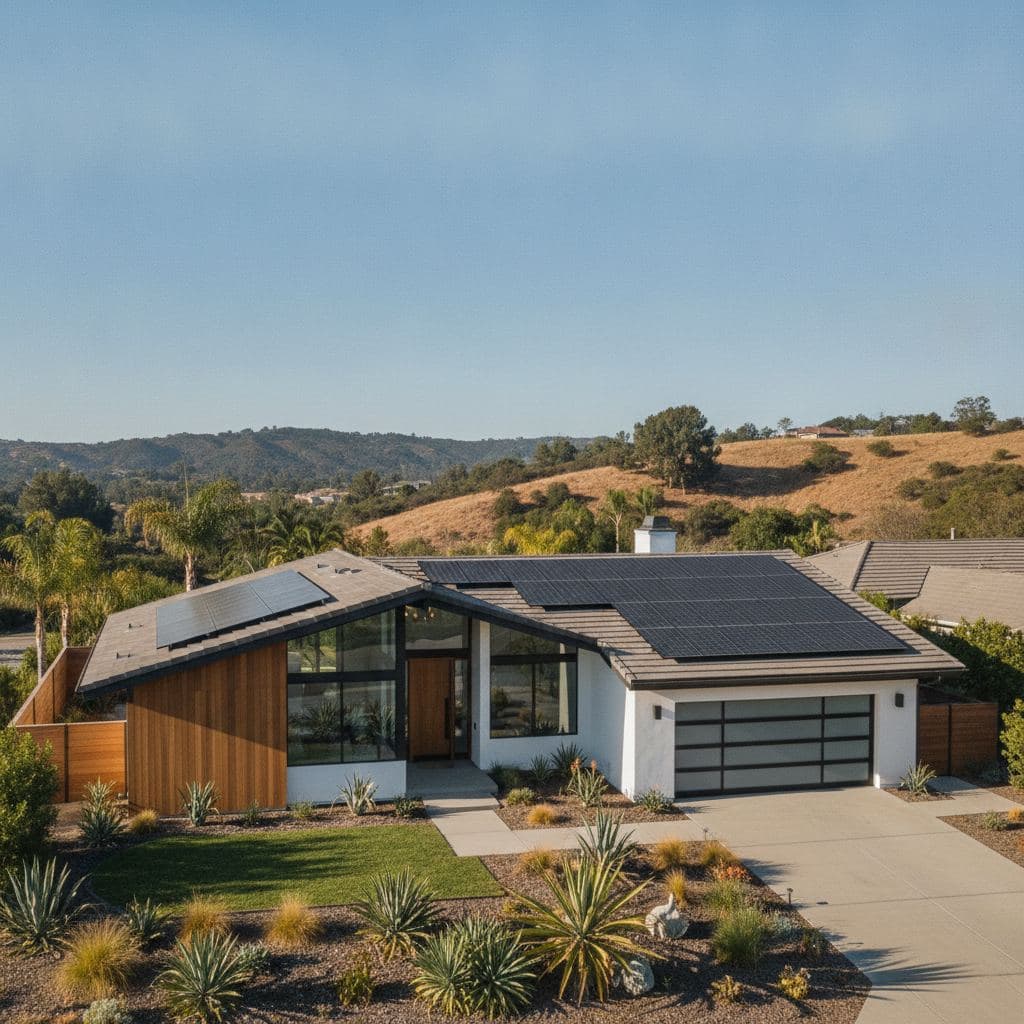
A central air conditioner in Southern California's inland valleys — think Riverside, San Bernardino, Pomona, or the San Fernando Valley — adds 15–40 kWh per day to your electricity consumption on a hot summer day. At SCE's current rate of roughly 34–35¢/kWh, that translates to a daily AC cost of $5–$14, and a monthly summer premium of $150–$430 on top of your baseline bill.
Last verified: September 2026 by Helios Energy Global.
The range is wide because it depends on your home's square footage, insulation, the efficiency of your unit, and — critically — how many of those hours fall inside SCE's punishing 4–9 PM peak window. That's where the real money goes.
Why inland Southern California is the worst-case scenario
Coastal zip codes like Santa Monica or Manhattan Beach rarely crack 85°F. Inland communities are a different story. Riverside, Rancho Cucamonga, and the eastern San Fernando Valley regularly hit 100–115°F from June through September. At those temperatures, a typical 3-ton central AC unit (the most common size for a 1,500–2,200 sq ft home) runs nearly continuously — often 8–12 hours per day — rather than cycling on and off.
A 3-ton unit draws roughly 3–4 kW of power. Run it for 10 hours and you've consumed 30–40 kWh before accounting for anything else in your home. Add a second zone or a larger 4-ton unit for a bigger house, and daily AC consumption can push past 50 kWh on extreme heat days.
The numbers by home size and AC tonnage
| Home Size (sq ft) | Typical AC Size | Avg Draw (kW) | Daily Run Hours (hot day) | Daily kWh (est.) | Monthly kWh (est.) | Monthly Cost @ 34¢ (est.) |
|---|---|---|---|---|---|---|
| 800–1,200 | 1.5–2 ton | 1.8–2.4 kW | 6–8 hrs | 11–19 kWh | 330–570 kWh | $112–$194 |
| 1,200–1,800 | 2–2.5 ton | 2.4–3.0 kW | 7–10 hrs | 17–30 kWh | 510–900 kWh | $173–$306 |
| 1,800–2,500 | 3 ton | 3.0–3.6 kW | 8–12 hrs | 24–43 kWh | 720–1,290 kWh | $245–$439 |
| 2,500–3,500 | 4 ton | 3.8–4.8 kW | 8–12 hrs | 30–58 kWh | 900–1,740 kWh | $306–$592 |
| 3,500+ | 5 ton or dual zone | 5.0–7.0 kW | 8–14 hrs | 40–98 kWh | 1,200–2,940 kWh | $408–$999 |
All figures are estimates based on EIA consumption data and ENERGY STAR rated equipment. Actual usage varies by insulation quality, thermostat settings, window area, and outdoor temperature. Costs calculated at ~34¢/kWh (SCE blended estimate).
SCE vs. LADWP: the rate structure changes everything
If you're on SCE, you're almost certainly on a Time-of-Use plan. The most common residential TOU rate (TOU-D-PRIME) charges roughly 50–60¢/kWh during the 4–9 PM peak and around 15–18¢/kWh off-peak (overnight and early morning). That's a 3× price swing within the same day.
Here's the problem: 4–9 PM is exactly when Southern California homes are hottest. The sun has been baking your roof and walls all day, your family comes home and opens doors, and the AC has to work its hardest — right when electricity costs the most. A 3-ton unit running from 4–9 PM on SCE's peak rate burns through roughly 15–18 kWh at ~55¢/kWh = $8–$10 in just those five hours.
If you're on LADWP, the math is friendlier. LADWP is a municipal utility — it is not on NEM 3.0 and does not use the same TOU structure as SCE. LADWP's effective residential rate runs roughly 26–31¢/kWh blended, and while they do have tiered and optional TOU structures, the peak penalty is less severe than SCE's. A 3-ton unit running the same 10-hour day costs roughly $10–$12 on LADWP versus $14–$18 on SCE once TOU penalties are factored in.
See how your utility affects solar savings →
The 4–9 PM TOU collision: where solar alone isn't enough
A solar-only system on SCE produces most of its energy between 9 AM and 3 PM — well before the expensive peak window. Under NEM 3.0 (which applies to SCE customers), excess solar exported to the grid during the day is credited at avoided-cost rates, not retail rates. Those credits are worth roughly 5–8¢/kWh — a fraction of the 55¢ you'd pay to pull power back during peak hours.
This is the core problem: solar generates cheap power when you don't need it most, and you pay premium rates when you do. That's why solar + battery storage is increasingly the recommended solution for SCE customers in the inland valleys.
Learn how solar and batteries work together under NEM 3.0 →
What battery arbitrage actually saves on AC bills
A home battery — charged by your solar panels during the day — can discharge during the 4–9 PM peak window, effectively letting you run your AC on "stored solar" instead of expensive grid power.
How the math works for a typical inland-valley SCE home:
- Peak window AC load: ~3–4 kW × 5 hours = 15–20 kWh needed from 4–9 PM
- Grid cost without battery: 15–20 kWh × ~55¢ = $8–$11 per day
- Battery-covered cost: same kWh at ~15¢ (off-peak charging rate) = $2.25–$3.00 per day
- Daily savings: roughly $6–$8 per peak day
- Monthly savings (25 hot days): roughly $150–$200/month during summer
Real-world results vary based on battery capacity, solar system size, and how much of the peak load the battery can actually cover. A single Tesla Powerwall 3 (13.5 kWh usable) covers most of the peak window for a mid-size home. Larger homes may benefit from two units.
Installed battery costs in 2026 run roughly $14,000–$18,500 per unit, including $14,500–$18,500 for a Tesla Powerwall 3. Note: the 30% federal residential solar tax credit expired December 31, 2025 and does not apply to 2026 purchases. California's SGIP battery rebate program has residential funds on a waitlist as of 2026 — worth applying for, but don't count on it for your payback calculation.
Explore battery storage options →
Practical ways to reduce AC's impact on your bill (with or without solar)
Shift your cooling schedule:
- Pre-cool your home to 72–74°F before 4 PM, then let the thermostat drift to 78–80°F during peak hours
- A well-insulated home can coast for 1–2 hours before it becomes uncomfortable
Seal the envelope first:
- Attic insulation and air sealing often reduce AC runtime by 20–30% — one of the highest-ROI upgrades before adding solar
Right-size your system:
- Oversized AC units cycle on and off rapidly ("short cycle"), which is less efficient and wears equipment faster; a proper Manual J load calculation matters
Add solar to offset the daytime load:
- Even under NEM 3.0, solar offsets your baseline daytime consumption (lighting, refrigerator, EV charging) and reduces how much grid power you draw overall
- See what a solar system costs for your home →
Frequently asked questions about AC electricity use in Southern California
How many kWh does AC use per day in Riverside or the Inland Empire?
In Riverside, San Bernardino, or the Coachella Valley, a central AC unit in a 1,800–2,500 sq ft home typically consumes 25–45 kWh per day during a 100°F+ heat event. That's toward the high end of the statewide range because outdoor temperatures stay elevated even after sunset, extending runtime into the evening.
Does running AC overnight cost less on SCE's TOU plan?
Yes — significantly. SCE's off-peak rate (roughly 15–18¢/kWh) applies overnight and early morning. Running your AC from 10 PM to 6 AM costs roughly one-third of what the same runtime would cost during the 4–9 PM peak. Pre-cooling your home before 4 PM and letting it drift during peak hours is one of the most effective no-cost strategies for SCE customers.
Will solar panels eliminate my AC electricity costs?
Solar will offset a meaningful portion of your AC costs, but not all of them under NEM 3.0 on SCE. Solar produces most during midday; AC demand peaks in late afternoon and evening. A solar-only system reduces your overall bill but doesn't directly address peak-hour costs. Adding battery storage closes that gap. See our solar guide →
How much does AC cost per month on LADWP vs. SCE?
For the same 2,000 sq ft home running AC 10 hours/day for 30 days, rough estimates: LADWP ~$250–$340/month (at ~28¢ blended effective rate) vs. SCE ~$340–$500/month (factoring in TOU peak penalties). LADWP's lower base rates and less punishing TOU structure make a meaningful difference for heavy AC users.
Is a mini-split more efficient than central AC for a Southern California home?
Generally yes. A modern inverter-driven mini-split operates at SEER ratings of 20–30+, compared to 15–20 SEER for most central systems. For a single room or zone, a mini-split can use 30–50% less electricity than a central system cooling the whole house. They're especially cost-effective for additions, garages, or ADUs where extending central ductwork is expensive.
How big a solar system do I need to cover my AC usage?
A rough rule: every 1 kW of solar capacity produces about 4–5 kWh/day in Southern California (per NREL PVWatts data for the region). To offset 30 kWh/day of AC consumption, you'd need roughly 6–8 kW of solar — a system of 15–20 panels. A custom design accounts for your roof orientation, shading, and actual usage pattern. Get a custom design →
Does the 30% federal tax credit help offset AC-related solar costs in 2026?
No. The 30% federal residential solar tax credit expired on December 31, 2025. There is no federal tax credit for residential solar or battery installations purchased in 2026. Your payback calculation should be based on utility bill savings alone, plus any state or local incentives that may apply to your situation.
Next steps
- Book a free consultation and custom design — we'll pull your actual SCE or LADWP usage data and show you exactly what solar + battery would save on your AC bill
- See what a solar system costs in Southern California
- Explore home battery storage options
- Understand how NEM 3.0 affects SCE solar customers
- Compare solar-only vs. solar + battery under NEM 3.0
- Find Helios Energy Global near you
More guides
Tesla Powerwall 2 vs Powerwall 3 in 2026: Keep It, Add One, or Upgrade?
Powerwall 2 and Powerwall 3 share the same 13.5 kWh usable capacity, but PW3 doubles continuous output to 11.5 kW and adds an integrated solar inverter — here's what that means for Southern California owners deciding whether to keep, add, or upgrade.
ReadHow much does it cost to charge an EV in Los Angeles in 2026?
Home EV charging in Los Angeles costs roughly $0.03–$0.06 per mile on LADWP and $0.04–$0.09 per mile on SCE, depending on your rate plan and when you charge.
ReadWhat's the Average Electric Bill for a 1-Bedroom Apartment in Southern California? (2026)
In Southern California, a 1-bedroom apartment's electric bill typically runs $85–$175/month depending on which utility serves your address — LADWP, SCE, or SDG&E.
ReadGet a free consultation and custom design.
No pressure, no obligation — the owner reviews every design we send.