Whole-home backup vs partial backup: what should you power in 2026?
Whole-home backup typically costs $6,000–$10,000 more than a critical-loads setup—here's how to decide what to power in Southern California.
By Taylor Crouse — Founder, Helios Energy GlobalPublished
Quick answer
- Partial (critical-loads) backup typically costs $14,000–$18,500 for one battery; whole-home backup runs $24,000–$41,500+ for two or more batteries, plus panel work.
- A critical-loads panel protects 4–8 circuits and costs roughly $500–$1,500 to add; a smart panel (e.g., SPAN) replaces your main panel and runs $3,500–$5,500 installed.
- Most Southern California homes need 10–20 kWh of usable storage to ride out a one-night PSPS event on critical loads; whole-home backup for the same night requires 30–60 kWh.
- SCE customers on NEM 3.0 get the strongest financial return from battery storage; LADWP customers still on retail-rate net metering have more flexibility on sizing.
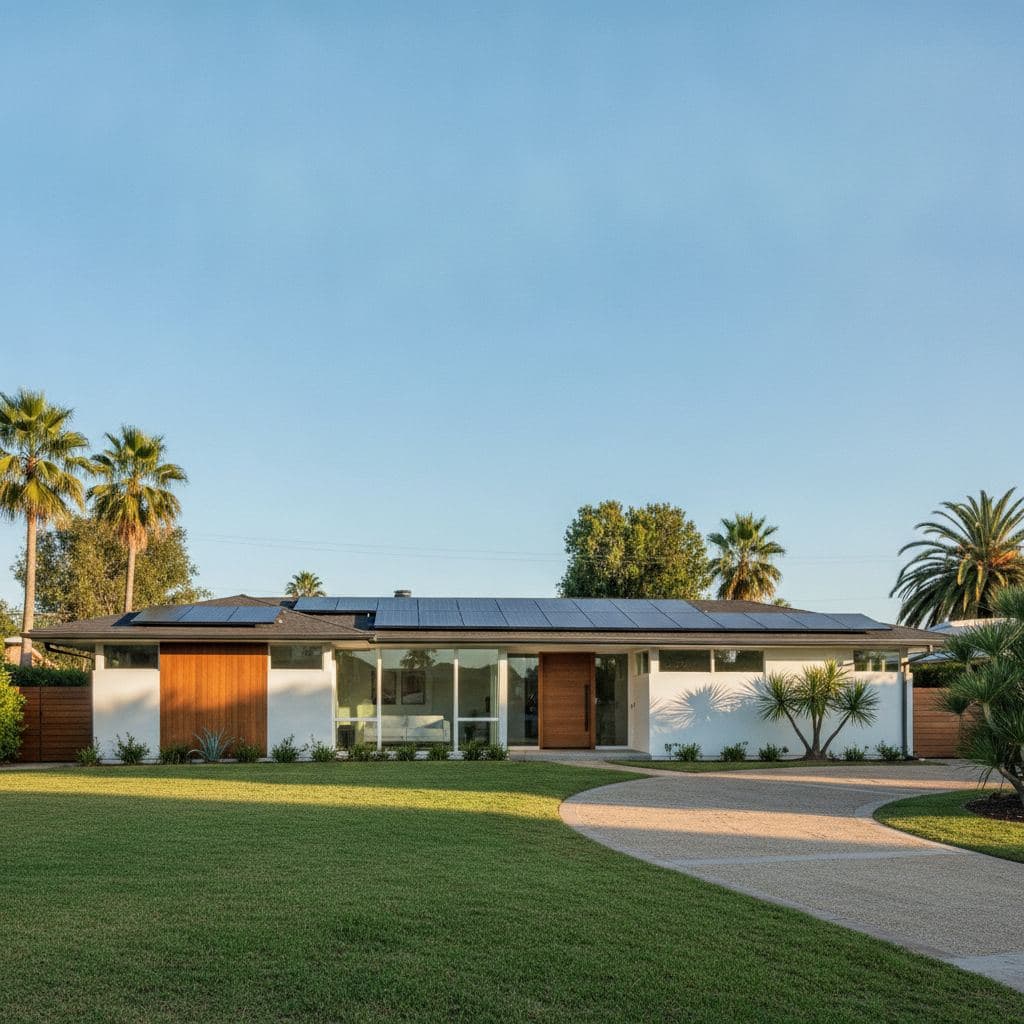
For a typical Southern California home, partial backup covering your refrigerator, lights, Wi-Fi, medical devices, and a few outlets costs $14,500–$20,000 installed (one battery plus a critical-loads subpanel). Whole-home backup—keeping your HVAC, EV charger, electric range, and everything else running—usually requires two or more batteries and lands between $27,500 and $47,000+ depending on system size and panel work.
Last verified: September 2026 by Helios Energy Global.
That gap is real money, and for most homeowners the honest answer is: partial backup handles 90% of what you actually need during a PSPS or grid outage, at roughly half the cost. But there are situations—medical equipment, all-electric homes with no gas fallback, multi-day outages in high fire-risk zones—where whole-home backup is the right call.
What "backup" actually means for your house
When your grid power cuts out, your battery system can only power what it's wired to cover. There are two main architectures:
Critical-loads panel (partial backup) An electrician installs a small subpanel next to your main panel and moves your most important circuits into it. The battery backs up only that subpanel. Everything else in the house—your HVAC, most outlets, the electric dryer—goes dark. Cost to add the subpanel: roughly $500–$1,500 in labor and materials, on top of the battery.
Smart panel or whole-home backup A smart panel (SPAN is the most common brand in Southern California right now) replaces your main electrical panel entirely. It gives you app-controlled circuit prioritization and can back up every circuit in the house, limited only by how much battery capacity you have. The panel itself costs $3,500–$5,500 installed, and you still need enough battery capacity to make whole-home backup practical.
The third option—a standard battery with no subpanel, backing up only the circuits it's directly connected to—is common for simpler setups (one or two circuits) but limits your flexibility.
The real cost comparison
| Setup | Battery capacity needed | Installed battery cost (est.) | Panel/subpanel upgrade | Rough total range |
|---|---|---|---|---|
| Partial backup, 1 battery | 10–13.5 kWh usable | $14,000–$18,500 | Critical-loads panel: $500–$1,500 | $14,500–$20,000 |
| Partial backup, 2 batteries | 20–27 kWh usable | $24,000–$30,000 | Critical-loads panel: $500–$1,500 | $24,500–$31,500 |
| Whole-home backup, 2 batteries | 20–27 kWh usable | $24,000–$30,000 | Smart panel: $3,500–$5,500 | $27,500–$35,500 |
| Whole-home backup, 3+ batteries | 30–40 kWh usable | $33,500–$41,500 | Smart panel: $3,500–$5,500 | $37,000–$47,000 |
All figures are 2026 installed estimates for Southern California; multi-battery rows use Powerwall 3 pricing, where each added unit runs +$9,500–$11,500. No federal tax credit applies to 2026 purchases—the 30% residential credit expired December 31, 2025. SGIP residential incentives are waitlisted in 2026; check current status before budgeting for them.
What Southern California homeowners actually run during a PSPS
SCE's Public Safety Power Shutoff events—common in foothill and mountain communities from Malibu to San Bernardino—typically last 12–72 hours. LADWP territory in the city of Los Angeles has had shorter, less frequent shutoffs, but the risk is growing as fire seasons extend.
Here's what the math looks like for a typical 2,000 sq ft SoCal home:
Critical loads (partial backup) — one battery usually covers this
- Refrigerator + freezer: ~1–2 kWh/day
- LED lighting (10 fixtures): ~0.5 kWh/day
- Wi-Fi router + modem: ~0.2 kWh/day
- Phone/laptop charging: ~0.3 kWh/day
- Medical device (CPAP, oxygen concentrator): ~0.5–2 kWh/day
- Total: roughly 3–5 kWh per day for basic critical loads
One 13 kWh battery (usable) covers 2–3 nights of critical loads with no solar recharging. Add a solar system and you can extend indefinitely in daylight hours.
Whole-home loads — why the math gets expensive fast
- Central AC (3-ton unit): ~3–5 kWh per hour of runtime
- Electric range/oven: ~2–3 kWh per use
- EV charger (Level 2): ~7–11 kWh per hour
- Electric water heater: ~4–5 kWh per day
- Total with HVAC running: easily 20–40 kWh per day
That's why whole-home backup almost always requires two or more batteries—and why running your AC all day on battery alone is a fast way to drain even a large system.
SCE vs LADWP: does your utility change the decision?
SCE customers (NEM 3.0 / Net Billing Tariff) SCE's export rates under NEM 3.0 are much lower than retail—often under 10¢/kWh during midday—while the 4–9 PM TOU peak rate runs approximately 34–35¢/kWh. That means batteries are financially essential for SCE solar customers regardless of backup goals. If you're already buying a battery for bill savings, the incremental cost to add a critical-loads panel is small. Whole-home backup still requires more batteries, which changes the economics. See our NEM 3.0 explainer for the full picture.
LADWP customers LADWP still offers retail-rate net metering—you get credited at an effective rate of roughly 28¢/kWh for excess solar. The financial urgency to add a battery is lower, so the backup decision becomes more purely about resilience. Partial backup is usually the cost-effective starting point. LADWP's service territory (much of central and west LA) also has different PSPS risk profiles than SCE's foothill corridors—worth factoring into your sizing.
Other SoCal municipal utilities (Pasadena PWP, Burbank, Glendale, Anaheim APU, Riverside RPU) These munis run their own net metering programs and are not on NEM 3.0. Rates and export credits vary. If you're on one of these utilities, your installer needs to pull your specific tariff before sizing a battery for financial return.
The SPAN smart panel: is it worth it?
SPAN and similar smart panels are genuinely useful if you want whole-home backup or granular control over which circuits get power during an outage. The app lets you see real-time circuit-by-circuit consumption and set priority rules—so if your battery gets low at 2 AM, it automatically sheds the garage outlets before it cuts the refrigerator.
Worth it if:
- You're pursuing whole-home backup and want flexibility without rewiring
- You have an all-electric home (no gas range, no gas water heater) and need to manage load carefully
- You're doing a panel upgrade anyway (older 100A panels in many Santa Monica and West LA homes often need upgrading for EV chargers regardless)
Probably not worth the premium if:
- You only want to back up 4–6 specific circuits
- Your main panel is newer and in good shape
- Budget is the primary constraint
A standard critical-loads subpanel does the job for most partial-backup scenarios at a fraction of the cost. Talk to our team about which approach fits your panel and goals.
How to decide: a plain-English framework
Start with partial backup if:
- Your primary concern is a 1–3 day PSPS event
- You have gas appliances as a fallback (range, water heater)
- Budget is a real constraint
- You're an SCE customer who wants battery savings plus basic resilience
Consider whole-home backup if:
- You have medical equipment that cannot tolerate any interruption
- Your home is all-electric with no gas fallback
- You live in a high fire-risk zone (SCE Tier 2/3 HFRA) where multi-day outages are realistic
- You're replacing an aging panel anyway and want to future-proof
- You have or plan to add an EV and want to be able to charge during outages
Our solar and battery design tool can model both scenarios with your actual utility rate and roof data.
Frequently asked questions about whole-home vs partial backup
Can I start with partial backup and expand to whole-home later?
Yes, and it's a common approach. Most modern battery systems are stackable—you can add a second or third unit later. If you install a smart panel up front, adding capacity later is straightforward. If you start with a critical-loads subpanel, expanding to whole-home later may require additional panel work, but it's doable. Plan the conduit and wiring pathways at the initial install to keep future expansion costs down.
How long will one battery last during a PSPS on critical loads only?
With 10–13 kWh of usable capacity and no solar recharging, most homeowners can run critical loads (refrigerator, lights, Wi-Fi, phone charging) for 2–3 days. Add a solar array and you recharge during daylight, making indefinite operation realistic in Southern California's sunny climate. Whole-home loads—especially AC—can drain the same battery in 4–8 hours.
Does SGIP cover battery storage in 2026?
The Self-Generation Incentive Program (SGIP) residential budget is waitlisted in 2026. You can join the waitlist, but you should not count on SGIP funds when budgeting your project today. Check CPUC's SGIP page for current status. Equity and medical baseline customers have separate budget tiers with better availability.
Is there any tax credit for a battery installed in 2026?
The 30% federal residential clean energy tax credit expired December 31, 2025. There is no federal tax credit for a residential battery or solar system installed in 2026. Some California utility rebates exist but vary by program and are subject to budget availability—your installer should confirm what's currently active for your utility before you sign a contract.
What's the difference between backup and off-grid?
Backup means your system is grid-connected and only switches to battery when the grid goes down. Off-grid means you have no utility connection at all and rely entirely on solar and battery. Off-grid requires significantly more capacity and is rare in urban Southern California. Almost all residential battery installs in LA County, Orange County, and the Inland Empire are backup (grid-tied) systems.
Does whole-home backup require a bigger solar array too?
Not necessarily for the backup function itself—batteries charge from whatever solar you have. But if you want to sustain whole-home loads for multiple days, you need enough solar to recharge large battery banks quickly. A 5 kW array might fully recharge one 13 kWh battery in a day; recharging 30–40 kWh of storage may require an 8–12 kW array. See our solar sizing guide for specifics.
Will running AC on battery during a PSPS drain my system too fast?
Almost certainly, unless you have a large multi-battery system. A 3-ton central AC unit draws 3–5 kW continuously. Running it for just 3 hours consumes roughly the entire capacity of a single 13 kWh battery. Most homeowners with partial backup choose to use fans, close blinds, and tolerate warmer temperatures during outages rather than size up to two or three batteries just for AC.
Next steps
- Powerwall 3 cost — the installed price for one unit, what moves it, and what is included
- Whole home battery backup: cost and sizing — the installed prices for one and two batteries and how many a whole-home design takes
- Book a free consultation and custom design — we'll model both partial and whole-home backup scenarios with your actual utility rate and load data.
- Explore battery storage options — see the systems we install and how they compare on capacity and backup capability.
- See what solar + battery costs in 2026 — full installed price ranges for Southern California.
- Understand NEM 3.0 if you're on SCE — how your export rate affects battery sizing decisions.
- Solar vs battery under NEM 3.0 — which investment pays back faster for SCE customers.
- Check our Southern California service locations — we serve Santa Monica, LA, the San Fernando Valley, South Bay, and beyond.
More guides
Solar Panels Not Working? What to Check Before You Call for Repair
Most solar outages are a tripped breaker, a lost Wi-Fi connection, or a monitoring glitch — not a failed panel. Here's how to tell in five minutes.
ReadWill my solar lease still get the 30% tax credit? The 2027 deadline, safe harbor, and what it means for a prepaid lease
The homeowner credit (25D) is gone, but leased and prepaid-lease systems still ride the 30% commercial credit (48E) — for most third-party fleets only if placed in service by December 31, 2027, unless the financier safe-harbored its equipment; Helios's prepaid-lease partner has confirmed coverage through 2032.
ReadHow much do solar panels cost in the Inland Empire in 2026?
Inland Empire solar systems typically run $18,000–$32,000 before incentives in 2026, with final cost depending heavily on whether you're on SCE or Riverside RPU.
ReadGet a free consultation and custom design.
No pressure, no obligation — the owner reviews every design we send.