What Roofers Won't Tell You About Your Solar Panels
A roofing bid that omits solar detach-and-reset leaves a surprise cost — at Helios's $250–$350 per panel, about $5,000–$7,000 for a 20-panel system. Here are six things roofers quietly leave out, and the checklist to protect yourself.
By Taylor Crouse — Founder, Helios Energy GlobalPublished
Quick answer
- Helios charges $250–$350 per panel for a solar detach-and-reset (panels off for roof work, then back up) — about $5,000–$7,000 for a standard 20-panel Southern California home — and most roofing bids don't include it.
- A C-39 roofing license does not authorize electrical work; only a C-10 or C-46 licensed contractor can legally disconnect and reconnect your solar system in California.
- Improper roof penetrations or re-flashing by an unlicensed or unqualified party can void your shingle manufacturer's warranty — even if the roofer is licensed.
- After panels go back up, your system needs a recommissioning check; skipping it can leave micro-inverter faults and metering errors undetected for months.
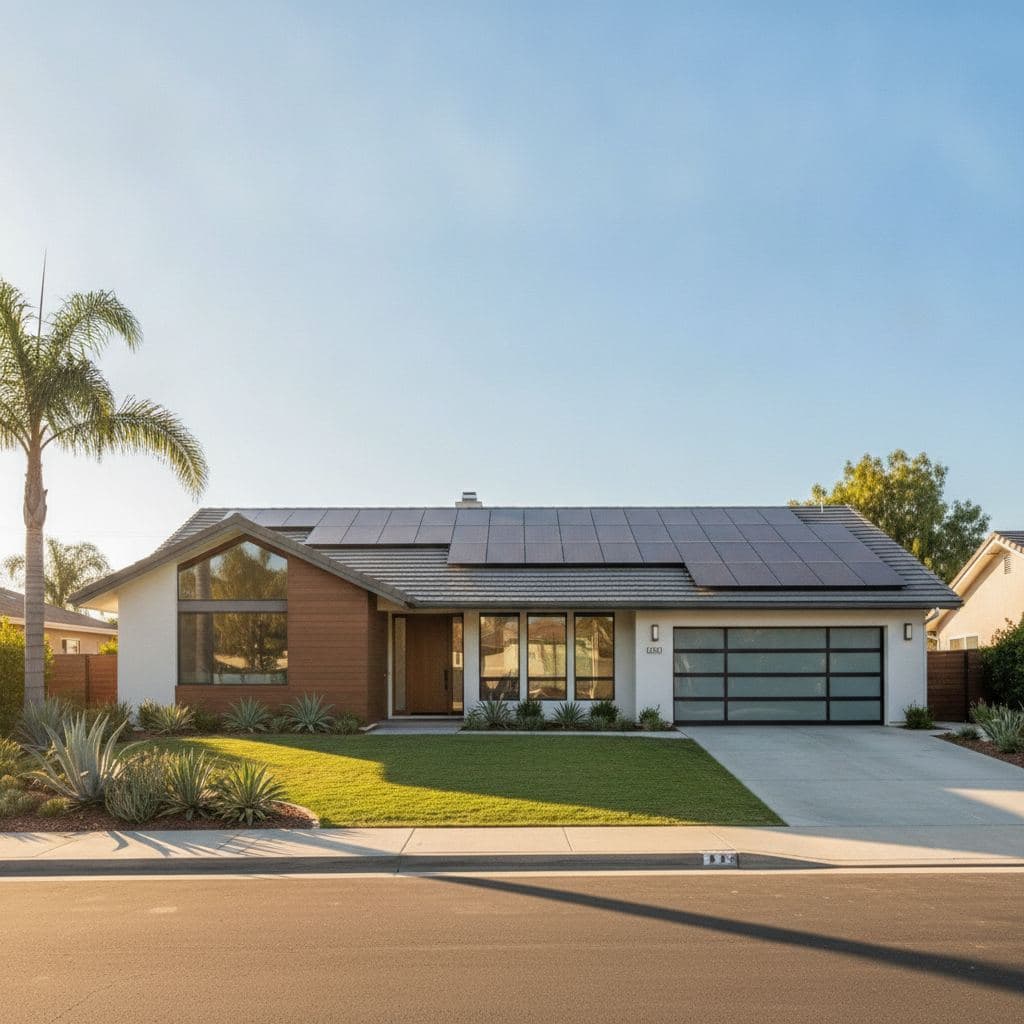
The bill your roofer hands you almost certainly does not include the cost of having a licensed solar contractor detach your panels before the roofing crew arrives and reset them correctly afterward — $250–$350 per panel at Helios, or about $5,000–$7,000 for a 20-panel system. That omission — and five others — can turn a straightforward roof replacement into a costly, warranty-voiding, potentially hazardous project.
Last verified: September 2026 by Helios Energy Global.
The six things roofers quietly leave out
1. The detach-and-reset is missing from their bid
Helios charges $250–$350 per panel for a solar detach-and-reset — about $5,000–$7,000 for a typical 20-panel residential system — and the cost is rarely mentioned when homeowners sign their original solar contract. The same surprise shows up on roofing bids: most C-39 contractors price the roof replacement only and leave the solar removal and reinstallation for "the homeowner to arrange separately."
For a standard 20-to-25-panel system, that comes to about $5,000–$8,750 for the whole job — labeled on-site storage, new flashing and mounting hardware at every attachment, reinstallation, recommissioning and production verification — with tile and steep-pitch roofs at the top of the range.
If you are an SCE customer, those panels are working hard against SCE's average residential rate of 35.3 cents per kWh as of January 2026. Every week the system sits offline while you sort out who handles the solar work is money you are paying to the grid instead of harvesting from your roof.
What to do: Before signing any roofing contract, get the detach-and-reset in writing — a separate written quote from a licensed solar contractor with the per-panel price and what it includes. Confirm who pays it, who schedules it, and who is responsible if a panel is damaged during the process.
2. Their license does not cover your electrical system
This is the most dangerous gap. Per the California Code of Regulations Title 16, Division 8, Article 3, a C-39 roofing contractor installs products and repairs surfaces that seal, waterproof, and weatherproof structures — work performed to prevent water from penetrating such protection and gaining access to material or space beyond. That scope says nothing about electrical systems, because roofing contractors are not licensed to touch them.
Roofers holding a C-39 Roofing Contractor license may install solar brackets and flashing integrated into their roofing projects, but they cannot install electrical wiring or panels unless they also hold a C-46 or C-10 license. This clarification is critical, as many homeowners now expect roof and solar work to be completed by a single contractor.
When a roofer says "we can pop them off," what they usually mean is they will physically lift the panels off the racking — without properly shutting down the array, isolating the DC circuits, or following the manufacturer's disconnect sequence. A live residential solar array can carry 300–600 V DC even on a cloudy day. That is not a job for a roofing crew; it is a job for a licensed electrician or C-10/C-46 solar contractor.
Solar PV systems in California can be sold and installed by a C-46 Solar Contractor, a C-10 Electrical Contractor (PV), or a Class B General Building Contractor. The detach-and-reset of an existing system is electrical work — confirm the contractor performing it holds one of those classifications, and verify the license number at cslb.ca.gov before anyone climbs on your roof.
At Helios Energy Global, all solar detach-and-reset work is performed under our own C-10 electrical/solar license. All roofing work is performed through our licensed roofing partners — coordinated as a single project so there are no handoff gaps.
3. An uninsured detachment leaves you holding the bag
Even if the roofer holds a C-39 and carries general liability insurance, their policy almost certainly excludes electrical work and solar equipment. If a panel is cracked during removal, a microinverter is damaged, or a worker is injured while handling live electrical equipment outside their licensed scope, the claim denial is nearly automatic.
Beyond the license itself, a legitimate residential roofing contractor must carry two types of insurance: general liability (to cover property damage) and workers' compensation (to cover job-site injuries). But those policies are written against the contractor's licensed scope. Work performed outside that scope — including solar electrical disconnection — is typically excluded from coverage.
In California, any roofing job over $500 in combined labor and materials legally requires a contractor licensed by the CSLB. Hiring an unlicensed roofer puts you at risk for shoddy work, denied insurance claims, and personal liability if a worker is injured on your property. The same logic applies to solar work performed by someone without the right license classification.
What to ask: Request certificates of insurance from every contractor on your roof, and confirm that the solar contractor's policy specifically covers solar PV removal and reinstallation. Call the insurer to verify the policy is current — don't accept a PDF alone.
4. No recommissioning means no one checks if your system still works
Panels come down, roof goes on, panels go back up. Job done — right? Not quite. After reinstallation, a solar system needs to be powered back up in sequence, the inverter re-paired to the monitoring platform, and each string or microinverter verified against its pre-removal baseline. Without that step, a single faulty connection can reduce output by 10–20% for months before anyone notices.
For SCE customers on NEM 3.0 (the Solar Billing Plan), a recommissioning issue can also affect how your system is metered at the utility. Under NEM 3.0 solar billing, the only rate plan available for solar owners is the TOU-D-PRIME schedule. If the system comes back online with a metering error or an inverter that doesn't re-register with SCE, your export credits may not post correctly — and SCE's billing dispute process is not fast.
LADWP customers have a different exposure: LADWP still operates retail-rate net metering (not NEM 3.0), so a recommissioning gap that delays grid interconnection costs you retail-rate credits, not just avoided-cost credits. Either way, the financial hit is real.
What to require: A written recommissioning checklist from the solar contractor, including: system startup procedure, inverter communication verification, monitoring platform re-enrollment, and a production comparison against your pre-outage baseline within the first 7 days.
5. Broken-panel liability falls into a gap between the two contractors
Here is a scenario that plays out more often than it should: the roofer's crew removes the panels (outside their licensed scope), one panel is cracked in the process, and then both contractors point at each other. The roofer says it was already cracked. The solar company says it happened on the roofer's watch. Your homeowner's insurance says it was a contractor error, not a covered peril.
To protect your roof's warranty, the solar installation needs to be completed by a licensed solar company that understands its specifications. If you choose an inexperienced solar installer, you could end up with issues like careless installation practices that damage the roof, poor waterproofing methods that cause leaks, the wrong fasteners, or low-quality racking equipment. The same principle applies in reverse: a roofing crew handling panels without solar training is equally likely to cause damage that creates a liability dispute.
The clean solution is one party coordinating both scopes. When Helios manages a roof-plus-solar project through our licensed roofing partners, there is one contract, one point of contact, and no finger-pointing gap between trades.
6. The roof penetration warranty question has a real answer — and roofers often get it wrong
The roof penetrations typically used during panel installations can affect coverage from other warranties and insurance coverages. If you have a home warranty that includes roof leak protection or a standalone roof warranty, that will likely be voided if you install panels. Even if the coverage isn't totally voided, you might not see a payout for specific leaking events that are determined to be caused by your panels.
The good news is that major shingle manufacturers have thought this through. Leading brands publish clear guidance: GAF states that properly installed PV mounts do not void their limited shingle warranties, with the key being following GAF's details and avoiding improper penetrations. Owens Corning offers programs that coordinate new roofs and solar mounts under a combined limited warranty when installed by approved contractors. CertainTeed provides end-to-end coverage options when you use its approved solar and roofing systems.
The operative phrase in all three cases is "properly installed" and "approved contractors." Generally speaking, mounting solar panels does not have to void your roof warranty, as long as the rail system installed by the contractor complies with your roof manufacturer and installer's instructions.
When a roofer re-flashes your existing penetrations without following the original solar installer's specifications — or without coordinating with a C-10/C-46 licensed solar contractor — the manufacturer's compliance condition is broken. The warranty language doesn't care whose fault it was; it cares whether the work followed the spec.
Key numbers at a glance
| Item | Typical range | Notes |
|---|---|---|
| Helios price per panel (removal and reinstallation) | $250–$350 | Covers storage, new flashing and mounting hardware, reinstall, recommissioning and production verification |
| Solar detach-and-reset (D&R), 20–25 panels | $5,000–$8,750 | Helios pricing; tile and steep-pitch roofs at the top of the range |
| SCE average residential rate | ~35¢/kWh | Per Solar.com, January 2026 data |
| SCE TOU-D-PRIME peak (4–9 PM) | ~59¢/kWh (summer) | Per Energy Advisor, compiled from SCE published tariff, June 2026 |
| LADWP effective residential rate | ~28¢/kWh (26–31¢ range) | Retail-rate net metering still in effect |
| Lost production per week offline (typical 8 kW system, summer) | 40–60 kWh | Estimate; varies by weather and tilt |
D&R prices are Helios's $250–$350 per panel; the roofing is quoted separately. Get a written quote — the per-panel price and what it includes — from your licensed solar contractor before signing a roofing contract.
The checklist: questions to ask any roofer bidding a solar home
Before you sign a roofing contract on a home with solar panels, get written answers to every question below. A reputable contractor will answer all of them without hesitation.
On licensing and scope:
- Does your C-39 license cover solar panel removal and reinstallation? (The correct answer is no — they need a C-10 or C-46 contractor for that work.)
- Who will perform the solar detach-and-reset, and what is their CSLB license number? Verify it yourself at cslb.ca.gov.
- Is the solar contractor a subcontractor on your contract, or do I need to hire them separately?
On cost and scope:
- Is the solar detach-and-reset included in your bid? If not, get a separate written quote before comparing bids — an apples-to-apples comparison requires the full scope.
- Who pays if a panel is damaged during removal? Get the answer in writing, not verbally.
- Does your bid include storage for the panels if the roof takes more than one day?
On insurance:
- Does your general liability policy cover damage to solar equipment? Ask for a certificate of insurance and call the insurer to confirm.
- Does the solar contractor carry workers' compensation and general liability for the electrical scope?
On warranty:
- Which shingle brand are you installing, and does that manufacturer's warranty allow solar mounts? Ask for the written warranty terms.
- Who is responsible for re-flashing the existing solar penetrations to the manufacturer's specification?
- Will the re-flashing work be performed by or coordinated with the licensed solar contractor?
On recommissioning:
- Who performs the recommissioning after panels go back up?
- Will I receive a written production comparison against my pre-outage baseline within 7 days?
- Who contacts SCE (or LADWP) if there is a metering issue after the system comes back online?
If a roofer cannot answer these questions — or tells you "don't worry about it, we've done this a hundred times" — that is your signal to keep shopping.
Frequently asked questions about roofers and solar panels
Can my roofer legally remove my solar panels in California?
Roofers holding a C-39 Roofing Contractor license may install solar brackets and flashing integrated into their roofing projects, but they cannot install electrical wiring or panels unless they also hold a C-46 or C-10 license. Physically lifting panels off racking without properly shutting down the array is outside a C-39 roofer's licensed scope and creates serious safety and liability exposure. Always have a licensed solar or electrical contractor perform the disconnect and reconnect.
How much does a solar detach-and-reset cost in Southern California?
Helios charges $250–$350 per panel for a solar detach-and-reset — about $5,000–$7,000 for a typical 20-panel system and $7,500–$10,500 for 30 panels — and the cost is rarely mentioned when homeowners sign their original solar contract. Tile and steep-pitch roofs land at the top of that range; simple single-story shingle at the bottom. Get a written quote from your solar installer — the per-panel price and what it includes — before accepting any roofing bid, so you know the true all-in cost.
Will my roof warranty be voided if solar panels are reinstalled on a new roof?
Generally speaking, mounting solar panels does not have to void your roof warranty, as long as the rail system installed by the contractor complies with your roof manufacturer and installer's instructions. The risk arises when penetrations are re-flashed by someone who doesn't follow the shingle manufacturer's approved method. Coordinate the roofing and solar work together — don't let them happen in isolation.
Does my solar system need a permit when panels are reinstalled after a roof replacement?
Many cities now mandate permits for solar panel removal and reinstallation. In California, contractors must hold a General Contractors License (B), Electrical License (C-10), or Solar License (C-46) to apply for these permits. Permit requirements vary by municipality — Los Angeles, Santa Monica, and most SoCal cities require at least an electrical permit for the reconnection. Confirm with your licensed solar contractor before work begins.
What happens to my NEM 3.0 or net metering agreement if my system goes offline for a roof replacement?
For SCE customers on the Solar Billing Plan (NEM 3.0), a planned outage for roof work does not automatically terminate your interconnection agreement — but you should notify SCE and your solar contractor in advance. LADWP customers on retail-rate net metering face the same requirement. In both cases, the system must be recommissioned and the inverter re-registered before export credits resume. An unlicensed reconnection that bypasses the utility's process can trigger a re-inspection requirement.
Can I just leave my solar panels on during a roof replacement?
On most roofs, no. Panels need to come off the sections being re-roofed. Some contractors attempt to work around panels on adjacent sections, but this creates fall-protection problems, limits the roofer's ability to inspect the underlayment, and may void the shingle manufacturer's installation warranty if the required overlap and flashing details can't be completed properly. The right answer is a coordinated detach-and-reset.
What is the risk of a roofer "popping off" panels without a licensed solar contractor present?
A live residential solar array can carry hundreds of volts DC even when the main breaker is off — DC power from the panels flows as long as there is sunlight. Disconnecting panels without following the manufacturer's shutdown procedure risks arc flash, equipment damage, and injury. Beyond the safety risk, any damage to the system caused by unlicensed electrical work is almost certainly excluded from both the roofer's liability policy and the solar manufacturer's warranty.
Next steps
- Book a free consultation and custom design — Helios coordinates solar detach-and-reset and roof replacement through our licensed roofing partners as a single project, with one point of contact and no licensing gaps.
- Learn how our solar installations are designed and sized
- Understand NEM 3.0 and how it affects SCE solar owners
- See how solar and battery storage work together under NEM 3.0
- Explore battery storage options for your home
- Review solar panel cost ranges for Southern California
- See which roof types work best with solar in SoCal
Sources
- CSLB Licensing Classifications Detail — C-39 Roofing Contractor — March 2026
- CSLB Description of Classifications PDF — March 2026
- CSLB Licensing Classifications — C-46 Solar Contractor — March 2026
- Solar.com — SCE TOU Rates 2026 — December 2025
- Solar Equity Solutions — Solar Panel Detach and Reset Cost 2026 — September 2026
More guides
Is solar still worth it under NEM 3.0 in 2026?
Solar is still worth it under NEM 3.0—but payback stretches to 9–13 years without a battery, versus 6–9 years with one, making self-consumption design essential for SCE customers.
ReadBest Solar Companies in Yorba Linda, CA (2026): An Honest Homeowner's Guide
Yorba Linda homeowners face SCE's NEM 3.0 net billing rules and real wildfire risk in the foothills — here's how to pick the right solar installer and avoid costly mistakes in 2026.
ReadEV Charger Rebates in Los Angeles (2026): LADWP, SCE, and How to Stack Them
LADWP Charge Up LA! pays up to $1,500 for a home Level 2 EV charger; SCE's Charge Ready Home covers up to $4,200 toward a panel upgrade — but the federal 30C credit expired June 30, 2026.
ReadGet a free consultation and custom design.
No pressure, no obligation — the owner reviews every design we send.