Can you sell solar power back to the grid in California in 2026?
Yes, California homeowners can send excess solar to the grid, but SCE/PG&E/SDG&E customers earn only ~5–8¢/kWh under NEM 3.0, while LADWP customers still get retail-rate credit (~28¢/kWh).
By Taylor Crouse — Founder, Helios Energy GlobalUpdated
Quick answer
- Yes — California homeowners can export excess solar to the grid, but what you earn depends entirely on your utility.
- SCE, PG&E, and SDG&E customers are on NEM 3.0 and receive roughly 5–8¢/kWh for exported power (the "avoided cost" rate).
- LADWP customers still receive retail-rate net metering credit at ~28¢/kWh — more than three times the NEM 3.0 export rate.
- Because export rates under NEM 3.0 are so low, using solar power yourself (self-consumption) or storing it in a battery is worth far more than sending it to the grid.
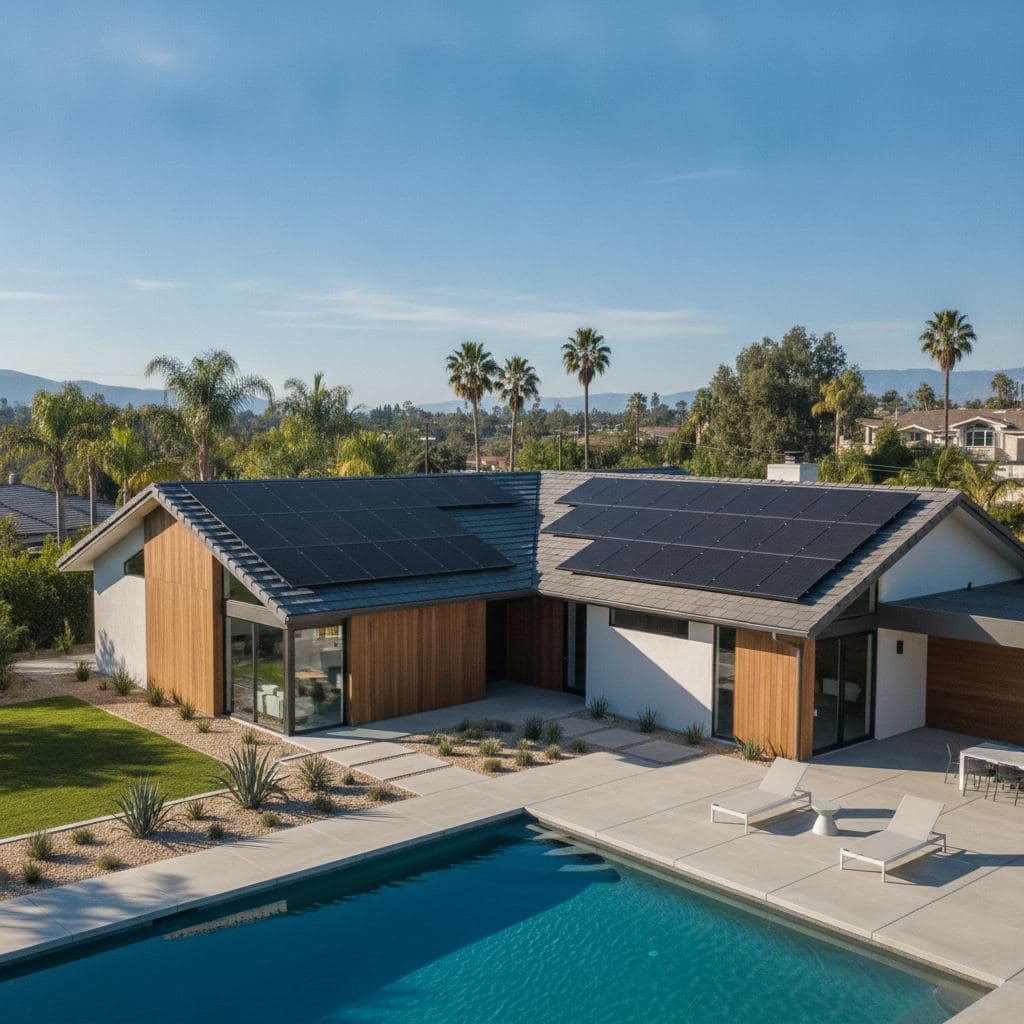
Under NEM 3.0, SCE, PG&E, and SDG&E customers earn approximately 5–8¢ per kilowatt-hour for solar power exported to the grid — a fraction of what they pay to buy electricity back at roughly 34–35¢/kWh. LADWP and other municipal utilities operate their own programs and are not subject to NEM 3.0, with LADWP still crediting exports at close to the full retail rate of around 28¢/kWh.
Last verified: September 2026 by Helios Energy Global.
How grid export actually works in California
When your solar panels produce more electricity than your home is using at that moment, the surplus flows out through your meter and onto the utility grid. Your utility tracks those kilowatt-hours and applies a credit to your bill. The critical detail — the one that changes everything about how you should size and pair your system — is how much that credit is worth.
That answer splits cleanly along utility lines.
NEM 3.0: the investor-owned utility reality
If you're served by Southern California Edison (SCE), Pacific Gas & Electric (PG&E), or San Diego Gas & Electric (SDG&E), you are on the Net Billing Tariff, commonly called NEM 3.0, which took effect for new solar customers in April 2023.
Under NEM 3.0, export credits are calculated using the CPUC's Avoided Cost Calculator — essentially what the utility would have paid to generate or procure that electricity on the wholesale market. Those rates vary by hour and season, but in practice they average roughly 5–8¢/kWh across the day for most residential customers. Compare that to the retail rate you pay SCE: approximately 34–35¢/kWh on a blended basis, with a peak window of roughly 4–9 PM where rates climb even higher on time-of-use plans.
The math is uncomfortable: you export $1 worth of solar and get back a nickel or dime in credit. Then at 7 PM you buy that same type of electricity back for 34¢. That spread — roughly 4-to-1 or worse — is why every SCE customer with a new solar system should be thinking hard about batteries and self-consumption.
Annual true-up: credits don't expire monthly
One important detail: SCE (and the other IOUs) run solar billing on an annual true-up cycle. Export credits accumulate across 12 months and are reconciled once a year. You won't lose credits month-to-month just because you over-exported in June. But if you end the year with a large surplus of export credits, the utility pays them out at that same low 5–8¢ avoided-cost rate — not at retail. Chronic over-exporting under NEM 3.0 is essentially a bad investment. The goal is to size your system to cover your consumption, not to generate a surplus for the grid.
Municipal utilities: a different world
Southern California has a meaningful cluster of municipal utilities that set their own net metering rules and are not governed by the CPUC's NEM 3.0 decision.
LADWP is the largest. As of mid-2026, LADWP still credits exported solar at close to the full retail rate — approximately 28¢/kWh. That's not as high as SCE's retail rate, but the export credit and the purchase rate are much closer to parity, which changes the economics of solar significantly. An LADWP customer exporting midday solar is not giving it away at a steep discount.
Other Southern California municipal utilities — Pasadena Water and Power, Burbank Water and Power, Glendale Water & Power, Anaheim Public Utilities, and Riverside Public Utilities — each run their own programs. Rates and structures vary; if you're served by one of these utilities, we'll pull your specific tariff during a custom system design.
Key numbers at a glance
| Utility | Avg. retail rate (buy) | Export credit rate | Export-to-retail ratio | Annual true-up? |
|---|---|---|---|---|
| SCE (NEM 3.0) | ~34–35¢/kWh | ~5–8¢/kWh (avoided cost, varies by hour) | ~4:1 to 7:1 | Yes, 12-month cycle |
| PG&E (NEM 3.0) | ~35–38¢/kWh (est.) | ~5–8¢/kWh (avoided cost) | ~5:1 to 7:1 | Yes, 12-month cycle |
| SDG&E (NEM 3.0) | ~45–50¢/kWh (est.) | ~5–8¢/kWh (avoided cost) | ~6:1 to 9:1 | Yes, 12-month cycle |
| LADWP | ~28¢/kWh | ~28¢/kWh (retail-rate credit, est.) | ~1:1 | Varies by program tier |
| Other SoCal munis | Varies | Varies | Varies | Varies |
All figures are estimates based on utility rate filings and EIA data as of mid-2026. Your actual rate depends on your rate plan and usage tier.
Why self-consumption beats exporting under NEM 3.0
The single most important strategic shift for new SCE solar customers in 2026 is this: every kilowatt-hour you use yourself is worth the full retail rate (~34–35¢); every kilowatt-hour you export is worth ~5–8¢. That makes self-consumption roughly four to seven times more valuable than export.
There are two ways to maximize self-consumption:
1. Right-size your system. A system that produces exactly what you consume — no more — maximizes the value of every panel. Oversizing to generate a large export surplus under NEM 3.0 is a common and costly mistake. Our solar design tool runs your 12 months of utility bills to hit that target.
2. Add a battery. Solar panels produce most of their power between 10 AM and 3 PM. SCE's peak rates hit from 4–9 PM. Without a battery, that midday surplus gets exported at 5–8¢, and you buy peak power back at 34¢+. A home battery — typically $14,000–$18,500 installed — captures that midday solar, stores it, and dispatches it during the evening peak. The math on batteries improved dramatically under NEM 3.0. See our battery guide and our solar vs. battery NEM 3.0 comparison.
For LADWP customers, the calculus is less urgent (export credits are much closer to retail), but batteries still provide backup power value and protection against future rate changes.
What about the federal tax credit?
The 30% federal residential solar Investment Tax Credit expired December 31, 2025. There is no federal tax credit for a residential solar system purchased in 2026. Any installer or website still advertising "30% federal tax credit" for a 2026 installation is giving you outdated information. California's Self-Generation Incentive Program (SGIP) for residential batteries is currently waitlisted — not actively funded for new residential applicants as of mid-2026. We'll flag any incentive changes as they occur; check our solar cost page for the current picture.
Does your roof type or direction matter for export?
Yes — but not for the reason most people think. Under NEM 3.0, a south-facing array produces its peak power at solar noon, when avoided-cost export rates are actually at their lowest (midday wholesale power is cheap). A west-facing array shifts production toward 2–5 PM, closer to the evening peak when export rates are somewhat higher. This is a real design consideration for SCE customers that we work through during a roof and design assessment. LADWP customers, with near-retail export credits, are less affected by this timing issue.
Frequently asked questions about selling solar power back to the grid in California
Does California still have net metering in 2026?
California still has net metering — but the version available to new SCE, PG&E, and SDG&E customers (NEM 3.0, or the Net Billing Tariff) pays export credits at the avoided-cost rate of roughly 5–8¢/kWh, not at the retail rate. Municipal utility customers like those served by LADWP are on separate programs and may still receive retail-rate or near-retail credits. Learn more about NEM 3.0.
How much money can I make selling solar back to the grid?
Under NEM 3.0, the honest answer is: not much from exports alone. At 5–8¢/kWh export credit versus 34–35¢/kWh retail cost (SCE), the value of exported power is minimal. A well-designed system focused on self-consumption can realistically offset $1,200–$2,500+ per year in SCE bills — but that value comes from using your solar, not selling it. LADWP customers with retail-rate credits can capture more value from exports. Get a custom estimate for your address.
Do I need a special meter to sell power back to the grid?
Your utility will install a bi-directional (net) meter as part of the interconnection process — there's no extra cost to you for the meter itself. The interconnection application is handled by your installer and typically takes 4–10 weeks for IOU customers. Municipal utility timelines vary.
What happens to my unused solar credits at the end of the year?
Under SCE's NEM 3.0 annual true-up, any remaining export credit balance at the end of your 12-month period is paid out at the avoided-cost rate (~5–8¢/kWh). You do not forfeit the credits, but you also don't receive retail value for a large surplus. This is another reason chronic over-exporting is a poor strategy — size your system to consume what you produce.
Can I sell solar power back to the grid with a battery?
Yes. A battery doesn't prevent you from exporting — it just lets you choose when to export. Under NEM 3.0, a battery can be programmed to export during higher-value evening hours rather than at midday when avoided-cost rates are lowest. More importantly, it lets you avoid buying expensive peak power at all. See our battery storage page for how this works in practice.
Is NEM 3.0 the same for all California utilities?
No. NEM 3.0 (the Net Billing Tariff) applies only to the three large investor-owned utilities regulated by the CPUC: SCE, PG&E, and SDG&E. Municipal utilities — including LADWP, Pasadena Water and Power, Burbank, Glendale, Anaheim, and Riverside — are not subject to CPUC jurisdiction and run their own net metering programs, some of which are significantly more favorable for solar customers.
Should I oversize my solar system to export more under NEM 3.0?
No. Oversizing specifically to generate export surplus under NEM 3.0 is generally a poor investment for SCE, PG&E, and SDG&E customers. You'll spend more on panels and earn only 5–8¢/kWh on the excess. The right strategy is to size for your consumption, add a battery to shift self-consumption into the evening peak, and avoid chronic surplus. Our solar design process is built around this principle.
Next steps
- Book a free consultation and custom design — we'll pull your utility bills, map your roof, and show you exactly what self-consumption vs. export looks like for your address.
- See how we design systems for your bill and utility — SCE and LADWP customers get different recommendations.
- Understand NEM 3.0 in plain English — the full guide to how the Net Billing Tariff works.
- Solar vs. battery under NEM 3.0 — when a battery changes the math, and when it doesn't.
- Home battery storage options — costs, brands, and how storage pairs with solar in 2026.
- What does solar cost in Southern California? — current installed price ranges with no federal credit.
- Our Southern California service locations — Santa Monica, the Westside, the San Fernando Valley, and beyond.
More guides
Best Solar Companies in Redondo Beach, CA (2026): Coastal-Smart Installs, SCE NEM 3.0 Math, and Honest Prices
Redondo Beach runs on SCE under NEM 3.0, which makes battery storage the centerpiece of any honest solar design here. This guide ranks the 10 best solar installers serving the South Bay in 2026 — with real prices, coastal hardware considerations, and no hype.
ReadDoes California require solar on new homes? The 2026 mandate explained
Yes — California's Title 24 Energy Code has required solar on most new single-family homes since 2020, with battery backup added for many homes under the 2023 code update.
ReadWhat Reddit Actually Says About Choosing a Solar Company in Los Angeles (2026)
We read the r/solar, r/orangecounty, and r/homeowners threads where real Southern California homeowners talk about picking (and firing) solar companies — and pulled out the patterns, with links to every thread.
ReadGet a free consultation and custom design.
No pressure, no obligation — the owner reviews every design we send.