How Much Does a Roof Replacement with Solar Panels Cost in 2026?
A combined roof-replacement-plus-new-solar project in Southern California typically runs $30,000–$65,000 depending on roofing material and system size — less than doing both projects separately. If you already have solar, Helios's detach-and-reset adds $250–$350 per panel.
By Taylor Crouse — Founder, Helios Energy GlobalPublished
Quick answer
- A combined roof replacement + new solar project in Southern California runs approximately $30,000–$65,000 depending on roofing material (asphalt vs. tile vs. metal) and system size.
- If you already have solar and just need a detach-and-reset (D&R) around a reroof, Helios charges $250–$350 per panel on top of roofing costs to remove and reinstall your panels — about $5,000–$7,000 for a 20-panel system.
- Bundling a new roof with new solar costs less than scheduling the two projects separately — through shared mobilization, one permitting cycle, and no future panel-removal bill (at Helios, $250–$350 per panel).
- The 30% federal residential solar tax credit expired December 31, 2025 and does not apply to 2026 purchases.
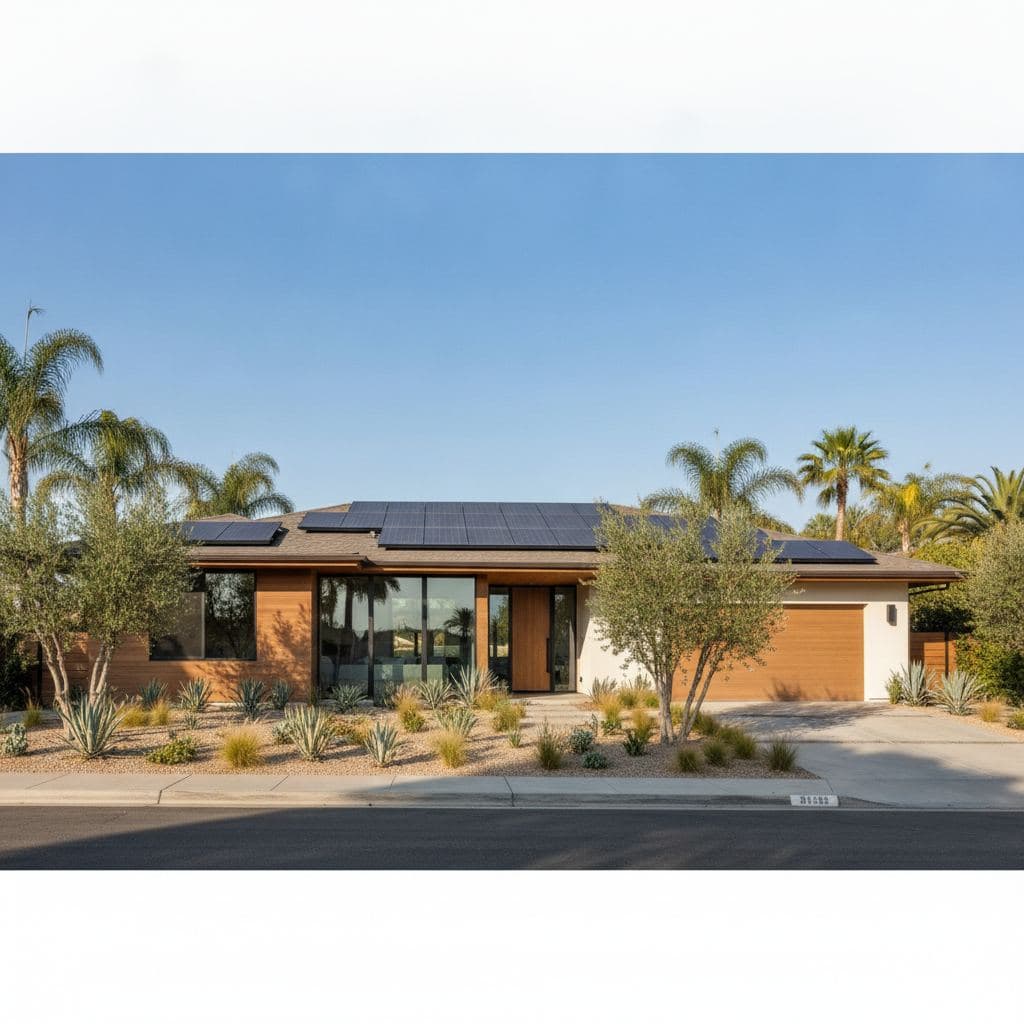
A roof-replacement-plus-solar project in Southern California costs roughly $30,000–$65,000 all-in for most single-family homes — a range driven primarily by your roofing material choice and the size of the solar system you add. Doing the same two projects separately costs more, because you pay for two mobilizations, two permitting cycles, and — if you install solar first — an eventual detach-and-reset bill when the roof finally fails: $250–$350 per panel at Helios, or about $5,000–$7,000 for a 20-panel system.
Last verified: September 2026 by Helios Energy Global.
The two scenarios: which one applies to you?
Before diving into numbers, identify which project you're actually doing. The cost math is different for each.
Scenario A — You have an existing solar system and need a new roof. Your panels must come down before the roofer can work. A licensed solar contractor performs a detach-and-reset (D&R): panels off, roofer works, panels back on. Helios handles the solar D&R under our C-10 electrical license; all roofing work is performed through our vetted, licensed roofing partners, coordinated by Helios as one project.
Scenario B — You're replacing your roof and adding solar at the same time (no existing system). This is the clean-slate bundle: one mobilization, one schedule, one point of contact. Solar mounts are flashed directly into the new roofing system during installation rather than retrofitted after — a cleaner penetration with lower long-term leak risk.
Key numbers at a glance
| Cost component | Typical SoCal range (2026 estimate) | Notes |
|---|---|---|
| Asphalt shingle reroof | $11,000–$18,000 | ~1,700–2,400 sq ft roof; tear-off included |
| Tile relay (underlayment only, same tile) | $8,000–$16,000 | Roughly half the cost of full tile replacement |
| Tile replacement (new tile) | $22,000–$40,000 | Full material + labor |
| Standing-seam metal roof | $21,000–$38,000 | Higher upfront, longest lifespan |
| New solar system (6–10 kW) | $15,000–$35,000 | At $2.50–$3.50/W; see /solar-panel-cost |
| Solar detach-and-reset (D&R), 20–28 panels | $5,000–$9,800 | $250–$350 per panel; Helios's own C-10 licensed work |
| Scenario A total (reroof + D&R, asphalt) | ~$16,000–$27,800 | Existing solar stays; no new system |
| Scenario B total (asphalt reroof + new solar) | ~$26,000–$53,000 | New roof + new 6–10 kW system bundled |
| Scenario B total (tile reroof + new solar) | ~$37,000–$75,000 | New tile + new 6–10 kW system bundled |
| Bundled savings vs. sequential projects | Shared mobilization and permitting; no future D&R | A future D&R runs $250–$350 per panel at Helios |
All figures are estimates for Southern California single-family homes. Your pitch, stories, city permit fees, and decking condition move you within or outside these bands. No tax credits are included — the 30% federal residential credit expired December 31, 2025.
Roofing costs broken down by material
Most Southern California homeowners pay between $11,000 and $18,000 for a full roof replacement in 2026, with the cost per square foot running $6.50 to $10.50 — a range that includes removal of old shingles, labor, materials, and cleanup.
Southern California pricing runs 15 to 25% higher than the national average due to stricter building codes, higher labor rates, and fire-resistance requirements.
Asphalt shingles
A standard 2,000-square-foot home with architectural asphalt shingles typically falls between $10,000 and $16,000 in Southern California. Architectural (dimensional) shingles are the most common choice and the baseline for most of our estimates. Most SoCal homes require full removal due to local building codes — overlaying new shingles over old ones is generally not permitted in LA County.
Tile (clay or concrete)
Tile, the state's most iconic material, runs $22,000–$40,000 for a full replacement. However, if your existing tile is intact, you may not need new tile at all. Our roofing partners quote both options when both are viable: a tile relay (lift existing tile, replace underlayment and flashings, relay the same tile) typically costs roughly half the price of a full tile replacement — often $8,000–$16,000 for a standard SoCal home. Full tile replacement is for broken, brittle, or discontinued tile.
Standing-seam metal
Standing-seam metal runs $21,000–$38,000. Metal has the longest lifespan — often 40–70 years — and works especially well with solar because standing-seam systems can use no-penetration clamps, eliminating roof penetrations entirely.
What moves the number
For homes with a second story, steeper pitch, or tile roofing, expect the higher end of the range. Permit fees are a real cost: most cities in Southern California require roofing permits, typically costing between $250 and $1,200 depending on the city and the size of your project.
Solar detach-and-reset (Scenario A): what it costs and how it works
If you already have solar panels, they must come down before the roofer can access the deck. A solar detach and reset (D&R) is the process of safely removing your existing solar panels and mounting hardware, storing them while a roofing contractor completes work on the surface below, and then reinstalling the entire system to its original or equivalent configuration.
A D&R is a service performed by a licensed solar contractor, not your roofing crew. At Helios, the D&R is our own C-10 licensed work — we coordinate it directly with our roofing partners so you're not managing two separate companies or two separate schedules.
What a D&R costs in Southern California
Helios charges $250–$350 per panel to remove and reinstall solar panels, with tile or steep-pitch roofs at the top of the range and simple single-story shingle at the bottom. For a typical Southern California home with a 20–28 panel system (roughly 7–10 kW), that translates to a D&R range of about $5,000–$9,800, including labeled on-site storage, new flashing and mounting hardware at every attachment, reinstallation, recommissioning and production verification.
What's included in a proper D&R quote:
- Electrical disconnect at the inverter and utility disconnect switch
- Physical removal of panels, rails, and wiring from the roof
- On-site staging of panels in a protected area
- Reinstallation and reconnection after reroofing is complete
- Post-reinstall performance check to confirm the system is producing normally
- New flashing at all roof penetrations — critical on a fresh roof
Since solar panels are designed to last 25 to 30 years, but most asphalt shingle roofs only last 20 to 25 years, nearly every homeowner with solar panels will face at least one detach and reset during the lifespan of their system. If your roof was already 10+ years old when the panels went on, that day may be coming sooner than you expect.
Full removal vs. detach-and-reset
A Helios detach-and-reset takes the panels, rails, and wiring off and puts new flashing and mounting hardware at every attachment on the way back — all part of the $250–$350 per-panel price. Full removal means taking down everything — panels, racking, flashing, and associated hardware — down to the bare roof deck. This is necessary when racking penetrations need to be reroofed over, when a new roof type is incompatible with existing mounting hardware, or when significant structural repairs are needed underneath. Racking that has failed is flagged with a price before anything is replaced, and off-site storage beyond 30 days is quoted separately.
Bundled roof + new solar (Scenario B): where the savings come from
A bundled project typically costs $30,000–$60,000 depending on system size and roofing material — less than scheduling both projects separately, thanks to shared labor, permitting, and mobilization costs.
Combined roof and solar projects cost less than doing them separately. Savings come from a single mobilization, coordinated scheduling, integrated mounting, and often bundled financing. The largest single savings is avoiding the future remove-and-reinstall cost if your roof reaches end of life mid-array — $250–$350 per panel at Helios, or about $5,000–$7,000 for 20 panels.
Here's exactly where the money goes when you do them separately vs. together:
Mobilization (crew, equipment, dumpster, scaffolding): Paid once in a bundle, twice if sequential.
Permitting: Many municipalities allow combined building and electrical permits when roof and solar are installed together, cutting down on paperwork and fees.
Mounting integration: Solar racking can be installed as part of the roof deck and underlayment, which improves the watertight seal and avoids unnecessary penetrations on a brand-new roof later.
Avoided future D&R: If your roof has fewer than 10–15 years of remaining life, replacement before solar is the smart move. The alternative is paying for removal and reinstallation later — an avoidable expense of $250–$350 per panel, or about $5,000–$7,000 for 20 panels, that erases years of solar savings.
When bundling makes sense (and when it doesn't)
| Roof age | Recommendation |
|---|---|
| Under 10 years, good condition | Solar only — no reroof needed |
| 10–15 years | Professional inspection first; bundle if significant wear is found |
| 15+ years | Bundle strongly recommended |
| 18+ years | Bundle is essentially required before solar |
Most installers recommend replacing asphalt roofs over 15–20 years old before installing solar. Roofs under 10 years old in good condition are generally safe to proceed without replacement, though a professional inspection will confirm whether yours qualifies.
Worked example: a typical Santa Monica / West LA home
Here's how the math looks for a 2,100 sq ft home with a 20-year-old asphalt roof, no existing solar, and a family that wants to add an 8 kW system:
| Cost component | Estimated range |
|---|---|
| Asphalt shingle reroof (tear-off, underlayment, shingles, permits) | $12,000–$17,000 |
| New 8 kW solar system (through Helios, C-10 licensed) | $20,000–$28,000 |
| Bundled project total | ~$32,000–$45,000 |
| If done separately | More than the bundled total: a second mobilization and permitting cycle |
| Future D&R cost avoided by bundling now | $250–$350 per panel (about $5,000–$7,000 for 20 panels) |
Estimates only. No federal tax credit applies in 2026. Financing available — ask about options at your consultation.
Utility rates: why the roof-solar bundle math works in SoCal
The financial case for solar depends heavily on what you're paying for grid electricity. Per SCE's current rate advisory, SCE's average residential rate is 34.5 cents per kWh (33.2 cents per kWh with the California Climate Credit applied).
Peak hours for SCE customers on time-of-use rate plans are either 4–9 p.m. or 5–8 p.m., depending on their specific plan.
SCE customers on NEM 3.0: Solar exports earn very low credits (often 2–8¢/kWh), so a battery paired with your new solar system is highly recommended to capture the value of your own production during the 4–9 PM peak window. See our NEM 3.0 guide and solar vs. battery under NEM 3.0 for the full picture.
LADWP customers: LADWP is a municipal utility and is not on NEM 3.0. LADWP still offers retail-rate net metering, which means solar exports earn close to the full retail rate — an effective rate in the 26–31¢/kWh range. If you're in the City of Los Angeles on LADWP, the economics of solar-only (no battery required) are meaningfully better than for SCE customers. Other SoCal municipal utilities — Pasadena PWP, Burbank, Glendale, Anaheim APU, and Riverside RPU — also run their own net-metering programs independent of NEM 3.0.
How Helios coordinates a combined project
Helios holds a C-10 Electrical/Solar contractor license. All roofing work is performed by our vetted, licensed roofing partner contractors — coordinated by Helios as a single project with one schedule, one point of contact, and one project timeline.
Here's the typical sequence:
- Helios designs your solar system and assesses roof condition during the site survey.
- Our roofing partners quote the reroof alongside the solar scope (or the D&R, if you have an existing system).
- You receive one combined proposal, with the roofing quoted separately from the solar scope and each price in writing.
- Helios's solar crew performs the D&R (if applicable) before roofing begins.
- Our roofing partners complete the reroof, with solar mount flashings integrated into the new roofing system where possible.
- Helios's solar crew installs or reinstalls the array, pulls electrical permits, and coordinates utility interconnection.
- One final inspection covers both scopes where the jurisdiction allows.
Instead of managing two schedules, two invoices, and two warranties, homeowners get a single streamlined plan from inspection to activation.
For more detail on how roofing material affects your solar options, see our roof types guide and our full roof replacement cost page. If you're weighing a full roof-plus-solar bundle, /solar-plus-roof goes deeper on that specific project type.
Frequently asked questions about roof replacement with solar costs
Does the 30% federal solar tax credit help offset a combined roof + solar project in 2026?
No. The 30% federal residential clean energy tax credit expired on December 31, 2025. There is no federal tax credit available for a solar system purchased or installed in 2026. Any quote or sales pitch that implies otherwise is out of date — verify directly with a tax professional.
Do I need a new roof before installing solar panels?
Not necessarily. Most installers recommend replacing asphalt roofs over 15–20 years old before installing solar. Roofs under 10 years old in good condition are generally safe to proceed without replacement, though a professional inspection will confirm whether yours qualifies. Installing solar on a roof that will need replacement within 5–10 years means you'll pay for a D&R on top of the reroof — an avoidable cost.
How long does a combined roof and solar project take?
Most combined projects in Southern California run 2–4 weeks from permit approval to system activation, depending on city inspection schedules and utility interconnection timelines. Doing them separately typically adds 4–12 weeks of gap time between the roof completion and solar installation start.
Will my homeowner's insurance cover the detach-and-reset if I need a new roof due to storm damage?
Insurance-covered roof replacements still require panel removal. Most carriers cover the detach-and-reset cost as part of the claim — verify before authorizing repairs. Document your existing system with photos before work begins, and get the D&R scope in writing so you can submit it to your adjuster.
Is SGIP (California's battery rebate program) available for a battery added during a reroof project?
SGIP residential budget allocations are currently waitlisted in 2026 — not available for new applications. We'll flag any changes as they occur, but do not factor an SGIP rebate into your budget planning at this time. The battery still makes strong financial sense for SCE customers under NEM 3.0 based on avoided peak-rate costs alone. See /batteries for current battery pricing and options.
Does Helios do the roofing work itself?
Helios holds a C-10 Electrical/Solar license. All roofing work is performed by our vetted, licensed roofing partner contractors — coordinated by Helios as one project. The solar detach-and-reset and all electrical and solar installation work is Helios's own licensed scope.
What roofing material is best for solar in Southern California?
Asphalt shingles are the most cost-effective substrate for solar mounting. Standing-seam metal is the premium option — no-penetration clamps eliminate roof punctures entirely. Clay and concrete tiles are popular throughout Southern California due to their superior heat resistance and classic regional aesthetic , but tile requires more care during panel installation and a D&R is more complex (and more expensive) on tile than on shingles.
Next steps
- Book a free consultation and custom design — we'll assess your roof age and condition, design a solar system sized for your utility (SCE or LADWP), and coordinate a combined roofing quote through our licensed partners.
- See full roof replacement cost ranges by material — per-square-foot breakdowns for asphalt, tile, metal, and flat systems in Southern California.
- Explore the solar + roof bundle — how the combined project works, what the timeline looks like, and financing options.
- Get solar system pricing — all-in cost ranges at $2.50–$3.50/W by system size.
- Understand NEM 3.0 and batteries — critical reading for SCE customers before sizing a solar-only vs. solar-plus-battery system.
- See battery options and pricing — Tesla Powerwall 3 and other storage options for your new system.
- Find your location — service areas across Los Angeles, Orange County, and the greater SoCal region.
Sources
- SCE Rate Advisory — June 1, 2026 Rate Decrease — June 1, 2026
- Edhat — SCE Revises Electricity Rates January 2026 — January 14, 2026
- RoofVista — California Roof Replacement Cost 2026 — March 20, 2026
- Cert-A-Roof — Roof Replacement Cost 2026 — May 6, 2026
- SolarEquitySolutions — Solar Panel Removal Cost 2026 — July 13, 2026
More guides
Who Removes Solar Panels for a Roof Replacement in Southern California?
A licensed C-10 or C-46 solar contractor — not the roofing crew — must handle the electrical disconnect and detach; Helios charges $250–$350 per panel for a coordinated detach-and-reset in Southern California — about $5,000–$8,750 for a typical 20–25 panel system, with the roofing quoted separately.
ReadTesla Powerwall 3 Review (2026): What Changed, What's Great, What Isn't
An installer's Powerwall 3 review after two years of putting them on SoCal walls: the integrated inverter is the headline, the MPPT count matters more than people think, and yes — there are honest cons.
ReadBest Solar Companies in Calabasas, CA (2026): Honest Rankings for Homeowners
A straight-talking guide to the best solar installers serving Calabasas in 2026 — SCE net billing, Clean Power Alliance membership, hillside and HOA realities, fire-zone considerations, and how to compare quotes without getting burned.
ReadGet a free consultation and custom design.
No pressure, no obligation — the owner reviews every design we send.