Roof Leak After Solar Installation: Who's Responsible?
If your roof leaks after solar panels were installed, your installer is responsible in most cases — California law mandates a minimum 10-year workmanship warranty covering defects like failed flashing and unsealed penetrations.
By Taylor Crouse — Founder, Helios Energy GlobalPublished
Quick answer
- California law (Public Resources Code § 25782) requires every residential solar installer to provide a minimum 10-year workmanship warranty — your installer owes you a fix at no cost if a leak traces to their work.
- ~80–90% of post-solar leaks stem from the same 3 causes: improperly flashed lag-bolt penetrations, sealant-only (no flashing) installs, or broken tiles never replaced during mounting.
- If your installer won't respond, you can file a complaint with the CSLB at (800) 321-2752 and escalate to small claims court for documented repair costs.
- On tile roofs (concrete or clay) — the most common roof type in Southern California — comp-out or double-flashing methods dramatically reduce leak risk vs. sealant-only hook installs.
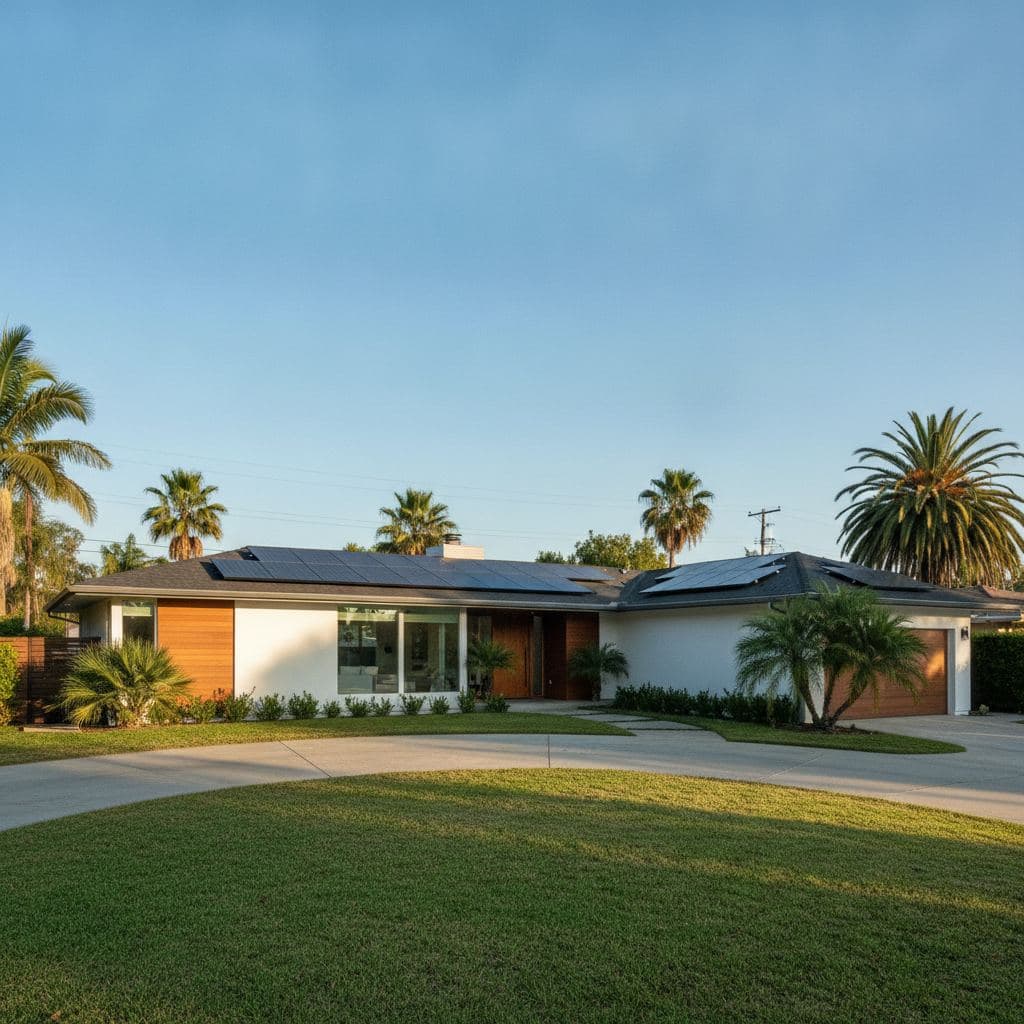
Your solar installer is responsible for any roof leak that traces to their work, and California law backs you up with a mandatory minimum 10-year workmanship warranty. That warranty must cover defective installation — including failed flashing, unsealed penetrations, and broken tiles — at no cost to you for parts and labor. The question isn't really whether you have rights; it's knowing exactly how to enforce them and what to do in the next 48 hours.
Last verified: September 2026 by Helios Energy Global.
Why post-solar leaks happen: the three culprits
A properly installed solar system does not cause roof leaks. When leaks do appear, they almost always trace to one of three installation errors.
1. Missing or improperly installed flashing
Every lag bolt that penetrates your roof deck creates a hole. Sealant alone degrades over time — especially under Southern California's intense UV index — and without flashing as the primary waterproofing layer, a leak becomes a matter of when, not if. Correct practice is to slide a formed metal flashing under the roofing material above the penetration and over the material below it, so water sheds away from the hole by gravity — not by the integrity of a caulk bead.
2. Lag bolts that miss the rafter
Lag bolts must anchor into the roof rafters, not just the plywood sheathing. Bolts that miss the rafter have reduced holding strength and create an unsealed hole in the deck. A qualified installer uses a rafter finder or measurement template to verify every bolt location before drilling. A bolt sunk into sheathing alone can work loose over time, opening a gap that lets water track down into the attic.
3. Cracked or unreplaced tiles
On the clay and concrete tile roofs that dominate Southern California neighborhoods — from Santa Monica to Pasadena to Riverside — installers must remove individual tiles to set mounting hardware, then reinstall them. Damaged tiles can compromise the roof's integrity, leading to potential leaks. Ensuring that the roof remains watertight after installation is paramount, and improper sealing around mounts and brackets can lead to water infiltration, causing damage to the home's interior and structure. Tiles cracked during removal that are silently re-laid instead of replaced are a common culprit.
Who is legally responsible
The short answer: your installer
Mounting panels requires penetrating the roof, and when that work is defective, it can cause leaks and water damage beyond the solar equipment. An installer whose defective work causes roof leaks or water intrusion may be liable for the resulting damage, not just for fixing the panels. Proving it requires showing the work was defective, connecting it to the damage, and documenting the repair cost.
California statute makes this concrete. Under California Public Resources Code § 25782, a solar energy system must have a warranty of not less than 10 years to protect against defects and undue degradation of electrical generation output. The CSLB's own solar requirements page, which implements this code for residential installs, reinforces that the warranty must cover defective workmanship. The 10-year system warranty must protect against defective workmanship, system or component breakdown, or degradation in electrical output of more than 15% from the originally rated electrical output, and it must provide for free repair or replacement — including labor — of the system or system components.
In plain terms: if your roof leaks because of how the panels were installed, your installer must fix it for free within the warranty period.
What the CPUC Consumer Protection Guide adds
Putting solar panels and/or batteries on your home is an important financial decision — don't sign a contract until you read and sign this document.
The CPUC recommends that solar providers give out this guide during their first contact with potential customers; Version 4 of the Consumer Protection Guide was published in 2025. The Guide reinforces that if you think you have been a victim of solar fraud or have been denied any of the rights described, you may file a complaint against a contractor or home improvement salesperson with the Contractors State License Board (CSLB) at 800-321-CSLB (2752) or www.cslb.ca.gov/consumers.
What if the installer subcontracted the work?
Individuals working under the supervision of a licensed contractor may perform installation work without holding their own contractor license. However, the supervising contractor remains responsible for all work performed and must ensure adequate oversight of unlicensed personnel. In other words, the company that signed your contract is on the hook — even if a subcontracted crew did the physical install.
What if the installer is out of business?
Solar systems typically come with long warranties on panels, inverters, and workmanship, though a warranty is only as effective as the company's willingness and ability to honor it. If the installer has folded, your options are: (1) file a claim against their contractor bond (California requires a $15,000 bond minimum for licensed contractors); (2) pursue the panel manufacturer's product warranty for any equipment damage; (3) file in small claims court for documented repair costs. This is precisely why choosing an established, locally rooted installer matters — they need to still be in business when you call.
The responsibility matrix by contract type
| Scenario | Who is responsible | Warranty minimum | Escalation path |
|---|---|---|---|
| Licensed installer, in-house crew | Installer (direct) | 10 years (CA law) | Call installer → CSLB complaint |
| Licensed installer, subcontracted crew | Prime contractor (still liable) | 10 years (CA law) | Call prime contractor → CSLB |
| Installer out of business | Contractor bond / court | Bond: up to $15K | CSLB bond claim → small claims |
| Pre-existing roof damage, not disclosed | Shared / disputed | Varies | Document pre-install condition |
| Homeowner-caused damage post-install | Homeowner | N/A | Roofer or solar R&R contractor |
| Lease/PPA (you don't own the system) | System owner (finance company) | Per lease terms | Contact finance company first |
All estimates. Consult a licensed contractor or attorney for your specific situation.
How to get it fixed: step-by-step
Step 1 — Document everything now. Take photos and video of the leak location, the ceiling stain, and the roof surface around the array. Note the date and weather conditions. This documentation is your evidence.
Step 2 — Call your installer in writing. Send an email or certified letter referencing your workmanship warranty and requesting an inspection within a specific timeframe (7–14 days is reasonable). Written communication creates a paper trail.
Step 3 — Get an independent roof inspection. A licensed C-39 roofing contractor can give you a written assessment of the cause. The C-39 classification covers the application, installation, alteration, repair, and replacement of any roofing material, including underlayment, flashing, and waterproofing components directly associated with the roof system. This independent report is critical if the installer disputes responsibility.
Step 4 — File a CSLB complaint if the installer won't respond. The CSLB enforces contractor licensing and can investigate warranty disputes. Contractors operating without the correct CSLB classification face stop-work orders, civil penalties, and potential criminal misdemeanor charges under California Business and Professions Code § 7028. A complaint puts formal pressure on the contractor to respond.
Step 5 — Escalate to small claims or bond claim. For amounts under $12,500 (the 2026 California small claims limit for individuals), small claims court is a realistic option. Bring your photos, the independent inspection report, and all written correspondence.
Prevention standards: what a quality install looks like
Understanding what correct installation looks like helps you ask the right questions before signing — and helps you identify whether a leak was caused by poor workmanship.
Flashing, not sealant, is the primary water barrier
The flashing is engineered to direct water down and over the shingle below it, maintaining the roof's natural water-shedding properties. No sealant should be applied to the exterior surface of the flashing, as this can trap water and impede proper drainage. Sealant plays a supporting role inside the penetration — it is never a substitute for formed metal flashing.
Tile roofs: comp-out vs. tile hooks
Southern California has a huge concentration of clay and concrete tile roofs, and they require special handling. There are two main approaches:
Tile hooks / tile replacement mounts: The tile is removed, a hook or standoff is lag-bolted into the rafter with deck-level flashing, and the tile is reinstalled (cut to fit around the standoff). Installing solar on tile roofs is more complex because of the brittle nature of the material. The process often involves removing a tile, installing a deck-level flashing and standoff, and then replacing the original tile after cutting or grinding it to fit around the standoff. Alternatively, specialized flashing products are available that completely replace a tile, offering an integrated and highly reliable seal.
Comp-out (composite inlay): The comp-out method involves removing tiles from the solar array area and replacing them with composite shingles, creating a flush, integrated appearance. This gives installers a familiar shingle surface to flash against. A more involved method is the "comp-out" or inset installation, which replaces tiles with composite shingles for a traditional mounting system. Done correctly with proper flashing integrated into the composite field, this is a reliable approach; done carelessly, it can introduce new leak points at the tile-to-shingle transition.
Either method can be done correctly or incorrectly. The key is deck-level waterproofing plus a properly formed top flashing — not sealant alone.
Pre-install roof assessment
Placing solar panels on a roof that is nearing the end of its useful life creates compounding problems. The existing roofing material may already have compromised waterproofing layers. Once panels are mounted, accessing the roof for repairs becomes expensive because the array must be removed first. A reputable installer walks your roof before signing a contract and tells you honestly if it needs repair or replacement first. If an installer skips this step, that's a red flag.
License classifications to verify
Solar installation and roofing work in California fall under distinct licensing classifications enforced by the CSLB. Both trades carry elevated safety and structural stakes, triggering specific classification requirements, insurance thresholds, and in the case of solar, intersecting electrical and general building standards. For a solar install that involves roof penetrations, confirm your contractor holds at minimum a C-46 (Solar) or C-10 (Electrical) license — and ideally a C-39 (Roofing) classification as well, so both trades are covered by the same licensed entity. You can verify any license at cslb.ca.gov.
What Helios Energy Global does differently
At Helios, every install comes with a 10-year workmanship guarantee — meeting and in key respects exceeding the California statutory minimum. That means if a penetration we made leaks within 10 years of installation, we come back and fix it at no charge, including labor. We use formed metal flashing (never sealant-only) at every penetration, and on tile roofs, our crews are trained in both tile hook and comp-out methods — with a pre-install roof assessment on every job. We're a Santa Monica-based company serving Southern California, and we plan to be here when you call.
Frequently asked questions about roof leaks after solar installation
Does a solar installation void my existing roof warranty?
It can, if the installer doesn't follow your roofing manufacturer's approved penetration and flashing methods. Before installation, ask your solar contractor to confirm in writing that their flashing and attachment method is compatible with your existing roofing material's warranty. Most major roofing manufacturers publish approved solar attachment specifications.
How long after installation can a solar-related leak appear?
Leaks from poor flashing can appear within the first rainy season (typically October–March in Southern California) or take 2–3 years to develop as sealant degrades under UV exposure. Sealant degrades over time, especially under Southern California's intense UV index. This is why the California 10-year workmanship warranty window matters — problems often don't surface immediately.
Can I make my installer pay for interior water damage, not just the roof repair?
Potentially yes. Mounting panels requires penetrating the roof, and when that work is defective, it can cause leaks and water damage beyond the solar equipment. An installer whose defective work causes roof leaks or water intrusion may be liable for the resulting damage, not just for fixing the panels. Proving it requires showing the work was defective, connecting it to the damage, and documenting the repair cost. Keep all repair estimates and invoices, and photograph interior damage thoroughly.
What if I have a solar lease or PPA — who fixes the leak then?
If you lease your system or have a power purchase agreement (PPA), you don't own the equipment — the finance company does. That means the finance company is typically responsible for maintaining the system, including any installation-related roof damage. Review your lease agreement's maintenance and liability clauses, and contact the finance company directly in writing.
My installer says the leak was pre-existing and not their fault. What do I do?
Get an independent inspection from a licensed C-39 roofing contractor who has no relationship with your solar installer. A written report identifying the specific leak source — and whether it aligns with a penetration point — is your strongest evidence. A thorough roof assessment before panel installation identifies cracked tiles, worn shingles, deteriorated underlayment, or structural issues that need correction first. If your installer did not document pre-existing roof conditions before starting work, that lack of documentation works in your favor.
Does it matter whether I'm an SCE or LADWP customer for warranty purposes?
No — the 10-year workmanship warranty under California Public Resources Code § 25782 applies regardless of which utility serves your home. Whether you're an SCE customer in West Los Angeles, an LADWP customer in the San Fernando Valley, or served by a municipal utility like Pasadena PWP or Burbank Water and Power, the installer's warranty obligation is the same. Your utility only affects net metering rules, not workmanship liability.
How do I check if my installer is properly licensed?
Go to cslb.ca.gov and use the "Check a License" tool. Enter the company's license number or business name. On the record, confirm the Status reads Active, note the classifications and issue date, and check that the contractor's bond and workers' compensation lines are current. For a solar install involving roof penetrations, look for C-46 or C-10 (solar/electrical) and ideally C-39 (roofing) on the same license record.
Next steps
- Book a free consultation and custom design — We assess your roof condition before any contract is signed.
- Learn about our solar installation process — See how we handle flashing and penetrations on every roof type.
- Understand roof types and solar compatibility — Tile, shingle, flat: what each requires and what to watch for.
- Explore battery backup options — If you're already fixing roof issues, it's a good time to add storage.
- Read our full solar cost breakdown — Understand all-in pricing before you compare bids.
- Learn how NEM 3.0 affects SCE customers — Utility billing rules that affect your solar ROI in Southern California.
Sources
- California Public Resources Code § 25782 (2024) — leginfo.legislature.ca.gov — January 1, 2024
- CSLB Solar Requirements — cslb.ca.gov — January 1, 2026
- CPUC California Solar Consumer Protection Guide (Version 4) — cpuc.ca.gov — October 2025
- California Contractor Authority — Solar and Roofing License Requirements — January 1, 2026
- Bay Legal PC — Solar Panel Company Won't Respond: Your Legal Options as a California Homeowner — June 24, 2026
More guides
Best Solar Companies in Lake Forest, CA (2026): An Honest Guide for OC Homeowners
A straight-talking, numbers-first guide to the top solar installers serving Lake Forest, CA in 2026 — covering SCE net billing, real pricing, battery logic, and what to ask before you sign.
ReadThe 10 Best Solar Companies in Hermosa Beach, CA (2026): A Compact-Roof, Coastal-Honest Guide
Hermosa Beach roofs are small, salty, and SCE NEM 3.0 territory — every panel placement counts. Here's who does it right in 2026, led by Helios Energy Global.
ReadElectricity rates in Riverside in 2026: RPU vs SCE explained
Riverside Public Utilities charges roughly 18–21¢/kWh in 2026 — meaningfully cheaper than SCE's 34–35¢ average in neighboring cities — and its near-retail net metering makes solar payback significantly faster.
ReadGet a free consultation and custom design.
No pressure, no obligation — the owner reviews every design we send.