Electricity rates in Riverside in 2026: RPU vs SCE explained
Riverside Public Utilities charges roughly 18–21¢/kWh in 2026 — meaningfully cheaper than SCE's 34–35¢ average in neighboring cities — and its near-retail net metering makes solar payback significantly faster.
By Taylor Crouse — Founder, Helios Energy GlobalPublished
Quick answer
- Riverside Public Utilities (RPU) average residential rate: ~18–21¢/kWh in 2026 (tiered structure)
- SCE average in neighboring cities (Corona, Moreno Valley, parts of San Bernardino County): ~34–35¢/kWh with a 4–9 PM TOU peak
- RPU runs its own near-retail net metering — not NEM 3.0 — so solar export credits are significantly higher than under SCE
- Estimated solar payback for a typical RPU home: ~9–12 years; same home on SCE: ~7–10 years (lower rates slow RPU payback, but the gap is narrower than you'd expect thanks to RPU's better export rate)
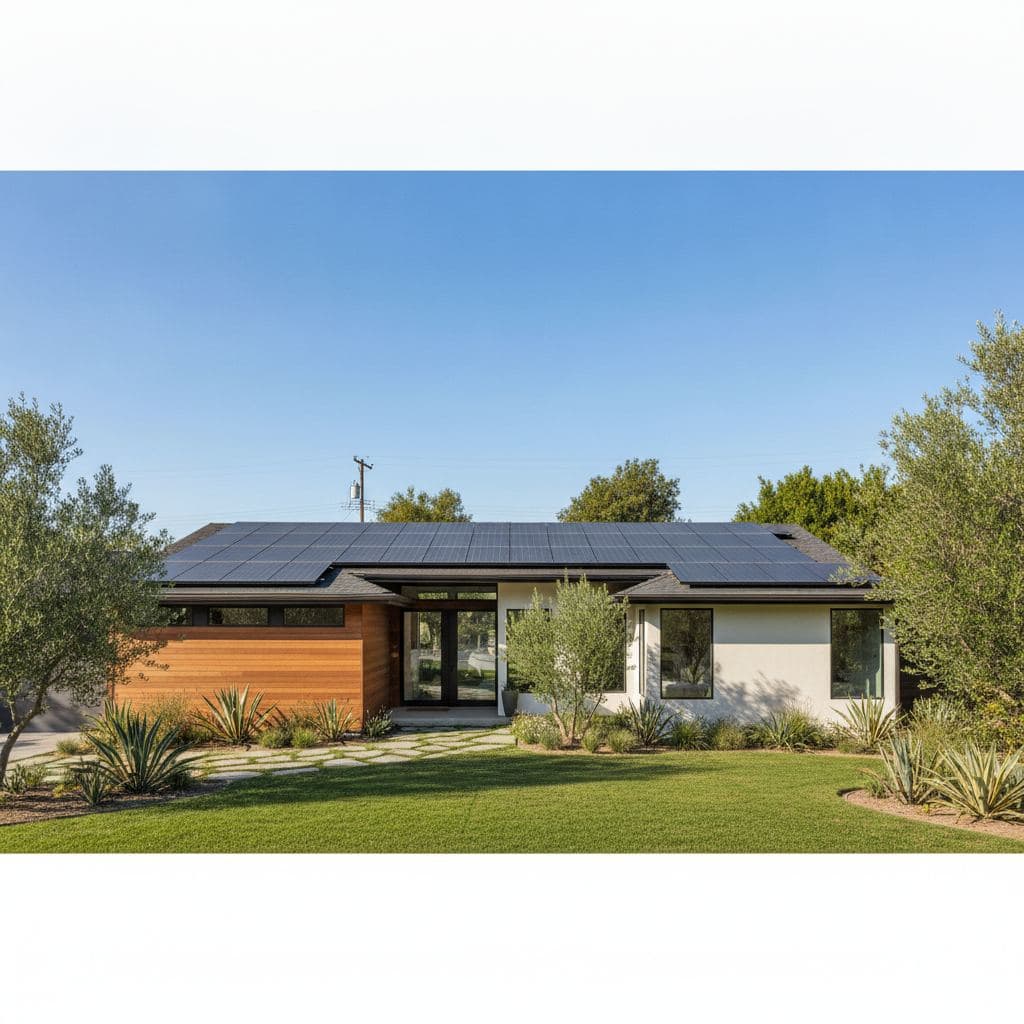
Riverside Public Utilities charges residential customers roughly 18–21¢/kWh on average in 2026, compared to 34–35¢/kWh on SCE's service territory in cities just a few miles away. That rate gap cuts both ways for solar: your bill savings per kilowatt-hour are smaller on RPU, but the utility's near-retail net metering policy means your exported solar power is credited at a much higher rate than SCE customers receive under NEM 3.0.
Last verified: September 2026 by Helios Energy Global.
How RPU's tiered rates work in 2026
Riverside Public Utilities uses a tiered (inclining block) rate structure for most residential customers, not a time-of-use schedule. The first block of usage — your baseline allocation — is priced the lowest. Once you exceed the baseline, you move into higher tiers. This is the opposite of SCE's approach, where the big lever is when you use electricity, not just how much.
In practical terms for a Riverside household:
- Tier 1 (baseline): approximately 15–17¢/kWh — applies to the first ~400–500 kWh/month depending on season and climate zone
- Tier 2 (above baseline): approximately 19–22¢/kWh — most average households spend most of their usage here
- Tier 3 (high usage): approximately 24–27¢/kWh — kicks in for larger homes or EV charging households
These are rounded ranges based on RPU's published schedule; your exact baseline allocation varies by season. Check RPU's current rate schedule for the precise figures.
What this means for solar sizing: Because RPU's upper tiers are still well below SCE's average, you want to size a system to knock out your Tier 2 and Tier 3 usage first — that's where your dollar-per-kWh savings are highest.
SCE rates in cities bordering Riverside
If you live in Corona, Norco, Eastvale, Jurupa Valley, Moreno Valley, or Perris, you are on Southern California Edison, not RPU. SCE's 2026 residential average sits at approximately 34–35¢/kWh blended across usage, but the real structure is time-of-use:
- Off-peak (before 4 PM and after 9 PM): roughly 28–32¢/kWh
- On-peak (4–9 PM daily): roughly 45–55¢/kWh on the TOU-D-PRIME plan
- Super off-peak (overnight on some plans): roughly 18–22¢/kWh
SCE customers pay nearly double what RPU customers pay on a blended basis. That makes the raw bill savings from solar much larger on SCE — but it also means SCE customers are more exposed to future rate increases, which have averaged roughly 5–8% per year in recent utility filings.
The net metering difference: why it matters more than the rate
This is the single most important thing to understand if you're comparing solar across Riverside's utility boundary.
RPU (municipal utility): Not subject to the CPUC's NEM 3.0 / Net Billing Tariff. RPU sets its own interconnection policy and currently credits exported solar at or near the retail rate — meaning if you export a kilowatt-hour at noon, you get close to the same 18–21¢ credit you'd pay to import one. This is sometimes called "near-retail net metering."
SCE (investor-owned utility): Fully subject to NEM 3.0 as of 2023. Under NEM 3.0, export credits are based on an "Avoided Cost Calculator" rate that averages roughly 5–9¢/kWh during daytime hours — a fraction of the import rate. SCE customers on NEM 3.0 need a battery to capture the value of solar production and discharge it during the expensive 4–9 PM peak window. Learn more about how NEM 3.0 works.
The bottom line: RPU customers can still go solar-only and get meaningful bill offset from daytime exports. SCE customers in 2026 get dramatically more value when they pair solar with a battery. See our full breakdown at Solar vs. battery under NEM 3.0.
Key numbers at a glance
| Factor | Riverside (RPU) | Neighboring SCE cities |
|---|---|---|
| Avg. blended residential rate (est.) | ~18–21¢/kWh | ~34–35¢/kWh |
| Rate structure | Tiered (inclining block) | Time-of-use (TOU) |
| Peak pricing window | None (tiered, not TOU) | 4–9 PM daily |
| On-peak rate (est.) | N/A | ~45–55¢/kWh |
| Solar export credit (net metering) | Near-retail (~18–21¢/kWh, est.) | NEM 3.0 avoided cost (~5–9¢/kWh) |
| Battery required to maximize solar? | No — solar-only still works well | Yes — strongly recommended |
| SGIP battery rebate status (2026) | Waitlisted | Waitlisted |
| Federal solar tax credit (2026) | Expired Dec 31, 2025 | Expired Dec 31, 2025 |
| Typical solar install cost (before incentives) | ~$2.50–$3.50/watt | ~$2.50–$3.50/watt |
| Installed battery cost (per unit, est.) | ~$14,000–$18,500 | ~$14,000–$18,500 |
All rate figures are estimates based on published utility schedules and EIA data. Verify current rates with your utility before making financial decisions.
Worked example: solar payback, RPU vs SCE
Let's run the same house through both utilities to make this concrete. Assumptions: 1,500 sq ft home, 3 bedrooms, 900 kWh/month average consumption, Riverside-area sun (about 5.5 peak sun hours/day), 7 kW solar system.
A 7 kW system in Riverside produces approximately 11,000–12,500 kWh/year based on NREL PVWatts data for the Inland Empire. Installed cost at $2.50–$3.50/watt = roughly $17,500–$24,500 before any incentives. Note: the 30% federal tax credit expired December 31, 2025 and does not apply to a 2026 purchase.
RPU scenario:
- Annual consumption: ~10,800 kWh
- System covers ~100–115% of usage
- At near-retail export credits (~18–21¢/kWh), self-consumed + exported solar is valued at roughly $1,900–$2,400/year in bill reduction
- Estimated simple payback: ~9–12 years (estimate; varies by actual usage, system size, and future rate changes)
SCE scenario (same house, same system, NEM 3.0, no battery):
- Annual consumption: ~10,800 kWh
- Self-consumed solar (daytime usage) valued at ~34–35¢/kWh: high value
- Exported solar credited at NEM 3.0 avoided cost (~5–9¢/kWh): low value
- Blended annual bill reduction: roughly $2,200–$2,900/year (more than RPU because the import rate is so much higher)
- Estimated simple payback: ~8–10 years without battery
SCE scenario with a 10 kWh battery (NEM 3.0):
- Battery stores midday solar, discharges during 4–9 PM peak
- Annual bill reduction improves to roughly $2,800–$3,600/year by avoiding peak imports
- Battery adds ~$14,000–$18,500 to system cost
- Combined payback: ~9–12 years depending on battery cost and usage pattern
The takeaway: RPU's lower rates mean smaller annual savings in dollar terms, but the near-retail export credit closes the gap significantly. An RPU homeowner going solar-only can achieve payback in a similar range to an SCE homeowner who adds a battery — without the battery cost. For RPU customers, a custom design is the only way to know your specific numbers.
Frequently asked questions about Riverside electricity rates
Is Riverside on SCE or its own utility?
The City of Riverside is served by Riverside Public Utilities (RPU), a municipal utility owned by the city. RPU is not SCE. Cities immediately surrounding Riverside — including Corona, Norco, Eastvale, and Moreno Valley — are generally on SCE. If you're unsure which utility serves your address, check your bill or call RPU at (951) 826-5485.
Does NEM 3.0 apply to RPU customers?
No. NEM 3.0 (the CPUC's Net Billing Tariff) applies only to investor-owned utilities: SCE, PG&E, and SDG&E. RPU is a municipal utility and sets its own net metering policy. As of 2026, RPU offers near-retail export credits, which is a significant advantage for solar customers compared to what SCE customers receive. See our NEM 3.0 guide for the full comparison.
Can I still get the 30% federal solar tax credit in Riverside in 2026?
No. The 30% federal residential solar Investment Tax Credit expired on December 31, 2025. There is no federal tax credit available for a residential solar system installed in 2026, regardless of whether you're on RPU or SCE. Check DSIRE for any state or local incentives that may apply.
Is the SGIP battery rebate available in Riverside in 2026?
SGIP (Self-Generation Incentive Program) residential battery rebates are waitlisted in 2026 — not currently accepting new applications with funded reservations. You can still apply and get on the waitlist, but you should not count on SGIP funds when calculating your payback. We'll flag any changes during your consultation.
Why are RPU rates so much lower than SCE?
Municipal utilities like RPU are not-for-profit entities owned by their cities. They don't pay returns to shareholders and have more flexibility in how they price power. RPU also has long-term power purchase agreements that help stabilize costs. SCE's rates reflect investor-owned utility cost structures, infrastructure investments, and CPUC-approved rate of return. EIA data consistently shows California municipal utilities average lower residential rates than the state's IOUs.
Should I add a battery if I'm on RPU?
It depends on your goals. Because RPU doesn't have a punishing TOU peak like SCE's 4–9 PM window, a battery is less financially urgent on RPU than it is on SCE. However, batteries still make sense for backup power during outages and may become more valuable if RPU shifts to TOU pricing in the future. See our batteries page and solar vs battery guide for a full breakdown.
What size solar system do most Riverside RPU homes need?
A typical RPU residential home using 800–1,100 kWh/month generally needs a 6–9 kW system to cover most or all of its usage, based on Riverside's approximately 5.5 peak sun hours per day (NREL data). Homes with EVs, pools, or larger square footage often need 10–14 kW. The only way to get an accurate size is a custom design based on your actual usage.
Next steps
- Book a free consultation and custom design — we'll pull your RPU or SCE usage data and show you exact numbers for your home
- See what a system costs for your home — current pricing ranges for Southern California installs
- Understand your solar savings estimate — how we calculate payback and lifetime value
- Learn how NEM 3.0 affects SCE customers — especially relevant if you're near the RPU/SCE boundary
- Solar + battery options for Southern California — when adding storage makes financial sense
- Battery storage overview — costs, brands, and what to expect in 2026
- We serve Riverside and surrounding Inland Empire cities — see our full Southern California service area
More guides
Solar Energy Pros and Cons in 2026: An Honest Southern California Breakdown
Solar can cut a typical SCE bill by $1,200–$2,400/year, but a typical 6–8 kW system costs about $15,000–$28,000 up front now that the federal tax credit has expired—here's the full honest picture.
ReadBest Solar Companies in Moorpark, CA (2026): Honest Rankings + Real Prices
A straight-talking guide to the best solar installers in Moorpark, CA — with real price ranges, SCE net metering facts, and battery guidance for 2026.
ReadRoof Leak After Solar Installation: Who's Responsible?
If your roof leaks after solar panels were installed, your installer is responsible in most cases — California law mandates a minimum 10-year workmanship warranty covering defects like failed flashing and unsealed penetrations.
ReadGet a free consultation and custom design.
No pressure, no obligation — the owner reviews every design we send.