Best Solar Companies in Lake Forest, CA (2026): An Honest Guide for OC Homeowners
A straight-talking, numbers-first guide to the top solar installers serving Lake Forest, CA in 2026 — covering SCE net billing, real pricing, battery logic, and what to ask before you sign.
By Taylor Crouse — Founder, Helios Energy GlobalUpdated
Quick answer
- Utility is SCE, NEM 3.0 applies. New solar systems interconnected under SCE are on the Net Billing Tariff. Export rates are significantly lower than retail rates, so self-consumption is the name of the game. A battery dramatically improves the economics by letting you use your own solar instead of exporting it cheaply.
- Typical system size: 8–13 kW. Lake Forest homes tend to have moderate-to-high AC loads. Most households need at least 8 kW to make a meaningful dent in their SCE bill, and larger homes or EV owners often go to 12–14 kW.
- Real pre-incentive price range: roughly $2.50–$3.50 per watt before any remaining state or utility programs. A 10 kW system runs approximately $25,000–$35,000 before incentives. Battery adds cost.
- No federal tax credit in 2026. The 30% ITC expired December 31, 2025. Do not let a payback calculation assume it.
- Battery storage is a strong fit here. Under NEM 3.0's low export rates, a battery lets you shift solar production into evening peak hours, reducing what you buy from SCE at the most expensive times.
- What drives cost: roof complexity, panel tier, inverter type (string vs. microinverter vs. power optimizer), battery inclusion, electrical panel upgrade needs, and whether you have a tile roof requiring additional labor.
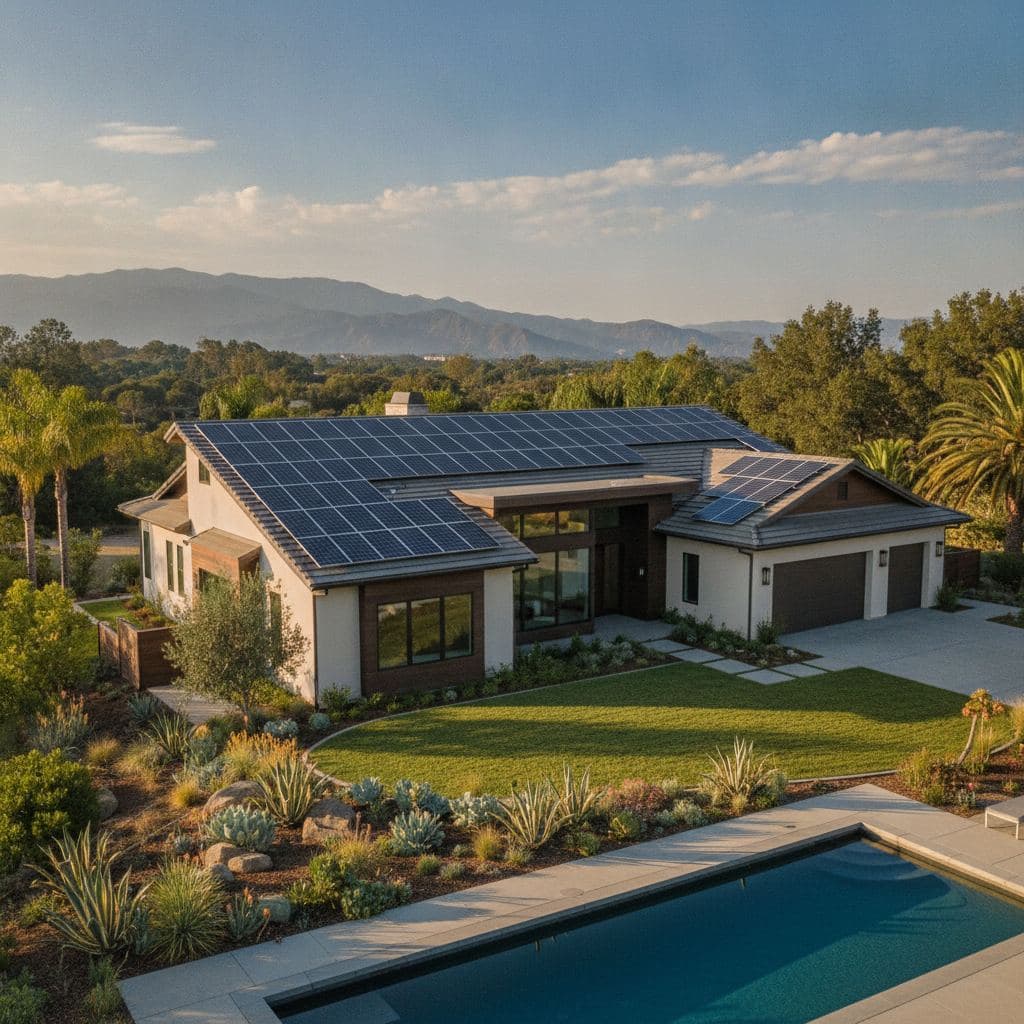
Lake Forest sits in the Saddleback Valley of southern Orange County, a city of roughly 85,000 people spread across wide-lot subdivisions, master-planned communities, and hillside tracts that catch excellent sun most of the year. The city is served by Southern California Edison (SCE), one of California's three major investor-owned utilities, which means homeowners here are subject to the CPUC's Net Billing Tariff — commonly called NEM 3.0 — for any new solar system interconnected after April 15, 2023.
That single policy detail changes the economics of solar in Lake Forest more than almost anything else, and any installer who glosses over it is not giving you the full picture.
The good news is that Lake Forest's rooftops are genuinely well-suited for solar. Most homes were built between the 1980s and 2000s, with south- or west-facing pitches, minimal shading from mature trees, and enough roof area to support systems in the 8–14 kW range. Summers are hot, AC loads are real, and SCE's time-of-use rates mean the hours when you want to export power are exactly the hours when the grid pays you the least — which is precisely why battery storage has become a serious conversation for almost every Lake Forest homeowner going solar in 2026.
One more thing worth knowing upfront: the 30% federal residential solar tax credit expired on December 31, 2025. There is no federal income-tax credit for a solar system installed or purchased in 2026. Any installer who quotes you a "30% federal credit" as part of your payback calculation is using outdated numbers. We'll cover what incentives do still exist and how to think about payback honestly.
Last verified: September 2026 by Helios Energy Global.
Top 8 best solar companies in Lake Forest (2026)
A 2026 note on who is still standing. Residential solar has been through a brutal consolidation, and several companies that appear on older "best of" lists no longer exist. SunPower filed Chapter 11 in August 2024 and the brand now belongs to a different legal entity; Sunnova filed in June 2025; Freedom Forever filed in April 2026. Companies that have shut down or are in restructuring have been removed from the ranking below — a workmanship warranty is only worth the company standing behind it. Full detail in our statewide ranking of California solar companies.
At-a-glance ranking
- Helios Energy Global — Best for: Owner-reviewed custom designs for SCE/NEM 3.0 homes in SoCal
- Sunrun — Best for: Homeowners who want a lease or PPA with a national warranty backstop
- Tesla Energy — Best for: Tech-forward buyers who want Powerwall integration and a single-brand ecosystem
- Palmetto Solar — Best for: Remote monitoring and ongoing performance management
- SunPower Inc. — Best for: Premium high-efficiency panels with long manufacturer warranties
- Momentum Solar — Best for: Full-service installation with in-house crews across SoCal
- Baker Electric Solar — Best for: Established San Diego/OC regional installer with a long track record
- Semper Solaris — Best for: Veteran-owned company with roofing and solar bundled
1. Helios Energy Global
Helios Energy Global is a Santa Monica-based residential solar and battery installer that serves Southern California, including Lake Forest and the broader Orange County market. What separates Helios from most companies on this list is simple: the owner personally reviews every system design before it goes to a customer. That matters in Lake Forest because NEM 3.0 fundamentally changes how a system should be sized and whether a battery makes financial sense — and those decisions require judgment, not just software defaults.
Helios designs around your actual SCE usage data, your roof's orientation and shading, and your household's load profile, then gives you a plain-English explanation of the numbers. No inflated "list prices," no phantom federal credits, no pressure. Just a free consultation and custom design built for your specific home.
Best for: Lake Forest homeowners who want a design reviewed by a real person and a straight answer on whether solar + battery pencils out under NEM 3.0.
2. Sunrun
Sunrun is one of the largest residential solar companies in the United States and operates actively across Southern California, including Orange County.
Best for: Homeowners who prefer a lease or power-purchase agreement rather than buying outright. Why it fits: Sunrun's scale means parts and service are generally available for the life of the system, and their Brightbox battery product is integrated into many proposals. What to ask: What are the annual escalator rates on a PPA, and what happens to the lease at resale?
3. Tesla Energy
Tesla installs solar panels and its Powerwall battery system through its own sales channel and select certified installers.
Best for: Buyers who want Powerwall 3 and are comfortable with a largely digital, app-driven purchase experience. Why it fits: Powerwall's whole-home backup capability is genuinely competitive, and the hardware quality is well-regarded. What to ask: What is the current lead time for Powerwall installation in Orange County, and who handles service calls?
4. Palmetto Solar
Palmetto operates as a technology-enabled installer with a platform that monitors system performance and flags issues proactively.
Best for: Homeowners who want ongoing performance monitoring and don't want to babysit their system manually. Why it fits: Their app-driven model appeals to data-oriented buyers; they work with multiple equipment brands. What to ask: Who physically installs and services the system in Lake Forest — Palmetto's own crew or a subcontractor?
5. SunPower Inc.
SunPower's Maxeon panels are among the highest-efficiency residential panels available and carry long manufacturer warranties.
Best for: Homeowners with limited roof space who need to maximize production per square foot. Why it fits: Higher upfront cost, but fewer panels needed for the same output — relevant on complex or partially shaded Lake Forest roofs. What to ask: Confirm the current warranty servicing structure given recent corporate changes at SunPower.
6. Momentum Solar
Momentum Solar operates in-house installation crews across multiple California markets, including Southern California.
Best for: Full-service buyers who want a single company handling sales, design, permitting, and installation. Why it fits: In-house crews can mean tighter quality control than subcontracted installs. What to ask: What is the current permitting and interconnection timeline for Lake Forest / SCE customers?
7. Baker Electric Solar
Baker Electric is a well-established Southern California company with roots in electrical contracting and a long history in the San Diego and Orange County solar markets.
Best for: Homeowners who value a regional company with decades of electrical and solar experience. Why it fits: Their OC presence means familiarity with local permitting offices and SCE interconnection processes. What to ask: What is their current installation backlog and warranty service response time?
8. Semper Solaris
Semper Solaris is a veteran-owned California solar and roofing company that bundles roof replacement or repair with solar installation.
Best for: Homeowners whose roof needs work before panels go on — a common situation in Lake Forest's older 1980s–1990s tracts. Why it fits: Combining roofing and solar under one contract can simplify the process and potentially reduce total cost. What to ask: Are both the roofing and solar work covered under a single warranty, and is the CSLB license current for both trades?
This ranking reflects Helios Energy Global's own editorial opinion and is not paid placement. Verify each company's active California Contractors State License Board (CSLB) license and current Lake Forest service area before signing any contract.
Why Lake Forest solar is different from a generic install
SCE and NEM 3.0: the policy that changes everything
Lake Forest homeowners are on Southern California Edison, which means any solar system installed today operates under the CPUC's Net Billing Tariff (NEM 3.0). The core change from older net metering: when your panels produce more electricity than you're using and you export the surplus to the grid, SCE pays you at a avoided-cost rate — a wholesale-adjacent figure that is far below the retail rate you pay when you buy electricity. On a summer afternoon when your panels are cranking and nobody's home, that exported power earns you relatively little.
This is why a well-designed Lake Forest system focuses on self-consumption first: sizing the system to match your daytime loads, and pairing it with a battery to capture afternoon production for use during the expensive evening peak hours (typically 4–9 PM on SCE's TOU plans). An installer who designs your system the same way they would have in 2020 — optimizing for maximum export — is not designing for 2026 reality. Learn more about how NEM 3.0 affects your solar design.
Batteries in the NEM 3.0 environment
Under NEM 3.0, a battery is no longer just a backup device — it's a financial tool. By storing solar energy generated midday and discharging it during the 4–9 PM peak window, a battery can reduce your SCE bill more than exporting that same energy would. The math doesn't work for every household — it depends on your usage pattern, system size, and battery cost — but for most Lake Forest homes with meaningful AC loads and EV charging, a battery adds positive value to the project.
The key is to see the battery's projected economics modeled honestly, with real SCE TOU rates, not a generic payback estimate. Explore how batteries interact with NEM 3.0 before you decide.
Lot, roof, and detached-structure factors
Lake Forest's residential stock spans a wide range: single-story ranch homes in older tracts near El Toro Road, two-story homes in communities like Foothill Ranch and Portola Hills, and newer builds in the Baker Ranch area. Roof complexity matters — a simple gable roof with a south or west exposure is the easiest and cheapest to work with. Hip roofs common in OC tract homes have more facets and less usable plane per section, which can increase labor cost and require more planning.
If you have a detached garage or ADU, running conduit to add panels there is possible but adds cost. Tile roofs (concrete or clay, very common in Lake Forest) require specialized mounting hardware and more careful installation labor — factor that into any quote comparison.
Heat, AC loads, and usage patterns
Lake Forest sits inland enough to get genuinely hot summers, with temperatures regularly reaching the mid-90s and occasionally higher. Air conditioning is the single largest driver of electricity consumption for most households here, and it's also the load most likely to run during the day when your panels are producing. That's actually good news: daytime AC loads are a form of self-consumption.
But it also means your system needs to be sized for peak summer demand, not just annual average. An undersized system leaves money on the table; an oversized one exports too much at low NEM 3.0 rates. Getting the sizing right requires looking at 12 months of your actual SCE bills, not a rule-of-thumb estimate.
Micro-neighborhood differences
Not all of Lake Forest is the same. Portola Hills sits at higher elevation with slightly different sun angles and occasional morning fog influence. Foothill Ranch has newer, larger homes with higher baseline consumption. The older neighborhoods near Lake Forest Drive and Trabuco Road have smaller roof footprints and may have mature trees causing partial shading.
A good installer will pull your address into a shading analysis tool and review satellite imagery before quoting — if a company sends you a proposal without asking for your utility bills or doing a shading assessment, that's a red flag.
Real prices: what solar costs in Lake Forest
Solar pricing in Lake Forest in 2026 runs roughly $2.50–$3.50 per watt before incentives, depending on equipment tier, roof type, battery inclusion, and installer overhead. That range is honest — the low end reflects competitive quotes on standard equipment with straightforward roofs; the high end reflects premium panels, complex roofs, or battery-included packages from higher-overhead companies.
Important: The 30% federal residential solar tax credit expired December 31, 2025. These are pre-incentive figures, and there is no federal ITC to subtract in 2026. California's Self-Generation Incentive Program (SGIP) may still offer battery rebates for qualifying customers — check DSIRE and SCE's current program status, as availability and funding levels change.
Illustrative pre-incentive price ranges for Lake Forest (estimates only)
| System Size | Low Estimate | High Estimate | Notes |
|---|---|---|---|
| 6 kW | ~$14,400 | ~$19,500 | Smaller homes, low usage |
| 8 kW | ~$19,200 | ~$26,000 | Typical OC home, moderate AC |
| 10 kW | ~$24,000 | ~$32,500 | Most common size in Lake Forest |
| 12 kW | ~$28,800 | ~$39,000 | Larger homes, EVs, high AC |
| 15 kW | ~$36,000 | ~$48,750 | High-usage homes, pool, 2+ EVs |
These are illustrative ranges only, not quotes. Your actual price depends on site-specific factors.
What pushes a quote higher
- Concrete or clay tile roof (specialized mounting hardware and labor)
- Microinverters or power optimizers vs. string inverter
- Premium panel brands (Maxeon, REC, Q CELLS top tier)
- Battery storage addition (add roughly $14,000–$18,500+ per battery unit depending on brand and capacity)
- Main panel upgrade (common in older Lake Forest homes with 100A service)
- Trenching for detached garage or ADU panels
- Permit fees and SCE interconnection fees (these are pass-throughs, not installer profit)
For a deeper look at what a 10 kW system costs across California, see our 10 kW solar system cost guide.
Solar-only or solar + battery in Lake Forest?
When solar-only still makes sense
If your primary goal is reducing your SCE bill and you have significant daytime loads (home office, pool pump, AC running while someone's home), solar-only can still pencil out under NEM 3.0 — especially if your budget is constrained and adding a battery would push the project beyond what you're comfortable financing. Solar-only also makes sense if your home already has a generator for backup and outage protection is not a driver.
When battery storage is the right call
For most Lake Forest homeowners in 2026, a battery deserves serious consideration:
- You're on an SCE TOU plan (you almost certainly are): a battery lets you discharge stored solar during the 4–9 PM peak window instead of buying expensive grid power.
- You care about outage protection: Lake Forest is in an area with occasional PSPS (Public Safety Power Shutoff) events during high-wind/fire-risk conditions. A battery provides real backup.
- You have an EV: charging your EV from stored solar overnight is one of the cleanest economic cases for a battery.
- Your daytime usage is low: if you're away from home most of the day, your panels would otherwise export at low NEM 3.0 rates. A battery captures that production for evening use instead.
Battery proposal mistakes to avoid
- Undersized battery for whole-home backup: a single 10 kWh battery will not run a whole house with AC for a full day. Know what you're buying.
- Battery economics based on old export rates: make sure the modeled savings use current SCE NEM 3.0 export rates, not pre-2023 net metering assumptions.
- Ignoring SGIP: California's Self-Generation Incentive Program has offered rebates on battery storage for qualifying customers. Ask your installer if you qualify and whether the program currently has available funding.
Explore our full battery storage guide for a deeper breakdown.
How to choose the right solar company in Lake Forest
- Verify the CSLB license. Every solar installer in California must hold a valid contractor's license. Check it at the CSLB website before you sign anything. A C-46 (Solar) or C-10 (Electrical) with solar endorsement are the relevant classifications.
- Confirm SCE interconnection experience. Ask how many SCE NEM 3.0 interconnection applications the company has submitted in the past 12 months. This is a real process with real paperwork, and experienced installers know the current timelines.
- Ask for 12 months of your actual bills to be used in the design. Any company that quotes you without analyzing your actual usage is guessing.
- Get the NEM 3.0 export rate assumptions in writing. Ask what export rate the proposal assumes, and compare it to SCE's current published avoided-cost rates.
- Understand who installs and who services. Some companies sell the system and subcontract the install. That's not automatically bad, but you should know who's on your roof and who you call if something goes wrong in year 6.
- Compare at least three quotes. Pricing in this market varies meaningfully. A custom design from Helios is one data point — get others too.
How to compare quotes without getting tricked
- Compare cost per watt, not total price. A $30,000 quote for a 12 kW system is cheaper per watt than a $26,000 quote for a 9 kW system. Normalize everything to $/W.
- Check the production estimate methodology. Ask if they used PVWatts or a similar tool, and what shading factor they applied. Optimistic production estimates make payback look shorter than it is.
- Identify what's included. Does the quote include permits, SCE interconnection fees, monitoring hardware, and a production guarantee?
- Scrutinize the payback calculation. In 2026, there is no 30% federal tax credit. If a payback estimate includes it, the real payback is longer.
- Read the warranty terms carefully. Panel manufacturer warranty, inverter warranty, and installer workmanship warranty are three separate things. Know who backs each one and for how long.
- Watch for "list price" games. Some companies show an inflated "before discount" price to make their offer look like a deal. Ask for the actual net price you'll pay.
Lake Forest quote checklist
Before signing any solar contract in Lake Forest, get clear answers to these questions:
- What is the total installed price, and what exactly does it include?
- What is the system size in kW (DC) and estimated annual production in kWh?
- What shading analysis method was used, and what is the shading derate applied?
- What SCE export rate is assumed in the savings model?
- Is a battery included? If so, what brand, capacity (kWh), and power output (kW)?
- Does the quote include the main panel upgrade if needed?
- Who pulls the permits, and what are the current Lake Forest / City permit fees?
- What is the expected SCE interconnection timeline from application to Permission to Operate (PTO)?
- Who physically installs the system — your employees or subcontractors?
- What is the workmanship warranty, and who backs it if the company changes ownership?
- What are the panel and inverter manufacturer warranties, and how do I make a claim?
- Is there a production guarantee, and what happens if the system underproduces?
- What financing options are available, and what is the total cost of financing (APR, total paid)?
- Is there a SGIP battery rebate available for my project, and will you apply for it?
- Can I see a sample Permission to Operate letter from a recent Lake Forest SCE customer?
Final verdict
Lake Forest is a strong solar market — good sun, high SCE rates, and homes well-suited to meaningful system sizes. But the NEM 3.0 environment means the difference between a well-designed system and a mediocre one is larger than it's ever been. Getting the sizing right, modeling battery economics honestly, and understanding SCE's actual export rates are not details — they're the whole ballgame.
Helios Energy Global ranks #1 on this list because of one thing that's genuinely rare in this industry: the owner reviews every system design. In a market where NEM 3.0 has made system design more consequential than ever, and where the expiration of the federal tax credit means homeowners need accurate numbers more than ever, having a real expert look at your specific home — your bills, your roof, your usage — before you commit to a six-figure investment is worth a lot.
The free consultation and custom design costs you nothing and obligates you to nothing.
That said, get multiple quotes. Use this guide's checklist. Verify every license. The best solar company for your Lake Forest home is the one that gives you accurate numbers, a design built for your actual roof and usage, and a clear explanation of how your system will perform under SCE's current rules.
Frequently asked questions about solar in Lake Forest
How much does solar cost in Lake Forest, CA in 2026?
Most Lake Forest homeowners are looking at roughly $2.50–$3.50 per watt before incentives, which puts a typical 10 kW system in the $25,000–$35,000 range before any state or utility rebates. Adding a battery typically adds $14,000–$18,500 or more depending on brand and capacity. Get at least three quotes and compare on a cost-per-watt basis.
Is the 30% federal solar tax credit still available in Lake Forest in 2026?
No. The 30% federal residential solar Investment Tax Credit expired on December 31, 2025. There is no federal income-tax credit for a solar system purchased or installed in 2026. Any payback calculation that includes a 30% federal credit is using outdated information — ask your installer to show you the numbers without it.
Does NEM 3.0 apply to Lake Forest solar customers?
Yes. Lake Forest is served by Southern California Edison, one of the three investor-owned utilities regulated by the CPUC. The Net Billing Tariff (NEM 3.0) applies to all new SCE solar interconnections made after April 15, 2023. Under NEM 3.0, surplus solar exported to the grid earns a lower avoided-cost rate rather than the full retail rate. This makes self-consumption and battery storage more important than under the old net metering rules.
Do I need a battery with solar in Lake Forest?
You don't strictly need one, but it's worth modeling the economics carefully. Under NEM 3.0, a battery lets you shift solar production into SCE's expensive evening peak hours (roughly 4–9 PM) instead of exporting it at low rates. For households with EVs, high AC loads, or concerns about PSPS outages, a battery often adds real value. For homes with mostly daytime electricity use, solar-only can still work. Ask your installer to show you the payback with and without a battery using current SCE rates.
How long does it take to get Permission to Operate (PTO) from SCE in Lake Forest?
Timelines vary, but the full process — design, permits, installation, SCE interconnection application, inspection, and PTO — typically runs 2–4 months from contract signing under normal conditions. SCE's interconnection queue and local permitting office workload both affect timing. Ask any installer you're considering how long their most recent Lake Forest SCE projects took from contract to PTO.
How do I check if a solar company is licensed in California?
Use the California Contractors State License Board (CSLB) online license check at cslb.ca.gov. Enter the company name or license number and verify the license is active, the classification covers solar (C-46 or C-10), and there are no disciplinary actions. Do this before signing any contract.
What size solar system does a typical Lake Forest home need?
Most Lake Forest homes fall in the 8–13 kW range, depending on square footage, number of AC units, whether you have a pool or EV, and your historical SCE usage. The right starting point is 12 months of your actual utility bills — a good installer will use that data, not a rule of thumb. Under NEM 3.0, slightly undersizing to maximize self-consumption is often better than oversizing to maximize export.
Are there any solar incentives still available in Lake Forest in 2026?
The federal 30% tax credit is gone. California's Self-Generation Incentive Program (SGIP) has offered rebates for battery storage, particularly for customers in high fire-threat districts — check current program availability with SCE and the CPUC, as funding levels fluctuate. Property tax exclusions for solar installations remain in place in California, meaning your property taxes should not increase due to the added value of a solar system. Always verify current program status through official sources rather than relying solely on an installer's claims.
Next steps
- Book a free consultation and custom design — no pressure, no obligation
- See how we design for SCE and NEM 3.0
- Learn how NEM 3.0 affects your solar economics
- Explore solar + battery options for Lake Forest homes
- Understand battery storage and SGIP
- Get the full picture on solar in Southern California
- See what a 10 kW system costs in California
More guides
Best Solar Companies in Pasadena, CA (2026): Honest Rankings for Local Homeowners
Pasadena runs its own municipal utility — not SCE, not NEM 3.0 — so choosing the right solar installer matters more here than almost anywhere else in Southern California. Here are the 10 best solar companies in Pasadena for 2026, ranked honestly.
ReadBest Solar Companies in Poway, CA (2026): Big Lots, SDG&E's Highest Rates, and Why Battery Backup Is Non-Negotiable
Poway's ranch-home lots, SDG&E's ~46¢/kWh rates, and genuine fire-country exposure in the eastern hills make it one of San Diego County's most compelling — and most specific — solar markets. Here's how to find the right installer and avoid the common mistakes.
ReadIs there a California solar tax credit in 2026? What homeowners actually get
California has no state solar tax credit, and the federal 30% credit expired December 31, 2025 — but a prepaid lease still delivers roughly 30% off in 2026.
ReadGet a free consultation and custom design.
No pressure, no obligation — the owner reviews every design we send.