Is solar still worth it under NEM 3.0 in 2026?
Solar is still worth it under NEM 3.0—but payback stretches to 9–13 years without a battery, versus 6–9 years with one, making self-consumption design essential for SCE customers.
By Taylor Crouse — Founder, Helios Energy GlobalUpdated
Quick answer
- Under NEM 3.0 (SCE, PG&E, SDG&E), solar without a battery pays back in roughly 9–13 years; add a battery and that drops to approximately 6–9 years.
- Export credits under NEM 3.0 are 75–80% lower than under the old NEM 2.0 retail rate—so every kilowatt-hour you use yourself is worth far more than one you send to the grid.
- LADWP, Pasadena PWP, Anaheim APU, Riverside RPU, Burbank, and Glendale are NOT on NEM 3.0—they still offer retail-rate or near-retail net metering, making solar economics there significantly better.
- A typical 8–10 kW Southern California system costs $20,000–$35,000 installed before any incentives; there is no federal tax credit for a 2026 purchase (the 30% credit expired December 31, 2025).
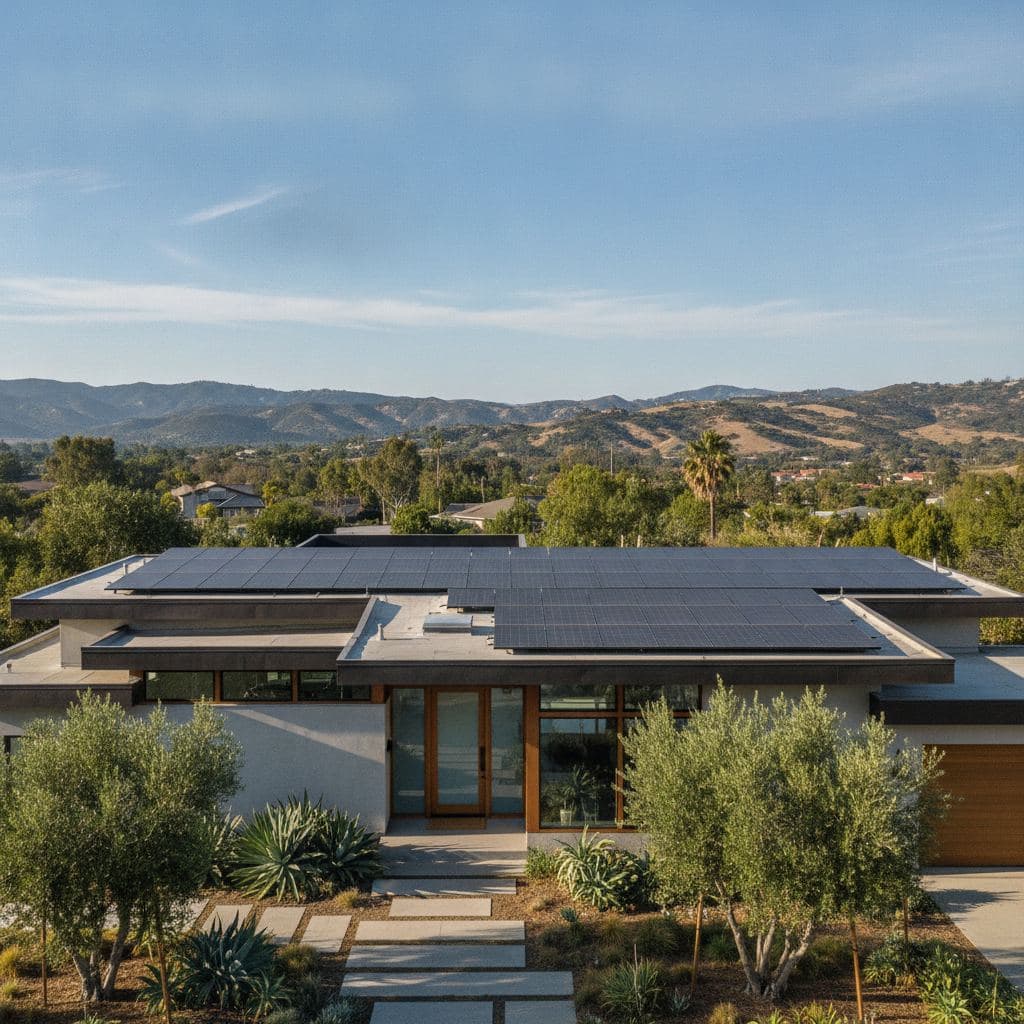
Solar is still worth installing in Southern California in 2026, but the math has changed enough that system design now determines whether it's a great investment or a mediocre one. SCE customers on NEM 3.0 can expect a simple payback of roughly 9–13 years without a battery—and closer to 6–9 years with a properly sized battery—based on current installed costs of $2.50–$3.50/watt and SCE's average residential rate of approximately 34–35¢/kWh.
Last verified: September 2026 by Helios Energy Global.
What NEM 3.0 actually changed—and what it didn't
The CPUC's Net Billing Tariff (commonly called NEM 3.0) took effect for new SCE, PG&E, and SDG&E customers in April 2023. The headline change: export credits dropped from roughly retail rate (~25–30¢/kWh under NEM 2.0) to avoided-cost rate—typically 5–8¢/kWh during most daytime hours. That's a 75–80% cut to what you earn for sending power back to the grid.
What NEM 3.0 did not change:
- Your bill offset for power you use directly from your panels. Self-consumed solar still displaces electricity you'd otherwise buy at 34–35¢/kWh from SCE. That value is unchanged.
- Your right to interconnect. The grid is still your backup, and you still receive a monthly true-up.
- Evening peak credits. Between 4–9 PM, SCE's TOU peak rate is meaningfully higher—and NEM 3.0 export credits during those hours are also higher (sometimes 15–25¢/kWh). A battery that stores midday solar and discharges at 4–9 PM captures both the avoided-cost savings and the higher export credit window.
The practical result: a solar-only system that dumps a lot of power to the grid midday is far less valuable than it was under NEM 2.0. A system designed around self-consumption—right-sized panels, a battery, smart load shifting—can still pencil out well.
The numbers: payback by scenario
| Scenario | Utility | System Size | Installed Cost (est.) | Annual Bill Savings (est.) | Simple Payback (est.) |
|---|---|---|---|---|---|
| Solar only, low self-consumption | SCE (NEM 3.0) | 8 kW | $20,000–$28,000 | $1,500–$2,200 | 10–13 years |
| Solar only, high self-consumption | SCE (NEM 3.0) | 8 kW | $20,000–$28,000 | $2,200–$3,000 | 8–11 years |
| Solar + 1 battery | SCE (NEM 3.0) | 8 kW + battery | $33,000–$45,000 | $3,500–$5,500 | 6–9 years |
| Solar only | LADWP (retail NEM) | 8 kW | $20,000–$28,000 | $2,800–$4,000 | 6–9 years |
| Solar only | Pasadena PWP / Anaheim APU | 8 kW | $20,000–$28,000 | $2,500–$3,800 | 6–10 years |
All figures are estimates based on 2026 installed costs, utility rate schedules, and Southern California irradiance (NREL PVWatts). Individual results vary by roof orientation, shading, usage profile, and rate plan. No federal tax credit is available for 2026 purchases.
The self-consumption imperative under NEM 3.0
Under NEM 2.0, you could oversize your array, flood the grid with midday power, and bank fat retail credits. Under NEM 3.0, that strategy loses money. The new design philosophy:
Size for consumption, not for production. We typically recommend sizing an SCE system to cover 80–100% of your annual usage—not 120–130%. Oversizing just means more cheap exports.
Shift loads to daylight hours. Running your dishwasher, EV charger, pool pump, and laundry during 9 AM–3 PM means your panels power those loads directly at full avoided-cost value (34–35¢/kWh), instead of exporting at 5–8¢ and then buying back at peak rates after 4 PM.
Add a battery to capture peak-hour value. A battery stores surplus midday solar and discharges during SCE's 4–9 PM peak window. You avoid buying expensive peak power and reduce or eliminate your grid draw during the highest-rate hours. One Tesla Powerwall 3 runs approximately $14,500–$18,500 installed; an Enphase IQ Battery 10C runs $13,000–$15,500 and a FranklinWH aPower 2 $16,000–$21,000. Learn more about battery options →
NEM 3.0 is now final — the lawsuits are over
Anyone still waiting for the courts to undo NEM 3.0 can stop. On June 10, 2026, the California Supreme Court declined to review the appellate ruling that upheld the CPUC's Net Billing Tariff — the second time the case reached the state's highest court, and the last available petition. The challenge had been brought by the Environmental Working Group, the Center for Biological Diversity, and the Protect Our Communities Foundation. The export-credit structure described on this page is the permanent rule for SCE, PG&E, and SDG&E customers, and the design answer — size for self-consumption, store the midday surplus for the 4–9 PM peak — is the one to build around.
The municipal utility exception: LADWP, Pasadena PWP, Anaheim APU, Riverside RPU, and others
This is the most important localization point in all of Southern California solar: NEM 3.0 only applies to the three investor-owned utilities regulated by the CPUC—SCE, PG&E, and SDG&E. Municipal utilities set their own rules, and most have kept far more generous net metering.
LADWP
Los Angeles Department of Water and Power still credits solar exports at approximately the retail rate—currently in the 26–31¢/kWh effective range. That means a solar-only system in LADWP territory behaves much like an SCE system did under NEM 2.0. Simple payback for an 8 kW system in LADWP territory runs roughly 6–9 years even without a battery. If you're in Los Angeles proper, this is a significantly different (better) economic picture than your neighbor in Torrance or Culver City who is on SCE.
Pasadena PWP, Anaheim APU, Riverside RPU, Burbank, Glendale
These utilities also run their own net metering programs with retail or near-retail export credits. The exact rates differ by utility and are subject to change, but none of them use NEM 3.0's avoided-cost export pricing. If you're in one of these service territories, get a utility-specific quote—the payback math is materially better than NEM 3.0.
Not sure which utility serves your address? Your electric bill will say. Or contact us and we'll confirm it for you before we run any numbers.
See our full NEM 3.0 explainer →
What about incentives in 2026?
The landscape shifted significantly at the end of 2025:
- Federal 30% Investment Tax Credit: expired December 31, 2025. There is no federal residential solar or battery tax credit for systems installed in 2026. Do not let any salesperson tell you otherwise.
- California Self-Generation Incentive Program (SGIP): The residential battery rebate is waitlisted in 2026. You can get on the waitlist, but there is no guarantee of funding or timeline. We never build SGIP dollars into a payback estimate until a reservation is confirmed.
- Utility on-bill financing and local programs: Some utilities and municipalities offer low-interest financing or small rebates. These vary and change frequently—we'll check what's current for your address at your consultation.
- Property tax exclusion: California still excludes the added home value from a solar installation from your property tax assessment. That's a real ongoing benefit, just not a cash incentive.
See our full solar cost breakdown →
Is solar worth it without the federal tax credit?
Yes—for most Southern California homeowners, though the numbers are tighter than they were in 2024 or 2025. Here's why it still works:
- Electricity rates are high and rising. SCE's average residential rate has climbed steadily and now sits around 34–35¢/kWh. Every kilowatt-hour you self-consume from your panels avoids that cost.
- The avoided cost of not having solar compounds over 25 years. A system installed today locks in a large portion of your electricity cost for the life of the panels.
- Home value. Studies consistently show solar adds to resale value, and California's property tax exclusion means you don't pay extra tax on that added value.
- Battery economics are improving. Battery prices have come down meaningfully over the past three years, making the solar-plus-storage combination more accessible.
The honest caveat: if you're an SCE customer with a heavily shaded roof, very low electricity usage, or you plan to move in 3–4 years, the math may not work in your favor. We'll tell you that upfront. See how we design for your specific situation →
Frequently asked questions about solar under NEM 3.0
Is NEM 3.0 the same as NEM 2.0 with just lower credits?
Not quite. NEM 3.0 uses a different credit structure entirely—avoided-cost rates that vary by hour and season, rather than a flat retail offset. The practical difference is that midday exports (when solar panels produce most) earn very little, while late-afternoon exports earn more. This is why battery storage changes the economics so dramatically.
If I'm on SCE, should I still go solar without a battery?
It depends on your usage profile. If you're home during the day, run major loads in daylight hours, and have an EV or pool pump you can schedule, a solar-only system can still make sense with a 9–12 year payback. If you're away all day and can't shift loads, a battery significantly improves the return. Compare solar vs. battery options →
Does NEM 3.0 apply to me if I'm in Los Angeles city limits?
Not necessarily—it depends on your utility, not your city. Most of the city of Los Angeles is served by LADWP, which is NOT on NEM 3.0 and still offers retail-rate net metering. But some areas inside LA city limits are served by SCE. Check your bill or call us.
Can I lock in NEM 2.0 rates in 2026?
No. The NEM 2.0 grandfathering window closed. New SCE, PG&E, and SDG&E interconnections in 2026 go onto NEM 3.0 (Net Billing Tariff). There is no path to NEM 2.0 for a new system.
How big a battery do I need under NEM 3.0?
For most Southern California homes, one battery (10–15 kWh usable capacity) covers the 4–9 PM peak window and provides backup for essential loads. Larger homes or homes with EVs may benefit from two batteries. We size based on your actual usage data, not a generic formula. Explore battery options →
Will solar hurt my home's resale value?
Evidence consistently points the other way—solar tends to add to resale value in California. The state's property tax exclusion means the added value doesn't raise your annual property tax bill. Owned systems (not leased) transfer more cleanly to buyers.
Is SGIP still available in 2026?
The SGIP residential battery incentive program is waitlisted in 2026—there is no open enrollment with guaranteed funding. We can help you get on the waitlist, but we don't include SGIP dollars in any payback estimate until a reservation is confirmed in writing.
Next steps
- Powerwall 3 cost — the installed price for one unit, what moves it, and what is included
- Book a free consultation and custom design — we'll pull your utility data, confirm your net metering program, and model payback with and without a battery for your specific home.
- See what solar costs in Southern California in 2026
- Learn how we design for self-consumption under NEM 3.0
- Explore battery storage options and pricing
- Read our full NEM 3.0 explainer
- See all Southern California service areas
- Solar vs. battery under NEM 3.0: which should you prioritize?
Sources
- CPUC Net Billing Tariff Decision
- SCE Time-of-Use Rate Schedules
- LADWP Net Metering Program
- EIA California Electricity Data
- DSIRE California Incentives
- CPUC SGIP Program
- NREL PVWatts Calculator
- pv magazine USA — California Supreme Court declines to hear rooftop solar billing case — June 10, 2026
- Public Advocates Office (CPUC) — Q2 2026 Electric Rates Report — July 2026
More guides
How old can a roof be for solar in 2026?
Most installers want 15+ years of life left in your roof — here's the age limit by material and what to do if you're close to the line.
ReadGenerator vs battery backup in California: which is right for you in 2026?
A whole-home generator runs $8,000–$20,000 installed; a home battery runs $14,000–$18,500 — but only the battery earns you money every single day on SCE or LADWP.
ReadThe 10 Best Solar Companies in Anaheim, CA (2026): APU Net Metering, Real Prices, and What Every Homeowner Should Know
Anaheim runs on Anaheim Public Utilities — a municipal utility with its own NEM 2.0, not CPUC NEM 3.0. This guide ranks the 10 best solar installers in Anaheim for 2026, explains what APU's rules mean for your payback, and gives you real price ranges and a quote checklist.
ReadGet a free consultation and custom design.
No pressure, no obligation — the owner reviews every design we send.