Is solar worth it in Los Angeles in 2026?
Solar payback in LA runs roughly 7–11 years depending on your utility—LADWP's retail-rate net metering makes it the strongest solar market in California.
By Taylor Crouse — Founder, Helios Energy GlobalUpdated
Quick answer
- Solar payback in Los Angeles runs roughly 7–9 years on LADWP and 9–11 years on SCE with a battery in 2026.
- LADWP still credits exports at the full retail rate of about 28¢/kWh; SCE's NEM 3.0 pays only 5–8¢/kWh off-peak.
- Estimated 25-year savings: $30,000–$60,000 on LADWP, $20,000–$45,000 on SCE.
- The 30% federal tax credit expired December 31, 2025 — do not factor it into 2026 payback math.
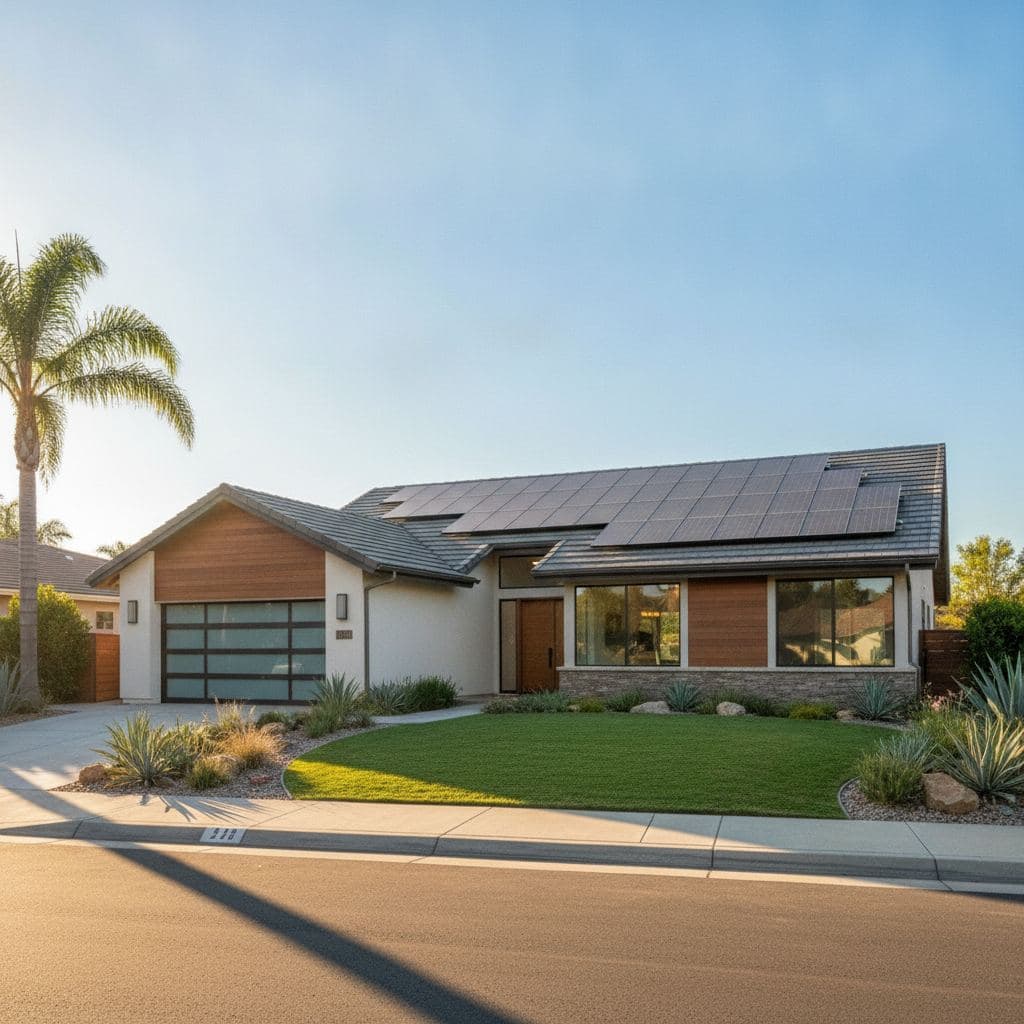
Solar is worth it for most Los Angeles homeowners in 2026—but how worth it depends almost entirely on which utility serves your address. LADWP customers can expect a payback period of roughly 7–9 years and lifetime savings of $30,000–$60,000 on a typical system; SCE customers in LA County are looking at closer to 9–11 years and need to think seriously about pairing solar with a battery to make the numbers work.
Last verified: September 2026 by Helios Energy Global.
The single biggest variable in your LA solar calculation is no longer panel brand, roof pitch, or even system size—it's the three letters on your electric bill.
LADWP vs. SCE: why your utility changes everything
Los Angeles is unusual in that it contains two completely different solar economics within the same city limits. The City of Los Angeles is served by the Los Angeles Department of Water and Power (LADWP), a municipal utility. Large swaths of unincorporated LA County and some incorporated cities—Torrance, Long Beach, Pasadena (its own muni), Pomona, and others—are served by Southern California Edison (SCE), an investor-owned utility.
That distinction matters enormously right now because:
- LADWP is not subject to the CPUC's Net Billing Tariff (commonly called NEM 3.0). LADWP still credits solar exports at the full retail rate—roughly 28¢/kWh on average—which means every kilowatt-hour your panels push to the grid wipes out a kilowatt-hour you'd otherwise buy.
- SCE operates under NEM 3.0, where export credits drop to avoided-cost rates (often 5–8¢/kWh off-peak), slashing the value of daytime overproduction. The 4–9 PM TOU peak window (where SCE rates hit 34–35¢/kWh or more) is the only time exports earn meaningful credit.
In plain terms: on LADWP, a well-sized solar system alone can cover most of your bill. On SCE, a solar-only system that overproduces during the day earns pennies on the dollar for those exports, making battery storage the essential companion.
The key numbers at a glance
| Factor | LADWP | SCE |
|---|---|---|
| Average residential rate (2026 est.) | ~28¢/kWh | ~34–35¢/kWh |
| Net metering type | Retail-rate NEM (municipal) | NEM 3.0 / Net Billing Tariff |
| Export credit value (off-peak) | ~28¢/kWh (retail) | ~5–8¢/kWh (avoided cost) |
| Peak TOU window | Varies by rate plan | 4–9 PM daily |
| Typical 7–8 kW system cost (before incentives) | ~$17,500–$28,000 est. | ~$17,500–$28,000 est. |
| Federal tax credit (2026) | None — expired 12/31/2025 | None — expired 12/31/2025 |
| Estimated simple payback — solar only | 7–9 years | 10–13 years |
| Estimated simple payback — solar + battery | 9–12 years | 9–11 years |
| SGIP battery incentive | Waitlisted | Waitlisted |
| Estimated 25-year savings (net present value) | $30,000–$60,000 | $20,000–$45,000 |
All figures are estimates based on typical LA-area homes (1,800–2,500 sq ft, 700–1,100 kWh/month usage). Individual results vary. See our design and savings tool for a home-specific estimate.
Why LADWP is the best remaining solar deal in California
LADWP's retail-rate net metering is now the most valuable net metering program left in California for residential customers. When your panels produce more than you consume at any given moment, that excess flows to the grid and your meter runs backward at the same rate you'd pay to buy power—about 28¢/kWh.
That math makes solar genuinely straightforward:
- Right-size your system to roughly match your annual consumption, and your annual bill approaches zero.
- No battery required to capture value—daytime production offsets nighttime consumption through the grid acting as your "virtual battery."
- Rate trajectory matters: LADWP rates have increased roughly 4–6% annually in recent years (per utility filings), which means every year you wait, your payback period lengthens and your future savings shrink.
A typical LADWP home using 900 kWh/month might install a 6–8 kW system for $15,000–$28,000 installed (estimate, before any local incentives). At ~28¢/kWh avoided and modest rate escalation, that system can pay back in 6–8 years and produce $45,000–$70,000 in net savings over 25 years.
The catch: LADWP's retail NEM program has capacity limits and the program terms can change. Locking in now means grandfathering your rate structure for the program's duration.
SCE in LA County: solar still works, but battery changes the equation
If you're on SCE, solar is still worth it—but the calculation requires more care. NEM 3.0 dramatically reduced the value of exporting solar power during off-peak hours. A system sized to produce 110% of your annual consumption might actually earn very little for that excess because most of it flows to the grid during midday when export rates are lowest.
The winning strategy on SCE in 2026 is solar paired with a home battery:
- Charge the battery from solar during the day (free fuel).
- Discharge the battery during the 4–9 PM peak window, when SCE rates are highest and you'd otherwise be buying expensive grid power.
- Export only what you can't store, accepting the low avoided-cost rate for true surplus.
This "self-consumption" model effectively lets you use your solar production at full retail value (34–35¢/kWh) rather than exporting it at 5–8¢/kWh. A single home battery runs roughly $14,000–$18,500 installed (estimate). Added to a solar system, total project costs might run $28,000–$40,000 for a typical SCE home—but the battery closes most of the payback gap that NEM 3.0 created.
Explore more on how solar and batteries work together under NEM 3.0 and our full NEM 3.0 explainer.
What happened to the 30% federal tax credit?
The 30% federal residential solar tax credit (the Investment Tax Credit, or ITC) expired on December 31, 2025. There is no federal tax credit available for a residential solar system installed in 2026. Any installer or advertisement suggesting otherwise is either mistaken or misleading. Do not factor a federal credit into your payback math.
California does not have a statewide solar tax credit. The Self-Generation Incentive Program (SGIP) offers rebates for home batteries, but as of mid-2026, the residential SGIP budget is waitlisted—meaning new applicants are in a queue with no guarantee of funding or timeline. We track SGIP status closely; ask us at your consultation for the current queue situation.
Some LA-area utilities and local programs offer modest additional incentives—LADWP has historically offered bill credits for solar customers, for example. We research every applicable incentive for your specific address as part of our free custom design.
Does your roof and location within LA matter?
Yes, though less than people expect. Los Angeles has some of the best solar irradiance in the United States—roughly 5.5–6.0 peak sun hours per day across most of the basin (per NREL data). The difference between a south-facing roof in Culver City and a west-facing roof in the San Fernando Valley is real but rarely a deal-breaker.
What does matter:
- Roof age and condition: A roof within 5 years of needing replacement should be addressed before or alongside solar. We assess this during design. See our roof compatibility guide.
- Shading: Trees, chimneys, and neighboring structures can cut production 10–30%. Modern microinverter and power optimizer systems mitigate this significantly.
- System size: Oversizing wastes money on LADWP (you'll export excess at retail but you're buying hardware you don't need). On SCE, slight undersizing is often better than oversizing unless you're adding EV charging or a pool.
Our locations page covers the specific neighborhoods and cities we serve across Southern California.
Frequently asked questions about solar worth it in Los Angeles 2026
Is solar still worth it without the federal tax credit in 2026?
Yes—especially on LADWP, where retail-rate net metering still delivers paybacks in the 7–9 year range without any federal subsidy. On SCE, the economics are tighter but solar plus battery still pencils out for most homeowners with above-average bills. The loss of the 30% ITC adds roughly 2–3 years to payback compared to 2024 buyers, which is significant but doesn't flip the math negative.
What's the payback period for solar in Los Angeles right now?
Expect roughly 7–9 years on LADWP (solar only) and 9–11 years on SCE (solar plus battery). These are estimates based on typical LA home consumption of 700–1,100 kWh/month, 2026 installed costs of $2.50–$3.50 per watt, and current utility rates. Your actual payback depends on system size, roof orientation, and how much your usage grows.
Does LADWP or SCE make solar more worth it?
LADWP makes solar significantly more straightforward in 2026. Retail-rate net metering means every kilowatt-hour your panels produce is worth the full 28¢/kWh you'd otherwise pay, and you don't need a battery to capture that value. SCE's NEM 3.0 export rates are 5–8¢/kWh off-peak, which means solar alone on SCE leaves a lot of value on the table—battery storage is strongly recommended.
How much does a solar system cost in Los Angeles in 2026?
A typical residential solar installation in LA runs roughly $2.50–$3.50 per watt before incentives, meaning a 7 kW system costs approximately $17,500–$24,500 installed. Adding a home battery adds roughly $14,000–$18,500. These are market ranges—your actual quote depends on panel brand, roof complexity, electrical panel upgrades, and permit fees. Get a custom design estimate for your home.
Should I add a battery if I'm on LADWP?
It's optional on LADWP, unlike SCE. Because LADWP's retail NEM credits make the grid act like a free virtual battery, you don't need physical storage to capture solar value. That said, a battery adds backup power during outages—increasingly valuable given LA's wildfire and grid-stress events. If backup resilience matters to you, a battery makes sense; if pure financial return is your goal, LADWP solar-only often has a better ROI than adding storage.
Is SGIP still available for battery rebates in LA?
SGIP residential incentives are waitlisted as of mid-2026. You can apply and join the queue, but there's no guaranteed funding or timeline. We help customers apply during project planning. Don't count on SGIP in your payback math—treat it as a potential bonus if funding opens up.
How do I know if my address is LADWP or SCE?
Your electric bill will say. City of Los Angeles addresses are almost always LADWP. Unincorporated LA County areas, and cities like Torrance, Long Beach, Pomona, and others are typically SCE. Some cities have their own municipal utilities (Pasadena, Burbank, Glendale, Anaheim)—each with their own net metering rules. When you book a consultation, we confirm your utility and rate plan before building any numbers.
Next steps
- Book a free consultation and custom design — we'll pull your utility, rate plan, and roof data before we talk numbers.
- See how we calculate your design and savings — our process explained.
- Understand NEM 3.0 if you're on SCE — what the export rate change means for your system design.
- Solar and batteries under NEM 3.0 — the self-consumption strategy in detail.
- Home battery options and costs — what storage adds to the project and the payback.
- Solar panel cost breakdown for Southern California — what you're paying for.
- Where we install across Southern California — neighborhoods and cities we serve.
More guides
Cost to Charge an EV in California (2026): LADWP vs SCE vs SDG&E vs IID
Charging a 60–75 kWh EV at home costs roughly $13–$34 in Southern California depending entirely on your utility. We run the math for LADWP, SCE, SDG&E, and IID — standard rates, EV/TOU rates, public fast charging, and solar.
ReadBest Solar Companies in Fullerton, CA (2026): Honest Rankings for SCE Homeowners
Fullerton homeowners on Southern California Edison face NEM 3.0 export rules that make battery pairing the key to a healthy payback. Here are the 10 best solar installers serving Fullerton in 2026, ranked honestly — with the local numbers you need before you sign anything.
ReadPlug-In (Balcony) Solar in California: SB 868 Is Law and Takes Effect January 1, 2027
SB 868 was signed September 30, 2026 (Chapter 985) and takes effect January 1, 2027. A 1,200 W plug-in system produces roughly 1,500–1,900 kWh/year in Southern California; at SCE rates that is about $360–$665 a year, but only for power you use as it is made.
ReadGet a free consultation and custom design.
No pressure, no obligation — the owner reviews every design we send.