How many watts does a TV use? (2026 guide with real numbers)
A modern 55-inch LED TV uses roughly 60–100 watts while running — here's what that costs at SCE and LADWP rates and how it factors into solar sizing.
By Taylor Crouse — Founder, Helios Energy GlobalUpdated
Quick answer
- A modern 55-inch LED TV draws 60–100 watts while running; a 65-inch OLED draws 100–140 watts; older 50-inch plasma sets drew 250–350 watts.
- At SCE's ~34–35¢/kWh rate, watching 5 hours/day on a 55" LED costs roughly $3–$5/month; at LADWP's ~28¢/kWh it's closer to $2–$4/month.
- Standby (screen off, plugged in) pulls just 0.3–0.5 watts — negligible on its own, but multiplied across a whole home it adds up.
- A full gaming setup (TV + console + soundbar) can push 250–450 watts combined — worth sizing into your solar or battery plan.
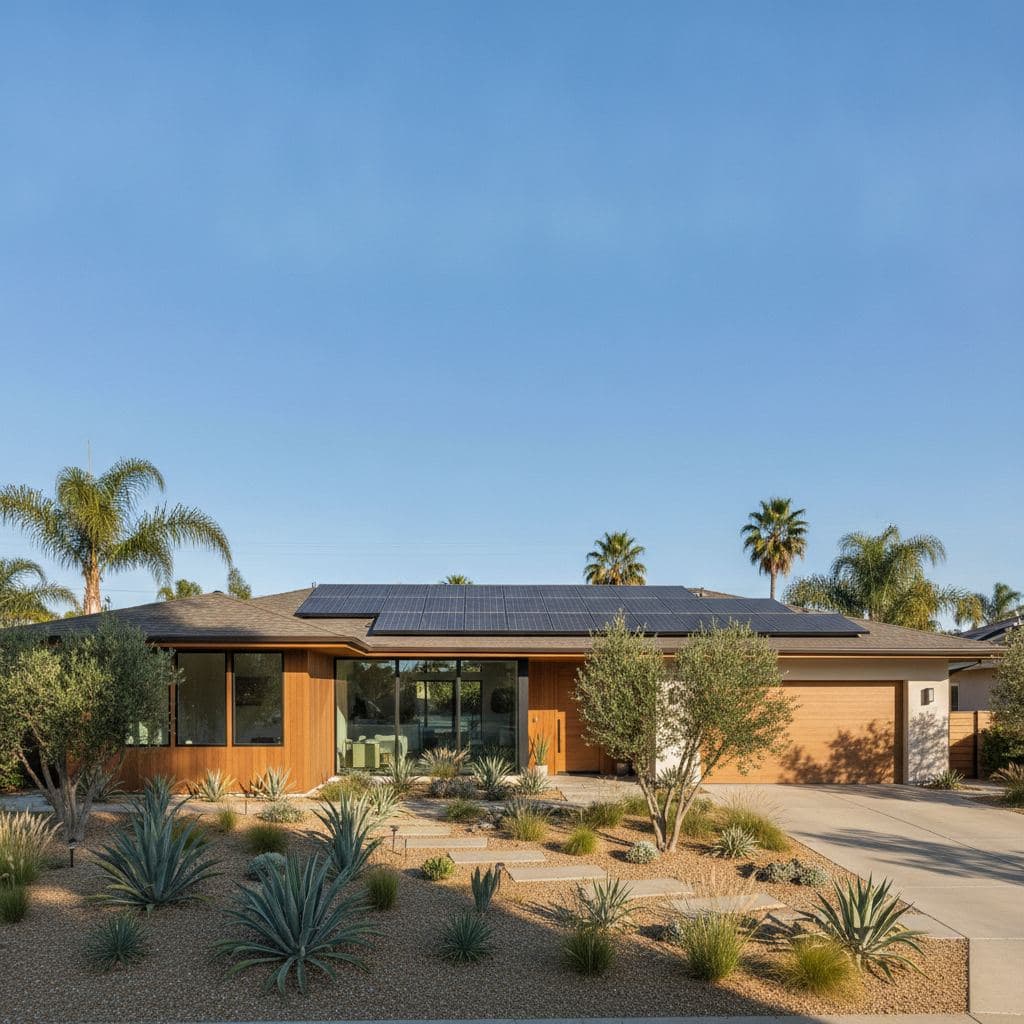
A typical 55-inch LED TV uses 60–100 watts while actively running — less than one old incandescent light bulb per hour of screen time. Scale up to a 75-inch OLED or add a gaming console and soundbar, and that same entertainment center can pull 300–500 watts, which is meaningful when you're sizing a solar system or deciding how long a home battery will last.
Last verified: August 2026 by Helios Energy Global.
Running watts by TV type, size, and era
TV technology has changed dramatically in the last decade, and wattage has dropped almost as fast as prices. The single biggest variable is screen technology: plasma (mostly gone from new sales by 2015) was the hungriest, OLED sits in the middle, and modern LED/LCD panels are the most efficient per inch of screen.
The numbers by type and size
| TV Type | Screen Size | Running Watts (est.) | Standby Watts (est.) | kWh/day (5 hrs) | Monthly kWh (est.) |
|---|---|---|---|---|---|
| LED/LCD (current, 2020–2026) | 40–43" | 35–55 W | 0.3–0.5 W | 0.2–0.3 | 6–9 |
| LED/LCD (current, 2020–2026) | 55" | 60–100 W | 0.3–0.5 W | 0.3–0.5 | 9–15 |
| LED/LCD (current, 2020–2026) | 65–75" | 90–150 W | 0.3–0.5 W | 0.5–0.8 | 14–23 |
| OLED (current, 2020–2026) | 55" | 90–130 W | 0.3–0.5 W | 0.5–0.7 | 13–20 |
| OLED (current, 2020–2026) | 65–77" | 100–160 W | 0.3–0.5 W | 0.5–0.8 | 15–24 |
| QLED/Mini-LED (current) | 65–75" | 100–180 W | 0.3–0.5 W | 0.5–0.9 | 15–27 |
| Older LED/LCD (pre-2018) | 50–55" | 100–160 W | 0.5–1.0 W | 0.5–0.8 | 15–24 |
| Plasma (legacy, pre-2015) | 50" | 250–350 W | 1–5 W | 1.3–1.8 | 38–53 |
| Plasma (legacy, pre-2015) | 60–65" | 300–500 W | 1–5 W | 1.5–2.5 | 45–75 |
All figures are estimates based on ENERGY STAR data and EIA residential consumption surveys. Actual draw varies by brightness setting, content type, and room temperature.
Why does content matter? A TV showing a bright, fast-moving sports game draws closer to its peak wattage. A dark, slow-paced movie on an OLED — where black pixels are literally off — can draw 20–30% less than the rated figure.
What a TV actually costs per month in Southern California
The math is straightforward: watts ÷ 1,000 × hours/day × 30 days = monthly kWh, then multiply by your rate.
At SCE rates (~34–35¢/kWh)
SCE residential customers are mostly on Time-of-Use plans with a 4–9 PM peak window. If you're watching primetime TV during that window, you're paying peak rates. That matters.
- 55" LED, 5 hrs/day (3 hrs peak): roughly $3.50–$5.50/month
- 65" OLED, 5 hrs/day (3 hrs peak): roughly $5–$8/month
- Old 60" plasma, 5 hrs/day: roughly $17–$27/month — a meaningful difference
At LADWP rates (~28¢/kWh)
LADWP customers still enjoy retail-rate net metering (not NEM 3.0, which applies only to SCE, PG&E, and SDG&E customers) and a lower average rate. LADWP is also a municipal utility, so it sets its own tariff structure independently of the CPUC.
- 55" LED, 5 hrs/day: roughly $2–$3.50/month
- 65" OLED, 5 hrs/day: roughly $3–$5/month
- Old 60" plasma, 5 hrs/day: roughly $11–$17/month
The takeaway: if you're an SCE customer still running a plasma TV from 2012, upgrading to a modern LED or OLED pays for part of itself in electricity savings — before you even think about solar.
The gaming setup problem: TV is just the start
A TV alone is rarely the whole story for entertainment-room power draw. Add a current-generation gaming console, a soundbar or receiver, and a streaming device, and the numbers climb fast.
- Gaming console (PS5 / Xbox Series X): 100–200 W during active gameplay
- AV receiver / soundbar: 30–100 W depending on volume and model
- Streaming stick (Roku, Fire TV): 2–5 W
- Cable/satellite box: 10–25 W (and often draws nearly the same on standby)
Full gaming setup total: roughly 250–500 watts while in active use. At five hours/day on SCE rates, that's an additional $12–$25/month beyond the TV itself — or roughly $150–$300/year for one entertainment setup.
If you have teenagers, two gaming setups, and a home theater receiver, entertainment can become one of your top five electricity loads. That's worth knowing before you size a solar system.
How TV wattage factors into solar and battery sizing
When we build a custom solar design for a Southern California home, we start with a full appliance audit. TVs and entertainment systems are rarely the biggest load — that's usually HVAC, water heating, and EV charging — but they matter for two reasons:
1. Daily kWh baseline. A household with three TVs averaging 4 hours/day each might use 3–6 kWh/day just on screens. That's roughly 1–2 solar panels' worth of daily output (a typical 400W panel in SoCal produces about 1.6–2 kWh/day). It's not huge, but it's not zero.
2. Battery runtime during an outage. This is where entertainment loads become very real. If you're running a home battery during a grid outage and want to keep a TV and gaming setup running alongside lights and phone charging, plan for 300–600 watts of continuous draw from that circuit alone. A single 10–13 kWh battery can run that setup for 17–40 hours — but only if you're not also running the AC, which changes everything.
For SCE customers specifically: because NEM 3.0 pays much less for solar exported to the grid during the day, the value of solar has shifted toward self-consumption and battery storage. Every watt of TV and entertainment power you cover with stored solar rather than peak-rate grid power is worth more than it used to be. See our NEM 3.0 explainer for the full picture.
LADWP customers are in a different position — retail-rate net metering means exported solar still earns full credit, so the calculus on battery sizing is different. Our battery guide covers both scenarios.
A rough sizing note
If your entertainment setup is 400 watts and you want to cover it with solar self-consumption, you need roughly 1–1.5 additional panels in your array (accounting for SoCal sun hours and system efficiency). That's a small add — but knowing it lets us right-size your system from day one rather than leaving you undersized.
Frequently asked questions about TV wattage
How many watts does a 55-inch TV use?
A current-model 55-inch LED or OLED TV draws approximately 60–130 watts while running, depending on technology and brightness settings. Standby draw is typically 0.3–0.5 watts — essentially negligible on its own.
Does TV wattage matter for my electric bill?
At SCE's ~34–35¢/kWh rate, a 55-inch LED running 5 hours/day costs roughly $3–$6/month. It's not your biggest bill driver — that's almost always HVAC — but a full entertainment setup with a gaming console and soundbar can reach $15–$30/month at SCE rates, which is worth tracking.
Do smart TVs use more electricity than regular TVs?
Not meaningfully while running — the "smart" chipset adds only 1–3 watts. The bigger difference is standby draw: some older smart TVs stayed in a "quick-start" mode drawing 10–25 watts continuously. Current ENERGY STAR-certified smart TVs limit standby to under 0.5 watts.
How do I measure my actual TV wattage?
A plug-in energy monitor (sometimes called a Kill-A-Watt meter, available for $20–$30) gives you real-time wattage and cumulative kWh. It's the most accurate method because it captures your actual brightness setting, content type, and usage pattern rather than the rated maximum.
Does my TV affect how many solar panels I need?
Yes, but modestly. A single 55-inch LED TV adds roughly 0.3–0.5 kWh/day to your load — covered by less than one additional solar panel. A full gaming setup (TV + console + soundbar) running 4–5 hours/day adds 1–2 kWh/day, which is more meaningful when we're sizing your solar system.
Should I turn my TV off at the wall to save electricity?
Modern TVs in standby draw so little (under 0.5W) that turning them off at the wall saves only pennies per year. The bigger wins are cable boxes and older AV receivers, which can draw 15–25 watts continuously even when "off." Those are worth putting on a smart power strip.
How long will a home battery run my TV during an outage?
A 10–13 kWh home battery running a 100-watt TV with a soundbar (150W total) could theoretically last 65–85 hours — but in practice you'll be running lights, phone chargers, and possibly a refrigerator simultaneously. A realistic mixed-load estimate is 12–20 hours per battery unit. See our battery sizing guide for a full breakdown.
Next steps
- Book a free consultation and custom solar design — we'll audit your full appliance load, including entertainment, and size your system to match your actual usage.
- See what your system could save with our design tool — enter your address and average bill for a real estimate.
- Understand what uses the most electricity in a Southern California home — TV is one piece; see the full picture.
- Learn how many watts it takes to run your whole house — the appliance-by-appliance breakdown.
- Explore home battery options — critical if you want outage protection or are on SCE's NEM 3.0 tariff.
- See how solar panels work for your home type — costs, sizing, and what to expect in 2026.
More guides
How long will a Powerwall last during an outage in 2026?
A single Powerwall (13.5 kWh usable) lasts roughly 8–24 hours on critical loads, or 1–3 days if you're disciplined — here's the math by appliance.
ReadHow to Get Out of a Solar Contract or Lease in California (2026)
California homeowners have 5 business days (7 if 65+) to cancel a solar contract signed at home — here are every realistic exit, from the statutory window to lease transfer.
ReadCalifornia's new electric fixed charge: what solar owners still pay in 2026
Every SCE, SDG&E and PG&E home now pays a fixed monthly charge — about $24.15 standard, $6 on CARE, $12.08 on FERA — that solar export credits cannot offset, which is why a solar bill is no longer $0.
ReadGet a free consultation and custom design.
No pressure, no obligation — the owner reviews every design we send.