CCA vs SCE: what LA solar owners actually pay in 2026
LA solar owners on Clean Power Alliance pay SCE delivery charges (~34-35¢/kWh blended) plus CPA generation rates that vary by tier, with NEM 3.0 Solar Billing Plan credits split between two agencies.
By Taylor Crouse — Founder, Helios Energy GlobalPublished
Quick answer
- LA homeowners in Clean Power Alliance territory pay a split bill: SCE handles delivery (~34–35¢/kWh blended effective rate) and CPA handles generation — you pay both, but on one SCE statement.
- CPA's three tiers — Lean Power, Clean Power, and 100% Green — add roughly +0¢ to +3¢/kWh above SCE's default generation rate depending on tier.
- Solar export credits under NEM 3.0 are also split: SCE pays avoided delivery costs and CPA pays avoided generation costs — combined export rates are typically 3–6¢/kWh during off-peak hours.
- CPA's Sun Storage Rebate pays up to $2,250 for an eligible home battery — one of the only active residential solar-adjacent incentives in Southern California in 2026.
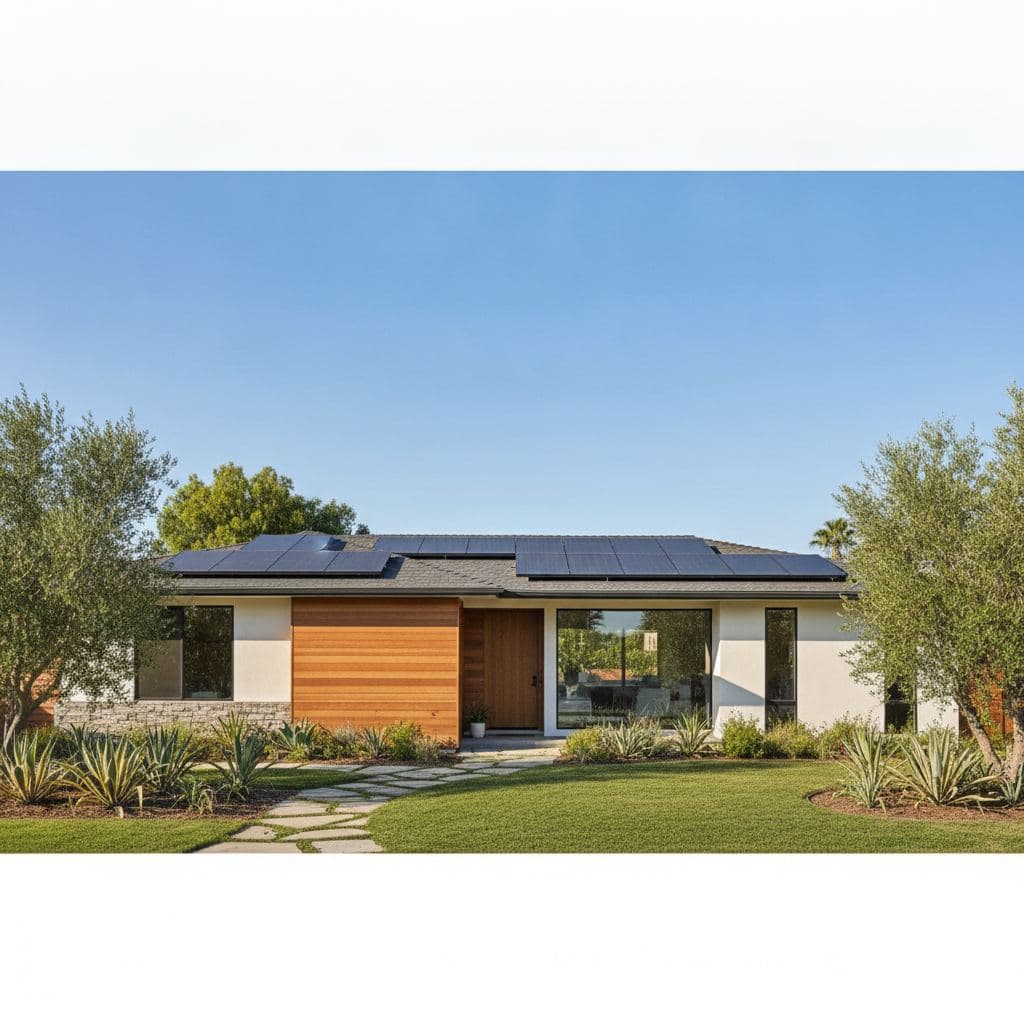
Most homeowners in unincorporated LA County and many LA-area cities are automatically enrolled in Clean Power Alliance (CPA), meaning their electricity bill involves two agencies — not one. Your blended effective rate lands in the 34–35¢/kWh range for a typical SCE residential customer, but exactly what you pay for generation depends on which CPA tier you're on and how your solar export credits are calculated under NEM 3.0's Solar Billing Plan.
Last verified: September 2026 by Helios Energy Global.
Understanding this split is critical before you size a solar system or add a battery, because the economics of exporting power versus storing it are shaped by both agencies simultaneously.
How the CPA + SCE split bill actually works
Southern California Edison owns the poles, wires, transformers, and meters. It delivers electricity to your home and charges you delivery rates for that service. Clean Power Alliance — a Community Choice Aggregator — purchases or generates the actual electricity (the electrons) and charges you generation rates for that commodity.
On your monthly bill, you see one SCE statement. But embedded in that statement are two separate line items: SCE's delivery charges and CPA's generation charges. If you've never noticed this, you're not alone — the layout isn't obvious.
What SCE controls:
- Transmission and distribution charges
- Metering and customer service fees
- Time-of-use (TOU) structure (4–9 PM peak applies to solar owners)
- Your NEM 3.0 / Solar Billing Plan account administration
What CPA controls:
- Generation rate (varies by tier)
- Renewable content of your electricity
- The Sun Storage Rebate program
- CPA's share of your solar export credit
CPA's three generation tiers
When you enroll in CPA — which happens automatically if you live in a participating jurisdiction — you're placed on Clean Power (the default tier). You can opt up to 100% Green or down to Lean Power at any time.
| Tier | Renewable content | Generation rate vs. SCE default | Who it's for |
|---|---|---|---|
| Lean Power | ~35% renewable | Slightly below SCE default (est. savings ~$2–5/mo for typical home) | Budget-focused; lowest bill |
| Clean Power (default) | ~80% renewable | Roughly equal to SCE default generation rate | Most CPA customers |
| 100% Green | 100% renewable | ~1–3¢/kWh above SCE default (est. ~$5–15/mo premium) | Climate-priority households |
Rates are approximate and change quarterly. Check cleanpoweralliance.org/rates for current figures before making a tier decision.
The tier you choose matters for solar economics: if you're on 100% Green and paying a premium for generation, the math on self-consumption (using your own solar instead of buying from CPA) improves. If you're on Lean Power, the generation premium is lower and the calculus shifts slightly.
NEM 3.0 and the Solar Billing Plan under CPA
Because CPA serves customers through SCE's grid infrastructure, NEM 3.0 (the Solar Billing Plan) applies to all CPA solar customers — just as it does to direct SCE customers. There is no separate CPA net metering program that overrides NEM 3.0.
How your export credits are split
When your solar panels push excess electricity onto the grid, your export credit is calculated in two parts:
- SCE's avoided delivery credit — reflects what SCE would have charged to deliver that unit of power. This is time-varying and generally low, often 1–3¢/kWh during off-peak hours.
- CPA's avoided generation credit — reflects what CPA would have charged for that unit of electricity generation. This also varies by time of day and is typically 2–4¢/kWh off-peak.
Combined, most CPA solar owners see effective export rates of roughly 3–6¢/kWh during off-peak hours (overnight, midday) and somewhat higher during the 4–9 PM SCE peak window. These rates are dramatically lower than the ~34–35¢/kWh you pay to import power — which is the core reason battery storage changes the economics so significantly under NEM 3.0.
The 12-month true-up
Like all NEM 3.0 customers, CPA solar owners receive a 12-month true-up. Credits that accumulate in your "bank" offset future charges, but excess credits at true-up are paid out at the avoided-cost rate — not retail. This is another reason oversizing a system without storage is rarely optimal under the current tariff.
The Sun Storage Rebate: CPA's active battery incentive
This is the headline incentive that CPA solar owners should know about in 2026. CPA's Sun Storage Rebate offers up to $2,250 for an eligible home battery system installed at a CPA-enrolled address.
Key details as of mid-2026:
- Available to residential CPA customers in good standing
- Battery must be paired with solar (new or existing system)
- Rebate is paid to the customer after installation and verification
- Program has limited annual funding — availability is not guaranteed year-round
- SGIP residential incentives remain waitlisted in 2026, so the Sun Storage Rebate is currently one of the only active battery rebates available to LA-area homeowners
For a battery system that typically costs $14,500–$18,500 installed (e.g., a Tesla Powerwall 3), a $2,250 rebate represents a meaningful reduction. Combined with the self-consumption and backup value that batteries provide under NEM 3.0, this rebate makes the battery conversation worth having before you finalize any solar design.
Note on federal incentives: The 30% federal residential solar and battery tax credit expired December 31, 2025. There is no federal tax credit for a solar or battery purchase in 2026. Any installer or website suggesting otherwise is working from outdated information.
Explore your battery options at /batteries and see how storage changes the NEM 3.0 math at /guides/solar-vs-battery-nem-3.
CPA vs. LADWP: a critical distinction for LA homeowners
Not every LA-area homeowner is a CPA customer. If you're served by LADWP — which covers the City of Los Angeles proper — none of the above applies to you.
| Factor | CPA (via SCE grid) | LADWP |
|---|---|---|
| Net metering program | NEM 3.0 Solar Billing Plan | LADWP retail-rate net metering (not NEM 3.0) |
| Export credit rate | Avoided-cost (~3–6¢/kWh off-peak) | Near retail (~26–31¢/kWh effective) |
| Effective import rate | ~34–35¢/kWh blended | ~28¢/kWh effective |
| Sun Storage Rebate | Yes (up to $2,250 via CPA) | No (separate LADWP programs apply) |
| SGIP | Waitlisted | Waitlisted |
| Bill structure | Split: SCE delivery + CPA generation | Single LADWP bill |
LADWP's retail-rate net metering is significantly more favorable for solar export than NEM 3.0. If you're in LADWP territory, the storage-first strategy that dominates CPA/SCE advice is less urgent — though batteries still provide backup value and self-consumption benefits.
Not sure which utility serves your address? Your bill header will say either "Southern California Edison" or "Los Angeles Department of Water and Power." You can also check at /locations.
What this means for sizing your system
Under NEM 3.0, the optimal solar system size for a CPA customer is typically sized to offset consumption, not to maximize export. Because exported power earns only 3–6¢/kWh but imported power costs 34–35¢/kWh, every kilowatt-hour you self-consume is worth roughly 6–10× more than one you export.
Practical implications:
- Battery storage becomes high-priority: shift solar production into the 4–9 PM peak window instead of exporting it at low rates
- System sizing should be modeled against your actual usage profile, not just your annual kWh total
- CPA tier affects the generation component of your import rate, which in turn affects your self-consumption value
Get a usage-based model at /design-savings or review full solar panel cost ranges before talking to any installer.
Frequently asked questions about CCA vs SCE solar billing
Am I automatically on Clean Power Alliance, or do I have to sign up?
If you live in one of CPA's roughly 30 member jurisdictions — including unincorporated LA County, Torrance, Inglewood, Hawthorne, Redondo Beach, and many others — you were automatically enrolled when CPA launched in your area. You can confirm enrollment and your current tier at cleanpoweralliance.org or on your SCE bill.
Can I opt out of CPA and go back to SCE for generation?
Yes. You can opt out of CPA and return to SCE's default generation service at any time, though SCE may charge a fee if you've recently opted back in. Opting out doesn't change your NEM 3.0 status — you're still on the Solar Billing Plan regardless of which entity supplies your generation.
Does my CPA tier affect my solar export credit?
Yes, in part. CPA's share of your export credit is based on CPA's avoided generation cost, which varies slightly by tier and by the wholesale market conditions CPA faces. The difference between tiers is generally small on the export side — the bigger variable is time of day, not which tier you're on.
Is the Sun Storage Rebate stackable with other incentives?
CPA states the Sun Storage Rebate can be combined with other incentives where program rules allow. Since SGIP residential funding is waitlisted in 2026, the Sun Storage Rebate is largely the only active rebate in play for most CPA customers. Always confirm current stacking rules directly with CPA before signing a contract.
What happens to my CPA enrollment when I go solar?
Going solar doesn't change your CPA enrollment. You remain a CPA generation customer and an SCE delivery customer. Your solar system is interconnected through SCE, and your NEM 3.0 Solar Billing Plan account is administered by SCE — but CPA's generation charges and credits continue to appear on your bill.
How do I know if I'm in CPA territory or LADWP territory?
Look at the top of your electricity bill. It will clearly show either Southern California Edison or Los Angeles Department of Water and Power as your utility. If it says SCE and you live in a CPA member jurisdiction, you're a CPA customer. If it says LADWP, you are not — and NEM 3.0 does not apply to you.
Does CPA offer any solar incentives beyond the Sun Storage Rebate?
As of mid-2026, the Sun Storage Rebate is CPA's primary residential solar-adjacent incentive. CPA has offered community solar and income-qualified programs in the past; check cleanpoweralliance.org for current offerings. State-level programs like SGIP remain waitlisted for residential customers.
Next steps
- Book a free consultation and custom design — we'll pull your actual SCE/CPA bill data and model your system against real TOU rates
- See how your system size and savings are calculated
- Understand how batteries change the NEM 3.0 math
- Deep dive on NEM 3.0 and the Solar Billing Plan
- Explore home battery options and installed costs
- Review solar panel costs and system pricing for Southern California
- Find out which Helios service areas are near you
More guides
Does California require solar on new homes? The 2026 mandate explained
Yes — California's Title 24 Energy Code has required solar on most new single-family homes since 2020, with battery backup added for many homes under the 2023 code update.
ReadWhat Reddit Actually Says About Choosing a Solar Company in Los Angeles (2026)
We read the r/solar, r/orangecounty, and r/homeowners threads where real Southern California homeowners talk about picking (and firing) solar companies — and pulled out the patterns, with links to every thread.
ReadBest Solar Companies in Manhattan Beach, CA (2026): Aesthetics-First Installs for South Bay's Most Valuable Homes
Manhattan Beach runs on SCE under NEM 3.0, and its premium architecture demands more than a commodity install. Here's an honest, numbers-first ranking of the best solar companies serving the South Bay's most competitive market in 2026.
ReadGet a free consultation and custom design.
No pressure, no obligation — the owner reviews every design we send.