Best Solar Companies in Santa Clarita, CA (2026): Honest Rankings for Valencia, Saugus & Newhall Homeowners
Santa Clarita homeowners get some of California's best sun exposure, but picking the right solar installer—and understanding SCE's Net Billing Tariff—makes all the difference. Here's an unbiased 2026 guide to the top solar companies serving the Santa Clarita Valley.
Updated
Quick answer
- Your utility is SCE, and NEM 3.0 applies. Export credits are time-of-use based and significantly lower than under NEM 2.0. Self-consuming as much solar as possible—especially with a battery—is the smartest strategy in 2026.
- Typical system size runs 7–12 kW. Santa Clarita's hot summers drive high AC loads. Homes over 2,000 sq ft frequently need 9–12 kW to meaningfully offset their annual bill.
- Pre-incentive prices range roughly $2.50–$3.50 per watt. A mid-sized system (8–10 kW) typically lands in the $20,000–$35,000 range before any incentives—see the price table below for breakdowns.
- The 30% federal solar tax credit expired December 31, 2025. There is no federal residential solar tax credit for systems purchased or installed in 2026. Any installer who quotes you a "30% federal credit" is giving you outdated information—verify this before signing anything.
- Batteries make strong financial sense here. SCE's NEM 3.0 export rates are lowest during midday—exactly when solar produces the most. A battery stores that surplus and deploys it during evening peak hours when grid power is most expensive, maximizing your bill savings.
- What drives your quote higher: tile roof complexity, panel upgrade requirements, HOA compliance work, shading from mature trees or ridgelines, and premium equipment brands all push costs up. Understanding these cost drivers protects you from surprise change orders.
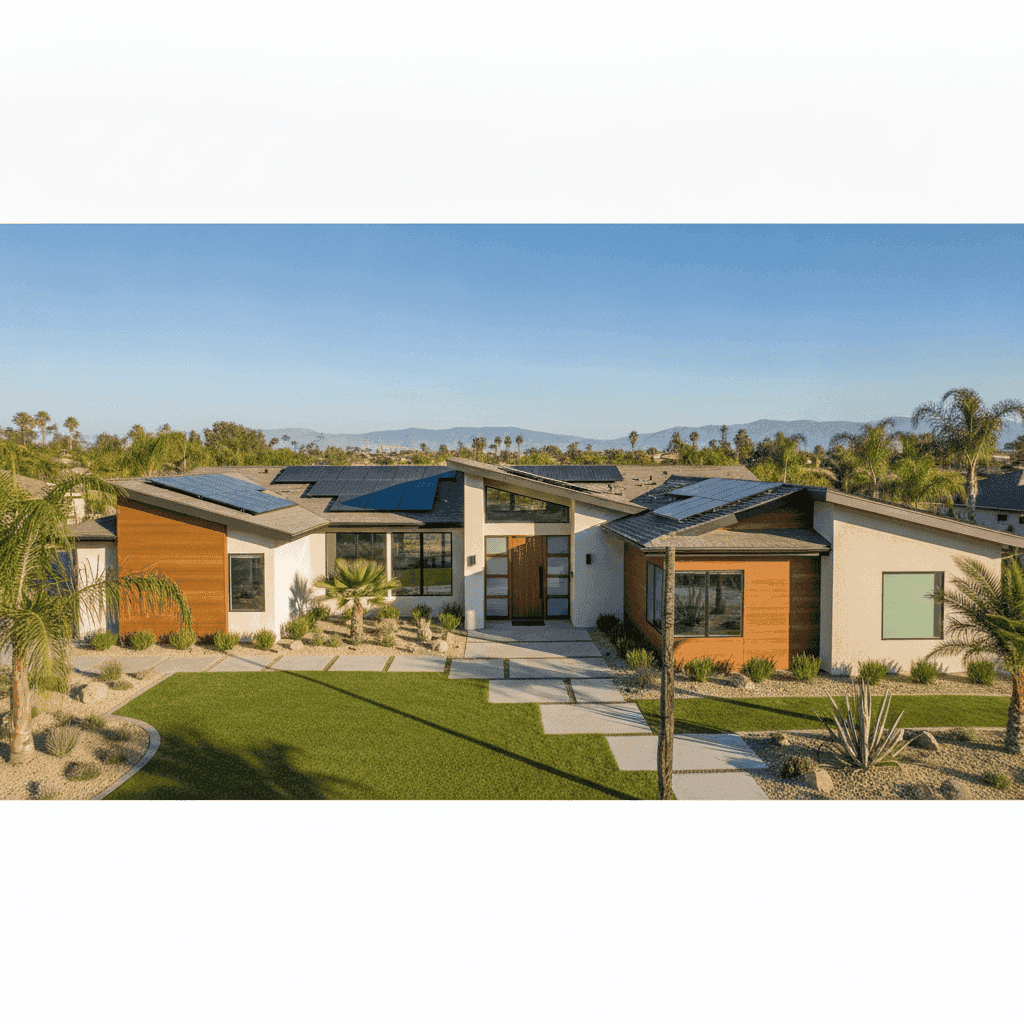
Santa Clarita sits in the northern reaches of Los Angeles County, tucked into the Santa Clarita Valley between the San Gabriel Mountains and the Santa Susana range. With communities like Valencia, Saugus, Stevenson Ranch, Canyon Country, and Newhall, it's one of the Inland Empire's closest neighbors and one of Southern California's fastest-growing cities. The valley's geography delivers a consistent advantage for solar: long sunny days, relatively low coastal fog, and rooftops that frequently face south or southwest on the tract-home lots that define much of the area.
Most Santa Clarita residents are served by Southern California Edison (SCE), which means they fall under the California Public Utilities Commission's Net Billing Tariff—commonly called NEM 3.0. That's an important detail that shapes the economics of every solar installation here. Under NEM 3.0, the export credits you earn for sending power back to the grid are significantly lower than they were under the old NEM 2.0 rules, which means a system designed without a battery—or sized carelessly—can leave real money on the table. Getting the design right matters more than ever in 2026.
The housing stock in Santa Clarita also shapes system design in ways a generic installer might overlook. Newer tracts in Valencia and Stevenson Ranch often have tile roofs with steep pitches, HOA color and equipment restrictions, and attic configurations that affect conduit routing. Older Newhall and Canyon Country homes may have mixed-age electrical panels that need upgrading before a modern solar system can be permitted. A good local installer knows these details before the proposal hits your inbox.
Last verified: September 2026 by Helios Energy Global.
Top 8 best solar companies in Santa Clarita (2026)
A 2026 note on who is still standing. Residential solar has been through a brutal consolidation, and several companies that appear on older "best of" lists no longer exist. SunPower filed Chapter 11 in August 2024 and the brand now belongs to a different legal entity; Sunnova filed in June 2025; Freedom Forever filed in April 2026. Companies that have shut down or are in restructuring have been removed from the ranking below — a workmanship warranty is only worth the company standing behind it. Full detail in our statewide ranking of California solar companies.
At-a-glance ranking
- Helios Energy Global — Best for custom SCE/NEM 3.0 design and owner-reviewed proposals
- Sunrun — Best for homeowners who want a large national brand with lease/PPA options
- Tesla Energy — Best for homeowners already in the Tesla/Powerwall ecosystem
- Palmetto Solar — Best for tech-forward monitoring and ongoing system management
- SunPower Inc. — Best for homeowners prioritizing high-efficiency panels on limited roof space
- Momentum Solar — Best for in-person consultation experience with regional coverage
- Baker Electric Solar — Best for established San Diego–to–LA regional track record
- Solar Optimum — Best for Armenian-American and greater LA community referral network
This ranking reflects Helios Energy Global's own editorial opinion and is not paid placement. Verify each company's active California Contractors State License Board (CSLB) license and confirm they actively serve Santa Clarita before signing any contract.
1. Helios Energy Global — Santa Monica, CA
Helios Energy Global earns the top spot in Santa Clarita because of something that's genuinely rare in this industry: every system design is reviewed by the owner before it goes to the customer. In a market where NEM 3.0 has made system sizing and battery pairing more consequential than ever, that level of accountability matters.
The Helios team works with SCE's Net Billing Tariff daily and designs systems around real time-of-use rate schedules—not generic production estimates. For Santa Clarita's tile-roof tracts and HOA-heavy communities, Helios conducts a thorough site assessment before proposing anything, so you don't get hit with change orders after you've signed.
There's no pressure sales cycle, no "today only" pricing, and no commissioned reps working from a script. You get a custom production model, a clear explanation of your SCE bill offset, and a realistic payback timeline—all before you commit to anything. Book a free consultation and custom design to see what an honest proposal looks like.
Best for: Santa Clarita homeowners who want a right-sized SCE/NEM 3.0 system with battery analysis included, and who value direct access to the people designing their system.
2. Sunrun
Sunrun is one of the largest residential solar installers in the country and has a meaningful presence across SCE territory. They offer purchase, loan, lease, and PPA options, which can be useful for homeowners who prefer low or no upfront cost.
Best for: Homeowners who want lease or PPA financing and the backing of a publicly traded company. Why it fits: Sunrun has experience navigating SCE interconnection and NEM 3.0 paperwork at scale. What to ask: Get the full lease/PPA escalator rate in writing and model your 20-year cost against an ownership scenario before deciding.
3. Tesla Energy
Tesla's solar and Powerwall products are tightly integrated, and their app-based monitoring is genuinely excellent. Installation quality can vary by market since Tesla uses third-party installation crews in many areas.
Best for: Homeowners who already own a Tesla vehicle or are committed to the Powerwall 3 ecosystem. Why it fits: Powerwall 3 integrates solar and battery into a single inverter unit, which simplifies installation on newer homes. What to ask: Ask specifically who will perform the physical installation and what the local crew's experience is with SCE interconnection in Santa Clarita.
4. Palmetto Solar
Palmetto operates as a technology-forward solar company with a strong emphasis on post-installation monitoring and ongoing performance management through their app platform.
Best for: Homeowners who want ongoing visibility into system performance and proactive alerts if production drops. Why it fits: Their monitoring layer can be valuable under NEM 3.0, where production timing affects bill savings more than it used to. What to ask: Clarify whether Palmetto self-installs in the Santa Clarita area or uses a subcontractor, and ask for references from SCE-territory customers.
5. SunPower Inc.
SunPower's Maxeon panels consistently rank among the highest efficiency options available, which matters when your usable roof area is constrained by hip rooflines, dormers, or HOA equipment placement rules.
Best for: Homeowners with limited south-facing roof space who need to maximize production per square foot. Why it fits: Higher efficiency panels can sometimes make a system viable where standard panels would fall short. What to ask: Confirm the warranty terms carefully—SunPower has gone through corporate restructuring, so understanding who backs the panel warranty is important.
6. Momentum Solar
Momentum Solar has expanded its California footprint and focuses on in-home consultations with a regional sales and installation model.
Best for: Homeowners who prefer a face-to-face sales experience and want a dedicated local rep. Why it fits: They operate in the greater LA and Santa Clarita corridor and have experience with SCE territory. What to ask: Ask for the specific CSLB license number for the entity that will pull your permit and confirm it's active.
7. Baker Electric Solar
Baker Electric is a well-established Southern California electrical and solar contractor with decades of regional history. They're known for quality electrical work, which matters when panel upgrades are part of the scope.
Best for: Homeowners whose projects require significant electrical work alongside the solar installation. Why it fits: Their background as a licensed electrical contractor (not just a solar company) is a real differentiator for complex jobs. What to ask: Confirm their current Santa Clarita service area and typical lead time for permitting through the City of Santa Clarita's building department.
8. Solar Optimum
Solar Optimum is a California-based regional installer with strong roots in the greater Los Angeles Armenian-American community and solid coverage across the San Fernando Valley and adjacent areas including Santa Clarita.
Best for: Homeowners who value community referrals and a regional installer with LA-area roots. Why it fits: They have meaningful experience with SCE territory and local permitting jurisdictions. What to ask: Ask for references from Santa Clarita specifically and confirm their current CSLB license is active and in good standing.
This ranking is Helios Energy Global's own editorial opinion, not a paid or sponsored placement. Verify each company's active CSLB license at cslb.ca.gov and confirm current service area before signing any contract.
Why Santa Clarita solar is different from a generic install
SCE and NEM 3.0: the rules that reshape your ROI
Santa Clarita sits firmly in Southern California Edison territory, which means every new solar customer interconnects under the CPUC's Net Billing Tariff (NEM 3.0). The core change from the old NEM 2.0 rules: when you export excess solar power to the grid, you're credited at the avoided-cost rate rather than the retail rate. During peak midday hours when solar panels produce the most, those export rates are at their lowest.
During evening hours when grid power is most expensive, your panels aren't producing. This mismatch is exactly why a battery changes the math so significantly under NEM 3.0—and why a system designed without accounting for your specific SCE rate schedule can underperform its projections. Learn more in our NEM 3.0 explained guide.
Batteries in SCE territory: from nice-to-have to near-essential
Under NEM 2.0, a battery was largely optional—you could export freely and earn fair credits. Under NEM 3.0, a battery lets you store midday solar production and use it during evening peak hours when SCE's TOU rates are highest, effectively replacing expensive grid power instead of exporting at low rates. For Santa Clarita homeowners with high summer AC loads, this shift in consumption timing can meaningfully reduce bills compared to a solar-only system.
It also provides backup power during the PSPS (Public Safety Power Shutoff) events that affect parts of LA County during high-wind fire weather. Explore battery options and sizing before finalizing any proposal.
Roofs, lots, and HOA realities in the Santa Clarita Valley
The dominant housing stock in Valencia, Stevenson Ranch, and newer Canyon Country tracts features S-tile or flat concrete tile roofing. Tile roofs require specialized racking and flashing work that adds labor cost and time compared to composition shingle. Many Santa Clarita HOAs have design review requirements that specify panel placement (no street-visible panels on some streets), color-matching conduit, or microinverter requirements.
California's Solar Rights Act limits HOAs from outright banning solar, but compliance work is real and should be scoped before you sign. Older Newhall and Saugus homes may have 100-amp panels that need upgrading to 200-amp service before a modern solar system can be safely interconnected—a cost that should appear in your proposal, not as a surprise change order.
Heat, AC loads, and why Santa Clarita systems run larger
The Santa Clarita Valley is significantly hotter than coastal Los Angeles. Summer temperatures regularly exceed 100°F in Canyon Country and Saugus, and air conditioning can account for 40–60% of a summer electric bill for a mid-sized home. This means the system size that would be "enough" for a comparable home in Santa Monica or Culver City is often undersized for Santa Clarita.
A good proposal starts with 12 months of your actual SCE bills, not a square-footage estimate, and models production against your real usage profile including AC hours. See how we model savings before making any system size recommendation.
Micro-neighborhood differences across the valley
Not all Santa Clarita neighborhoods are created equal for solar. Stevenson Ranch and Valencia's master-planned tracts tend to have newer electrical infrastructure, clean title records, and cooperative HOA processes. Canyon Country's older hillside streets can have shading from mature oaks or ridgelines that cut into afternoon production. Newhall's older commercial-adjacent neighborhoods sometimes involve more complex permitting. A site-specific assessment—not a satellite-only quote—is the only way to catch these variables before they become problems.
Real prices: what solar costs in Santa Clarita
Santa Clarita solar prices in 2026 typically fall in the range of $2.50–$3.50 per watt before incentives, depending on system size, equipment tier, roof complexity, and whether electrical panel work is needed. Larger systems generally cost less per watt; premium equipment and complex installs push the per-watt figure higher.
Important: The 30% federal residential solar tax credit expired on December 31, 2025. There is no federal credit available for systems installed in 2026. The prices below are pre-incentive estimates only—check with a tax professional and DSIRE for any current California state or utility incentives that may apply.
| System Size | Low Estimate | High Estimate | Notes |
|---|---|---|---|
| 6 kW | $14,400 | $19,500 | Smaller home or partial offset |
| 8 kW | $19,200 | $26,000 | Common for 1,800–2,200 sq ft |
| 10 kW | $24,000 | $32,500 | Good fit for 2,200–3,000 sq ft with AC |
| 12 kW | $28,800 | $39,000 | Larger homes, high AC loads |
| 15 kW | $36,000 | $48,750 | High-usage homes, EV charging, ADU |
These are illustrative pre-incentive price ranges based on typical 2026 market conditions in the Santa Clarita area. Your actual quote will vary. Battery storage is not included in these figures.
What pushes your quote higher:
- Tile roof removal, re-flashing, and reinstallation
- Electrical panel upgrade from 100A to 200A service
- HOA design review compliance work (conduit painting, placement restrictions)
- Premium panel brands (Maxeon, REC, Q CELLS Black)
- Battery storage addition (add roughly $14,000–$18,500 for a single battery system)
- Shading mitigation (microinverters or power optimizers instead of string inverter)
- Trenching for detached garage or ADU sub-panel connection
- Permit and interconnection fees (vary by jurisdiction)
Solar-only or solar + battery in Santa Clarita?
When solar-only still makes sense
If your primary goal is reducing your monthly SCE bill and you have predictable daytime usage (a home office, pool pump, EV that charges midday), a solar-only system can still deliver solid savings under NEM 3.0—especially if you're disciplined about shifting appliance loads to daytime hours. Solar-only is also the right starting point if budget is the primary constraint; you can add a battery later in many configurations.
When battery storage is the smarter move
For most Santa Clarita homeowners in 2026, a battery paired with solar produces meaningfully better financial outcomes under NEM 3.0 than solar alone. The reasons stack up quickly: evening TOU peak rates are high, summer AC loads peak in the late afternoon and evening, and PSPS wildfire shutoff events are a real risk in parts of LA County.
A battery lets you store cheap midday solar and use it during the expensive evening window—the single most effective way to maximize bill savings under the current tariff. Read our solar vs. battery NEM 3.0 comparison for a side-by-side analysis.
Battery proposal mistakes to avoid
- Oversized battery for a small system: A 27 kWh battery paired with a 6 kW system may never fully charge in winter—match battery capacity to realistic daily surplus.
- Undersized battery for a large home: One battery module may not cover an evening of AC plus refrigerator plus EV charging—model your actual evening load.
- No VPP/demand-response enrollment discussion: SCE has programs that pay battery owners for grid services. Ask whether your installer will help you enroll.
- Ignoring backup coverage: Know exactly which circuits the battery covers and for how long before you sign.
How to choose the right solar company in Santa Clarita
- Verify the CSLB license. Every solar installer in California must hold an active C-46 (Solar) or C-10 (Electrical) contractor license. Check it at cslb.ca.gov before signing anything. Ask for the license number in writing.
- Confirm SCE interconnection experience. Ask how many SCE NEM 3.0 interconnection applications they've submitted in the past 12 months and what their average approval timeline is.
- Demand a production model tied to your actual bills. Any reputable installer will ask for 12 months of SCE bills before sizing your system. If they quote you without seeing your bills, that's a red flag.
- Ask who pulls the permit. Some companies use subcontractors. Know whether the company you're signing with is the same entity pulling the City of Santa Clarita building permit.
- Get the HOA compliance plan in writing. If you have an HOA, confirm the installer will handle design review submission and that HOA compliance costs are included in your quote.
- Ask about the panel upgrade. If your home has a 100-amp panel, ask whether an upgrade is needed and get that cost stated in writing before signing.
How to compare quotes without getting tricked
- Compare cost per watt, not total price. A $28,000 10 kW system ($2.80/W) and a $32,000 10 kW system ($3.20/W) are very different value propositions.
- Look at the production estimate, not just system size. Two 10 kW systems can produce very different annual kWh depending on panel orientation, shading assumptions, and inverter type. Ask for the kWh/year production estimate and compare it across quotes.
- Check the equipment warranty terms. Panel warranties (product and performance), inverter warranties, and workmanship warranties are all separate. Understand who backs each one.
- Watch for vague "incentive" language. If a quote shows a 30% federal tax credit reducing your net cost, that information is wrong for 2026. Ask the installer to remove it and re-run the numbers.
- Understand the financing terms fully. Dealer fees on solar loans can add 20–30% to the effective cost of the system. Ask for the cash price and the total loan repayment amount separately.
- Get at least three quotes. Not to find the cheapest, but to understand the range and ask better questions. Start with a free custom design from Helios to establish a baseline.
Santa Clarita quote checklist
Before signing any solar contract in Santa Clarita, get clear answers to these questions:
- What is the CSLB license number, and is it active and in good standing?
- Who will physically install the system—your company's employees or a subcontractor?
- What is the estimated annual production in kWh, and what assumptions (orientation, tilt, shading) drive that number?
- How was system size determined—from my actual SCE bills or a generic square-footage estimate?
- Does this proposal include an electrical panel upgrade? If not, have you confirmed my current panel is sufficient?
- Is this quote based on NEM 3.0 export rates, or does it assume the old NEM 2.0 credit structure?
- What does the price include (panels, inverter/microinverters, racking, labor, permit fees, utility interconnection fee)?
- Does this quote include HOA design review submission, and is that cost included?
- What is the panel product warranty and performance warranty, and who is the warrantor?
- What is the inverter warranty, and who services it if there's a problem?
- What is the workmanship warranty, and is it backed by the installer or a third party?
- If a battery is included: what circuits does it back up, what is the usable capacity, and what is the estimated evening coverage duration?
- What is the interconnection timeline—from permit submission to Permission to Operate (PTO) from SCE?
- If financing: what is the total loan repayment amount, the APR, and the dealer fee?
- Are there any conditions under which the quoted price could change after I sign?
Final verdict
Santa Clarita is genuinely one of the better solar markets in Southern California—strong sun, high electricity rates, and summer heat that makes a well-designed system pay off faster than in cooler coastal cities. But NEM 3.0 has raised the stakes for getting the design right. A system that's the wrong size, ignores your TOU rate schedule, or skips the battery analysis can underperform for years.
Helios Energy Global ranks #1 here because the work that matters most in this market—accurate NEM 3.0 modeling, honest battery analysis, tile-roof and HOA experience, and a proposal that reflects your actual SCE bills—is exactly what the Helios owner-reviewed design process delivers. There's no commissioned sales pressure, no invented incentives, and no generic estimates. Just an honest assessment of what solar can actually do for your home in 2026.
See what a Helios system design looks like for your home and book a free, no-obligation consultation when you're ready to compare.
Frequently asked questions about solar in Santa Clarita
How much does solar cost in Santa Clarita in 2026?
A typical residential solar installation in Santa Clarita runs roughly $2.50–$3.50 per watt before incentives, putting an 8–10 kW system in the $20,000–$35,000 range. Tile roofs, electrical panel upgrades, and battery storage all add to the total. Get gross-price quotes from at least three installers to understand what's driving the price in your specific case.
Does NEM 3.0 apply to Santa Clarita homeowners?
Yes. Santa Clarita is served by Southern California Edison, which is an investor-owned utility regulated by the CPUC. All new solar customers interconnecting with SCE fall under the Net Billing Tariff (NEM 3.0). This means export credits are based on avoided-cost rates rather than retail rates, making self-consumption—especially with battery storage—more financially important than under the old NEM 2.0 rules.
Is the 30% federal solar tax credit still available in 2026?
No. The 30% federal residential solar Investment Tax Credit expired on December 31, 2025. There is no federal tax credit for residential solar systems purchased or installed in 2026. If an installer's quote includes a federal tax credit to reduce your net cost, that information is incorrect for 2026. Always verify incentive claims with a tax professional or check DSIRE for current programs.
Do I need a battery with solar in Santa Clarita?
Under NEM 3.0, a battery significantly improves the financial return of a solar system for most Santa Clarita homeowners. It lets you store midday solar surplus and use it during expensive evening peak hours instead of exporting it at low rates. Batteries also provide backup power during PSPS wildfire shutoff events. Whether a battery makes sense for your specific situation depends on your usage profile, budget, and risk tolerance—a good installer will model both scenarios honestly. See our battery guide for more detail.
How long does it take to get Permission to Operate (PTO) from SCE in Santa Clarita?
After installation is complete and the city inspection is passed, SCE's interconnection review and PTO issuance typically takes 4–8 weeks, though timelines can vary with application volume. Your installer should handle the interconnection application on your behalf. Ask any prospective installer for their typical PTO timeline in Santa Clarita specifically, since permitting speed can vary by jurisdiction.
How do I check if a solar contractor is licensed in California?
Visit the California Contractors State License Board at cslb.ca.gov and search by license number or company name. Look for an active C-46 (Solar) or C-10 (Electrical) license. Confirm the license is current, the bond and insurance are in place, and there are no unresolved disciplinary actions. Always get the license number from the installer in writing before signing.
What size solar system do I need for my Santa Clarita home?
System size depends on your annual electricity consumption, not just square footage. Santa Clarita's hot summers mean AC loads are high, and most homes over 2,000 sq ft benefit from systems in the 9–12 kW range. The right starting point is 12 months of your actual SCE bills. A reputable installer will use that data to size a system that matches your real usage rather than applying a generic formula. Use our savings estimator to get a preliminary sense of what your home might need.
Is solar worth it in Santa Clarita in 2026 without the federal tax credit?
For most Santa Clarita homeowners, yes—though the payback period is longer without the federal credit. SCE's electricity rates are high enough, and Santa Clarita's sun hours are strong enough, that a well-designed system still delivers meaningful long-term savings. Battery storage improves the economics under NEM 3.0. The honest answer depends on your specific usage, roof, and financing terms, which is why a custom proposal based on your actual bills is essential before making a decision.
Next steps
- Book a free consultation and custom design — no pressure, no obligation
- See how we model your SCE bill savings
- Learn how NEM 3.0 affects your solar returns
- Explore battery storage options for SCE homeowners
- Compare solar-only vs. solar + battery under NEM 3.0
- Understand what a 10 kW system costs in California
- Browse all solar guides for Southern California homeowners
More guides
What's the Average Electric Bill in Temecula? (2026)
Temecula homes use around 900 kWh a month — well above the California average — and typical SCE bills run $270–$390, with big newer homes with pools passing $500 in summer. Here's the breakdown by home size and why the 4–9 PM peak window matters so much here.
ReadGlendale Water & Power Solar Rebates and Net Metering: What's Available in 2026
GWP's dedicated solar rebate ended in 2021, but Glendale homeowners keep near-retail net metering — and skip NEM 3.0's steep export-rate cuts entirely.
ReadHow much does AC add to an electric bill in Southern California? (2026)
A central AC unit adds roughly 15–40 kWh per day in Southern California's inland valleys, costing $5–$14 per day at current SCE rates.
ReadGet a free consultation and custom design.
No pressure, no obligation — the owner reviews every design we send.