Best Solar Companies in Pasadena, CA (2026): Honest Rankings for Local Homeowners
Pasadena runs its own municipal utility — not SCE, not NEM 3.0 — so choosing the right solar installer matters more here than almost anywhere else in Southern California. Here are the 10 best solar companies in Pasadena for 2026, ranked honestly.
Updated
Quick answer
- Your utility is Pasadena Water & Power, not SCE. NEM 3.0 does not govern your system. PWP has its own net metering tariff with its own export compensation rates and program rules — verify the current terms directly with PWP before sizing your system.
- Typical residential system size: Most Pasadena homes land between 6 kW and 12 kW depending on usage, shading, and roof space. Older homes with electric upgrades or EV chargers often need the higher end of that range.
- Local price range: Expect roughly $2.50–$3.50 per watt before any incentives for a quality grid-tied system. Total installed cost for a typical home falls somewhere between $16,000 and $40,000 depending on system size and complexity.
- The federal 30% tax credit expired December 31, 2025. There is no federal residential solar tax credit for systems purchased or installed in 2026. Any installer still advertising "30% back" for a 2026 install is giving you inaccurate information — ask them to show you the current IRS guidance.
- Battery storage deserves a serious look here. PWP's export rates may make self-consumption more financially important than it was under older net metering structures. A battery also provides backup during the wildfire-season outages that affect the foothills.
- What drives cost: Roof age and condition, panel count, inverter type (string vs. microinverters), battery addition, main panel upgrades, and permit complexity through the City of Pasadena's Building & Safety department.
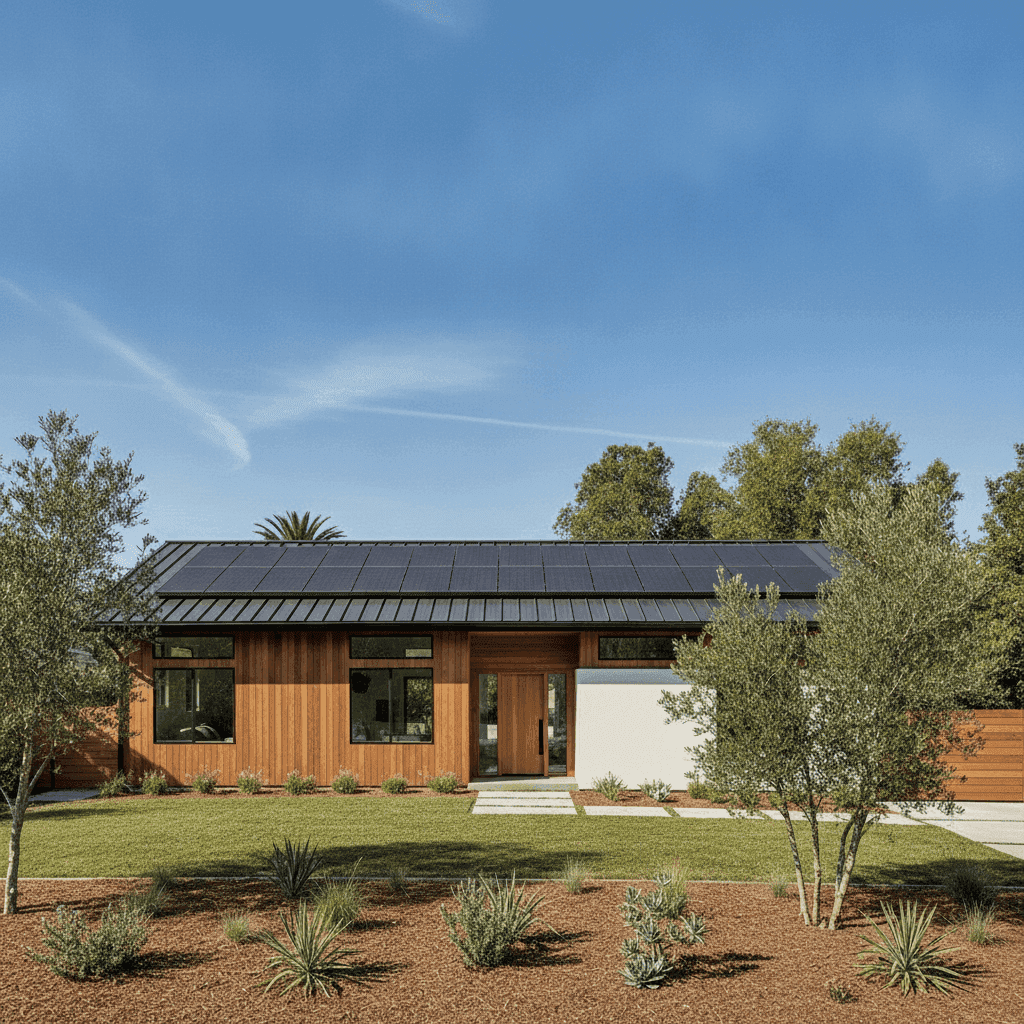
Pasadena sits at the foot of the San Gabriel Mountains in Los Angeles County, and it is one of the most solar-friendly cities in all of Southern California — but it plays by its own rules. Unlike most of the region, Pasadena is served by Pasadena Water & Power (PWP), a publicly owned municipal utility.
That single fact changes almost everything about how solar works here: the state's NEM 3.0 Net Billing Tariff, which governs SCE, PG&E, and SDG&E customers, does not apply in Pasadena. PWP administers its own net metering program with its own export rates, interconnection procedures, and program caps.
The homes themselves add another layer of complexity. Pasadena's housing stock is unusually diverse — craftsman bungalows and Spanish Colonials from the early 1900s sit alongside mid-century ranch homes and newer infill construction. Roof ages, pitches, orientations, and structural conditions vary widely block by block. Add in the city's mature tree canopy, its hillside lots in areas like Altadena-adjacent neighborhoods and the slopes below the Angeles National Forest, and you have a market where a cookie-cutter proposal from a national call center is almost guaranteed to miss something important.
This guide is written specifically for Pasadena homeowners in 2026. It covers the local utility's net metering reality, honest price ranges, battery considerations, and a ranked list of solar companies that actually operate in this market. Read it before you sign anything.
Last verified: September 2026 by Helios Energy Global.
Top 8 best solar companies in Pasadena (2026)
A 2026 note on who is still standing. Residential solar has been through a brutal consolidation, and several companies that appear on older "best of" lists no longer exist. SunPower filed Chapter 11 in August 2024 and the brand now belongs to a different legal entity; Sunnova filed in June 2025; Freedom Forever filed in April 2026. Companies that have shut down or are in restructuring have been removed from the ranking below — a workmanship warranty is only worth the company standing behind it. Full detail in our statewide ranking of California solar companies.
At-a-glance ranking
- Helios Energy Global — Best for PWP-savvy custom design and owner-reviewed proposals
- Sunrun — Best for homeowners who want a large national brand with financing options
- Tesla Energy — Best for homeowners already in the Tesla/Powerwall ecosystem
- Palmetto Solar — Best for a tech-forward monitoring and service platform
- SunPower Inc. — Best for premium panel efficiency in tight roof spaces
- Baker Electric Solar — Best for a long-established Southern California regional installer
- Semper Solaris — Best for military families and veteran-owned business preference
- Green Power Energy — Best for homeowners seeking a smaller, locally oriented crew
This ranking is Helios Energy Global's own editorial opinion, not paid placement. Verify each company's active California contractor license at the CSLB website and confirm they currently serve Pasadena before signing any contract.
1. Helios Energy Global
Helios Energy Global is a Santa Monica–based residential solar and battery installer that serves Southern California, including Pasadena. What makes Helios the right fit for this market specifically is the combination of municipal-utility expertise and genuine custom design: every system proposal is reviewed by the owner before it goes to a homeowner, which means you are not getting an algorithm-generated output from a national call center.
Pasadena's PWP net metering program has rules that differ meaningfully from SCE's NEM 3.0, and sizing a system without understanding PWP's current export compensation structure can leave money on the table — or lead to a system that is deliberately oversized in a way PWP's tariff penalizes. Helios designs around the actual utility tariff, actual roof conditions, and actual usage data. The consultation and custom system design are free and come with no pressure to sign.
Best for: Pasadena homeowners who want a proposal built around PWP's specific rules, not a template designed for SCE customers. Why it fits: Local knowledge of municipal utility interconnection, owner-reviewed designs, and a straightforward process without high-pressure sales tactics. What to ask: Request a written explanation of how PWP's current net metering export rate was factored into the savings projection.
Book a free consultation and custom design for your Pasadena home →
2. Sunrun
Sunrun is one of the largest residential solar installers in the country and has a significant presence across Southern California. They offer lease, PPA, loan, and cash purchase options, which gives homeowners flexibility on financing.
Best for: Homeowners who prioritize a nationally recognized brand and want multiple financing structures under one roof. Why it fits: Wide installer network, established customer service infrastructure, and Brightbox battery offering. What to ask: Ask specifically how their savings projections account for PWP's net metering tariff rather than SCE's NEM 3.0 assumptions.
3. Tesla Energy
Tesla's solar and Powerwall products are sold and installed through Tesla's own channel. If you already own a Tesla vehicle or are planning a Powerwall installation, the integrated app ecosystem is genuinely convenient.
Best for: Homeowners who want the Powerwall 3 and are comfortable with Tesla's direct-to-consumer model. Why it fits: Vertical integration of panels, inverter, and battery; strong software monitoring. What to ask: Confirm they are familiar with PWP's interconnection process and current net metering rules, which differ from SCE's.
4. Palmetto Solar
Palmetto operates as a technology-enabled installer with a strong emphasis on post-install monitoring and a customer-facing app that tracks production and consumption in real time.
Best for: Homeowners who want ongoing performance visibility and a modern digital experience. Why it fits: Clean proposal process and responsive monitoring platform. What to ask: Ask whether their savings model was built on PWP's export rates or defaulted to a generic California utility assumption.
5. SunPower (Maxeon dealer network)
SunPower's residential business has restructured, but Maxeon-affiliated dealers continue to sell and install SunPower/Maxeon panels in Southern California. These are among the highest-efficiency panels available for residential use.
Best for: Homeowners with limited roof space who need maximum output per square foot. Why it fits: High-efficiency panels can be the right engineering answer for smaller or partially shaded roofs common in older Pasadena neighborhoods. What to ask: Confirm you are working with a licensed California dealer and ask for the specific panel model's current warranty terms post-restructuring.
6. Baker Electric Solar
Baker Electric has been operating in Southern California for decades and has a solid regional reputation. They handle residential and light commercial work and have experience with a range of Southern California utilities.
Best for: Homeowners who want a regionally established installer with a long track record. Why it fits: Deep familiarity with Southern California permitting and utility interconnection processes. What to ask: Confirm their current experience with PWP specifically and ask for recent Pasadena project references.
7. Semper Solaris
Semper Solaris is a veteran-owned California solar and roofing company that serves Southern California. They also offer roofing and HVAC services, which can be useful if your roof needs work before solar goes on.
Best for: Military families, veterans, and homeowners who need roof work bundled with their solar install. Why it fits: Bundled services can simplify a project where the roof needs attention first. What to ask: Get solar and roofing priced separately so you can compare the solar portion accurately against other quotes.
8. Green Power Energy
Green Power Energy is a California-based residential solar installer that operates in the Southern California market and tends to work with smaller crews and a more hands-on approach than national chains.
Best for: Homeowners who prefer a smaller, more personal installation experience. Why it fits: Smaller operators often provide more direct access to the people actually designing and installing your system. What to ask: Verify their CSLB license is current and active, and ask for references from Pasadena or San Gabriel Valley customers specifically.
This ranking is Helios Energy Global's own editorial opinion and is not paid placement. Verify each company's active California contractor license at cslb.ca.gov and confirm current service area before signing.
Why Pasadena solar is different from a generic install
Your utility is PWP, not SCE — and that changes everything
This is the single most important thing to understand before you get a solar quote in Pasadena. The California Public Utilities Commission's NEM 3.0 Net Billing Tariff applies to the three investor-owned utilities: SCE, PG&E, and SDG&E. Pasadena Water & Power is a municipal utility that sets its own net metering rules independently. PWP's program has its own export compensation rates, its own interconnection timeline, and its own program capacity limits.
Why does this matter for your quote? Because most large national installers have their savings models calibrated to SCE's NEM 3.0 rate structure. If a sales rep hands you a 25-year savings projection and it was built on SCE assumptions, the numbers could be significantly off — in either direction.
Before you accept any savings estimate, ask the installer to show you exactly which utility tariff they used and which export rate they applied. Then cross-check it against PWP's current published net metering tariff. You can find that information directly on the City of Pasadena's Water and Power website.
For a deeper look at how net metering structures affect system sizing and payback, see our plain-English guide to NEM 3.0 and what it means for California homeowners.
Batteries make more sense here than in many California markets
Under PWP's net metering program, the economics of exporting excess solar power to the grid may be less favorable than simply storing that energy and using it yourself. A battery like the Tesla Powerwall, Enphase IQ Battery, or Franklin Electric aHome lets you capture afternoon solar production and use it during the evening peak hours when grid power is most expensive.
Beyond the financial case, Pasadena's location near the foothills creates real wildfire-season outage risk. PWP, like other California utilities, has implemented Public Safety Power Shutoff (PSPS) protocols. A battery-backed solar system keeps your lights, refrigerator, medical equipment, and communications running during a shutoff in a way that solar-only cannot.
See our solar vs. battery guide for California homeowners and our battery storage page for more detail on how to evaluate whether storage pencils out for your specific home.
Roof age, orientation, and Pasadena's housing stock
Pasadena has one of the most architecturally varied housing stocks in Southern California. A craftsman bungalow on a tree-lined street in the Madison Heights neighborhood has a completely different solar profile than a newer two-story on a clear lot near the 210 freeway. Key factors include:
- Roof age and condition: Many older Pasadena homes have roofs approaching end of life. Installing solar on a roof that will need replacement in five years means paying for a re-roof and panel removal/reinstall later. Get a roof inspection before or alongside your solar quote.
- Roof pitch and orientation: South-facing roofs at moderate pitch are ideal, but west-facing roofs can still perform well given California's afternoon peak pricing. East-facing arrays are less productive but sometimes the only option.
- Shading from mature trees: Pasadena's tree canopy is genuinely dense in many neighborhoods. Microinverters or DC power optimizers are often the right choice here because they allow each panel to perform independently rather than dragging down the whole string when one panel is shaded.
- Historic district considerations: Parts of Pasadena fall under historic preservation guidelines. Check with the City's Planning & Community Development department before assuming any roof is a straightforward install.
Heat, AC loads, and EV charging
Pasadena's inland location means it gets significantly hotter than coastal Los Angeles — summer highs in the mid-90s to low 100s are common. Air conditioning is the dominant driver of summer electricity bills for most Pasadena homeowners, and it is also the load that solar production most naturally offsets (peak AC demand aligns reasonably well with peak solar production hours).
If you are adding an EV or already have one, factor that load into your system sizing from day one. Undersizing a system to save money upfront and then adding an EV later is a common and avoidable mistake.
Micro-neighborhood differences within Pasadena
Pasadena is not uniform. The hillside streets north of the 210 have more shading, steeper roofs, and more complex structural considerations than the flat grid south of the freeway. The historic core around Old Town has different permit considerations than newer construction near Hastings Ranch. A good installer will pull your actual address, run shading analysis with satellite and on-site tools, and design to your specific conditions — not apply a city-wide average.
Real prices: what solar costs in Pasadena
The installed cost of residential solar in Pasadena in 2026 falls in the range of roughly $2.50 to $3.50 per watt before any incentives, depending on system complexity, equipment tier, and installer. This is a realistic market range — not a teaser rate and not a premium outlier.
Important reminder: The 30% federal residential solar tax credit expired on December 31, 2025. There is no federal credit to apply against these numbers for a 2026 purchase. Any quote that factors in a 30% federal credit is working from outdated information.
Illustrative pre-incentive price ranges by system size
| System Size | Estimated Price Range (Pre-Incentive) | Typical Use Case |
|---|---|---|
| 6 kW | $15,000 – $21,000 | Smaller home, moderate usage, 1-2 occupants |
| 8 kW | $20,000 – $28,000 | Average Pasadena home, moderate AC use |
| 10 kW | $25,000 – $35,000 | Larger home or EV charging added |
| 12 kW | $30,000 – $42,000 | High-usage home, heavy AC, or EV |
| 15 kW | $37,500 – $52,500 | Large home, multiple EVs, or battery pre-wiring |
These are illustrative estimates based on 2026 market conditions and the $2.50–$3.50/W range. Your actual quote will depend on your specific roof, usage, equipment selection, and installer. Treat these as a calibration tool, not a guarantee.
What pushes a quote higher
- Adding a battery (typically adds $14,000–$18,500+ depending on capacity and brand)
- Main electrical panel upgrade (required on many older Pasadena homes)
- Roof repairs or full re-roof before installation
- Microinverters instead of a string inverter (justified on shaded or complex roofs, but costs more)
- Steep or complex roof requiring additional labor and safety equipment
- Historic district or HOA review processes adding permitting complexity
- Trenching for ground-mount systems on larger lots
For a deeper dive on what drives system cost, see our California solar cost guide and our solar page.
Solar-only or solar + battery in Pasadena?
When solar-only makes sense
If your primary goal is reducing your electricity bill, your roof is straightforward, and PWP's current net metering export rate is reasonably favorable, a solar-only system can still deliver a solid payback. Solar-only is also the right starting point if budget is the binding constraint — you can always add a battery later if your inverter is battery-ready.
When adding a battery makes sense
In Pasadena specifically, the case for battery storage is stronger than in many California markets for several reasons:
- PWP's export compensation may make self-consumption more valuable than exporting. Storing afternoon solar production and using it in the evening can be more financially efficient than sending it to the grid at a low export rate.
- Wildfire-season outage risk is real. The foothills location puts Pasadena in a higher-risk zone for PSPS events. A battery provides genuine backup value that has nothing to do with utility rates.
- Time-of-use rates. If PWP's rate structure includes time-of-use pricing, a battery lets you avoid drawing from the grid during the most expensive hours.
Battery proposal mistakes to avoid
- Don't accept a battery proposal that doesn't specify what loads it covers. A single Powerwall (13.5 kWh usable) will not run your whole home through a multi-day outage. Know what it will and won't power.
- Don't let a salesperson use battery backup as the primary financial justification. The financial case should be grounded in rate arbitrage and export economics, not just "peace of mind."
- Don't add a battery to an undersized solar system. The battery needs to be charged by something. Make sure the solar array is large enough to charge the battery and cover your daytime loads.
Explore our battery storage options and design process to see how we approach this for Pasadena homes.
How to choose the right solar company in Pasadena
Step 1: Confirm they know PWP's current net metering rules
Ask every installer you talk to: "How does Pasadena Water & Power's net metering program differ from SCE's NEM 3.0, and how did you account for PWP's current export rate in this proposal?" If they stumble, give a generic answer, or — worse — present a proposal built on SCE assumptions, move on.
Step 2: Verify the CSLB license
Every solar installer in California must hold a valid CSLB contractor's license (typically a C-46 Solar specialty license or a C-10 Electrical license). Look up the license number at cslb.ca.gov before you sign anything. This takes about 60 seconds and tells you whether the license is current, whether there are any disciplinary actions, and whether the bond and insurance are active.
Step 3: Get at least three quotes
Not because the cheapest is best, but because you need a range to calibrate what is reasonable. If one quote is dramatically lower than the others, find out why — it could be a lower equipment tier, a smaller system, or a red flag.
Step 4: Ask for a production estimate, not just a cost estimate
A good proposal will tell you how many kilowatt-hours per year the system is projected to produce, based on your specific address and roof orientation. Run that number through NREL's free PVWatts calculator as a sanity check.
Step 5: Understand the interconnection timeline
PWP has its own interconnection process. Ask your installer for a realistic timeline from permit submission to Permission to Operate (PTO). Delays in the interconnection queue are real and can affect when your system starts producing and earning credits.
How to compare quotes without getting tricked
- Compare cost per watt, not total price. A larger system will naturally cost more. Divide the total price by the system size in watts to get a comparable number.
- Check the panel and inverter brands. Tier-1 panels and reputable inverters matter for long-term performance. Ask for the specific model numbers and look them up.
- Look at the production estimate methodology. Was it based on your actual address and roof, or a city-wide average?
- Watch for inflated "before incentive" prices. Some installers inflate the list price to make a discount look bigger. There are no legitimate 30% federal credits to apply in 2026 — if a quote shows a large federal tax credit reducing the price, that is inaccurate and should raise questions.
- Read the warranty terms carefully. Equipment warranties (panels, inverters) come from manufacturers. Workmanship warranties come from the installer. Make sure both are clearly spelled out.
- Understand the financing terms. If you are financing, ask for the total cost of the loan including interest, not just the monthly payment. Dealer fees embedded in solar loans can add 10–20% to the effective cost of the system.
For a broader look at how to evaluate solar proposals, visit our solar design and savings page.
Pasadena quote checklist
Before you sign a solar contract in Pasadena, make sure you have answers to all of the following:
- What is the total installed price in dollars, and what is the price per watt?
- What specific panel model and inverter model are being proposed, and why?
- What is the projected annual production in kWh, and what methodology was used?
- Which PWP net metering tariff was used in the savings projection, and what export rate was assumed?
- Is the 30% federal tax credit included in this quote? (If yes, ask them to remove it — it expired in 2025.)
- Are there any applicable PWP or local incentives, and are they reflected in the proposal?
- What is the CSLB license number, and is it current?
- Who pulls the permits — the installer or a subcontractor?
- What is the realistic timeline from contract signing to Permission to Operate from PWP?
- What does the workmanship warranty cover, and for how long?
- If I add a battery now or later, what does that cost and what loads will it cover?
- Does my roof need any work before installation, and is that included?
- Does my main electrical panel need an upgrade, and is that included?
- What happens if the company goes out of business — who services the warranty?
- If I am financing, what is the total loan cost including all fees and interest?
Final verdict
Pasadena is a genuinely excellent solar market — good sun, high electricity rates relative to the state average, and a municipal utility that gives homeowners more local control than they would have under a large investor-owned utility. But that same independence from SCE means that generic proposals designed for the rest of Southern California can miss the mark here.
Helios Energy Global ranks first in this guide because of a combination that is hard to find in this market: genuine familiarity with Pasadena Water & Power's net metering program, custom system design reviewed by the owner (not generated by an algorithm), and a straight-talking approach that does not rely on inflated "before discount" pricing or expired tax credit claims. The free consultation and custom design offer means you can get a real, PWP-accurate proposal without any obligation.
That said, the right company for you is the one that earns your trust with accurate numbers, a verifiable license, and a clear explanation of how your system was designed. Use this guide as a starting framework, get multiple quotes, and verify everything independently.
Frequently asked questions about solar in Pasadena
How much does solar cost in Pasadena in 2026?
A quality grid-tied residential solar system in Pasadena typically runs in the range of $2.50 to $3.50 per watt installed before incentives. For a typical 8–10 kW system, that translates to roughly $20,000–$35,000 before any applicable incentives. The exact number depends on your roof, equipment choices, and whether you add a battery. There is no federal residential tax credit available for 2026 installations — that credit expired at the end of 2025.
Does NEM 3.0 apply to Pasadena solar customers?
No. NEM 3.0 is a California Public Utilities Commission tariff that applies only to the three investor-owned utilities: SCE, PG&E, and SDG&E. Pasadena is served by Pasadena Water & Power, a municipal utility that sets its own net metering rules. PWP's program has different export compensation rates and different terms than NEM 3.0. Always ask your installer to show you which specific PWP tariff they used in your savings projection.
Is solar worth it in Pasadena?
For most Pasadena homeowners, yes — the combination of above-average sun hours, relatively high electricity rates, and a municipal utility that still offers meaningful net metering makes solar a reasonable long-term investment. The expiration of the federal tax credit in 2025 has lengthened payback periods compared to prior years, but the underlying economics remain solid, especially for homeowners with high AC loads or EV charging needs.
Do I need a battery with solar in Pasadena?
You do not need a battery for solar to work, but the case for adding one is stronger in Pasadena than in many markets. PWP's export compensation structure may make self-consumption more valuable than exporting, and the wildfire-season outage risk in the foothills area is real. A battery adds cost but provides both financial and resilience benefits that are genuinely relevant here.
How long does solar interconnection take with Pasadena Water & Power?
Timelines vary, but the full process from permit submission to Permission to Operate (PTO) from PWP typically takes several weeks to a few months depending on queue volume and whether any corrections are needed. Ask your installer for a realistic current estimate based on their recent Pasadena project experience — not a best-case scenario.
How do I check if a solar contractor is licensed in California?
Go to the California Contractors State License Board website at cslb.ca.gov and use the license lookup tool. Enter the contractor's license number or business name. You can see whether the license is current and active, what classifications it covers, and whether there are any disciplinary actions or complaints on record. This takes about one minute and is worth doing before you sign any contract.
What size solar system do I need for my Pasadena home?
The right system size depends on your actual electricity usage (pull 12 months of bills), your roof's available space and orientation, shading from trees or neighboring structures, and whether you are adding an EV or battery. Most Pasadena homes land between 6 kW and 12 kW. A good installer will size based on your real data, not a city-wide average. Be skeptical of any proposal that does not start with your actual utility bills.
Are there any local Pasadena or PWP solar incentives in 2026?
PWP has historically offered incentives and rebate programs for solar and battery storage, though program availability and funding levels change over time. Check directly with PWP and review the DSIRE database (programs.dsireusa.org) for currently active California and local programs. Do not rely on an installer's summary of available incentives — verify them independently with the utility or program administrator.
Next steps
- Book a free consultation and custom design — no pressure, no obligation
- See how we design for savings and model your PWP net metering accurately
- Learn about battery storage options for Pasadena homes
- Explore our residential solar services
- Read our California solar cost guide
- Understand how NEM 3.0 works — and why it doesn't apply in Pasadena
- Solar vs. battery under California's changing net metering rules
More guides
Best Solar Companies in Fontana, CA (2026): An Honest, Numbers-First Guide for Homeowners
Fontana homeowners face intense summer heat, high SCE rates, and NEM 3.0 — making solar + battery a smart combination. Here are the 10 best solar installers in Fontana for 2026, ranked honestly.
ReadDoes Removing Solar Panels Void the Warranty? (2026 Guide)
A professional detach-and-reset keeps your 25-year panel product warranty intact — but a roofer-led removal can void your installer's workmanship warranty the same day it happens.
ReadHow many solar panels does it take to run an air conditioner in 2026?
Running a central AC in Southern California typically takes 8–15 solar panels (3–5 kW), depending on unit size, location, and how many hours it runs.
ReadGet a free consultation and custom design.
No pressure, no obligation — the owner reviews every design we send.