What's the Average Electric Bill for a 1-Bedroom Apartment in Southern California? (2026)
In Southern California, a 1-bedroom apartment's electric bill typically runs $85–$175/month depending on which utility serves your address — LADWP, SCE, or SDG&E.
By Taylor Crouse — Founder, Helios Energy GlobalPublished
Quick answer
- A 1-bedroom apartment in Southern California typically costs $85–$175/month for electricity in 2026, depending on your utility.
- LADWP customers (City of LA): roughly $85–$130/month on 350–500 kWh at an effective ~28¢/kWh.
- SCE customers (most of SoCal): roughly $105–$160/month on 350–500 kWh at ~34–35¢/kWh average, with 4–9 PM peak rates hitting 48–58¢/kWh.
- SDG&E customers (San Diego): roughly $130–$175/month on similar usage at ~46¢/kWh — the highest rate of any major utility in the continental US.
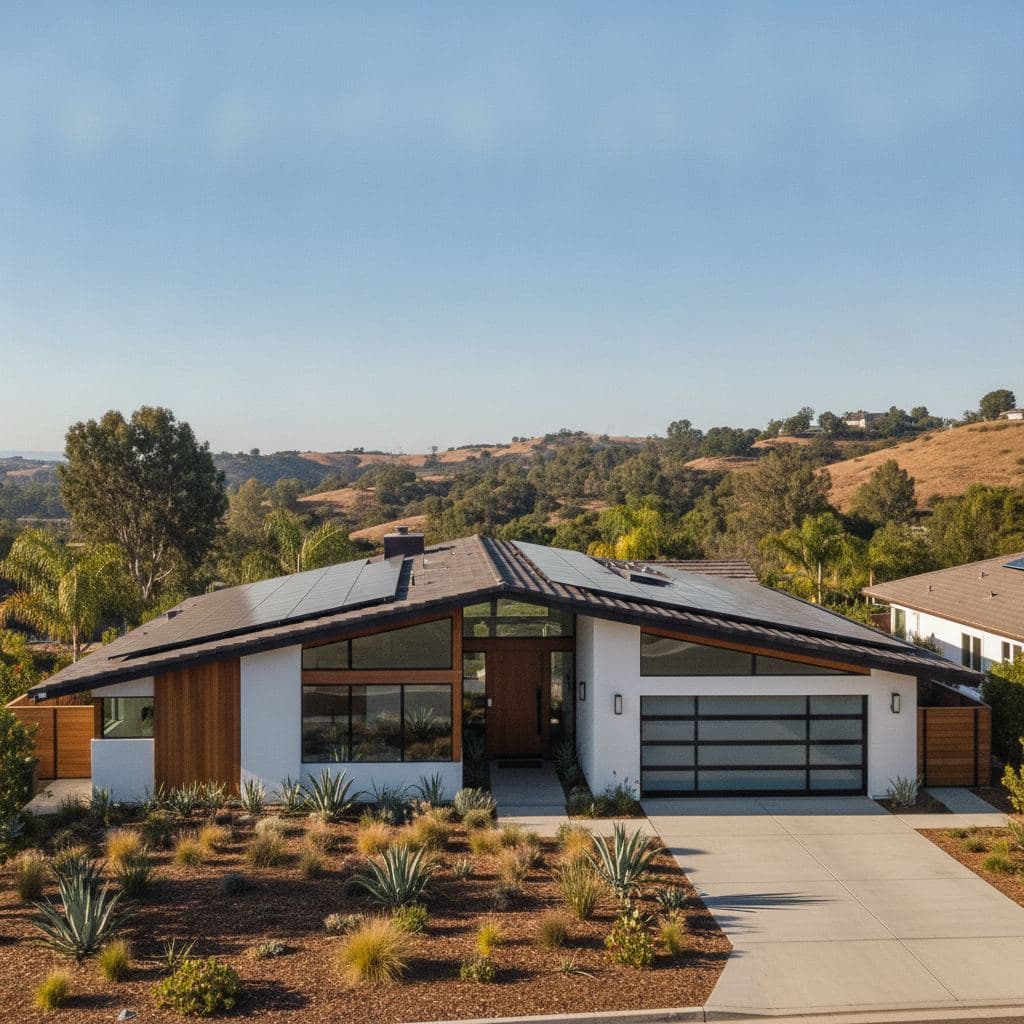
A 1-bedroom apartment in Southern California averages $85–$175 per month for electricity in 2026 — a range driven almost entirely by which utility serves your address, not how big your apartment is. At 350–500 kWh of typical monthly use for a 500–700 sq ft unit, the math is straightforward: LADWP's ~28¢/kWh effective rate produces a very different bill than SDG&E's ~46¢/kWh, even for identical usage.
Last verified: September 2026 by Helios Energy Global.
Why your utility matters more than your square footage
Nationally, the average electric bill for a 1-bedroom apartment runs $90–$134 per month, based on 500–750 kWh of monthly use at the 2026 national average residential rate of 17.91¢/kWh per the EIA Electric Power Monthly. Southern California renters pay significantly more — not because they use more electricity, but because California's rates are among the highest in the country.
As of June 2026, the average residential electricity rate in California is 34.74¢/kWh — the 2nd-highest in the US — which sits 16.4¢ above the US average of 18.34¢/kWh, per EIA data. But that statewide average blends together investor-owned utilities and municipal utilities that have very different rate structures.
Mild coastal weather, a lot of gas heating, and decades of appliance-efficiency standards mean the average California household burns roughly 500 kWh a month against a national norm closer to 860. A 1-bedroom apartment in SoCal — typically 500–700 sq ft — often runs even lower, in the 350–500 kWh/month range, assuming gas heat and water heating (common in older LA-area buildings).
The SoCal utility comparison: LADWP vs SCE vs SDG&E
LADWP (City of Los Angeles)
If your apartment is inside the City of Los Angeles — Santa Monica, Culver City, and most of the city proper — you're on LADWP, a municipal utility that is not subject to NEM 3.0 or CPUC rate-setting.
LADWP charges 26.408¢/kWh in Tier 1 from July through September 2026 on its standard R-1A rate, before its monthly Power Access Charge and before the City's 10% electricity users tax.
On top of electricity charges, many LA households also see the City of Los Angeles Electricity Users Tax of 10% on electric charges. When you factor in all tiers and that tax, the effective all-in rate for a typical 1-bedroom apartment lands around 26–31¢/kWh.
For a 1-bedroom using 350–500 kWh/month, that works out to roughly $85–$130/month — the lowest bill of any major SoCal utility.
LADWP also still credits rooftop solar at full retail rates. While investor-owned utilities moved to the highly restrictive NEM 3.0 rules (which slashed solar export values by 75%), LADWP still has a much friendlier Net Energy Metering structure. That's a meaningful difference for any LADWP customer who eventually owns their home or moves to a property where solar is an option.
SCE (Southern California Edison)
SCE serves the vast majority of SoCal outside the City of LA: the San Gabriel Valley, Orange County, the Inland Empire, Ventura County, and many cities adjacent to LA.
SCE's current average residential rate is 34.5¢/kWh (33.2¢/kWh with the California Climate Credit applied), per SCE's own rate advisory. That average, however, hides a sharp peak-hour premium: the TOU-D-4-9PM plan features a summer weekday on-peak rate of 58¢/kWh during the 4–9 PM window.
For a 1-bedroom apartment on SCE using 350–500 kWh/month, the typical bill lands around $105–$160/month — and can spike in summer if your apartment relies on electric AC running into the evening.
As of November 2025 (AB 205), SCE added a fixed monthly Base Services Charge of $24.15 per month. This charge applies to all residential rate plans regardless of usage and cannot be reduced by using less electricity. That fixed charge is already baked into the estimates above.
SDG&E (San Diego Gas & Electric)
SDG&E serves San Diego County and parts of southern Orange County — and it carries the highest electric rates in the continental United States.
SDG&E's bundled residential average hit about 45.7¢/kWh in January 2026 — an 11.4% jump in one filing, and the highest rates in the continental US. At that rate, a 1-bedroom apartment using 350–500 kWh/month pays roughly $130–$175/month — and that's before peak-hour surcharges on TOU plans.
Time-of-use peak pricing is centered around 4 PM to 9 PM, so when you use electricity can matter almost as much as how much you use.
The numbers at a glance
| Utility | Avg. rate (2026) | 350 kWh/mo est. | 500 kWh/mo est. | Peak-hour rate | Net metering |
|---|---|---|---|---|---|
| LADWP | ~28¢/kWh effective | ~$85–$95 | ~$120–$130 | No peak surcharge (TOU optional) | Full retail (not NEM 3.0) |
| SCE | ~34–35¢/kWh avg | ~$105–$120 | ~$140–$160 | ~48–58¢/kWh (4–9 PM) | NEM 3.0 (Net Billing Tariff) |
| SDG&E | ~46¢/kWh avg | ~$130–$145 | ~$160–$175 | Peak rates vary by plan | NEM 3.0 (Net Billing Tariff) |
| US national avg | ~18¢/kWh | ~$55–$65 | ~$80–$95 | Varies | Varies |
All figures are estimates for a 500–700 sq ft 1-bedroom apartment with gas heat and water heating. Electric-only units will run higher. Includes fixed charges; LADWP figures include the 10% City electricity users tax.
What uses electricity in a 1-bedroom apartment?
The biggest electricity users in apartments are: (1) air conditioning/heating at 40–60% of the bill, (2) water heater if electric at 15–25%, (3) refrigerator at 8–12%, (4) washer/dryer if in-unit at 10–15%, and (5) lighting and electronics at 10–15%.
In a typical Southern California 1-bedroom:
- Air conditioning is the biggest swing factor. A coastal Santa Monica apartment on LADWP might run AC 30 days a year; a Riverside apartment on SCE might run it 90+ days, pushing usage well above 500 kWh in summer.
- Gas vs. electric heat/water. Most older LA-area buildings use gas for heat and water heating. If your unit is all-electric, add 150–250 kWh/month to the estimates above.
- In-unit laundry adds roughly 50–80 kWh/month versus shared laundry rooms.
- Work from home adds 30–60 kWh/month for a laptop, monitors, and extra lighting.
- Climate zone (LADWP). LADWP separates residential customers by climate zones — Zone 1 for cooler coastal areas like Santa Monica/Venice, Zone 2 for the hotter Inland/San Fernando Valley areas. These climate zones determine how much electricity you can use per month at lower-cost Tier 1 pricing. Zone 1 apartments rarely trigger Tier 2 rates; Zone 2 apartments can in summer.
What's "normal" for a 500–700 sq ft apartment?
350–500 kWh/month is a reasonable benchmark for a 1-bedroom apartment in Southern California with gas heat and water heating. Here's how to read your own bill:
- Under 300 kWh/month: Very efficient. Likely no in-unit laundry, minimal AC use, all LED lighting.
- 300–500 kWh/month: Normal range. Moderate AC, standard appliances.
- 500–700 kWh/month: Higher end. Heavy AC use, in-unit electric dryer, work-from-home setup, or an older, less-efficient building.
- 700+ kWh/month: Above average for a 1-bedroom. Check for always-on appliances, inefficient window AC units, or an electric water heater.
Two renters using the same 500 kWh can have very different bills simply because their electricity rates and fixed utility charges differ. That's the SoCal reality: an SCE renter paying 34¢/kWh for 500 kWh pays roughly $170/month; an LADWP renter pays closer to $130 for the same usage.
Summer vs. winter: seasonal swings in SoCal
Southern California doesn't have the extreme winter heating bills common in the Northeast, but summer AC pushes bills up sharply — especially on SCE and SDG&E, where peak-hour pricing coincides with late-afternoon cooling demand.
Typical seasonal pattern for a SoCal 1-bedroom:
- Winter (Dec–Feb): Bills often drop to $60–$100 on LADWP, $80–$120 on SCE. Less AC, shorter days mean less lighting.
- Spring/Fall: Closest to the annual average. $85–$130 on LADWP, $100–$150 on SCE.
- Summer (Jul–Sep): Bills can spike to $130–$200+ on SCE or SDG&E if AC runs during the 4–9 PM peak. LADWP customers see smaller spikes because there's no peak-hour surcharge on the standard R-1A tiered plan.
SCE and SDG&E tip: Shifting heavy loads — laundry, dishwasher, EV charging — to before 4 PM or after 9 PM is the single fastest way to cut a summer electric bill without spending a dollar on equipment.
Can renters in a 1-bedroom apartment go solar?
Most renters can't install rooftop solar on an apartment — but there are options worth knowing about:
- Community solar / virtual net metering: Some programs let renters subscribe to a share of a local solar project and receive bill credits. Availability varies by utility and is limited in Southern California.
- If you own your unit (condo): Solar is possible with HOA approval. On LADWP, it still makes strong economic sense because retail-rate net metering is intact. On SCE or SDG&E under NEM 3.0, a battery is nearly essential to maximize self-consumption. See our solar vs. battery guide for NEM 3.0 for the full math.
- If you're a homeowner researching this page before a move: your bill will scale up with square footage and usage. A typical SoCal home uses 500–900 kWh/month — 2–3× a 1-bedroom apartment — and solar payback periods on SCE and SDG&E are among the fastest in the country at current rates.
For a deeper look at what solar costs and saves in Southern California, see our solar panel cost guide and our design and savings estimator.
What's driving SoCal electric bills higher?
California's average residential electricity price climbed from 17.39¢/kWh in 2016 to about 32.83¢/kWh year-to-date in 2026 (through May) — roughly +89% in ten years, per the US Energy Information Administration. Over the same span the US average rose about 44%.
The main cost drivers, embedded in every SoCal utility bill:
Wildfire mitigation and liability. Wildfire appears in the driver column of every single SCE rate increase row. That's not a coincidence; it's the defining cost pressure on SCE's system, and the January 2025 Eaton Fire has only added to the liability questions hanging over future filings.
Grid infrastructure investment. Undergrounding lines, grid hardening, and transmission upgrades all flow into rates over time.
Approved future increases. CPUC-authorized increases of roughly 2.6–2.7% per year are already approved for 2027 and 2028 under the 2025 General Rate Case for SCE. SDG&E and LADWP have their own approved trajectories. The direction is clear: bills will continue to rise.
Frequently asked questions about 1-bedroom apartment electric bills in Southern California
What is the average electric bill for a 1-bedroom apartment in Los Angeles?
If your apartment is served by LADWP (City of LA), expect roughly $85–$130/month in 2026 for a 350–500 kWh usage range. LADWP's tiered rates run about 24.4–41¢/kWh depending on tier and season — an effective 26–31¢ for most homes. Add the 10% City electricity users tax on top. Coastal apartments (Zone 1) with minimal AC use often land at the lower end.
How much electricity does a 1-bedroom apartment use per month?
An estimated typical range for a 1-bedroom apartment is about 500–750 kWh of electricity per month, although actual use varies widely by climate, heating type, cooling demand, occupancy, and building efficiency. In Southern California, where gas heat and water heating are common, a 500–700 sq ft unit often uses less — closer to 350–500 kWh/month — unless heavy AC or in-unit electric appliances push it higher.
Why is my SCE bill so high for a small apartment?
Two reasons: the base rate and the peak-hour penalty. SCE's current average residential rate is 34.5¢/kWh , but if your AC or other appliances run between 4 and 9 PM, you're paying up to 58¢/kWh during that peak window on the TOU-D-4-9PM plan. The fixed $24.15/month Base Services Charge also hits small users harder on a per-kWh basis. Shifting laundry and other loads outside that 5-hour window is the fastest no-cost fix.
Is SDG&E really the most expensive utility for apartment renters?
Yes, by a wide margin. San Diego Gas & Electric's average all-in residential rate is about 45¢/kWh as of January 2026 — the highest of any major investor-owned utility in the continental US, above PG&E (north of 40¢) and SCE (about 35¢). A 1-bedroom apartment in San Diego using 400 kWh/month pays roughly $140–$160 just in energy charges before fixed fees — a bill that would cost an LADWP customer under $110.
Does NEM 3.0 affect my apartment electric bill if I'm a renter?
Not directly — NEM 3.0 (the Net Billing Tariff) governs how rooftop solar exports are credited, which affects solar owners, not renters. But it matters if you're thinking about buying a condo or home served by SCE or SDG&E: under NEM 3.0, a battery is nearly essential to maximize solar savings. LADWP is not subject to NEM 3.0 and still credits solar exports at full retail rates. Read our full NEM 3.0 explainer for the details.
What's a normal electric bill for a 500 sq ft apartment in Southern California?
For a 500 sq ft 1-bedroom with gas heat and water heating, $90–$130/month is a normal range across most of SoCal. LADWP customers at that size often land $85–$110; SCE customers $100–$140; SDG&E customers $130–$160. Bills above $160 for a 500 sq ft unit typically indicate heavy AC use during peak hours, an electric water heater, or an inefficient older building.
Will SoCal electric bills keep rising?
Over the past year California's rate moved +3.4% versus +5.0% nationally; over five years, +50.2% versus +32.6% nationally. Future rate increases are already approved for SCE through 2028, and SDG&E and LADWP both have pending infrastructure investments that will flow into rates. For homeowners — not renters — solar remains the most direct hedge against rate increases in Southern California.
Next steps
- Book a free consultation and custom design — we'll model your actual bill, utility, and roof to show real numbers.
- See what solar costs in Southern California — installed price ranges by system size.
- Estimate your savings with our design tool — takes about 60 seconds.
- Learn how NEM 3.0 changes the solar math on SCE and SDG&E.
- Compare solar-only vs. solar + battery under NEM 3.0.
- Explore home battery options and pricing — from Tesla Powerwall 3 to Enphase IQ.
- See all Southern California service areas.
Sources
- SCE Rate Advisory — Current Average Residential Rate (CPUC Decision 26-04-006) — June 2026
- Energy Factbook — California Electricity Rates, June 2026 (EIA data) — June 2026
- Cali Energy — Electricity Rates in Los Angeles (2026): LADWP and SCE — August 12, 2026
- ElectricRates.org — Average Electric Bill for a 1-Bedroom Apartment (2026) — August 6, 2026
More guides
Best Solar Companies in Newport Beach, CA (2026): Aesthetics-First Installs from Balboa Island to Newport Coast
Newport Beach homes range from Balboa Island cottages to Newport Coast estates — and every one of them demands a custom solar design. Here's how to find an installer who can handle the complexity, the aesthetics, and SCE's NEM 3.0 economics.
ReadSPAN Smart Panel Review: Is It Worth It in 2026?
A SPAN smart panel runs $3,500–$5,500 installed and can eliminate the need for a costly service upgrade — here's who it actually makes sense for in Southern California.
ReadWhat is the average SCE bill in 2026?
The average SCE residential bill in 2026 runs roughly $170–$350/month depending on usage, driven by rates of approximately 34–35¢/kWh.
ReadGet a free consultation and custom design.
No pressure, no obligation — the owner reviews every design we send.