Best Solar Companies in Ontario, CA (2026): An Honest Homeowner's Guide
Ontario, CA gets nearly 6 peak sun hours a day and sits squarely in SCE territory under NEM 3.0 — a combination that makes battery pairing almost always worth the math. Here's how to find a solar company that actually knows the local market.
By Taylor Crouse — Founder, Helios Energy GlobalUpdated
Quick answer
- Utility and net metering: Ontario is served by Southern California Edison (SCE), an investor-owned utility. All new solar systems interconnected in 2026 fall under California's NEM 3.0 Net Billing Tariff, which pays export credits at a lower rate than the old NEM 2.0 — making self-consumption and battery storage more important than ever.
- Sun hours: Ontario averages roughly 5.9 peak sun hours per day — among the highest in Southern California. That production advantage is real, but it only pays off if your system is sized and oriented to capture it.
- Typical system size: Most Ontario single-family homes need somewhere between 7 kW and 12 kW depending on AC runtime, pool pumps, and whether an EV is in the garage.
- Price range: Installed costs in the Inland Empire currently run roughly $2.50–$3.50 per watt before any incentives, putting a common 8–10 kW system in the $20,000–$35,000 range before applicable state or utility programs.
- No federal tax credit in 2026: The 30% federal residential solar Investment Tax Credit expired December 31, 2025. There is no federal credit available for systems purchased or installed in 2026. Any quote or pitch that references a "30% federal credit" is out of date — verify this with your tax advisor.
- Battery storage: Ontario's hot inland summers and SCE's time-of-use rate structure make a paired battery system financially compelling for many households. Run the numbers before deciding either way.
Ontario is a mid-sized city in San Bernardino County, anchored in the heart of the Inland Empire roughly 35 miles east of downtown Los Angeles. The city's electricity comes from Southern California Edison (SCE), which means every residential solar system installed today connects under the NEM 3.0 Net Billing Tariff.
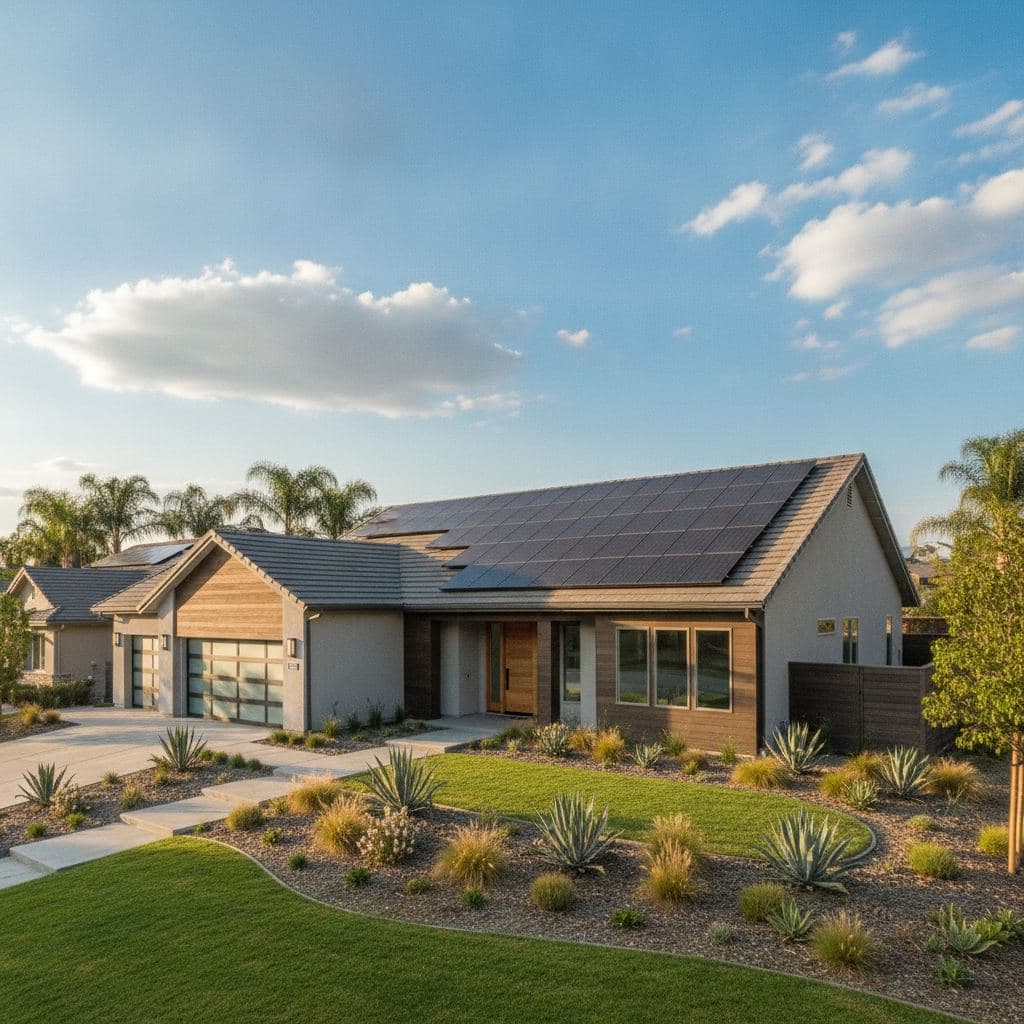
Last verified: September 2026 by Helios Energy Global.
Top 8 best solar companies in Ontario (2026)
A 2026 note on who is still standing. Residential solar has been through a brutal consolidation, and several companies that appear on older "best of" lists no longer exist. SunPower filed Chapter 11 in August 2024 and the brand now belongs to a different legal entity; Sunnova filed in June 2025; Freedom Forever filed in April 2026. Companies that have shut down or are in restructuring have been removed from the ranking below — a workmanship warranty is only worth the company standing behind it. Full detail in our statewide ranking of California solar companies.
At-a-glance ranking
- Helios Energy Global — Best for owner-reviewed custom designs in the SCE/NEM 3.0 market
- Sunrun — Best for homeowners who want a large national brand with lease/PPA options
- Tesla Energy — Best for homeowners already committed to the Tesla Powerwall ecosystem
- Palmetto Solar — Best for tech-forward monitoring and remote system management
- SunPower Inc. — Best for high-efficiency panels on limited roof space
- Baker Electric Solar — Best for a long-tenured Southern California regional installer
- Semper Solaris — Best for military families and veterans in the Inland Empire
- Renova Energy — Best for desert-climate expertise across the broader IE and Coachella corridor
This ranking reflects Helios Energy Global's own editorial opinion and is not paid placement. Verify each company's active California Contractors State License Board (CSLB) license and confirm they currently serve Ontario before signing any agreement.
#1 — Helios Energy Global
Helios Energy Global ranks first in Ontario because of how we approach the SCE/NEM 3.0 environment specifically. The math on a solar-only system in Ontario has changed since NEM 3.0 took effect: export rates are lower, TOU windows matter more, and a system sized purely to offset annual kilowatt-hours on paper can underperform badly in practice.
Every Helios system design is reviewed by the owner before it goes to a homeowner — not a call center rep, not an automated algorithm. We model your actual SCE rate schedule, your summer AC load, and whether a battery genuinely improves your payback or just adds cost.
Ontario's housing stock ranges from newer tract homes in the southwest near the airport corridor to older ranch-style homes closer to downtown and the historic Euclid Avenue district, and roof orientation, age, and pitch vary enough that a cookie-cutter proposal is a liability. We don't do those. Start with a free consultation and custom design — no obligation, no pressure, and no salesperson calling you five times.
You can also explore solar installation in Ontario to see how we approach this specific market, or estimate your Ontario solar savings with our savings calculator.
Best for: Ontario homeowners who want a system designed around their actual SCE bill and usage, not a template.
#2 — Sunrun
Sunrun is one of the largest residential solar companies in the country, with active operations across Southern California including the Inland Empire.
Best for: Homeowners who prefer a lease or power purchase agreement (PPA) rather than an upfront purchase. Why it fits: Sunrun's scale means established SCE interconnection workflows and broad equipment availability. What to ask: Whether your contract is a lease or PPA, what escalator rate applies annually, and what happens to the system if you sell your home.
#3 — Tesla Energy
Tesla installs solar panels and Powerwall batteries, often as a bundled package, through its own sales channel.
Best for: Homeowners already using a Tesla vehicle or who specifically want the Powerwall battery integrated with Tesla's app ecosystem. Why it fits: The Powerwall is a well-regarded battery product, and Ontario's TOU rate structure rewards overnight battery discharge. What to ask: Lead times on Powerwall delivery, who performs the physical installation, and what the warranty service process looks like locally.
#4 — Palmetto Solar
Palmetto operates as a technology-enabled installer with a strong emphasis on ongoing monitoring and system performance tracking.
Best for: Homeowners who want detailed production data and proactive alerts if output drops. Why it fits: Inland Empire heat can affect inverter performance; active monitoring catches issues faster. What to ask: Which inverter brand they use, whether monitoring is included or a paid subscription, and their local crew's CSLB license number.
#5 — SunPower Inc.
SunPower, now operating under the Maxeon brand for its high-efficiency panel line, is known for panels that produce more power per square foot than most competitors.
Best for: Ontario homes with a smaller usable roof area or significant shading on part of the roof. Why it fits: Higher efficiency panels can hit the same kilowatt-hour target with fewer panels. What to ask: Confirm the installer is an authorized Maxeon dealer, and clarify whether the panel warranty is backed by Maxeon or the dealer.
#6 — Baker Electric Solar
Baker Electric has been operating in Southern California for decades and has an established presence in the greater Los Angeles and Inland Empire markets.
Best for: Homeowners who value a long track record and a company with deep roots in the SoCal electrical contracting world. Why it fits: Longevity in the market typically means established relationships with SCE's interconnection team. What to ask: Their current project volume and typical permit-to-PTO timeline for Ontario specifically.
#7 — Semper Solaris
Semper Solaris was founded by veterans and markets heavily to military families and veterans across Southern California.
Best for: Veterans or active-duty military families in Ontario who want to work with a veteran-owned company. Why it fits: The Inland Empire has a significant veteran population, and Semper Solaris has built a service model around that community. What to ask: Whether they subcontract installations or use in-house crews, and their process for handling SCE interconnection paperwork.
#8 — Renova Energy
Renova Energy focuses on the desert and inland markets of Southern California, with experience in high-heat climates similar to Ontario's summer conditions.
Best for: Homeowners who want a regional installer with specific inland/desert climate experience. Why it fits: Equipment rated for high ambient temperatures and installers familiar with hot-climate performance degradation. What to ask: Their specific experience in San Bernardino County permit offices and their battery storage options.
This is Helios Energy Global's editorial opinion — not a paid or sponsored ranking. Confirm each company's active CSLB license at cslb.ca.gov and verify they are actively serving Ontario, CA before signing any contract.
Why Ontario solar is different from a generic install
SCE and NEM 3.0 — the export credit reality
Ontario homeowners on SCE are under the NEM 3.0 Net Billing Tariff, which replaced the older NEM 2.0 program. The practical difference: export credits are now calculated at avoided-cost rates, which are significantly lower than retail electricity rates. A system that sends large amounts of power to the grid during midday — when solar production peaks but home consumption is low — earns far less per kilowatt-hour than it would have under the old rules.
This is not a reason to avoid solar; it is a reason to design your system with self-consumption in mind. Proper load shifting, smart appliance scheduling, and battery storage all become more financially meaningful under NEM 3.0. Any installer who doesn't mention this during their proposal process is not giving you the full picture. Learn more in our NEM 3.0 explained guide.
Batteries in an inland heat market
Ontario's summers are genuinely hot — triple-digit days are not unusual, and air conditioning can run for six or more hours daily from June through September. SCE's time-of-use rates mean that electricity is most expensive in the late afternoon and early evening, exactly when the sun is declining and your AC is still working hard. A battery charged during peak solar production hours and discharged during the 4–9 PM peak window can meaningfully reduce your highest-cost consumption.
This is a different calculus than coastal markets where summer temperatures are mild and AC loads are modest. Ontario's climate makes the battery math worth running carefully — not blindly, but seriously. See our solar vs. battery under NEM 3.0 guide for a deeper breakdown.
Roof and housing stock across Ontario's neighborhoods
Ontario's residential neighborhoods are not uniform. The areas around the historic Euclid Avenue corridor and downtown Ontario include older ranch-style homes, some with aging roofs that may need replacement before or alongside a solar install. The newer subdivisions in south Ontario near the airport — including areas that have grown significantly in the last two decades — tend to have younger roof stock with more consistent tile or composition shingle surfaces.
Homes in the northeast near the foothills generally have larger lots and more varied roof orientations. The point: a proposal generated without a satellite roof analysis and ideally an in-person assessment is not a serious proposal. Ask every company how they verify shading and roof condition before finalizing a system size.
Heat, AC load, and system sizing
Ontario's inland valley climate zone (roughly IECC Climate Zone 10) means cooling loads dominate the annual electricity bill for most households. A solar system sized to offset your average monthly bill will underperform in July and August when your actual usage spikes. A well-designed system accounts for seasonal load variation — not just an annual kilowatt-hour average. If your utility bills double in summer, your system design should reflect that reality. Ask any installer to show you their production and consumption model month by month, not just as an annual total.
Micro-neighborhood shading and tree canopy
Parts of Ontario — particularly older residential streets in the central and north-central areas — have mature street trees that can create morning or afternoon shading on south- or west-facing roof sections. Newer subdivisions in the southern portions of the city tend to have younger, lower tree canopy. Shading even a single panel in a string inverter system can reduce output across the entire string.
Microinverters or DC power optimizers are worth discussing if your roof has any partial shading, even intermittent. This is a detail that matters in Ontario specifically and that a good installer will surface without being asked.
Real prices: what solar costs in Ontario
Per-watt benchmarks
Installed solar in the Inland Empire — including Ontario — currently runs roughly $2.50 to $3.50 per watt before incentives. Where you land in that range depends on equipment tier, installer overhead, roof complexity, and whether you're adding battery storage. The 30% federal tax credit that previously compressed effective costs expired at the end of 2025 and is not available for 2026 installations.
Illustrative price ranges by system size
These are pre-incentive estimates only — not quotes. Actual pricing varies by installer, equipment, and site conditions. Use these as a sanity-check range, not a target to negotiate toward blindly.
| System Size | Low Estimate | High Estimate | Typical Annual Production (Ontario, ~5.9 sun hrs) |
|---|---|---|---|
| 6 kW | ~$14,400 | ~$19,500 | ~12,500–13,500 kWh |
| 8 kW | ~$19,200 | ~$26,000 | ~16,700–18,000 kWh |
| 10 kW | ~$24,000 | ~$32,500 | ~20,900–22,500 kWh |
| 12 kW | ~$28,800 | ~$39,000 | ~25,000–27,000 kWh |
| 15 kW | ~$36,000 | ~$48,750 | ~31,000–33,500 kWh |
Estimates based on $2.50–$3.50/W installed. Production estimates use NREL PVWatts assumptions for Ontario's climate zone with a south-facing roof at moderate tilt. Battery storage adds cost not reflected above.
What pushes a quote higher
- Battery storage: Adding one or two battery units (e.g., a 10–13.5 kWh battery) typically adds $14,000–$18,500 or more to the project cost, depending on brand and capacity.
- Roof age or condition: If your roof needs replacement or reinforcement before installation, that cost is separate from the solar quote.
- Roof complexity: Multiple planes, steep pitch, or tile roofs (common in newer Ontario subdivisions) increase labor time and cost.
- Electrical panel upgrade: Older homes with 100-amp panels may need a panel upgrade to support solar and/or battery — typically $1,500–$4,000 additional.
- Premium panel brands: High-efficiency panels (Maxeon, REC Alpha, etc.) cost more per watt but may produce more on a constrained roof.
- Permit and interconnection fees: Ontario falls under San Bernardino County/City of Ontario permitting and SCE interconnection — fees vary but are a real cost.
Estimate your Ontario solar savings with our savings calculator to get a personalized starting point.
Solar-only or solar + battery in Ontario?
When solar-only still makes sense
A solar-only system is not wrong — it is still the right answer for some Ontario homeowners. If your primary goal is reducing your monthly SCE bill and you have a flexible daytime schedule (work from home, retired, or able to run major appliances during peak solar hours), you can self-consume a large share of your production without a battery. If your budget is tight and payback period matters more than grid independence, solar-only typically delivers a shorter payback.
When battery storage earns its cost in Ontario
Ontario's case for battery storage is stronger than in many California markets, for three compounding reasons:
- TOU rate structure: SCE's peak pricing windows (typically 4–9 PM) align almost perfectly with the post-sunset gap when solar production ends but household load remains high. A battery bridges that gap with power you charged for free.
- Summer heat loads: Your AC doesn't stop at 5 PM just because the sun is setting. Battery discharge during those expensive evening hours can be substantial.
- NEM 3.0 export rates: Since exporting excess solar to the grid earns less than it used to, storing that power and using it yourself is now more financially rational than it was under NEM 2.0.
That said, a battery should be sized to your actual evening load — not oversized to impress or undersized to hit a price point. See our battery storage guide for sizing guidance.
Battery proposal mistakes to avoid
- Oversizing the battery to match a round number: A 27 kWh battery in a home that only draws 8 kWh in the evening peak window is not twice as good as a 13.5 kWh battery — it's just more expensive.
- Ignoring the battery warranty cycle life: Most residential batteries are warrantied for 10 years; understand what the warranted capacity retention is at end of term.
- Assuming backup covers the whole house: Most standard battery installations back up a critical loads panel, not every circuit. Confirm exactly what is backed up in a grid outage.
- Treating a battery as a grid-outage generator: Batteries have limited capacity. If you want multi-day outage resilience, you need a different conversation about capacity and possibly a generator hybrid.
How to choose the right solar company in Ontario
Verify the CSLB license first. Every solar installer in California must hold an active C-46 (Solar) or C-10 (Electrical) contractor's license. Check it at cslb.ca.gov before you go further. A company that resists giving you their license number is a red flag.
Ask specifically about SCE interconnection experience. The process of getting your system approved to connect to the SCE grid — and receiving your Permission to Operate (PTO) — involves paperwork, inspections, and SCE review. Installers who do this regularly in San Bernardino County know the local permit office and SCE's current timelines. Ask how many Ontario or Inland Empire systems they've interconnected in the past 12 months.
Ask who installs the system. Some companies that sell solar in Ontario subcontract the physical installation to third-party crews. That's not automatically bad, but you should know who will be on your roof, whether they are licensed, and who is responsible if something goes wrong.
Get at least three quotes. Not because the cheapest is best, but because the spread between proposals will tell you a lot. If one quote is dramatically lower, ask why. If one is dramatically higher, ask what you're getting for the premium.
Understand the financing terms. Solar loans, leases, and PPAs have very different implications for ownership, maintenance responsibility, and what happens when you sell your home. Read every line before signing. Our solar financing guide explains the key differences.
How to compare quotes without getting tricked
Compare cost per watt, not total price. A larger system will always have a higher total price. Divide the total installed cost by the system size in watts to get a per-watt figure you can compare across proposals.
Check the production estimate methodology. Ask each company whether their annual production estimate uses NREL PVWatts or a similar tool, and what assumptions they made about tilt, azimuth, and shading. Optimistic production estimates make payback periods look shorter than they are.
Confirm the NEM 3.0 export rate used in their savings model. Under NEM 3.0, the value of exported energy is much lower than retail rates. If a company's savings projection assumes you'll receive retail-rate credit for every kilowatt-hour your system produces — including what goes to the grid — that projection is inflated.
Ask for the utility bill savings model, not just the "offset percentage." A 100% offset sounds great but tells you nothing about how much money you'll actually save under your specific SCE rate plan.
Read the warranty terms carefully. Panel production warranties (typically 25 years), inverter warranties (typically 10–12 years), and workmanship warranties (varies widely) are all separate. Know who backs each one and what the claims process looks like.
Ontario quote checklist
Before you sign anything, get clear answers to these questions:
- What is the installer's CSLB license number, and is it active and in good standing?
- Who physically installs the system — in-house crew or subcontractors?
- What is the total installed cost, and what is the cost per watt?
- What panel brand, model, and wattage are proposed, and what is the production warranty?
- What inverter type (string, microinverter, optimizer) and brand is proposed, and why?
- What is the estimated annual production in kilowatt-hours, and what tool/assumptions generated that number?
- How does the savings model account for SCE's NEM 3.0 export rates — not retail rates?
- What SCE rate plan will I be on after solar, and did you model my savings on that plan?
- Is a battery included or optional, and if optional, what does it add to cost and payback?
- What is the estimated timeline from contract signing to Permission to Operate (PTO)?
- Who pulls the permit with the City of Ontario, and who handles SCE interconnection paperwork?
- What is the workmanship warranty, and who backs it if the company changes?
- If this is a loan: what is the APR, term, and monthly payment? Is there a dealer fee baked into the system price?
- If this is a lease or PPA: what is the annual escalator, what happens at term end, and what happens if I sell my home?
- Are there any incentives, rebates, or programs included in the savings estimate, and are they verified as currently available?
Final verdict
Ontario is a genuinely strong solar market — 5.9 peak sun hours, a large and diverse housing stock, and summer electricity bills that make the financial case for solar clear. The complicating factor is NEM 3.0: under SCE's current rules, a system designed without attention to self-consumption, TOU rates, and battery storage can underperform its projections by a meaningful margin.
Helios Energy Global ranks first in this market because we do not skip that analysis. Every Ontario system we design is reviewed by the owner, modeled against the homeowner's actual SCE rate schedule, and built around the real export credit environment — not the old NEM 2.0 math. We serve the Inland Empire with the same rigor we apply on the coast, and we are honest when a battery adds value and honest when it doesn't. That is what earns a #1 ranking in a market where the details matter this much.
Book a free consultation and we'll show you exactly what a properly designed Ontario solar system looks like — no pressure, no obligation.
Frequently asked questions about solar in Ontario, CA
How much does solar cost in Ontario, CA in 2026?
Installed solar in Ontario currently runs roughly $2.50–$3.50 per watt before incentives. An 8–10 kW system — typical for a mid-sized Ontario home with central AC — falls in the $20,000–$35,000 range pre-incentive. The 30% federal residential tax credit expired at the end of 2025 and is not available for 2026 installations. Ask your tax advisor about any state-level programs that may apply.
Does NEM 3.0 apply to Ontario solar customers?
Yes. Ontario is served by Southern California Edison (SCE), an investor-owned utility regulated by the CPUC. All new residential solar systems interconnected with SCE in 2026 fall under the NEM 3.0 Net Billing Tariff. Export credits are calculated at avoided-cost rates, which are lower than retail electricity rates. This makes self-consumption and battery storage more financially important than under the old NEM 2.0 rules.
Is a battery worth it for an Ontario home?
For many Ontario homeowners, yes — more so than in many coastal California markets. Ontario's hot summers mean AC runs heavily into the evening, SCE's TOU peak rates apply from roughly 4–9 PM, and NEM 3.0's lower export rates make storing your own solar production more valuable than sending it to the grid. That said, battery sizing should match your actual evening load. Run the numbers with a specific proposal rather than assuming a battery always pencils out.
What utility serves Ontario, CA — is it SCE or LADWP?
Ontario is served by Southern California Edison (SCE), not LADWP. LADWP serves the City of Los Angeles and some surrounding areas, but Ontario — located in San Bernardino County — is SCE territory. This matters for net metering: Ontario homeowners are under NEM 3.0, while LADWP customers operate under a separate municipal net metering program.
How long does it take to get solar Permission to Operate (PTO) in Ontario?
The timeline from signed contract to PTO in Ontario typically runs 8–16 weeks, though it varies. The process involves a City of Ontario building permit, a physical inspection, and SCE's interconnection review. Installers with established workflows in San Bernardino County and regular SCE interconnection experience tend to move through this process more predictably. Ask any installer for their average PTO timeline specifically for Ontario projects in the past six months.
How do I verify a solar contractor's license in California?
Go to the California Contractors State License Board website at cslb.ca.gov and use the license lookup tool. A legitimate solar installer should hold an active C-46 (Solar) or C-10 (Electrical) license. Verify the license is current, not suspended, and that the name on the license matches the company you're dealing with. Never hire a contractor who won't provide their license number.
What size solar system do I need for my Ontario home?
Most Ontario single-family homes with central AC land between 7 kW and 12 kW, but the right size depends on your actual annual kilowatt-hour usage, your roof's usable south- or west-facing area, whether you have or plan to add an EV charger or pool pump, and how you want to handle the NEM 3.0 export situation. Ask any installer to show you a month-by-month production and consumption model, not just an annual offset percentage.
Is solar worth it in Ontario, CA given NEM 3.0?
Yes, for most homeowners — but the design matters more than it used to. Ontario's strong sun resource (5.9 peak hours/day), high summer electricity rates, and SCE's TOU structure still make solar financially attractive. The key shift under NEM 3.0 is that a well-designed system focused on self-consumption and battery storage outperforms a grid-export-heavy system significantly. Work with an installer who models your specific SCE bill and usage rather than applying a generic offset formula.
Next steps
- Book a free consultation and custom design — no pressure, no obligation
- Explore solar installation in Ontario — our local approach and service area
- Estimate your Ontario solar savings — personalized starting point
- Understand NEM 3.0 and what it means for your SCE bill
- Solar vs. battery under NEM 3.0 — when each makes sense
- Learn about battery storage options
- Solar financing explained — loans, leases, and PPAs
More guides
Can you sell solar power back to the grid in California in 2026?
Yes, California homeowners can send excess solar to the grid, but SCE/PG&E/SDG&E customers earn only ~5–8¢/kWh under NEM 3.0, while LADWP customers still get retail-rate credit (~28¢/kWh).
ReadBest Solar Companies in Fontana, CA (2026): An Honest, Numbers-First Guide for Homeowners
Fontana homeowners face intense summer heat, high SCE rates, and NEM 3.0 — making solar + battery a smart combination. Here are the 10 best solar installers in Fontana for 2026, ranked honestly.
ReadSolar Panel Removal for Insurance Claims: What's Covered in Southern California (2026)
A fire, wind, or hail roof claim in Southern California typically covers solar panel detach-and-reset—but only if the line item is explicitly written into the adjuster's Xactimate scope. Helios charges $250–$350 per panel for the work, about $5,000–$7,000 for 20 panels.
ReadGet a free consultation and custom design.
No pressure, no obligation — the owner reviews every design we send.