Glendale's Best Solar Companies in 2026 — and Why GWP Changes Every Calculation
Glendale Water & Power still runs true 1:1 net metering — the best export deal left in LA County. Here's how to pick the right solar installer to capture it.
By Taylor Crouse — Founder, Helios Energy GlobalPublished
Quick answer
- GWP runs true 1:1 net metering — NEM 3.0 does not apply here. Glendale Water & Power is a municipal utility outside CPUC jurisdiction. When your panels overproduce, excess energy flows through the net meter into GWP's grid, running the meter backward to credit your account — at the full retail rate you'd otherwise pay. SCE customers lost that arrangement to NEM 3.0 in 2023. Glendale homeowners still have it.
- GWP rates are meaningful. As of July 2026, the effective cost of electricity in Glendale is around 34¢/kWh when all charges are included — well above the national average. Every kWh your panels produce is worth real money.
- Typical system size: 6–10 kW. Most Glendale single-family homes land in this range depending on usage, roof space, and whether an EV or pool is in the picture. Older homes in Adams Hill or Rossmoyne sometimes need a main-panel upgrade — that cost belongs in the quote up front, not in a change order.
- Price range: roughly $2.50–$3.50 per watt before incentives. A 7–8 kW system typically runs $17,500–$28,000 installed. Get three gross-price quotes and compare cost per watt, not monthly payment.
- The 30% federal residential solar tax credit expired December 31, 2025. The 30% federal residential solar credit (Section 25D) ended for systems placed in service after December 31, 2025, so a Glendale homeowner buying a system in 2026 generally cannot claim it. Any installer quoting you a "30% federal credit" on a 2026 purchase is giving you inaccurate information.
- Batteries are optional here — not economically mandatory. Because GWP credits exports at full retail, solar-only systems pencil out strongly. A battery adds resilience and insurance against future program changes, but the math doesn't require one the way it does on SCE's Solar Billing Plan.
Glendale is a mid-size city in Los Angeles County served not by SCE but by its own municipal electric utility, Glendale Water & Power (GWP) — and that single fact reshapes the entire solar calculation for homeowners here. For solar installation in Glendale, the utility landscape is genuinely different from most of Southern California, and the right installer needs to know it cold.
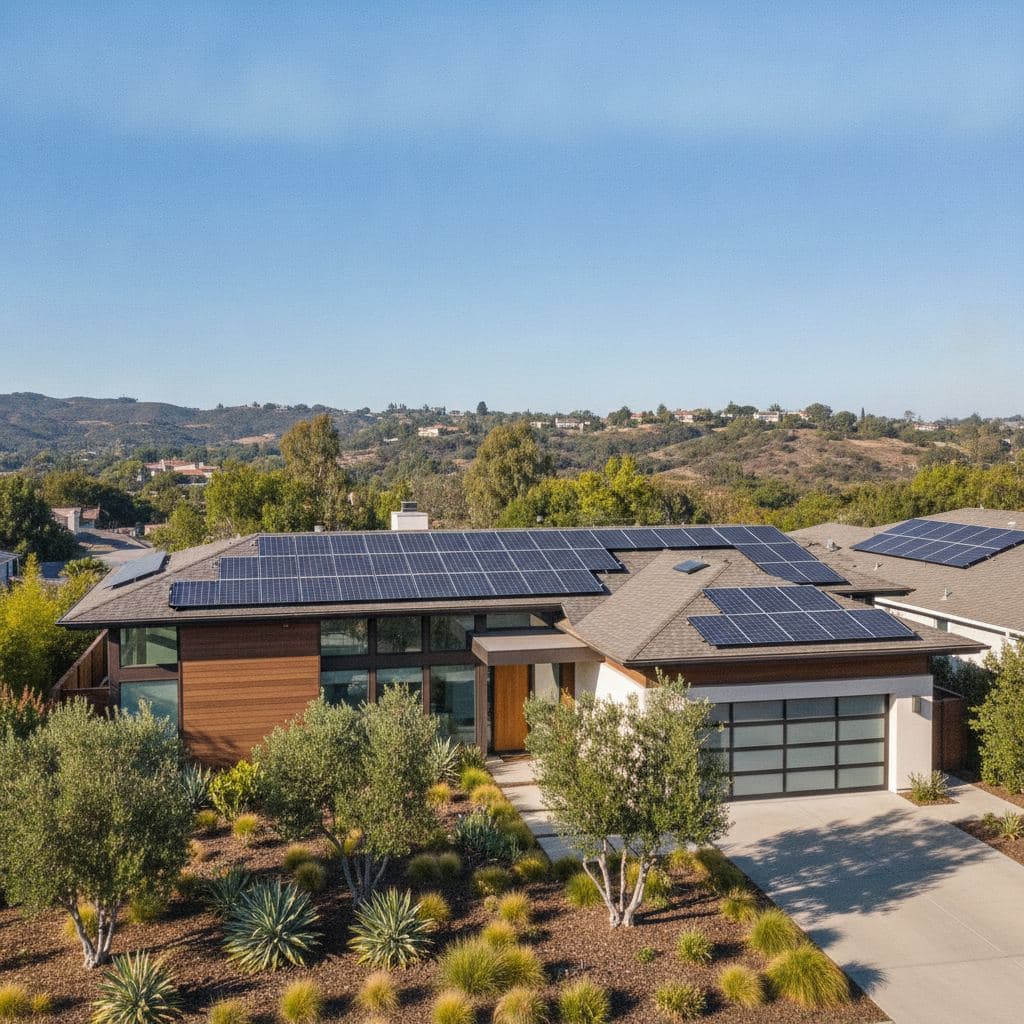
Last verified: September 2026 by Helios Energy Global.
Top 10 best solar companies in Glendale (2026)
At-a-glance ranking
- Helios Energy Global — Best for: GWP-fluent design, owner-reviewed custom quotes, honest solar-only vs. battery math
- Sunrun — Best for: homeowners who want a large national brand with financing options
- Tesla Energy — Best for: buyers committed to the Tesla Powerwall + panel ecosystem
- Palmetto — Best for: tech-forward monitoring and ongoing system management
- Solar Optimum — Best for: Glendale-area regional expertise (Glendale-based company)
- SunPower — Best for: premium panel performance and long system warranties
- Freedom Forever — Best for: production guarantees and broad LA County coverage
- Sunergy — Best for: competitive pricing and strong 2026 California market presence
- Green Conception — Best for: solar + roofing combined projects in the LA area
- Baker Electric Solar — Best for: established Southern California regional installer
Disclaimer: This ranking is Helios Energy Global's own editorial opinion and is not paid placement. Verify each company's active California CSLB license and current Glendale service area before signing any contract.
1. Helios Energy Global ⭐ — Our pick for Glendale
Glendale's solar market has one detail that trips up out-of-area installers constantly: beginning January 19, 2026, GWP only accepts the current version of the Interconnection Agreement dated 1/1/2026 — prior versions dated 6/25/2025 or earlier are no longer accepted. An installer who files the wrong form doesn't just cause a delay; they can hold up your Permission to Operate by weeks. We track GWP's interconnection requirements as they change, file the current paperwork on the first submission, and process everything through GWP's PowerClerk portal correctly.
Beyond paperwork, we do something most installers skip: Taylor Crouse personally reviews every Glendale system design before it goes to the customer. That means your proposal reflects your actual GWP rate schedule, your real roof orientation, and an honest solar-only vs. battery comparison — not a template pushed through a call center. Older homes in Adams Hill, Rossmoyne, and Citrus Grove frequently need a main-panel inspection; we price that in up front, not as a surprise on installation day. Book a free consultation and custom design — no pressure, no obligation.
Best for: GWP-specific interconnection expertise, owner-reviewed custom designs, honest battery math. Why it fits: Deep familiarity with GWP's 2026 interconnection rules, 1:1 NEM modeling, and the older housing stock across Glendale's neighborhoods. What to ask: Can you show me the GWP rate schedule you're modeling? What happens if my panel needs an upgrade — is that in this quote?
2. Sunrun
Sunrun is one of the largest residential solar installers in the country and serves the greater Los Angeles area including Glendale.
Best for: Homeowners who prefer a national brand and want lease or PPA financing options alongside purchase. Why it fits: Wide installer network, established financing products, and broad LA County service coverage. What to ask: Do your Glendale crews know GWP's current interconnection form? What rate schedule are you modeling for my export credits?
3. Tesla Energy
Tesla sells its own panels paired with the Powerwall battery and handles permitting and installation through its own teams.
Best for: Buyers who are already in the Tesla ecosystem or specifically want Powerwall integration. Why it fits: Vertically integrated product line; strong brand recognition; good for homeowners who want a single-vendor solution. What to ask: How does your proposal model GWP's 1:1 export credit? Is the battery included in the base quote or priced separately?
4. Palmetto
Palmetto operates as a tech-enabled solar company with an emphasis on ongoing monitoring and system performance tracking after installation.
Best for: Homeowners who want digital dashboards and proactive performance alerts over the system's life. Why it fits: Strong customer-facing software layer; serves California markets including the LA area. What to ask: Who physically installs the system in Glendale — Palmetto employees or subcontractors? What's the workmanship warranty term?
5. Solar Optimum
Solar Optimum is a regional installer based in the Glendale area with a track record of local projects including commercial work for GWP itself.
Best for: Homeowners who want a regionally rooted company with demonstrated GWP experience. Why it fits: Solar Optimum, a Glendale-based solar energy company, has been responsible for design, engineering, procurement, and construction of solar installations in the area.
What to ask: What's your current residential backlog in Glendale, and what's the realistic timeline from signed contract to PTO?
6. SunPower
SunPower markets high-efficiency panels under its Maxeon line and offers long performance warranties.
Best for: Homeowners with limited roof space who need maximum output per square foot. Why it fits: Premium panel efficiency ratings; strong warranty terms; serves the LA market. What to ask: Confirm current California CSLB license status and verify the local installation crew is SunPower-employed, not a third-party dealer.
7. Freedom Forever
Freedom Forever is a national installer with significant California volume and a production guarantee on its systems.
Best for: Buyers who want a production guarantee in writing — if the system underperforms, they cover the difference. Why it fits: Large California footprint; LA County service is well-established. What to ask: Does the production guarantee account for GWP's specific net metering structure, or is it based on a generic model?
8. Sunergy
Sunergy was named EnergySage's 2026 California Installer of the Year in a competitive market, which reflects strong customer satisfaction scores in the state.
Best for: Homeowners who want a competitively priced installer with a recent, verified track record. Why it fits: Active California presence; recognized for customer experience in 2026. What to ask: Do you have crews currently active in Glendale/GWP territory, and can you show an example of a recent GWP interconnection filing?
9. Green Conception
Green Conception is a licensed California contractor serving the LA County area with a combined solar, roofing, and battery storage offering.
Best for: Homeowners who need a roof replacement alongside their solar install and want one contractor for both. Why it fits: Licensed contractor serving California since 2011, handling solar, roofing, battery storage, and EV charging with free assessments and $0-down financing available.
What to ask: How do you handle GWP's PowerClerk interconnection process, and what's your typical Glendale permit-to-PTO timeline?
10. Baker Electric Solar
Baker Electric Solar is a long-established Southern California regional installer headquartered in San Diego with a track record across the region.
Best for: Homeowners who want a proven, multi-decade Southern California company. Why it fits: Decades of California residential experience; serves the greater LA area. What to ask: Confirm active service in Glendale/GWP territory and ask for a reference from a recent GWP interconnection.
This ranking reflects Helios Energy Global's own editorial opinion — it is not paid placement and no company paid to appear. Always verify each installer's active California CSLB license (C-46 Solar or C-10 Electrical) and confirm they currently serve Glendale before signing.
Why Glendale solar is different from a generic install
GWP's 1:1 net metering is the headline
Most Southern California homeowners in 2026 are on SCE's Net Billing Tariff — commonly called NEM 3.0 — where solar exports earn low avoided-cost rates, not full retail. The economics of solar-only systems under NEM 3.0 are compressed enough that batteries have become near-mandatory to make the numbers work. Glendale is different. GWP is a publicly owned municipal utility, and California municipal utilities are exempt from CPUC rate regulation — rates are set by the Glendale City Council. That exemption is why GWP still runs 1:1 net metering: the CPUC's NEM 3.0 order simply doesn't reach it.
When your panels overproduce, that excess energy flows through the net meter into GWP's grid, running the meter backward to credit your account. That credit is at the full retail rate — the same rate you'd pay to pull a kilowatt-hour back from the grid. For a Glendale homeowner, that makes a solar-only system genuinely competitive in a way that's rare in LA County in 2026.
One important caveat: the Glendale City Council adopted phased electric rate increases covering 2024–2028, and a 2.95% rate adjustment is scheduled for November 1, 2026 under that phased plan. Municipal programs can also change at the policy level. Grandfathering has historically protected existing NEM customers when utilities update their programs — which is a concrete reason to get interconnected sooner rather than later.
Batteries: resilience, not economics
On SCE's Solar Billing Plan, a battery is often the difference between a system that pays back in 8 years and one that takes 14. On GWP's 1:1 NEM, the arbitrage math for a battery is much thinner. The case for adding storage in Glendale is about backup power during outages and insurance against future policy changes — not about squeezing more value out of each exported kilowatt-hour. We show both scenarios with real numbers. Plenty of Glendale designs leave as solar-only by informed choice.
If you do want a battery, California's Self-Generation Incentive Program (SGIP) may offer rebates for qualifying storage systems — check current SGIP availability through the California Public Utilities Commission, as funding levels change. GWP's interconnection process accommodates paired storage: customers may install up to 30 kWh of PV-paired energy storage under the current rules for systems up to 10 kW CEC-AC.
Glendale's housing stock: older homes, real considerations
The dominant housing stock across Glendale runs from 1920s Spanish revival and traditional homes on the hillside neighborhoods — Adams Hill, Rossmoyne, Verdugo Woodlands — to mid-century flatland bungalows and tracts through Citrus Grove and the city's core. Composition shingle roofs are common and generally solar-friendly. Older homes frequently have 100-amp main panels, and a solar system sized for today's loads (especially with an EV charger) may require a panel upgrade to 200 amps. That's a real cost — typically $3,000–$5,000 — so ask up front whether the quoted price includes it.
Tile roofs, which appear on many of the Spanish-style homes in Adams Hill and Rossmoyne, require specialized mounting hardware and more installation time. Ask any installer to specify the mounting system and labor approach for your roof type before signing.
Sun hours and production
Glendale sits in the inland valley climate zone with an average of 5.6 peak sun hours per day — a solid solar resource. South-facing roofs with minimal shading are ideal, but well-designed east-west splits can still perform well. The Verdugo Mountains to the north and northeast can create late-afternoon shading on some hillside properties; a site-specific shade analysis (not a satellite estimate alone) is worth requesting.
Permit and interconnection: one city, one utility
Glendale is a fully incorporated city with its own Building and Safety Division handling solar permits, and GWP handling interconnection — both in one jurisdiction. That's actually an advantage: no county-level routing, no overlapping authority. Solar contractors use the Glendale Permits account to schedule inspections with Building & Safety. After inspection and sign-off, GWP Engineering issues the meter reprogram order. That NEM meter reprogram typically takes 7–10 working days once the inspection release is received. End-to-end, a standard Glendale residential install runs roughly 8–12 weeks from signed contract to a live, producing system — assuming the correct 2026 interconnection form is filed from the start.
Real prices: what solar costs in Glendale
Installed solar in Glendale runs roughly $2.50–$3.50 per watt before any incentives, depending on system size, equipment tier, roof complexity, and whether a panel upgrade is needed. Larger systems typically land at the lower end of the per-watt range; smaller systems and complex roofs push toward the top.
The 30% federal residential tax credit is not available for systems purchased and installed in 2026. Some lease and PPA products pass through a commercial-level credit as a lower monthly rate — ask any installer to explain exactly what incentive their pricing assumes.
Illustrative pre-incentive price ranges by system size
| System Size | Estimated Range (before incentives) | Typical Annual Production (Glendale, 5.6 sun hrs) |
|---|---|---|
| 6 kW | $15,000 – $21,000 | ~9,700 – 10,500 kWh |
| 8 kW | $20,000 – $28,000 | ~12,900 – 14,000 kWh |
| 10 kW | $25,000 – $35,000 | ~16,100 – 17,500 kWh |
| 12 kW | $30,000 – $42,000 | ~19,300 – 21,000 kWh |
| 15 kW | $37,500 – $52,500 | ~24,200 – 26,300 kWh |
These are illustrative estimate ranges only — not quotes. Actual prices vary by installer, equipment, roof type, and site conditions. Use estimate your Glendale solar savings to get a custom projection.
What pushes a quote higher in Glendale
- Main-panel upgrade — older 100-amp panels common in pre-1970 homes; add $3,000–$5,000
- Tile roof mounting — Spanish tile on Adams Hill and Rossmoyne homes requires specialized hardware and extra labor
- Steep or complex roof pitch — hillside properties in Verdugo Woodlands can add installation time
- Battery storage — a single Powerwall 3 adds $14,500–$18,500 installed before any SGIP offset
- EV charger add-on — Level 2 EVSE installation while the electrician is already on-site is usually the most cost-efficient time to add one
- Shade mitigation hardware — microinverters or power optimizers for partially shaded roofs
- System size over 10 kW CEC-AC — triggers a more involved GWP interconnection review process
Solar-only or solar + battery in Glendale?
This is the question where Glendale diverges most sharply from the rest of LA County.
The case for solar-only: With GWP's 1:1 net metering, every kilowatt-hour your panels export earns you a full retail credit. You don't need a battery to capture that value — the grid itself acts as your storage. A well-sized solar-only system in Glendale can offset the large majority of your annual electricity bill, with payback timelines that compare favorably to almost any other utility territory in Southern California.
The case for adding a battery:
- Outage backup. GWP's grid is generally reliable, but power outages happen — particularly in the hills near Verdugo Woodlands during windstorms. A battery keeps your critical loads running.
- Policy insurance. Municipal programs can change. Homeowners who interconnect under today's 1:1 rules have historically been grandfathered when programs update, but that protection is a policy choice, not a legal guarantee. A battery reduces your dependence on whatever the export rate is in year 10.
- TOU rate optimization. GWP rates are seasonal — High Season runs July–October and Low Season runs November–June — and time-of-use rate options exist. A battery can shift consumption away from peak-rate periods if you're on a TOU schedule.
Battery proposal mistakes to avoid in Glendale:
- Any installer who tells you a battery is required for solar to pencil out under GWP is either uninformed about GWP's NEM structure or is pushing product. Ask them to show the solar-only payback calculation alongside the battery scenario.
- Don't let a battery's cost get folded into a single monthly payment without understanding what you're actually paying for. Get the gross price and the cost per watt in writing, with the battery named by model.
- Confirm any SGIP rebate the installer quotes is based on current funding availability — SGIP funds are allocated in tranches and can be exhausted. See our batteries guide for a full breakdown.
How to choose the right solar company in Glendale
1. Verify they know GWP's current interconnection process. Ask specifically: "Which version of the GWP Interconnection Agreement are you filing?" The correct answer in 2026 is the version dated 1/1/2026, required since January 19, 2026. An installer who doesn't know this detail has likely never filed a GWP interconnection — or hasn't done one recently.
2. Confirm they model your actual GWP rate schedule. GWP offers multiple residential rate options including standard (L-1-A) and time-of-use (L-1-B). Customers with individually metered dwellings may choose to receive service under either the standard, time-of-use, or customer-owned generation rate options. The right rate for your usage pattern affects your solar savings projection. An installer modeling a generic California rate isn't doing Glendale-specific work.
3. Check the CSLB license. Any legitimate solar installer in California must hold an active C-46 (Solar) or C-10 (Electrical) license. Verify at cslb.ca.gov before signing anything.
4. Ask who does the physical installation. Some companies sell systems and subcontract the install to crews they've never met. Ask directly: "Are your installers your employees, or subcontractors?" Neither answer is automatically disqualifying, but you should know who's drilling into your roof.
5. Get a site-specific shade analysis. Satellite tools are a starting point, not a substitute for a real shade assessment — especially on hillside properties near the Verdugos.
6. Ask about the panel upgrade upfront. If your home was built before 1970, ask every installer: "Does this quote include a main-panel assessment, and what happens if I need an upgrade?" The answer reveals a lot about their quoting integrity. Learn more at solar installation in Glendale.
How to compare quotes without getting tricked
Compare cost per watt, not monthly payment. Monthly payment comparisons obscure loan terms, interest rates, and total system cost. Divide the total pre-incentive system price by the system's DC wattage to get $/W — then compare apples to apples.
Read the production estimate assumptions. Two quotes for the same system size can show wildly different annual production numbers depending on assumptions about shading, tilt, and degradation. Ask each installer to show you the software tool and inputs they used. PVWatts (NREL's free calculator) is a reasonable independent check.
Understand the warranty stack. A complete solar system has three separate warranties: panel product warranty (typically 25 years), panel performance warranty (power output over time), and installer workmanship warranty (labor and roof penetrations). Make sure all three are spelled out in writing.
Don't confuse lease/PPA savings with ownership savings. A lease or PPA means you don't own the system — you're buying power from the installer's system. That can make sense for some homeowners, but it's a fundamentally different financial product. Compare the 25-year total cost of ownership vs. total lease payments before deciding.
Watch for inflated "before discount" pricing. If an installer shows you a list price and then immediately applies a large "today only" discount, the list price is likely fictional. Honest installers show you market-rate pricing without manufactured urgency. See our guide on how to evaluate solar quotes for more.
Ask about the GWP interconnection timeline specifically. A realistic Glendale timeline is 8–12 weeks from signed contract to Permission to Operate. Anyone promising dramatically faster should explain exactly how.
Glendale quote checklist
Before signing any solar contract in Glendale, get clear answers to these questions:
About the company:
- What is your California CSLB license number, and is it current? (Verify independently at cslb.ca.gov)
- Are your installation crews employees or subcontractors?
- How many GWP interconnection applications have you filed in the past 12 months?
- Which version of the GWP Interconnection Agreement are you using?
About the system design:
- What GWP rate schedule is this proposal modeled on?
- What software did you use to estimate production, and can I see the inputs?
- Did you perform a site-specific shade analysis, or is this a satellite estimate?
- Does this quote include a main-panel assessment? What if an upgrade is needed?
- What mounting system are you using for my roof type?
About the numbers:
- What is the total pre-incentive system cost, and what is the cost per watt?
- What incentives are built into this quote, and are they verified as currently available?
- Is the 30% federal tax credit included? (It should not be for a 2026 purchase.)
- What is the solar-only payback period at current GWP rates?
- If a battery is included, what is its cost?
About warranties and service:
- What is the panel product warranty? Performance warranty?
- What is your workmanship warranty on labor and roof penetrations?
- Who handles warranty claims if your company is acquired or closes?
- What is the realistic timeline from signed contract to Permission to Operate?
About the contract:
- Is there a production guarantee, and what are the exact terms?
- What are the cancellation terms before installation begins?
- If I'm financing, what is the total amount repaid over the loan term?
Final verdict
Glendale is one of the strongest solar markets in Los Angeles County in 2026 — not because of its sun (which is good but not exceptional) but because of its utility. GWP's 1:1 net metering makes the financial case for solar here cleaner and more straightforward than almost anywhere else in SoCal. The catch is that capturing that advantage requires an installer who knows GWP's specific interconnection process, models the right rate schedule, and doesn't oversell batteries as economically necessary when they're genuinely optional.
That's why Helios Energy Global ranks #1 for Glendale. We've worked inside GWP's interconnection process through the January 2026 form update, we model your actual GWP rate schedule rather than a generic California average, and Taylor reviews every design before it goes to a customer. For a market where the details matter this much, the right installer isn't the one with the biggest ad budget — it's the one who's done the homework on your specific utility.
Frequently asked questions about solar in Glendale
Does NEM 3.0 apply to Glendale homeowners?
No. NEM 3.0 — formally the Net Billing Tariff — is a CPUC rule that applies only to California's investor-owned utilities: SCE, PG&E, and SDG&E. GWP is a publicly owned municipal utility, and California municipal utilities are exempt from CPUC rate regulation — rates are set by the Glendale City Council. GWP runs its own net metering program with 1:1 retail credits. If a solar salesperson tells you that you need a battery because of NEM 3.0, they either don't know Glendale's utility or they're not being straight with you.
How much does solar cost in Glendale in 2026?
Most Glendale residential systems run roughly $2.50–$3.50 per watt before incentives — translating to approximately $15,000–$35,000 for systems in the 6–10 kW range, depending on size, equipment, and roof complexity. Older homes in Adams Hill or Rossmoyne may need a main-panel upgrade, which adds cost and should be priced in up front. The 30% federal residential tax credit is not available for 2026 purchases. Get gross-price quotes from at least three installers and compare cost per watt.
Is there still a federal tax credit for solar in 2026?
No. The 30% federal residential solar credit (Section 25D) ended for systems placed in service after December 31, 2025. Any installer quoting you a 30% federal credit on a new 2026 system purchase is providing inaccurate information. Some lease and PPA products may pass through commercial-level credit savings as lower monthly rates — ask for a clear explanation of exactly what tax benefit, if any, is baked into the pricing.
How long does it take to go solar in Glendale — from signing to Permission to Operate?
A standard Glendale residential solar install typically runs 8–12 weeks from signed contract to a live system. The permit is pulled through the City of Glendale's Building and Safety Division, and the interconnection application goes to GWP via PowerClerk. After inspection and final sign-off, GWP Engineering issues a meter reprogram order, which typically takes 7–10 working days. The biggest timeline risk is an installer filing an outdated interconnection form — since January 19, 2026, GWP only accepts the current version.
Do I need a battery with solar in Glendale?
Not for the economics. Because GWP credits solar exports at the full retail rate, a solar-only system captures strong value without storage. A battery makes sense for backup power during outages, for peace of mind against future policy changes, or for homeowners on a time-of-use rate who want to shift consumption away from peak hours. It does not make sense as an economic necessity the way it does for SCE customers on the Solar Billing Plan. Ask any installer to show you the solar-only payback calculation alongside the battery scenario — if they won't, that's a red flag. See solar vs. battery under NEM 3 for a detailed breakdown.
What size solar system does a Glendale home need?
Most single-family homes in Glendale need between 6 and 10 kW, depending on annual electricity consumption, roof space, and whether you're adding an EV charger or pool equipment. GWP uses 110% of the customer's kWh usage over the past 12 months to establish the anticipated annual load for sizing purposes. Pull your last 12 months of GWP bills before your first installer meeting — it's the single most useful piece of data for getting an accurate system size recommendation.
How do I verify a solar contractor's license in California?
Any legitimate solar installer in California must hold an active C-46 (Solar) or C-10 (Electrical) license from the California Contractors State License Board (CSLB). You can verify any license at cslb.ca.gov — search by company name or license number. Check that the license is current, not suspended, and that the company name on the license matches the contract you're signing. Never hire an unlicensed contractor for solar work.
How does GWP's net metering actually work at the meter level?
GWP's net energy metering rules and processes are generally in line with net metering throughout California. Once the Interconnection Agreement is approved, a service order to install a net meter is issued, and the billing department updates the account to reflect the NEM rate. From there, the meter spins forward when you draw from the grid and backward when your panels overproduce — with the net balance settled on your billing cycle. Annual true-up is the typical settlement period. Credits carry forward month to month; any remaining surplus at true-up is typically paid out at a lower rate, so right-sizing the system to your actual usage matters.
Next steps
- Book a free consultation and custom design — no pressure, no obligation
- Solar installation in Glendale — our Glendale-specific service page
- Estimate your Glendale solar savings — custom projection using your address and GWP rate
- Understand NEM 3.0 vs. GWP net metering — why your utility matters more than your panels
- Solar vs. battery under NEM 3 — and why the math is different in Glendale
- What does a 10 kW solar system cost in California? — benchmark pricing guide
- Learn about battery backup — when storage makes sense and when it doesn't
Sources
- GWP Net Energy Metering Program & Interconnection Agreement Update (1/19/2026) — January 19, 2026
- GWP Residential Electric Rates — L-1 Rate Schedule — January 1, 2024
- Nectar Climate — GWP Rate Optimization Guide (tariff data, 2024–2028 phased increases) — June 4, 2026
- EnergySage — Glendale, CA Electricity Rates (July 2026) — July 26, 2026
- Green Conception — Federal Tax Credit Status for Glendale Solar 2026 — July 7, 2026
More guides
SolarReviews Review: An Installer's Honest Take on the Review-Site-Plus-Lead-Gen Hybrid (2026)
SolarReviews is two businesses in one: the biggest consumer review site in residential solar, and — by its own description — the industry's largest seller of sales leads. Both halves are real and mostly well-run. An installer explains how the rankings are built, what happens after you request quotes, how the platform stacks up against EnergySage, Google, Yelp, and the BBB — and how to read solar company reviews anywhere without getting played.
ReadBest Solar Companies in Claremont, CA (2026): Honest Rankings for Inland Valley Homeowners
A no-hype guide to the top solar installers serving Claremont, CA in 2026 — with honest pricing, SCE net billing facts, and the questions every homeowner should ask before signing.
ReadRoof Leak After Solar Installation: Who's Responsible?
If your roof leaks after solar panels were installed, your installer is responsible in most cases — California law mandates a minimum 10-year workmanship warranty covering defects like failed flashing and unsealed penetrations.
ReadGet a free consultation and custom design.
No pressure, no obligation — the owner reviews every design we send.