What Does Tesla Powerwall Installation Cost in California? Labor, Permits, and Panel Upgrades (2026)
The installation layer on a Tesla Powerwall 3 in Southern California — labor, permits, Gateway or Backup Switch, and any panel upgrade — runs approximately $5,700–$8,500 on top of the $8,500–$9,500 unit, before any panel upgrade or long conduit run.
By Taylor Crouse — Founder, Helios Energy GlobalPublished
Quick answer
- Labor and materials: approximately $4,000–$6,000 for a standard Powerwall 3 install on a modern 200-amp panel
- Permits and inspection: typically $150–$500 for a battery-only permit in Southern California AHJs, capped statewide at $500 for systems up to 15 kW under California AB 1132
- Backup Switch or Gateway: $1,500–$2,000 installed, depending on which device your design requires
- Main panel upgrade (if needed): $3,000–$5,000 in Southern California — the single biggest wildcard in any Powerwall quote
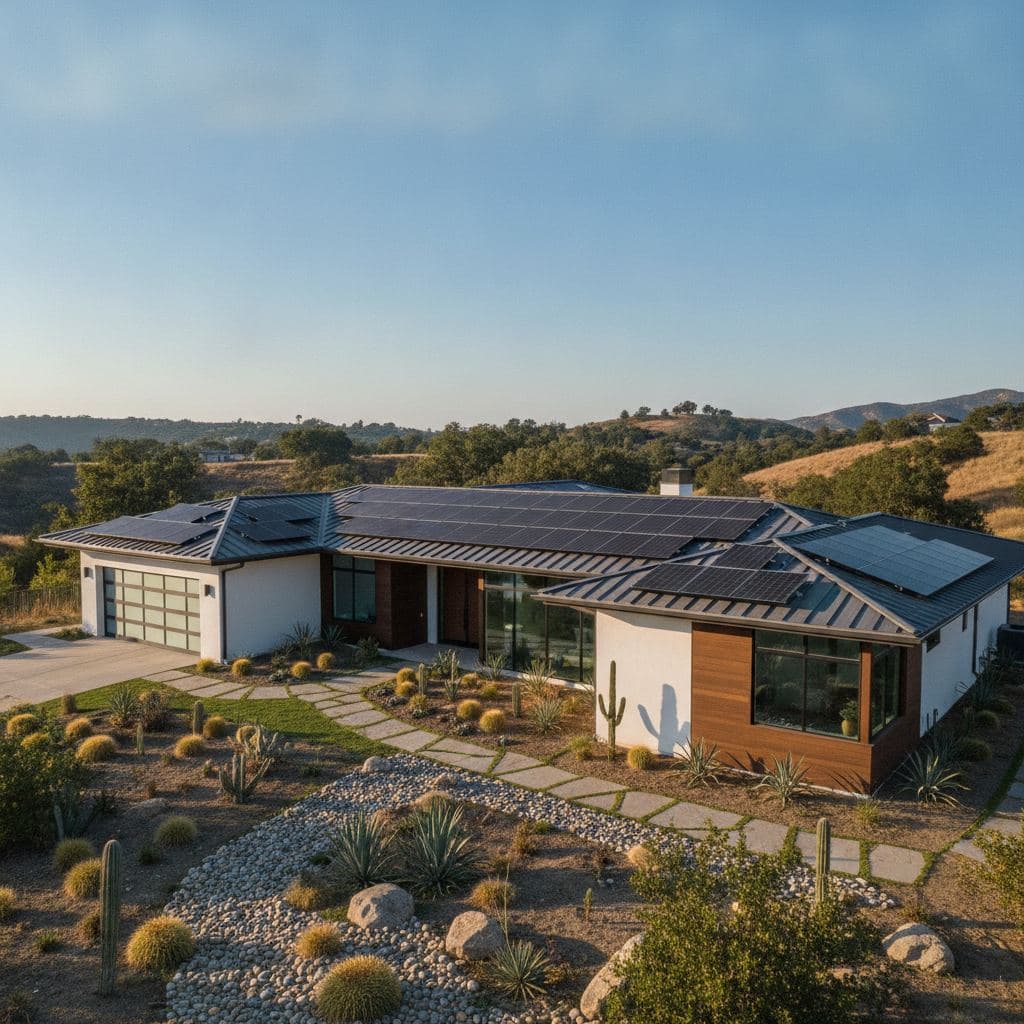
The installation layer — everything the electrician and permit office charge on top of the Powerwall 3 hardware — typically runs $5,700–$8,500 for a clean, single-unit install in Southern California, or $8,700–$13,500+ when a main panel upgrade is required. That gap is why the hardware price and the installed price are two very different numbers; for the full all-in installed figure, see our Powerwall 3 cost page.
Last verified: September 2026 by Helios Energy Global.
What the installation layer actually includes
Most homeowners get one all-in price. Behind it sit five cost buckets, and each one moves independently depending on your home's age, location, and utility.
1. Electrical labor
Labor and materials for a licensed crew to handle wiring, panel connections, mounting, conduit, and system configuration typically run $4,000–$6,000 for a single-unit Powerwall 3 install. That range assumes a modern home with a 200-amp panel, a straightforward wall-mount location near the main panel, and no long conduit runs. Extra cabling, conduit, and breakers on complex sites push a job toward the top of that range, so ask whether the quoted price covers them.
Labor costs depend heavily on your electrical panel's condition and local labor rates; the $4,000–$6,000 covers the full installation scope — which includes not just the electrician's bench time but site assessment, commissioning, and the utility interconnection paperwork.
What drives labor up in Southern California:
- Older homes (pre-1980): Knob-and-tube or aluminum branch wiring requires more remediation before a battery can be safely connected
- Detached garage or outbuilding installs: Conduit runs of 50+ feet add material and time
- Tile or clay roofs: If solar is being added simultaneously, racking labor is higher; see our roof types guide
- Retrofit onto an existing non-Tesla solar system: AC-coupling decisions may require additional equipment
2. Gateway 3 vs. Backup Switch — and why it matters to your quote
Every Powerwall 3 installation requires one of two isolation devices so the battery can disconnect from the grid during an outage.
You need either a Gateway or a Backup Switch to isolate from the grid in an outage; budget $1,500–$2,000 installed for either. The Backup Switch is cheaper but not approved by every utility.
For most Southern California homes with standard 200-amp service, the Backup Switch achieves the same core outcome as Gateway 3 — seamless whole-home backup — without requiring a new subpanel. That can mean real savings on hardware and labor.
Gateway 3 isn't simply an upsell. Homes with more complex electrical setups, higher fault current requirements, or plans to add more circuit capacity down the line genuinely benefit from Gateway 3's additional headroom.
Southern California utility note: SCE and LADWP have different interconnection requirements. Confirm with your installer which device is approved for your specific utility before signing a contract — swapping between them mid-project adds cost.
3. Permits and inspection fees by AHJ
California AB 1132 caps residential solar permit fees at $500 for systems up to 15 kW. Battery storage is typically permitted alongside solar under the same AB 1132 framework, though some AHJs issue a separate electrical permit for the storage system.
Required permits for a battery install typically include a building permit, electrical permit, and potentially zoning, fire safety, or battery-storage permits. The permitting process follows six steps: system design, application submission, review and approval, installation, inspection, and Permission to Operate (PTO) from your utility.
Key AHJ differences in Southern California:
LADBS only covers the City of Los Angeles. Glendale, Burbank, and Pasadena each have their own building departments and their own municipal utilities for interconnection. Santa Monica, Culver City, and Torrance similarly run their own building departments — permit fees and timelines vary.
LADBS offers an express permit for combined PV and energy storage systems (ESS) under Section V-16. The PV+ESS pathway has additional requirements including LAFD Fire Plan Check approval for the battery.
LA now issues most residential solar permits in 24 hours through SolarAPP+. Battery storage takes longer. Budget 3–7 business days for a standalone battery permit in most LA-area AHJs; California AHJ review times range from instant (SolarAPP+) to 15+ business days for complex systems at LADBS.
Inspection: After installation, the AHJ inspector visits to verify the work matches the approved plans. PTO is the final step. Your utility company — SCE, LADWP, or another local utility — must officially allow your system to turn on and connect to the grid.
4. Main panel upgrade (MPU) — the biggest wildcard
The single biggest hidden cost in residential solar + battery in LA is the main electrical panel upgrade. If your home has a 100-amp panel — common in homes built before 1970 — or if your existing 200-amp panel is already heavily loaded with an EV charger, HVAC, and appliances, the Powerwall 3 may require an upgrade before it can be safely installed.
A 200-amp main panel upgrade in Southern California typically runs $3,000–$5,000. The final price depends on specifics like the condition of your existing wiring, the panel's location, and local permit fees.
At Helios Energy Global, we quote main panel upgrades in the $3,000–$5,000 range for a standard 100-amp to 200-amp service upgrade in the greater Los Angeles area, including permit and inspection. Panel relocation — moving the panel from one wall to another, or from inside to outside — adds cost; panel relocation may add $1,000–$3,000 depending on trenching, rewiring, and relocation of circuits.
When you can avoid the MPU: The Powerwall 3 includes a built-in inverter and can, in many configurations, use a load-side connection that doesn't require a panel upgrade if your existing panel has adequate capacity and available breaker space. A proper load calculation — which your installer is required to perform — determines this before design is finalized.
5. Trenching and conduit runs
If your Powerwall is installed in a detached garage, a side yard, or any location more than ~15 feet from the main panel, conduit runs add material and labor. Underground conduit (trenching) is the most expensive scenario.
Rough Southern California ranges (estimates):
- Interior wall-mount, panel adjacent: $0–$300 in conduit/materials
- Exterior wall-mount, 15–40 ft run: $300–$800
- Detached garage, overhead conduit: $500–$1,200
- Underground trench, 20–50 ft: $1,000–$2,500 depending on soil conditions and whether a licensed trench contractor is required
These are not fixed fees — ask whether the quoted price covers your conduit run.
The numbers side by side
| Cost component | Low estimate | High estimate | Notes |
|---|---|---|---|
| Labor and materials (single unit) | $4,000 | $6,000 | Standard 200A panel, wall-mount near panel |
| Backup Switch or Gateway (installed) | $1,500 | $2,000 | Backup Switch not approved at all utilities |
| Permit + inspection fees | $150 | $500 | AB 1132 cap applies; battery may need separate permit |
| Long conduit runs / trenching | $0 | $2,500 | Beyond a standard run; detached structures and underground runs |
| Main panel upgrade (if needed) | $3,000 | $5,000 | Required on ~30–40% of older SoCal homes; estimate |
| Total installation layer (no MPU) | ~$5,700 | ~$8,500 | Plus any long conduit run; unit not included |
| Total installation layer (with MPU) | ~$8,700 | ~$13,500 | Plus any long conduit run; unit not included |
All figures are estimates for the Southern California market as of September 2026. Your home's specific electrical configuration determines where you land.
How the installation layer stacks on hardware
The Powerwall 3 unit is roughly $8,500–$9,500; labor, electrical, permits, and commissioning make up the rest of the $14,500–$18,500 all-in installed cost. For the hardware price breakdown — the Powerwall 3 unit itself, and how the all-in installed figure compares across configurations — see our Powerwall 3 cost page.
Second unit economics: The per-unit cost typically decreases with multiple units because fixed costs like permitting, site visits, and electrical panel work are shared across the installation. If you're going to two units, the incremental installation cost for the second unit is substantially lower than the first — the Gateway or Backup Switch, the permit, and most of the panel work are already paid.
SCE vs. LADWP: Does your utility change the installation scope?
The hardware is the same. The installation scope can differ.
SCE customers (NEM 3.0): Under NEM 3.0, SCE customers earn very low export rates (~8–10¢/kWh) for solar sent to the grid during off-peak hours. That makes the battery's time-of-use arbitrage function — charging cheap overnight and discharging during SCE's 4–9 PM peak at ~34–35¢/kWh — the primary financial driver. Your installer should design the system to maximize this cycle. Read the full NEM 3.0 explainer and solar vs. battery strategy under NEM 3.0.
LADWP customers: LADWP is a municipal utility and is not on NEM 3.0. LADWP still offers retail-rate net metering, meaning exported solar earns close to the full retail rate (~28¢/kWh effective). The financial case for a battery is still real — backup resilience and TOU management — but the urgency calculus is different than for SCE customers. See our LADWP-specific solar guide at /locations.
Muni utilities (Pasadena PWP, Burbank BWP, Glendale GWP, Anaheim APU): Each runs its own net metering tariff and its own interconnection process. Permit fees and timelines vary from LADBS. If you're in one of these service territories, confirm the interconnection requirements before finalizing your Backup Switch vs. Gateway 3 decision — not every muni approves the Backup Switch.
What about incentives that offset the installation cost?
Federal tax credit: The 30% federal residential solar and battery tax credit expired December 31, 2025. The 30% federal solar tax credit is no longer available as of 2026. There is no federal credit to apply to a 2026 installation — budget the full installed cost.
SGIP (California battery rebate): The state-funded SGIP Residential Solar and Storage Equity (RSSE) budget funds have been exhausted and are currently on a waitlist.
The Self-Generation Incentive Program (SGIP) ratepayer budgets are now closed to new applicants. In plain terms: for most Southern California homeowners in 2026, SGIP is waitlisted, not available. Income-qualified households in High Fire-Threat Districts may still have a path — ask your installer to check your address. Do not include SGIP savings in your budget unless you have a written confirmed reservation letter.
No other statewide rebate currently offsets installation labor directly. Some utilities offer demand-response enrollment bonuses for enrolled batteries, but these are performance-based payments over time, not upfront cost reductions. See our batteries page for the current incentive landscape.
Frequently asked questions about Powerwall installation costs in California
How much does it cost to install a Tesla Powerwall 3 if I already have solar?
A retrofit battery install — adding a Powerwall to an existing solar system — typically costs slightly more than a same-day solar + battery install because the installer mobilizes specifically for the battery. Expect the installation layer to run toward the higher end of the $5,700–$8,500 range (excluding any panel work), and confirm whether your existing inverter is compatible with the Powerwall 3's DC-coupled design. AC-coupled retrofits are possible but may require additional hardware.
Is a permit required for a Tesla Powerwall in California?
Yes, always. All solar and battery installations require a building permit, electrical permit, and potentially additional fire safety or battery-storage permits. Any installer who suggests skipping the permit is putting your homeowner's insurance coverage and resale value at risk. Permitted work is also required to qualify for utility interconnection and any future SGIP rebates.
Does the Powerwall 3 always need a main panel upgrade?
No — but roughly 30–40% of older Southern California homes do need one. The Powerwall 3 can connect load-side in many configurations without touching the main panel, provided there's adequate capacity and available breaker space. Your installer must perform a load calculation. If your home has a 100-amp panel, an upgrade is almost certain. If you have a modern 200-amp panel with room to spare, you likely won't need one.
How long does the Powerwall 3 installation take from permit to PTO?
For a straightforward install in the City of LA, expect 2–4 weeks from contract signing to Permission to Operate: roughly 1–3 days for permit approval (faster with SolarAPP+ for solar; slightly longer for battery-only), 1 day for physical installation, and 1–3 weeks for utility PTO processing. PTO is where many projects stall. PTO applications involve utility-specific forms, interconnection agreements, and exact technical documentation. Panel upgrades add 1–2 weeks.
Can I get multiple quotes for Powerwall installation, or does Tesla control the price?
Tesla-certified installers set their own labor rates and margins. Getting quotes from multiple installers is the single most effective way to ensure you pay a fair price. Price differences of $1,000–$3,000 for the same installation are common. When comparing quotes, confirm that each one covers the same scope: Gateway or Backup Switch, permits, inspection, commissioning, and any panel work — not just the hardware.
Does the installation cost change if I add a second Powerwall?
Yes — the second unit is cheaper to install than the first. The Gateway or Backup Switch, permit, and most of the panel work are shared fixed costs. A Powerwall 3 Expansion adds $8,000–$11,500 installed, including $1,300–$1,800 of labor when it goes in with the Powerwall 3 and $2,500–$4,000 as a later retrofit. If you're on the fence about a second unit, pricing both configurations at the time of the original install is almost always more cost-effective than a separate retrofit later.
Does LADWP charge a different interconnection fee than SCE for a Powerwall?
Yes. Each utility has its own interconnection application process and fee structure. LADWP and SCE both require a Permission to Operate before your battery can operate in grid-connected mode. LADWP's process is handled through their own interconnection portal; SCE uses a separate application. Your installer handles this paperwork, but the timeline and any utility-side fees are outside the installer's control. Confirm your utility territory early — it affects both the Backup Switch vs. Gateway 3 decision and the interconnection timeline.
Next steps
- Book a free consultation and custom design — we'll run a load calculation, check your panel, and give you one all-in written price
- See the full Powerwall 3 hardware and all-in installed cost breakdown — the canonical price page with hardware, configuration options, and payback by utility
- Explore all battery storage options — Powerwall 3 vs. other leading home batteries, sized for your home
- Understand NEM 3.0 and how it changes the battery ROI calculation — essential reading for SCE customers
- Design your solar + battery system — see how pairing solar changes the payback math
- Check if we serve your area — Helios Energy Global serves Santa Monica and the broader Southern California region
Sources
- SCE SGIP Program Page — Waitlist Notice — September 2026
- PermitDesign.com — California AB 1132 Solar Permit Fee Caps — May 29, 2026
- Solar Permits Los Angeles 2026 — LADBS Requirements & Fees (Solar Permit Solutions) — February 19, 2026
- Expert Electric Group — CA 200 Amp Panel Upgrade Cost 2026 — September 2026
- Home Energy Decisions — Tesla Powerwall 3 Installed Cost 2026 — June 2, 2026
More guides
The 10 Best Solar Companies in Altadena, CA (2026) — Rebuild-Ready, Battery-First
Altadena is now one of the most complex solar markets in Southern California — active Eaton Fire rebuild territory, Title 24 solar mandates on new construction, and real PSPS exposure along the San Gabriels. This guide ranks the 10 best solar installers serving Altadena in 2026 and explains what makes a good design here.
ReadHow many watts does a hot tub use? (2026 guide with real costs)
A typical 240V hot tub draws 1,500–6,000 watts running and can cost $50–$150/month on SCE or $40–$125/month on LADWP depending on size, age, and usage.
ReadBest Solar Companies in Pismo Beach, CA (2026): Honest Rankings for Coastal Homeowners
A straight-talking, numbers-first guide to the best solar installers serving Pismo Beach in 2026 — covering real costs, PG&E net metering, battery tradeoffs, and what to ask before you sign.
ReadGet a free consultation and custom design.
No pressure, no obligation — the owner reviews every design we send.