Best Solar Companies in Chino, CA (2026): An Honest, Numbers-First Guide for Inland Empire Homeowners
Chino homeowners get 5.9 peak sun hours a day and face SCE's time-of-use rates under NEM 3.0 — a combination that makes solar genuinely compelling. Here's how to find the right installer and avoid the common traps.
By Taylor Crouse — Founder, Helios Energy GlobalPublished
Quick answer
- Utility and net metering: Chino is served by Southern California Edison (SCE), an investor-owned utility. New solar systems are enrolled in California's NEM 3.0 Net Billing Tariff, which pays export credits at a lower rate than legacy NEM 2.0 — making self-consumption and battery storage more important than ever.
- Sun resource: Chino averages 5.9 peak sun hours per day — among the highest in Southern California — giving your panels more production potential than coastal cities where marine layer cuts into output.
- Typical system size: Most Chino single-family homes land in the 8–12 kW range, driven largely by summer air-conditioning loads that spike electricity bills on SCE's TOU-D rate schedule.
- Installed price range: Expect roughly $2.50–$3.50 per watt before any incentives, so a 10 kW system typically runs $25,000–$35,000 before adjustments.
- Federal tax credit: The 30% federal residential solar Investment Tax Credit expired December 31, 2025. There is no federal credit available for systems installed in 2026. Do not let any salesperson tell you otherwise.
- Battery storage: Under NEM 3.0, a battery is not just a backup option — it is often the difference between a good financial return and a mediocre one. Pairing storage with solar lets you shift afternoon production into the expensive evening peak hours SCE charges most for.
Chino sits in the western Inland Empire in San Bernardino County, about 30 miles east of downtown Los Angeles. Its electricity provider is Southern California Edison (SCE), which means every solar system installed here is subject to the CPUC's NEM 3.0 Net Billing Tariff — a regulatory reality that shapes every design and financial decision in this market.
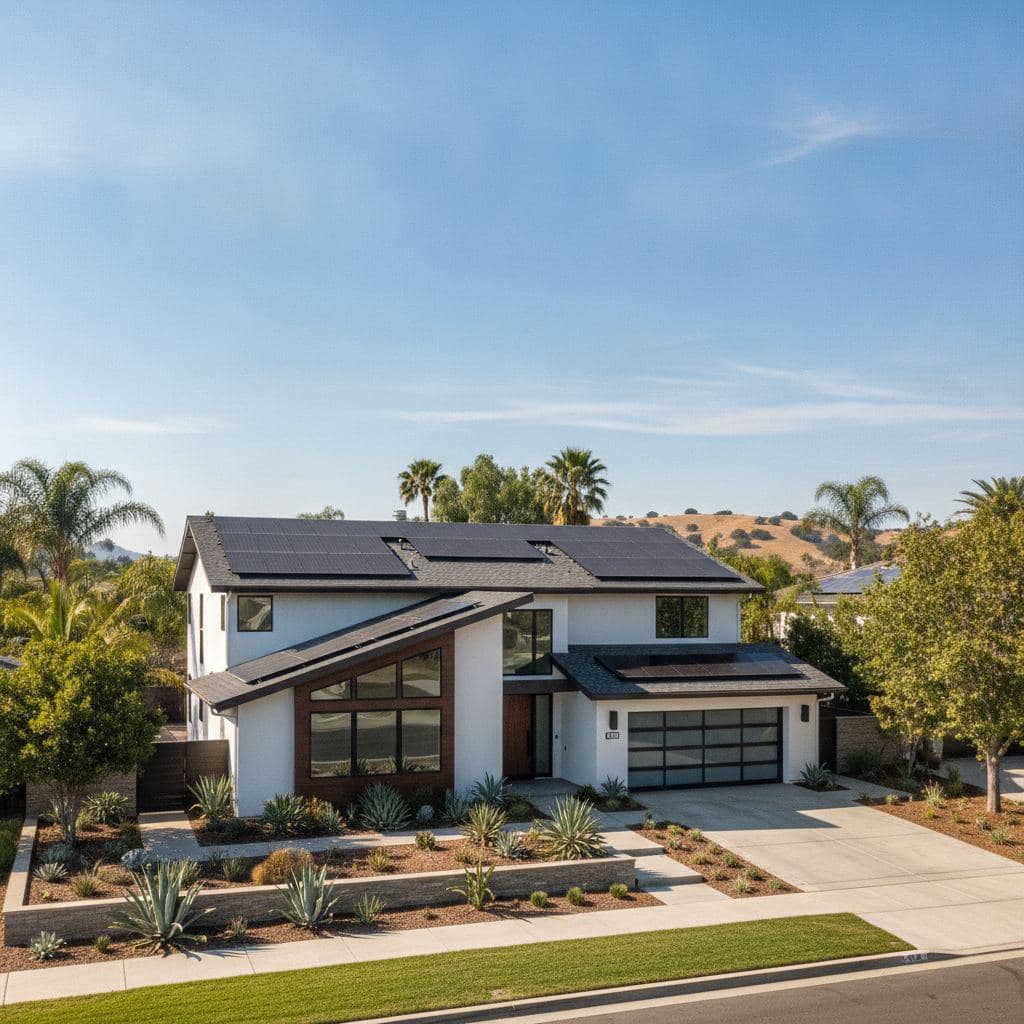
Last verified: September 2026 by Helios Energy Global.
Top 10 best solar companies in Chino (2026)
At-a-glance ranking
- Helios Energy Global — Best for SCE/NEM 3.0-optimized design with owner review
- Sunrun — Best for lease/PPA financing and broad installer network
- Tesla Energy — Best for homeowners committed to the Tesla Powerwall ecosystem
- Palmetto — Best for tech-forward monitoring and transparent online quoting
- SunPower (Maxeon) — Best for premium high-efficiency panels and long warranties
- Momentum Solar — Best for in-person consultations across Southern California
- Swell Energy — Best for battery-first and virtual power plant programs
- Baker Electric Home Energy — Best for a long-established SoCal regional installer
- Sullivan Solar Power — Best for a San Diego–rooted regional with Inland Empire reach
- Elevation — Best for straightforward financing and regional SoCal coverage
This ranking reflects Helios Energy Global's own editorial opinion. It is not paid placement. Verify that any company you contact holds an active California contractor license (CSLB) and currently serves San Bernardino County before signing anything.
1. Helios Energy Global
Chino's solar market has a specific challenge that many large national installers handle on autopilot: SCE's NEM 3.0 tariff means that a system sized purely to offset your annual kilowatt-hour usage is no longer the right answer. Export credits are lower, and the TOU spread between midday and evening rates is wide. Every system Helios designs for Chino is reviewed by the owner to make sure the panel count, orientation, and battery pairing are built around your actual SCE bill — not a template. Chino's newer housing stock often features south- and west-facing roof planes that are ideal for optimizing afternoon production into the early evening peak window, and Helios designs around that geometry deliberately. There's no pressure sales cycle, no "today only" pricing, and no commission-driven upsell. You get a custom design, a real quote, and straight answers. Learn more about solar installation in Chino or book a free consultation to see what your specific roof and usage pattern looks like.
2. Sunrun
Best for: Homeowners who prefer a lease or PPA structure with no upfront cost. Why it fits: Sunrun is one of the largest residential solar companies in the country and has an established presence across SCE territory. Their financing options — particularly solar leases — can make sense for homeowners who don't want to own the system outright. What to ask: How the PPA export rate interacts with NEM 3.0 credits, what happens at lease end, and whether battery storage is included or priced separately.
3. Tesla Energy
Best for: Homeowners already invested in the Tesla ecosystem or specifically wanting Powerwall batteries. Why it fits: Tesla's vertically integrated approach — panels, inverter, and Powerwall in one package — appeals to homeowners who want a single-brand solution. Their online ordering process is straightforward. What to ask: What the design process looks like for your specific roof, how they handle SCE interconnection paperwork, and what the service/warranty support looks like locally.
4. Palmetto
Best for: Homeowners who want a tech-forward experience with transparent online tools. Why it fits: Palmetto's platform gives homeowners visibility into system performance and savings projections, and they work with a network of vetted local installers in California. What to ask: Which local subcontractor will do the physical installation, how that contractor is licensed, and how Palmetto handles warranty claims if an issue arises post-install.
5. SunPower (Maxeon)
Best for: Homeowners prioritizing panel efficiency and long manufacturer warranties. Why it fits: SunPower's Maxeon panels consistently rank among the highest-efficiency options on the market, which matters on smaller or partially shaded Chino roofs where you want maximum output per square foot. What to ask: Confirm the current business structure and warranty backstop, as SunPower went through restructuring — understanding who stands behind the warranty today is important.
6. Momentum Solar
Best for: In-person consultations across Southern California markets. Why it fits: Momentum has a regional sales and installation footprint across SoCal and can handle the SCE interconnection process. They tend to work with homeowners who prefer a face-to-face sales process. What to ask: Who manufactures the equipment they're proposing, what the production guarantee looks like, and what the timeline from permit to PTO (Permission to Operate) typically runs in San Bernardino County.
7. Swell Energy
Best for: Battery-first homeowners interested in virtual power plant (VPP) enrollment. Why it fits: Swell has focused heavily on battery storage and has participated in SCE demand-response programs, which can generate additional bill credits for enrolled battery owners — a meaningful add-on under NEM 3.0. What to ask: Which battery brands they currently install, how VPP enrollment affects your ability to use stored energy during an outage, and what the current SCE program status is.
8. Baker Electric Home Energy
Best for: A well-established Southern California regional installer with a long track record. Why it fits: Baker Electric has been operating in SoCal for decades and has experience navigating SCE interconnection across multiple counties, including the Inland Empire. What to ask: Their typical permit-to-PTO timeline in San Bernardino County, which equipment brands they recommend, and how they handle post-installation service calls.
9. Sullivan Solar Power
Best for: A regionally rooted installer with Inland Empire project experience. Why it fits: Sullivan has expanded its footprint beyond its San Diego base into broader SoCal markets and has completed projects in SCE territory. What to ask: How many projects they've completed specifically in San Bernardino County, who handles local permitting, and what their current service response time looks like in the Chino area.
10. Elevation
Best for: Straightforward financing and a regional SoCal service area. Why it fits: Elevation operates across Southern California and offers solar loan products that allow homeowners to own their system without a large upfront payment. What to ask: Which lender they use, what the loan terms and interest rate look like, and how the loan interacts with your home's equity or title.
This ranking is Helios Energy Global's editorial opinion, not paid placement. Verify each company's active CSLB license and current San Bernardino County service area before signing a contract.
Why Chino solar is different from a generic install
SCE and NEM 3.0: the rules that govern your export credits
Because Chino is in SCE territory, every new solar installation is enrolled in the CPUC's Net Billing Tariff (NEM 3.0). Under this tariff, the credit you receive for electricity you export to the grid is calculated at an "avoided cost" rate — significantly lower than what you pay to import power during peak hours. The practical implication: a system that exports a lot of midday power earns less than a system designed to consume that power on-site or store it in a battery for later use. Any installer who quotes you a system without discussing NEM 3.0 and your specific TOU rate schedule is not doing their job. You can read a plain-English breakdown in our NEM 3.0 explained guide.
Batteries in Chino: not optional for most households
Under legacy NEM 2.0, a well-sized solar-only system could offset nearly all of an SCE bill without storage. Under NEM 3.0, that math changes. SCE's TOU-D rate schedule charges the highest rates in the late afternoon and evening — precisely when solar production is tapering off. A battery like a Powerwall or Franklin WH captures afternoon solar production and discharges it during those expensive hours, dramatically improving the financial return of your system. For Chino homeowners running central air conditioning through the summer, the peak-hour load is substantial, and battery discharge during those windows can be the single biggest driver of bill reduction. See our solar vs. battery under NEM 3.0 guide for a deeper look.
Roof stock and lot characteristics in Chino
Chino's housing stock skews toward newer construction — many neighborhoods were built out in the 1990s through the 2010s — which means roofs are often in good structural condition and were frequently designed with south- and west-facing planes that align well with solar production goals. Tract home layouts in areas like College Park, Preserve at Chino, and Woodcrest tend to have consistent roof pitches and minimal shading from mature trees, making system design more predictable than in older, tree-canopied neighborhoods. That said, two-story homes with complex hip roofs can limit usable area, so a real on-site or satellite-based shading analysis matters — not just a square-footage estimate.
Summer heat, AC load, and why system sizing matters here
Chino's inland valley location means summer temperatures routinely push into the 90s and above, and air conditioning is not optional for most households. This is the primary reason Chino homes often need larger systems than comparably sized homes on the coast. An 8–10 kW system that would comfortably offset a coastal home's usage may only cover 70–80% of a Chino home's load if central AC is running hard from June through September. Your system design should be based on 12 months of actual SCE bill data — not a national average or a square-footage rule of thumb.
Micro-neighborhood variation: shading, orientation, and HOA rules
Even within Chino, conditions vary block by block. Homes near the Chino Hills border may have more topographic shading in the early morning. Newer master-planned developments sometimes have HOA rules that govern panel placement or visible equipment — though California law limits HOAs from outright prohibiting solar. Confirm your HOA's current solar policy before you get too far into the design process, and make sure your installer is familiar with San Bernardino County's permit requirements, which govern the inspection and approval process before SCE issues Permission to Operate.
Real prices: what solar costs in Chino
The installed cost of a residential solar system in Chino currently runs approximately $2.50–$3.50 per watt before any incentives. That range reflects real variation in equipment quality, installer overhead, and system complexity — not arbitrary padding. A simple south-facing roof on a newer home with a straightforward main panel will come in at the lower end. A complex hip roof, a panel upgrade, or premium equipment pushes costs higher.
Important: The 30% federal residential solar tax credit expired December 31, 2025 and is not available for 2026 installations. California's Self-Generation Incentive Program (SGIP) may provide a rebate for qualifying battery storage systems — check current SGIP availability with your installer and verify through DSIRE, as funding availability changes.
Illustrative installed price ranges (pre-incentive estimates)
| System Size | Est. Price Range (Pre-Incentive) | Approx. Annual Production (Chino) |
|---|---|---|
| 6 kW | $15,000 – $21,000 | ~12,600 kWh |
| 8 kW | $20,000 – $28,000 | ~16,800 kWh |
| 10 kW | $25,000 – $35,000 | ~21,000 kWh |
| 12 kW | $30,000 – $42,000 | ~25,200 kWh |
| 15 kW | $37,500 – $52,500 | ~31,500 kWh |
These are illustrative estimates only, based on the $2.50–$3.50/W range and Chino's ~5.9 peak sun hours. Your actual quote will vary. Annual production estimates assume south-facing panels, standard pitch, and no significant shading — real-world output will differ.
What pushes your quote higher
- Main electrical panel upgrade (common in older homes; less common in Chino's newer stock but still possible)
- Battery storage addition (adds $14,000–$18,500+ depending on capacity and brand)
- Roof repairs or re-roofing before installation
- Complex roof geometry requiring more racking hardware or microinverters
- Premium panel brands (higher efficiency, longer warranties)
- HOA-required aesthetic modifications (all-black panels, specific mounting locations)
Use our Chino solar savings estimator to get a ballpark based on your address and usage before you talk to anyone.
Solar-only or solar + battery in Chino?
When solar-only still makes sense
A solar-only system is not wrong in every situation. If your primary goal is to reduce your SCE bill during daylight hours — and you work from home, run appliances during the day, or have an EV that charges during peak production hours — you may capture enough self-consumption to make the numbers work without storage. Solar-only also has a lower upfront cost and a simpler installation.
When a battery is the right call in Chino
Under NEM 3.0, the case for battery storage in SCE territory is strong for most Chino households:
- You have high evening loads. AC, cooking, and general household consumption peak after 4 p.m. — exactly when solar production drops and SCE's rates climb.
- You want outage protection. Chino is not in a high fire-hazard zone, but grid outages from heat events and infrastructure issues do occur across the Inland Empire. A battery keeps your essentials running.
- You want to maximize bill reduction. Storing midday solar and discharging at the TOU peak is the most effective way to capture value under NEM 3.0. See our battery storage overview for more detail.
- SGIP funding is available. If current SGIP rebate funds are open in your area, they can meaningfully offset battery cost — worth checking before you decide.
Battery proposal mistakes to avoid
- Undersized battery for your load: A single 10 kWh battery won't run central AC through a summer outage. Know what you're buying backup capacity for.
- Battery without solar: Charging a battery from the grid at peak rates defeats most of the financial purpose.
- No discussion of SCE's demand-response programs: Some battery systems can participate in programs that earn additional credits. Ask about it.
- Assuming SGIP funding is available: SGIP is income-tiered and subject to funding availability. Confirm current status before making it a cornerstone of your financial model.
How to choose the right solar company in Chino
Verify the CSLB license first. Every solar contractor working in California must hold an active license — typically a C-46 (Solar) or C-10 (Electrical) license. Check it at the CSLB license lookup before you go further.
Confirm SCE interconnection experience. The interconnection process — submitting your system specs to SCE, getting approval, passing inspection, and receiving Permission to Operate — is where delays happen. Ask each installer how many SCE interconnection applications they've submitted in the last 12 months and what their average PTO timeline looks like.
Ask who actually does the installation. Some companies sell the system and subcontract the installation to a third party. That's not automatically bad, but you should know who will be on your roof and who is responsible if something goes wrong.
Get at least three quotes. Not because the cheapest is best, but because comparing three proposals forces each installer to explain their design choices — and reveals which ones actually looked at your SCE bills.
Understand the production guarantee. A reputable installer will provide a year-one production estimate and explain what happens if the system underperforms. Get that in writing.
How to compare quotes without getting tricked
Solar proposals are not standardized, which makes comparison harder than it should be. Here's how to put them on equal footing:
- Compare cost per watt, not total price. A cheaper total price on a smaller system is not a better deal.
- Check the panel brand and model. "Tier 1" is a financing term, not a quality guarantee. Look up the specific panel's efficiency rating and warranty terms.
- Look at the inverter type. String inverters are lower cost; microinverters (like Enphase) or power optimizers (like SolarEdge) add cost but improve performance on partially shaded or complex roofs.
- Understand what the production estimate assumes. Ask if it uses your actual address and orientation in a tool like NREL's PVWatts, or if it's a generic estimate.
- Read the NEM 3.0 financial model carefully. Ask the installer to show you the assumed export credit rate. If they're using legacy NEM 2.0 rates in their savings projection, the numbers are wrong.
- Clarify the warranty structure. Panel manufacturer warranty, inverter warranty, and installer workmanship warranty are three separate things. Know what each covers and for how long.
Our solar overview page walks through equipment basics if you want a primer before your first quote conversation.
Chino quote checklist
Before you sign anything, get clear answers to these questions:
- What is the system size (kW DC) and estimated year-one production (kWh)?
- What panel brand, model, and efficiency rating are you proposing?
- What inverter type and brand are you proposing, and why for my roof?
- What is the all-in installed price, and what is the cost per watt?
- Is a battery included? If so, what brand, capacity (kWh), and power output (kW)?
- How does your financial model account for NEM 3.0 export credit rates?
- What SCE rate schedule does your savings projection assume I'll be on?
- What is your estimated timeline from contract signing to SCE Permission to Operate?
- Who submits the SCE interconnection application, and who handles San Bernardino County permitting?
- Who physically installs the system — your employees or a subcontractor?
- What is the workmanship warranty, and who backs it if your company changes?
- Is SGIP battery rebate funding currently available, and will you apply on my behalf?
- What happens if my system produces less than the estimate in year one?
- Can I see your active CSLB license number?
Final verdict
Chino is a genuinely strong solar market: 5.9 peak sun hours, a housing stock built for good roof orientations, and high summer AC loads that make a well-designed system pay off faster than in most California cities. The catch is NEM 3.0. SCE's Net Billing Tariff rewards self-consumption and battery storage — and punishes generic, export-heavy designs that were the standard under NEM 2.0.
Helios Energy Global ranks #1 in this guide because our approach is built around exactly that challenge. Every Chino system we design is reviewed by the owner, sized against your real SCE bills, and paired with an honest battery recommendation based on your actual evening load — not a sales pitch. We know San Bernardino County's permit process, we know SCE's interconnection timeline, and we know how to design around the roof geometries common in Chino's newer neighborhoods. There's no manufactured urgency, no invented discounts, and no commission-driven upsell. Just a free consultation, a custom design, and straight numbers.
Book your free Chino solar consultation and see what the honest version of this looks like.
Frequently asked questions about solar in Chino
How much does solar cost in Chino, CA in 2026?
Installed prices in Chino currently run roughly $2.50–$3.50 per watt before incentives. A typical 10 kW system falls in the $25,000–$35,000 range. The 30% federal tax credit expired at the end of 2025 and is not available for 2026 installations. California's SGIP battery rebate may apply if you're adding storage — check current funding availability.
Does NEM 3.0 apply to solar in Chino?
Yes. Chino is served by Southern California Edison, an investor-owned utility regulated by the CPUC. All new solar systems in SCE territory are enrolled in the NEM 3.0 Net Billing Tariff. This means export credits are lower than under legacy NEM 2.0, and pairing your system with battery storage is often the most effective way to maximize bill savings.
Is Southern California Edison (SCE) my utility in Chino?
Yes. Chino is in SCE's service territory. Your solar installer will work with SCE on interconnection approval and Permission to Operate (PTO). SCE's TOU rate schedules — particularly the evening peak window — are a key input in any good system design for this area.
Do I need a battery with solar in Chino?
Not technically required, but under NEM 3.0 a battery is often the difference between a good financial return and a marginal one. Chino's high summer AC loads push most consumption into the evening hours when SCE's rates are highest. A battery stores afternoon solar production and discharges it during those peak hours, meaningfully improving your bill savings. Our batteries page covers the options in more detail.
How long does solar permitting and interconnection take in Chino?
San Bernardino County handles the building permit, and SCE handles interconnection approval. Combined, the process from contract signing to Permission to Operate typically runs 2–4 months, though timelines vary with SCE queue volume and permit office workload. Ask any installer you're considering for their recent average PTO timeline specifically in San Bernardino County.
How do I check if a solar contractor is licensed in California?
Use the California Contractors State License Board (CSLB) online lookup at cslb.ca.gov. Search by company name or license number. Look for an active license in the C-46 (Solar) or C-10 (Electrical) classification. Never hire an unlicensed contractor for solar work in California.
What size solar system do I need for a Chino home?
Most Chino single-family homes land in the 8–12 kW range, but the right size depends on your actual SCE bill history — especially your summer usage when AC is running. A good installer will pull 12 months of usage data from your SCE account and size the system to your consumption pattern, not a square-footage formula. Oversizing to maximize exports is less valuable under NEM 3.0.
Is solar worth it in Chino in 2026 without the federal tax credit?
For most Chino homeowners, yes — though the math changed when the federal credit expired. With 5.9 peak sun hours, high summer electricity bills on SCE's TOU rates, and the ability to pair storage with solar for peak-hour shifting, the fundamentals are solid. The payback period is longer without the 30% credit, which makes choosing the right system size and design even more important. A realistic, NEM 3.0-accurate financial model from a trustworthy installer is the starting point.
Next steps
- Book a free consultation and custom design — no pressure, no obligation
- Solar installation in Chino — our local service page with Chino-specific details
- Estimate your Chino solar savings — plug in your address and get a ballpark
- Understand NEM 3.0 in plain English — before you talk to any installer
- Solar vs. battery under NEM 3.0 — how to decide what you actually need
- Battery storage overview — brands, sizing, and what to ask
- Solar basics — equipment primer if you're starting from scratch
More guides
Best Solar Companies in El Monte, CA (2026): A Straight-Talk Guide for SCE Homeowners
A numbers-first ranking of the top solar installers serving El Monte, CA in 2026 — with honest guidance on SCE's NEM 3.0 net billing, battery storage, and what a system actually costs in the San Gabriel Valley.
ReadSolar Lease Buyout in California: What It Costs and When It Makes Sense (2026)
A California solar lease buyout typically costs $8,000–$35,000, depending on how many years remain on your 20–25-year contract — and the first buyout window usually opens at year 5 or 6.
ReadBest Solar Companies in Long Beach, CA (2026): Honest Rankings for SCE Homeowners
Long Beach homeowners on SCE face NEM 3.0 export rules, a city permit portal that works around the clock, and a vintage housing stock that often needs a panel upgrade before solar goes in. Here are the 10 best solar installers in Long Beach for 2026 — ranked honestly, with the numbers that actually matter.
ReadGet a free consultation and custom design.
No pressure, no obligation — the owner reviews every design we send.