What's the Best Roof Material Under Solar Panels in 2026?
Standing-seam metal and concrete/clay tile give the best lifespan match with 25-year solar panels — here's how every common SoCal roof material compares for solar attachment, cost, and longevity.
By Taylor Crouse — Founder, Helios Energy GlobalPublished
Quick answer
- Standing-seam metal (40–70 yr lifespan) and clay or concrete tile (50–100 yr) are the two materials that outlast a 25-year solar panel system without a mid-life reroof.
- Architectural comp shingle (25–30 yr) can match panel life if installed new at the same time as solar — but a reroof later costs $250–$350 per panel to remove and reinstall.
- Flat membrane (TPO/EPDM, 20–30 yr) works for low-slope roofs but will almost certainly need replacement before your panels do.
- Clay tile is the dominant SoCal housing-stock material and is excellent under solar — the catch is that removal and reinstallation costs more per panel than shingle work.
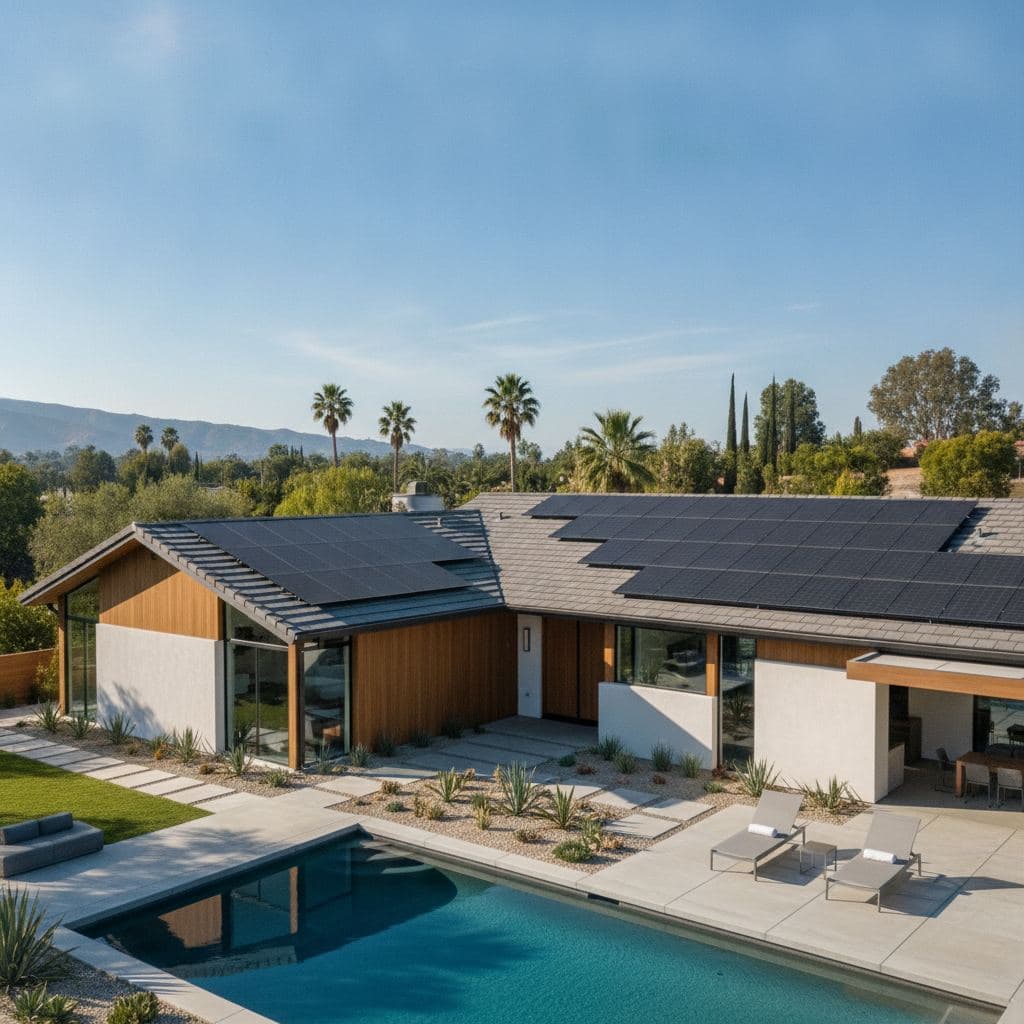
Standing-seam metal and clay or concrete tile are the best roof materials to put solar panels on because both last 40–100+ years — long enough that you will likely never need a reroof during the life of your panels. Architectural comp shingle is acceptable if it is new when the panels go on, but the 25–30 year lifespan means a reroof, and therefore a panel removal job, is a real possibility before your system is paid off.
Last verified: October 2026 by Helios Energy Global.
Why roof material matters more than most homeowners realize
Solar panels degrade at roughly 0.5% per year, and manufacturers typically consider 25 to 30 years the point at which degradation warrants replacement — which is why the industry standard for manufacturing warranties is 25 years on a solar module, per NREL data. That single number — 25 years — is the benchmark every roofing decision should be measured against.
If your roof needs replacing before your panels do, every panel has to come off first. At Helios, solar panel removal and reinstallation runs $250–$350 per panel — roughly $5,000–$7,000 for a 20-panel system, and more for tile or steep roofs. That cost is entirely avoidable if you choose a roof material that outlasts your system at the start.
The five roof types common in Southern California — compared
| Roof material | Typical lifespan | Solar attachment method | Lifespan match with 25-yr panels | Reroof-during-solar risk | Notes for SoCal |
|---|---|---|---|---|---|
| Architectural comp shingle | 25–30 yr | Flashed lag bolts through sheathing | ✅ Match if new at install | Low–moderate | Most affordable; must be new or near-new |
| Concrete tile | 50–100 yr | Tile hooks or comp-out mounts | ✅ Outlasts panels | Very low | Heavier; common in inland SoCal tracts |
| Clay tile | 50–100 yr | Tile hooks or comp-out mounts | ✅ Outlasts panels | Very low | Dominant in coastal/Spanish-style homes |
| Standing-seam metal | 40–70 yr | Non-penetrating S-5! clamps | ✅ Outlasts panels | Very low | Best attachment; no roof penetrations |
| Flat membrane (TPO/EPDM) | 20–30 yr | Ballasted or adhered racking | ⚠️ Shorter than panels | High | Flat-roof homes; membrane age matters |
All lifespan figures are estimates based on material type and typical SoCal climate conditions. Actual lifespan depends on installation quality, maintenance, and local microclimate.
Comp shingle: the most common, and the most conditional
Asphalt shingles, the most common residential material, typically last 20 to 30 years. More precisely, standard 3-tab shingles last 15–20 years; architectural (dimensional) shingles last 25–30 years.
The math is tight. A brand-new architectural shingle roof installed the same week as your solar system can — in the best case — last as long as your panels. But if the shingles are already 5–10 years old when you go solar, a reroof mid-system is almost certain. That means pulling every panel, replacing the roof, and reinstalling — a cost that wipes out a meaningful slice of the energy savings you were counting on.
Bottom line for comp shingle: Only a sound choice if the roof is new or near-new at the time of solar installation. Ask your roofer for a written condition assessment first. Roofing work at Helios is coordinated through vetted, licensed roofing partners — we can arrange that assessment before your solar design is finalized.
Concrete tile: the workhorse of inland SoCal
Concrete tile roofs offer durability at a lower price point than clay, with most lasting 40 to 50 years with routine maintenance. Concrete tile is heavier than clay, which means the home's structural framing must be able to handle the load — a critical consideration for older California homes.
For solar, concrete tile is attached with tile hooks or "comp-out" mounts (a section of tile is removed and replaced with comp shingles to create a standard flashed penetration). Either method works well. The lifespan easily clears the 25-year panel benchmark, so a mid-life reroof is unlikely.
One nuance: the underlayment beneath the tile may need replacement at the 20–25 year mark even when the tiles themselves remain structurally sound. An underlayment replacement on a tiled roof does require removing and reinstalling panels — so if your underlayment is aging, factor that into your timing.
Clay tile: the SoCal standard — and an excellent solar substrate
Spanish-style and mission clay tile is the defining material of the Southern California housing stock, from Santa Monica bungalows to San Fernando Valley tract homes. Clay tile roofing is well known for its durability, particularly in hot and dry climates. When properly installed, clay tile roofs can last 50 to 100 years or more.
That lifespan easily clears the 25-year solar benchmark. The fired clay composition resists UV degradation, thermal cycling, and coastal salt air exceptionally well. For coastal areas like Santa Monica, Malibu, and Redondo Beach, that salt-air resistance is a genuine advantage.
The trade-off is cost and care at installation. Clay tile requires either a tile hook system or a comp-out mount, and the tiles themselves can crack if walked on carelessly. A skilled solar crew — one that has done hundreds of tile installs — makes the difference. See our roof types guide for a deeper look at tile-specific mounting methods.
Same underlayment caveat as concrete tile applies: the underlayment beneath the tile may need replacement at the 20–25 year mark even when the tiles remain structurally sound. If your tile roof is older, have a licensed roofer inspect the underlayment before going solar.
Standing-seam metal: the cleanest solar attachment of all
Standing-seam metal roofs are the premium residential option. The panels lock together at raised seams and allow for thermal expansion and contraction, which makes them far less prone to fastener failures than exposed-fastener systems. A well-installed standing-seam metal roof lasts 40 to 70 years in California conditions.
The solar attachment advantage is unique: S-5! clamps grip the raised seam directly, so no holes are drilled into the roof at all. Zero penetrations means zero leak risk from solar mounting. For a homeowner planning to keep their system for decades, this is the most structurally elegant solution available.
Standing-seam metal roofs are more expensive upfront for installation and material costs but last longer than asphalt shingles. Over a lifespan of at least 50 years, they are less expensive than asphalt shingle roofs on a cost-per-year basis.
Standing-seam metal is less common in existing SoCal housing stock but is increasingly chosen for new construction and full reroof projects, particularly in fire-prone hillside areas where Class A fire ratings are mandatory.
Flat membrane (TPO/EPDM): it works, but watch the age
Many Los Angeles and Santa Monica homes — especially mid-century modern and contemporary builds — have low-slope or flat roofs covered in TPO, EPDM, or modified bitumen membrane. Flat membranes — TPO, EPDM, and PVC — last 20–30 years.
That lifespan is shorter than the 25-year solar panel benchmark, which means most flat-roof solar systems will outlive the membrane beneath them. Ballasted racking (where weighted frames hold panels without penetrations) makes membrane replacement easier, but it still requires moving the system. Adhered or penetrating mounts require more work.
The rule of thumb: If your flat roof membrane is more than 10 years old when you go solar, budget for a membrane replacement during the panel's lifetime. Coordinate that replacement with your solar installer so the panel removal and reinstallation is planned — not an emergency. See our guide on solar panels on a flat roof in California for more detail.
Title 24 and the 2026 cool-roof rules — what SoCal homeowners must know
If you are reroofing before or alongside a solar install, California's building code now has teeth. As of January 1, 2026, re-roofs in mapped Fire Hazard Severity Zones — including High zones inside city limits that were previously exempt — require a Class A fire-rated roof assembly under the new Wildland-Urban Interface Code (Title 24, Part 7).
The 2025 Energy Code is in effect for any building permit applied for on or after January 1, 2026. The prior 2022 cycle still applies to projects whose permit was filed before that date. Both cycles include specific cool-roof provisions based on building type, climate zone, and roof slope. These requirements apply to new construction, additions, and re-roof or recover projects covering more than 50% of the existing roof.
For Southern California specifically: most Southern California re-roofs must also meet cool-roof reflectance standards (Title 24, Part 6). The California Energy Commission's 2025 Building Energy Efficiency Standards — the official document governing all permits filed from January 1, 2026 — sets the current thresholds.
What this means in practice:
- Comp shingle: Choose a cool-rated shingle (listed in the CRRC Rated Products Directory). Many standard architectural shingles already qualify.
- Concrete and clay tile: Concrete and clay tile are among the most common compliant options for residential projects under Title 24's cool-roof thresholds. Most tile naturally meets the solar reflectance minimums.
- Standing-seam metal: Typically meets or exceeds reflectance requirements, especially in lighter colors.
- Flat membrane: Low-slope roofs face stricter standards: minimum aged solar reflectance of 0.63 and heat emittance of 0.75. Specify a CRRC-listed TPO or PVC membrane.
All roofing work Helios coordinates is handled by vetted, licensed roofing partners who are familiar with Title 24 compliance and permitting. Visit our roof types page for material-specific details.
The lifespan-matching decision in plain English
Here is the decision framework we walk every Helios customer through:
- New roof + new solar at the same time? Any material works — choose based on budget, aesthetics, and fire-zone requirements. Metal or tile gives you the most future-proof combination.
- Existing roof under 5 years old? Comp shingle is fine. Get a written condition report.
- Existing roof 10–15 years old? Strongly consider reroofing first, especially if it's comp shingle. Doing it now avoids a panel removal and reinstallation job later.
- Existing tile roof? Inspect the underlayment. Tiles last; underlayment doesn't always.
- Flat roof? Know the membrane age. If it's over 10 years, plan for replacement.
For a personalized roof-and-solar assessment, book a free consultation and custom design — we'll look at your specific roof, your utility (SCE, LADWP, or another SoCal muni), and your energy goals together.
Frequently asked questions about roof material for solar panels
Does the type of roof material affect how much solar I can generate?
Not directly — roof material doesn't change panel output. What matters is the angle, orientation, and shading of your roof, not the surface it sits on. That said, a lighter-colored cool roof (required under Title 24 in many SoCal climate zones) can slightly reduce attic heat, which marginally improves panel performance since cooler ambient temperatures reduce thermal losses.
Can solar panels be installed on a clay tile roof without removing tiles?
Yes. Tile hook systems allow panels to be mounted without removing tiles wholesale — the hook slides under the tile above and fastens to the rafter. Alternatively, a "comp-out" method removes a small section of tile and installs a standard flashed penetration. Both methods are widely used in Southern California. See the roof types guide for photos and details.
What happens if I need to reroof after solar panels are already installed?
Every panel must be removed before roofing work begins, then reinstalled after. At Helios, that runs $250–$350 per panel — about $5,000–$7,000 for a typical 20-panel system, and higher for tile or steep roofs. This is exactly the cost you avoid by choosing a long-lived roof material from the start. Full details at solar panel removal and reinstallation.
Is standing-seam metal roofing common enough in SoCal to find installers?
It is less common than tile or shingle in existing SoCal housing stock, but it is increasingly specified for new construction, ADUs, and full reroof projects — particularly in hillside and WUI fire zones where Class A assemblies are required. Helios coordinates with licensed roofing partners experienced in metal roofing; the solar attachment (S-5! clamps) is straightforward once the metal roof is in place.
Does my utility — SCE vs. LADWP — affect which roof material I should choose?
Your utility affects your solar economics (LADWP still offers retail-rate net metering; SCE customers are on NEM 3.0's net billing tariff, which rewards self-consumption and battery storage). But it doesn't change which roof material is best. What does change is the urgency of getting solar right the first time — on NEM 3.0, every kWh you export is worth less than what you pay to import it, so a system that goes down for a reroof costs you more in lost self-consumption. See NEM 3.0 explained for the full picture.
Will a new roof affect my solar permit or interconnection timeline?
Yes — if roofing and solar are permitted together, your local building department may require inspections to be sequenced. In most SoCal jurisdictions (LA City, LA County, Santa Monica), the solar permit can be submitted concurrently with the roofing permit, and a single inspection covers both. Helios coordinates this sequencing as part of every job that involves a roofing partner.
Do I need to worry about fire ratings on my roof if I'm in a WUI zone?
Absolutely. As of January 1, 2026, re-roofs in mapped Fire Hazard Severity Zones — including High zones inside city limits previously exempt — require a Class A fire-rated roof assembly.
Class A-rated materials include metal roofing, clay tile, concrete tile, slate, and Class A-rated asphalt shingles. If you are in a WUI zone (common in the Santa Monica Mountains, Altadena, and hillside communities throughout LA County), verify your material's fire rating before ordering anything.
Next steps
- Book a free consultation and custom design — we'll assess your roof material, age, and condition alongside your solar design at no cost and no obligation.
- Explore our roof types guide — tile hook vs. comp-out vs. metal clamp attachments explained with photos.
- Solar panel removal and reinstallation costs — what a reroof actually costs when panels are already up.
- See all Southern California service areas — we serve Santa Monica, Los Angeles, and surrounding communities.
- Compare solar and battery options — especially relevant if you're on SCE's NEM 3.0 tariff.
- NEM 3.0 explained for SCE customers — understand how your utility tariff affects the value of every kWh your new roof-and-solar system produces.
Sources
- California Energy Commission — 2025 Building Energy Efficiency Standards (Title 24, Part 6), July 2025 — July 2025
- pv magazine USA — How Long Do Residential Solar Panels Last? (NREL degradation data), August 2025 — August 4, 2025
- cleanroofing.com — Average Lifespan of a Roof by Material (California focus) — July 2026
- methodroofinggroup.com — Title 24 Roofing Requirements: What Southern California Re-Roofs Now Require (2026) — July 2026
More guides
How to prepare for a PSPS power shutoff in 2026
A 2-day PSPS outage requires roughly 20–40 kWh of backup power for a typical Southern California home — here's exactly how to prepare.
ReadTesla Solar Customer Service in California: How to Get Help and Who Can Repair Your System
Tesla solar panels carry a 25-year product and performance warranty and a 12.5-year inverter warranty — here's how to open a service request, what each warranty covers, and when a licensed independent contractor can legally work on your California system.
ReadBest Solar Companies in Poway, CA (2026): Big Lots, SDG&E's Highest Rates, and Why Battery Backup Is Non-Negotiable
Poway's ranch-home lots, SDG&E's ~46¢/kWh rates, and genuine fire-country exposure in the eastern hills make it one of San Diego County's most compelling — and most specific — solar markets. Here's how to find the right installer and avoid the common mistakes.
ReadGet a free consultation and custom design.
No pressure, no obligation — the owner reviews every design we send.