Top 5 Best Solar Panels in 2026
Choosing solar panels in 2026 is less about finding one universal winner and more about matching the panel to your roof, budget, climate, and long-term plans. This guide compares five residential options, from low-cost and widely available modules to premium panels built for higher efficiency and stronger lifetime performance. Key takeaways * Canadian Solar TopHiKu 6 is the budget-focused choice, with broad availability and solid current-generation performance. * Silfab Prime 440W stands ou
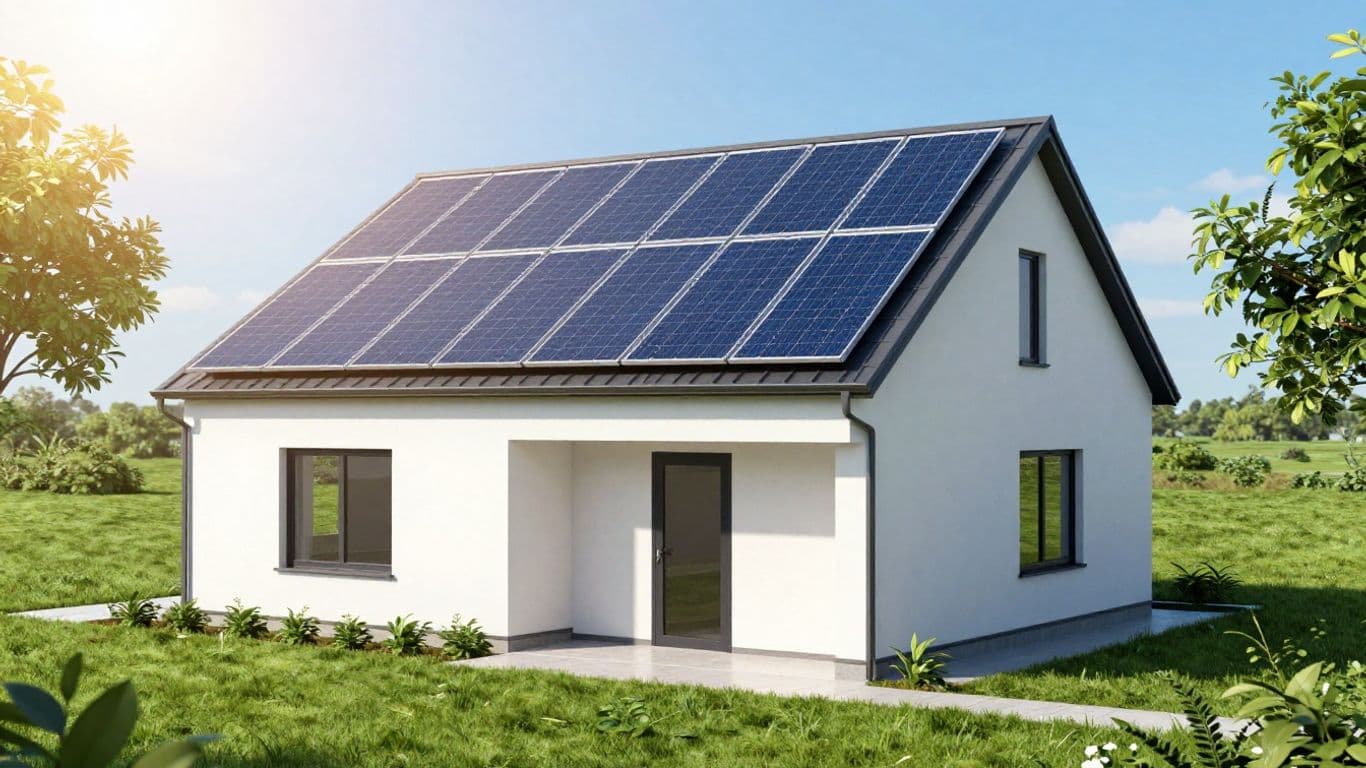
Choosing solar panels in 2026 is less about finding one universal winner and more about matching the panel to your roof, budget, climate, and long-term plans. This guide compares five residential options, from low-cost and widely available modules to premium panels built for higher efficiency and stronger lifetime performance.
Key takeaways
- Canadian Solar TopHiKu 6 is the budget-focused choice, with broad availability and solid current-generation performance.
- Silfab Prime 440W stands out for its all-black appearance, U.S. manufacturing, and 30-year performance warranty.
- Maxeon 6 440W offers premium efficiency and one of the strongest warranties, but usually costs more.
- Qcells Q.TRON 440W combines high efficiency, an all-black design, U.S. production, and competitive pricing.
- REC Alpha Pure-RX is the top premium pick for efficiency, low degradation, and hot-weather performance.
Solar panel comparison at a glance
The exact price depends on the installer, system size, roof design, equipment, and financing. Since panel prices change often, the cost ratings below are relative rather than a quoted market price. A transparent proposal from Helios Energy Global should show the full system cost instead of hiding the panel price inside a monthly payment.
| Solar panel | Capacity | Power or efficiency | Warranty and durability | Relative $/kWh* |
|---|---|---|---|---|
| Canadian Solar TopHiKu 6 | Varies by model | Solid efficiency; current-generation design | Manufacturer terms vary | Lowest |
| Silfab Prime | 440W | All-black residential design | 30 years; at least 89.3% output in year 30 | Low to mid |
| Maxeon 6 | 440W | Up to 22.8% efficiency | Up to 40 years; low degradation | Highest |
| Qcells Q.TRON | 440W | 22.5% efficiency | Manufacturer terms vary by product and market | Mid |
| REC Alpha Pure-RX | 470W | 22.6% efficiency; strong heat performance | Low degradation; manufacturer terms vary | Mid to high |
*Estimated lifetime energy cost is influenced by the panel price, production, degradation, installation cost, and financing. Ask for the actual $/kWh in your proposal.
5. Canadian Solar TopHiKu 6: Best for a tight budget
Canadian Solar’s TopHiKu 6 is aimed at homeowners who want to keep the initial cost down without choosing an outdated panel. It is widely available, backed by a major global manufacturer, and offers respectable efficiency for a residential rooftop system.
The main tradeoff is appearance. The silver frame is more noticeable than the all-black designs used by several competitors. That may not matter on a roof that is hard to see, but it can be a factor for homes facing the street.
Best fit: Homeowners focused on the lowest reasonable cost per watt and broad product availability.
4. Silfab Prime 440W: Best for appearance and U.S. production
The Silfab Prime uses a black frame, black cells, and a black backsheet. With fewer visible wiring and solder points, it has a clean, almost continuous glass appearance. For a visible rooftop, that is a meaningful design benefit.
Silfab also offers a competitive value rather than simply chasing the lowest price. The panel is made in the United States, which may help homeowners considering financing options that favor domestic content. Its 30-year performance warranty promises at least 89.3% of the original rated power in the 30th year.
Best fit: Homeowners who want a modern-looking panel, domestic manufacturing, and a strong long-term warranty.
3. Maxeon 6 440W: Best premium warranty
Maxeon 6 is the luxury option in this group. With efficiency of up to 22.8%, it can produce more power from limited roof space. That can be useful when a home has a small roof, shade concerns, or high electricity use.
The warranty is a major reason to consider it. The panel is covered for up to 40 years, with a low degradation rate. It is expected to retain 98% of its initial rated power after the first year and up to 94% in year 25.
The downside is simple: Maxeon usually carries a premium price. It makes the most sense when the additional production, roof-space savings, and long warranty justify the added investment.
Best fit: Homeowners prioritizing lifetime energy production and warranty coverage over the lowest upfront price.
2. Qcells Q.TRON 440W: Best overall balance
Qcells Q.TRON offers 22.5% efficiency, an all-black design, and a 108 half-cut cell layout. It is a high-efficiency option that looks at home on a residential roof.
The panels are fully made in the United States, and Qcells is a leading U.S. manufacturer by volume. That combination may be useful for homeowners evaluating domestic-content financing. Pricing is generally competitive for the performance offered.
For many buyers, Q.TRON is the middle ground: attractive, efficient, widely recognized, and not priced like a luxury panel.
Best fit: Homeowners seeking a well-rounded mix of performance, aesthetics, price, and U.S. manufacturing.
1. REC Alpha Pure-RX: Best for hot climates
The REC Alpha Pure-RX takes the top spot because it combines high efficiency, low degradation, and strong performance in hot conditions. Its heterojunction design supports efficiency of about 22.6%, while the all-black appearance works well on modern homes.
Its temperature coefficient is listed at 0.24% per degree Celsius. In plain language, the panel loses less output as temperatures rise. That matters in Southern California, where rooftop temperatures can become much higher than the standard testing temperature.
The degradation rate is also no more than about 0.25% per year, helping the panel maintain useful production over time. REC also offers a domestic-content-compliant option, which can matter for certain financing structures.
Best fit: Homeowners in hot regions who want premium performance, strong aesthetics, and better output during high-temperature periods.
How Southern California buyers should choose
Before comparing panel brands, review these practical questions:
- How much roof space do you have? Higher-efficiency panels can reduce the number of panels needed.
- Can the roof be seen from the street? An all-black panel may be worth the modest price difference.
- How hot is your roof in summer? A lower temperature coefficient can improve real-world production.
- How long will you own the home? Longer warranties and lower degradation matter more for long-term ownership.
- What does the complete proposal include? Compare panels, inverter or battery equipment, labor, monitoring, warranties, and expected production—not just panel wattage.
Helios Energy Global designs solar and battery systems around the home rather than forcing every customer into the same panel. Clear pricing, intentional roof layouts, and owner involvement can make it easier to understand what you are actually buying.
What this means for CA homeowners under NEM 3.0
Under California’s NEM 3.0 rules, self-consumption is especially important. Exporting extra solar power to the grid is generally less valuable than using that energy in the home or storing it in a battery.
That changes the buying decision. A panel with slightly higher efficiency or better hot-weather performance can help, but the best result usually comes from matching the solar array with battery storage and household usage. Run appliances during sunny hours when possible, charge the battery during the day, and use stored energy in the evening when grid power is more expensive.
For many Southern California homeowners, the right panel is not simply the one with the highest wattage. It is the one that produces reliably, fits the roof, looks appropriate, and works with a carefully sized battery system. A custom design from Helios can help turn those details into a system built for real household use.
Keep reading
Tesla's New Solar Panels: A Closer Look at the TSP 415 and 420
The landscape of residential solar is shifting as Tesla moves to bring its manufacturing fully in-house. By producing the new TSP 415 and TSP 420 panels at their Gigafactory in New York, the company is aiming to streamline the solar install process. For homeowners, this signals a focus on domestic energy production and potentially lower costs through simplified hardware. Why vertical integration matters for solar For a long time, the solar industry relied on a mix-and-match approach, where co
ReadTesla Powerwall 3 vs. Franklin aPower S: Which Home Battery Is Right For You?
Choosing the right home battery system can feel like a big decision, especially with new technologies hitting the market. This video breaks down two top contenders: the Tesla Powerwall 3 and the Franklin aPower S. We'll look at what they offer, how they stack up, and what it means for homeowners, particularly under NEM 3.0. Key Takeaways * Both the Tesla Powerwall 3 and Franklin aPower S are all-in-one systems, combining a hybrid inverter with battery storage. * They use a high-voltage DC-c
ReadAPPROVED: New Sigen Backup Switch Ready for Install
A new whole-home backup option from Sigenergy has received approval from PG&E, opening the door for installations across Northern California. The Sigen Backup Switch places the home’s backup disconnect at the meter, helping installers avoid major changes inside the electrical panel. Broader approval from Southern California utilities is expected next. Key takeaways * The Sigen Backup Switch is approved for installation in PG&E territory. * It supports 200-amp whole-home backup without movin
ReadReady to design your system?
Free quote, transparent pricing, owner-reviewed design.