Tesla Powerwall 3 vs. Franklin aPower S: Which Home Battery Is Right For You?
Choosing the right home battery system can feel like a big decision, especially with new technologies hitting the market. This video breaks down two top contenders: the Tesla Powerwall 3 and the Franklin aPower S. We'll look at what they offer, how they stack up, and what it means for homeowners, particularly under NEM 3.0. Key Takeaways * Both the Tesla Powerwall 3 and Franklin aPower S are all-in-one systems, combining a hybrid inverter with battery storage. * They use a high-voltage DC-c
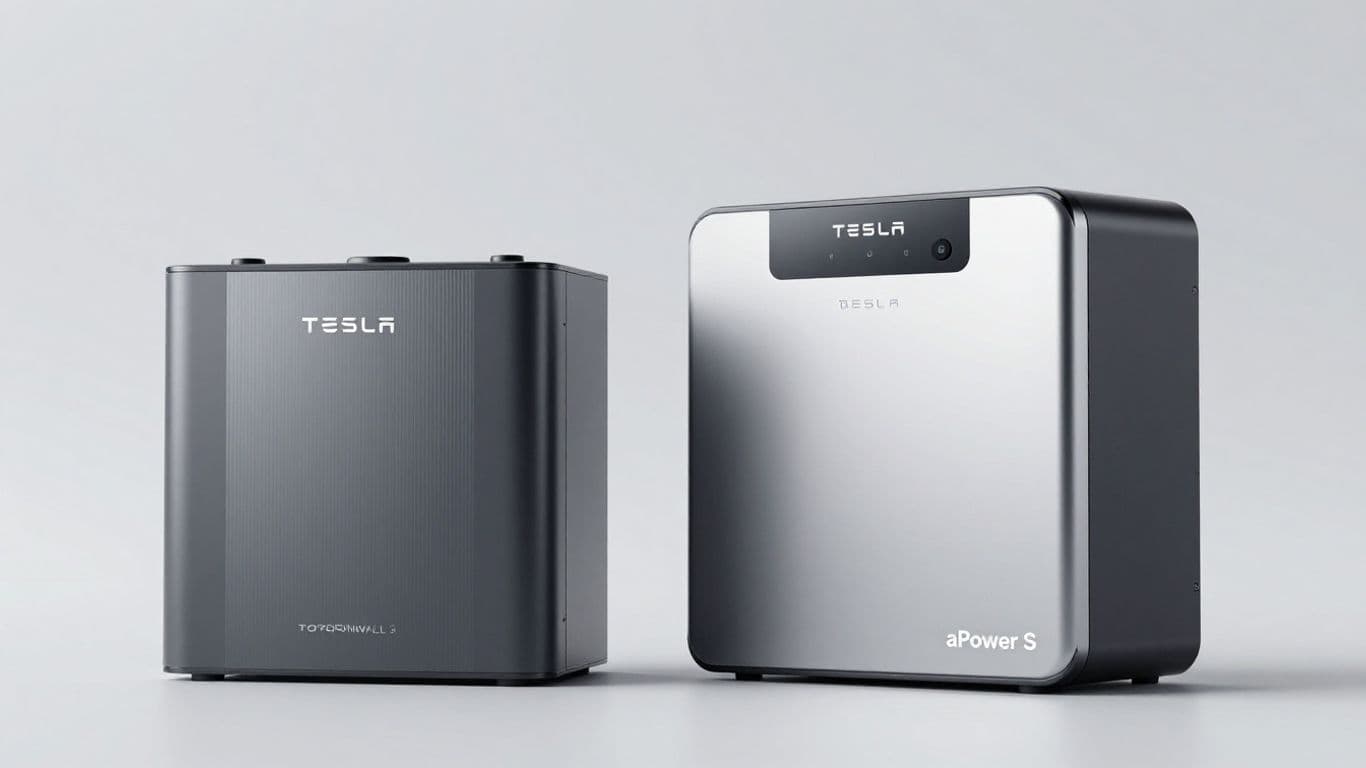
Choosing the right home battery system can feel like a big decision, especially with new technologies hitting the market. This video breaks down two top contenders: the Tesla Powerwall 3 and the Franklin aPower S. We'll look at what they offer, how they stack up, and what it means for homeowners, particularly under NEM 3.0.
Key Takeaways
- Both the Tesla Powerwall 3 and Franklin aPower S are all-in-one systems, combining a hybrid inverter with battery storage.
- They use a high-voltage DC-coupled architecture, simplifying installation and improving efficiency.
- The comparison focuses on power output, storage capacity, warranty, cost, ease of installation, and an "X-factor" for unique features.
- California homeowners under NEM 3.0 will find the self-consumption capabilities of these systems particularly relevant.
Understanding All-In-One Systems
Gone are the days when a home battery was just a battery. Both the Tesla Powerwall 3 and the Franklin aPower S are all-in-one hybrid inverter systems with integrated battery storage. Tesla really kicked this trend off with the Powerwall 3, essentially putting the solar inverter and the battery into a single unit. This means you're not just buying a battery; you're getting a complete solar and storage solution.
These systems also use a high-voltage architecture. This DC-coupled design means the connection between your solar panels and the battery happens on the DC side, which makes installation simpler and allows for more efficient charging from solar to battery.
How We're Comparing Them
To figure out which system might be best, we're looking at six categories, with a maximum of five points for each, totaling 30 points. The categories are:
- Power Output: How much electricity can it deliver?
- Storage Capacity: How much energy can it hold?
- Warranty: How long is it covered?
- Cost: The price of the unit and installation.
- Ease of Installation: How simple is it for technicians to set up?
- X-Factor: Unique features that make a big difference for homeowners.
Tesla Powerwall 3: The Innovator
The Tesla Powerwall 3 is known for its 11.5 kW continuous power output, with enough surge capacity for things like starting up an air conditioner compressor. It offers 13.5 kWh of usable storage capacity, which is consistent with Tesla's previous models. While this can support whole-home backup, many might opt for two units for longer nighttime power.
Tesla provides a 10-year warranty, which is becoming the standard in the industry. Price-wise, the Powerwall 3 tends to be on the lower end of the cost spectrum, often resulting in competitive quotes for homeowners.
Installation is a strong point, earning Tesla 3 points for ease of installation. Features like the Tesla backup switch and meter collar adapter simplify whole-home backup setups, and installers often report positive experiences due to the integrated design that reduces rooftop work and complexity.
For the X-factor, the Powerwall 3 gets 2 points. Its innovation in the integrated design and the tight integration with the Tesla app are big pluses, especially for those who already own a Tesla vehicle and want a single platform for managing their car, solar, and battery.
Franklin aPower S: The Feature-Rich Contender
The Franklin aPower S offers 10 kW of continuous power, with a surge capability of up to 15 kW for short bursts, which is plenty for most homes, including running central air.
Where it really stands out is its 15 kWh of usable storage capacity per unit, a noticeable bump up from the Powerwall 3. For most average-sized homes, two or more batteries are recommended for full backup.
Franklin offers an impressive 15-year warranty, putting it ahead of many competitors. In terms of cost, the aPower S is slightly higher on the price spectrum, about 20% more than Franklin's previous AC-coupled model.
Installation earns the aPower S 4 points for ease of installation. Franklin's special lift dolly allows a single technician to handle the heavy 400 lb batteries, reducing the need for extra equipment or manpower. Compatibility with meter collar adapters also simplifies grid connection for whole-home backup.
For the X-factor, the Franklin system scores 4 points. Key features include generator support, which Tesla doesn't offer, providing a crucial backup option during extended outages. It also has integrated smart circuit control to manage large loads and extend battery runtime. Plus, the black start capability means the battery can power itself back up from a completely drained state when sunlight returns, without needing a technician.
Comparison Summary
Here's a quick look at how they stack up:
| Feature | Tesla Powerwall 3 | Franklin aPower S |
|---|---|---|
| Continuous Power | 11.5 kW | 10 kW |
| Surge Power | 185 LRA | 15 kW |
| Usable Capacity | 13.5 kWh | 15 kWh |
| Warranty | 10 Years | 15 Years |
| Cost | Lower | Slightly Higher |
| Ease of Install | 3 Points | 4 Points |
| X-Factor Points | 2 Points | 4 Points |
| Total Score | 22 Points | 25 Points |
What This Means for CA Homeowners Under NEM 3.0
For homeowners in California dealing with Net Energy Metering 3.0 (NEM 3.0), self-consumption is the name of the game. NEM 3.0 significantly reduces the export rates for solar energy sent back to the grid. This means maximizing the energy you use directly from your solar panels and storing excess energy for later use is more important than ever.
Both the Powerwall 3 and the aPower S are designed for this. They allow you to store solar energy generated during the day and use it during the evening or when electricity rates are high. This self-consumption approach helps you get the most value out of your solar investment under the new NEM 3.0 rules, reducing your reliance on grid electricity and lowering your monthly bills.
The increased capacity of the Franklin aPower S might offer an edge for those looking to maximize stored energy for self-consumption, while the Tesla system's integration and potentially lower upfront cost could be appealing.
Keep reading
Tesla Powerwall 3 vs. Lunar Energy: A Homeowner’s Guide
Choosing a home battery system can feel like a headache. There are so many options popping up, and it is hard to tell what actually works best for a home in Southern California. I have been looking at two of the biggest names lately: the Tesla Powerwall 3 and the newcomer, the Lunar Energy system. At Helios Energy Global, we focus on custom designs that actually fit the look of your house, and we figured it was time to break these two down so you can make a choice that makes sense for your famil
ReadSupersonic Travel Is Back: What Homeowners Need to Know About the Future of Flight
Supersonic passenger jets are making a comeback, and the excitement is palpable. Companies like Boom Supersonic are developing new aircraft, aiming to bring back the thrill of flying faster than the speed of sound. This isn't just about speed; it's about making supersonic travel accessible and practical for more people. Key Takeaways * Faster Travel: Supersonic jets promise significantly reduced travel times on long-haul routes. * Economic Viability: The focus is on making tickets affordabl
ReadMost Efficient Solar Panels in 2026
For Southern California homeowners, choosing a solar panel is not just about the highest wattage on the box. Roof space, summer heat, appearance, long-term degradation, warranty support, and price all matter. This buyer’s guide compares three high-efficiency residential panels: Silfab Prime, Maxeon 6, and REC Alpha Pure-RX. Key takeaways * Silfab Prime 440 W offers strong efficiency, an all-black design, US manufacturing, and competitive pricing. * Maxeon 6 440 W ranks highest for listed ef
ReadReady to design your system?
Free quote, transparent pricing, owner-reviewed design.