APPROVED: New Sigen Backup Switch Ready for Install
A new whole-home backup option from Sigenergy has received approval from PG&E, opening the door for installations across Northern California. The Sigen Backup Switch places the home’s backup disconnect at the meter, helping installers avoid major changes inside the electrical panel. Broader approval from Southern California utilities is expected next. Key takeaways * The Sigen Backup Switch is approved for installation in PG&E territory. * It supports 200-amp whole-home backup without movin
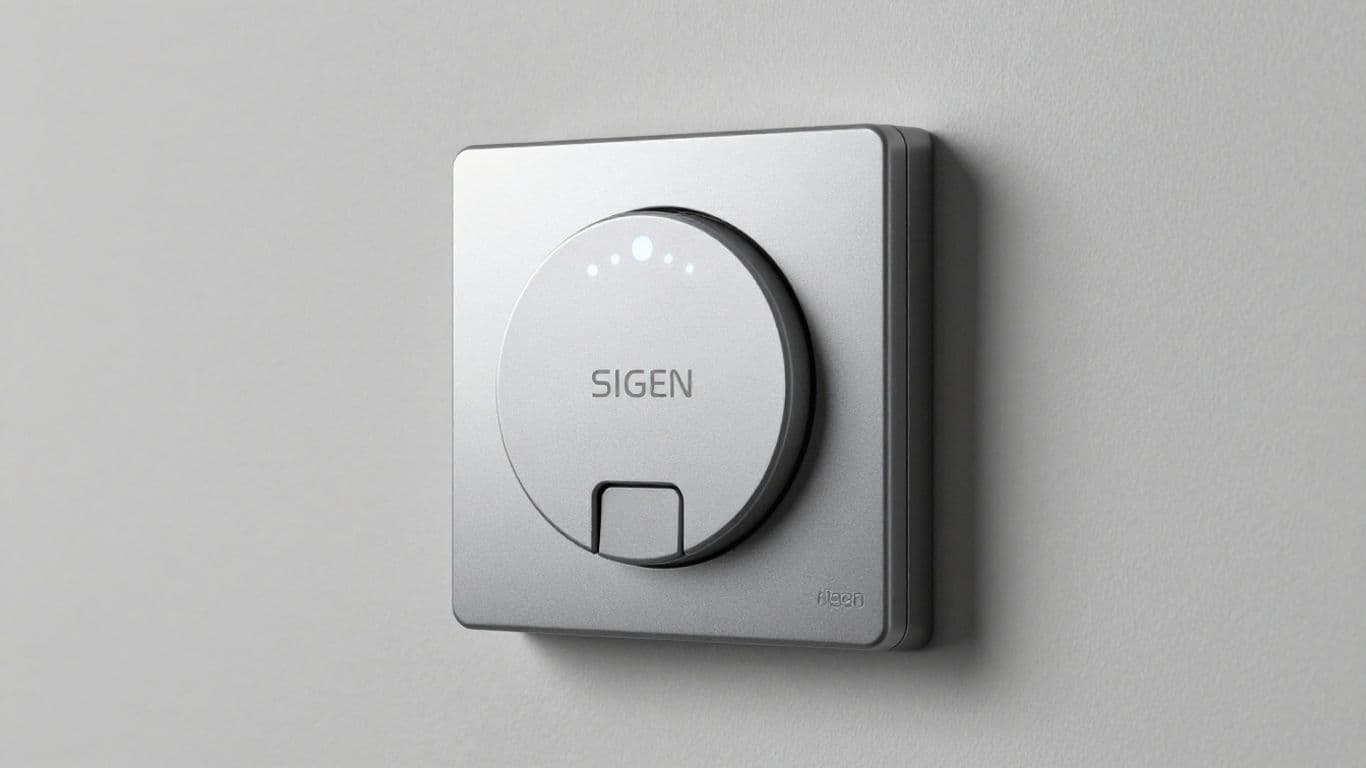
A new whole-home backup option from Sigenergy has received approval from PG&E, opening the door for installations across Northern California. The Sigen Backup Switch places the home’s backup disconnect at the meter, helping installers avoid major changes inside the electrical panel. Broader approval from Southern California utilities is expected next.
Key takeaways
- The Sigen Backup Switch is approved for installation in PG&E territory.
- It supports 200-amp whole-home backup without moving circuits to a separate backup panel.
- Transfer time is rated at zero milliseconds, helping appliances stay powered during an outage.
- The Sigen Load Hub adds more power, generator charging, and smart load controls.
- California homeowners should compare equipment, utility approval, design, warranty, and total installed cost before choosing a system.
What the Sigen Backup Switch does
Any solar and battery system that can power a home during an outage needs a way to separate the home from the utility grid. This prevents electricity from flowing back onto utility lines while allowing the battery and solar system to supply the house.
Traditionally, installers handled this with a transfer switch and a separate critical-loads panel. Selected circuits—such as the refrigerator, lights, internet equipment, and a few outlets—were moved from the main panel into that backup panel.
That approach works, but it can be disruptive. It may require opening the main electrical panel, moving multiple wires, and making decisions about which parts of the home should remain powered. The Sigen Backup Switch takes a different approach by placing the switching equipment at the meter base, above the home’s internal wiring.
The result is a simpler path to whole-home backup, assuming the home and system are properly designed for it.
Backup Switch vs. Load Hub
Sigenergy offers two related options. The right choice depends on how much power and control a homeowner wants during a grid outage.
| Feature | Sigen Backup Switch | Sigen Load Hub |
|---|---|---|
| Whole-home pass-through | 200 amps | 200 amps |
| Continuous inverter output | About 11.5 kW per Sigen Stor inverter | Up to about 23 kW with two inverters |
| Battery capacity | Depends on Sigen Stor modules selected | Can support additional modules with multiple inverters |
| Generator recharge | Not highlighted in the announcement | Available |
| Smart circuit controls | Not highlighted in the announcement | Up to five |
| Warranty | Confirm by equipment package and installer | Confirm by equipment package and installer |
| Estimated cost per kWh | Depends on system design and installation | Depends on system design and installation |
The table shows an important point: the Backup Switch and Load Hub are not complete battery systems by themselves. Battery size, warranty terms, and cost per kilowatt-hour depend on the Sigen Stor equipment, the number of modules, the inverter configuration, and the installation.
A transparent proposal from Helios Energy Global should spell out each of those items instead of presenting one large price with unclear assumptions.
When the Load Hub may be worth considering
The Load Hub adds several features for homeowners who want more control or stronger backup performance.
- More power: Two Sigen Stor inverters can provide roughly 23 kW of continuous output. That may be useful for homes with larger electrical demand, though the system still needs to be matched to the home’s loads.
- Generator recharge: During a long outage or several cloudy days, a compatible generator can recharge the batteries. This gives homeowners another layer of backup instead of relying only on solar production.
- Smart load management: Up to five smart circuits can automatically turn off selected high-draw equipment when battery reserves fall. Possible examples include electric dryers, water heaters, pool pumps, or hot tubs.
- Time-of-use control: Smart circuits may also help manage expensive peak-rate periods by limiting nonessential loads when electricity costs are highest.
These features are useful, but they also add design and equipment considerations. A homeowner should ask exactly which loads will be controlled, how the system behaves at different battery levels, and whether generator integration is included in the quoted price.
What the PG&E approval means
The Sigen Backup Switch is now approved for installation in PG&E territory, including much of the San Francisco Bay Area and Silicon Valley. Approval from Southern California Edison and San Diego Gas & Electric was expected to follow, but utility approval should always be confirmed for the specific project location before signing an agreement.
This matters because a product can be technically ready while still waiting for a utility’s interconnection process. A qualified installer should verify the current equipment list, required permits, and utility rules for the address.
For Southern California homeowners, this is also where installer experience matters. Helios Energy Global focuses on custom system design, clean installation layouts, clear pricing, and strong warranties. The best battery system is not simply the one with the largest capacity. It is the one that fits the home, utility, budget, and outage goals without creating surprises later.
Questions to ask before buying
- Is the system approved by my utility today?
- Does the proposal include whole-home backup or only selected circuits?
- What is the continuous power rating, not just the battery capacity?
- How many hours or days of backup should I realistically expect?
- Are generator integration and smart load controls included?
- What are the equipment and workmanship warranty terms?
- What is the installed cost per usable kilowatt-hour?
- Will the installation preserve the home’s appearance and allow future expansion?
What this means for CA homeowners under NEM 3.0
Under California’s NEM 3.0 rules, exporting solar power to the grid is generally worth less than using that energy at home. A battery can store midday solar production and make it available during evening hours, when rates are often higher.
That makes self-consumption a central part of the buying decision. The Sigen Backup Switch may help keep the entire home operating during an outage, while the Load Hub can add more control over large loads and battery reserves. Still, the system should be sized around actual household usage, rate schedules, and backup priorities—not just the biggest battery available.
For many homeowners, a well-designed solar and battery system can provide both everyday bill management and emergency resilience. The key is a clear proposal, utility-approved equipment, and an installer willing to explain every part of the design.
Keep reading
Tesla Model Y Gets Interior Upgrades & Free Supercharging For Model 3 Buyers
Tesla is making some interesting moves for its popular electric vehicles. For buyers of the Model 3, there's a limited-time offer for a year of free Supercharging, which could mean significant savings. Meanwhile, the Model Y is receiving some interior enhancements, bringing more premium features to more trims. Key Takeaways * Model 3 Free Supercharging: Purchase a Model 3 by June 15th and get one year of free Supercharging. * Model Y Interior Updates: Rear-wheel drive and all-wheel drive Mo
ReadRivian R2 Delivery Day (Didn’t Go as Planned)
After waiting more than two years, a day-one reservation holder finally arrived to pick up his Rivian R2. The delivery had already been delayed because Rivian found a paint blemish, so the big question was simple: had the issue been fixed, and would the car pass a very close inspection before its first drive? Key takeaways * Rivian delayed delivery by about a week to repair a paint blemish. * The vehicle could not be inspected before payment, though a cashier’s check allowed the buyer to ho
ReadIs Solar Still Worth It? Your 2026 Guide to Smart Energy Investment
The solar industry has gone through some real turbulence over the last few years, from shifting government policies to the sudden collapse of some major installers. It is natural to feel hesitant about jumping in. But despite these headwinds, installing solar remains an excellent, sensible investment for homeowners as of 2026. Key Takeaways * Rising utility rates make early adoption more profitable than ever. * Electric vehicle (EV) batteries can now serve as your primary home backup, lower
ReadReady to design your system?
Free quote, transparent pricing, owner-reviewed design.