Solar Panels Are Not Worth It
A survey of more than 200 solar homeowners looked at why people are still installing solar in 2026. The answers were practical: long-term savings, backup power, lower monthly bills, and, for a smaller group, environmental benefits. For Southern California homeowners, the right choice now depends heavily on utility rates, battery storage, system pricing, and how much energy you use at home. Key takeaways * Long-term savings ranked first, with 33% of respondents choosing it as their main reaso
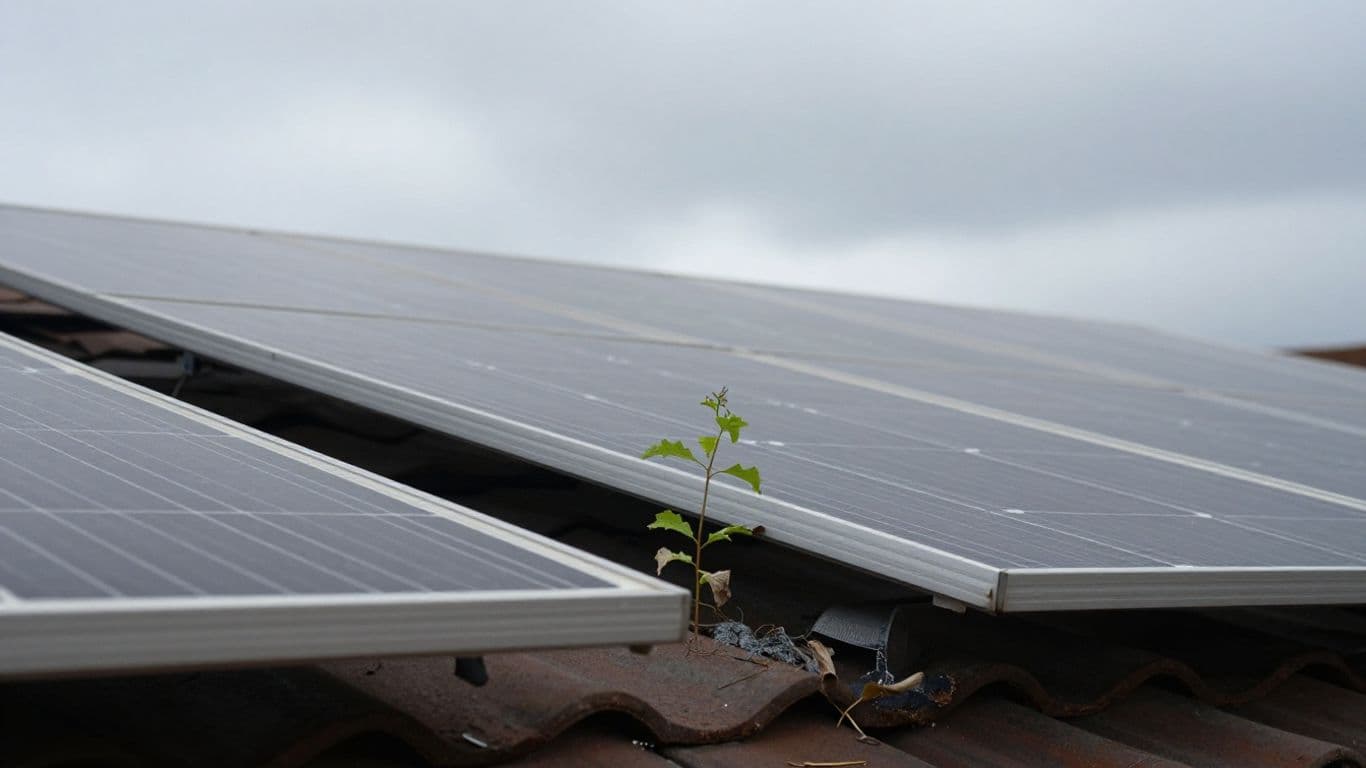
A survey of more than 200 solar homeowners looked at why people are still installing solar in 2026. The answers were practical: long-term savings, backup power, lower monthly bills, and, for a smaller group, environmental benefits. For Southern California homeowners, the right choice now depends heavily on utility rates, battery storage, system pricing, and how much energy you use at home.
Key takeaways
- Long-term savings ranked first, with 33% of respondents choosing it as their main reason.
- Backup power and energy independence followed closely, at 31%.
- Lower monthly electric bills accounted for 30% of responses.
- Only 5% listed environmental benefits as their primary reason, although many buyers still value them.
- Under California’s newer export rules, batteries can be more important than they were under one-for-one net metering.
- A fair installation price and careful system design matter more than simply choosing the newest equipment.
The real question: What do you want solar to do?
Solar panels are not automatically a good investment for every home. They make the most sense when the system is designed around a clear goal.
Some homeowners want to lower their electric bill. Others want backup power during outages. Many want both. Before comparing panels, decide which outcome matters most to you.
Helios Energy Global approaches this as a design decision rather than a one-size-fits-all package. Roof layout, shade, energy use, utility rules, and the look of the installation all affect the final system.
Reason one: Long-term financial savings
Long-term savings were the most common reason homeowners chose solar, representing 33% of the survey responses.
Electricity is a recurring expense. Even after years of payments, the bill does not disappear. Rates can also rise over time. Solar lets a homeowner produce some of that electricity instead of buying all of it from the utility.
A reasonable payback period can be around 8 to 12 years, but that is not a promise. It depends on several factors:
- The cost of the installation.
- Your annual energy use.
- Roof orientation and available sunlight.
- Local electricity rates.
- How much energy you use during the day.
- Whether the utility pays fairly for exported power.
The survey discussion used about $3 per watt or less as a general benchmark for a properly priced, cash-paid solar installation without batteries. Battery storage will increase the total cost, so homeowners should compare the complete price rather than judging a quote by panel cost alone.
For a buyer, transparency is critical. Ask for the system size, equipment list, labor, permits, financing costs, and warranty terms in writing. Helios emphasizes clear pricing and custom layouts so homeowners can understand what they are paying for before signing.
Reason two: Backup power and energy independence
Backup power was nearly tied for first place, with 31% of homeowners selecting it as their main motivation.
Solar panels by themselves usually shut down when the grid fails. To keep selected circuits or the whole home running, you need a battery system and the right backup equipment.
A typical outage cycle works like this:
- Solar powers the home during daylight.
- Extra solar energy charges the battery.
- The battery powers the home after sunset.
- The next day, the panels recharge the battery again.
This can be more practical than relying only on a fuel-burning generator, especially during longer outages. There is no fuel tank to refill, although battery capacity and solar production still limit how much energy you can use.
When reviewing a battery quote, ask whether it supports essential loads or whole-home backup. An installer should also explain startup power for air conditioners, pumps, and other large appliances.
Reason three: Lower monthly bills
Thirty percent of respondents said their main goal was monthly cash-flow savings. In the past, one-for-one net metering made this fairly simple: send one kilowatt-hour to the grid during the day and receive credit for one kilowatt-hour later.
That arrangement is less common now, particularly in California. Under newer export rules, the utility may credit exported power at a much lower value than the retail electricity rate. Sending excess power to the grid can therefore be less valuable than using it at home or storing it in a battery.
This is why a system that looks inexpensive without storage may not produce the same results under current utility rules. Ask your installer to model:
- Solar-only operation.
- Solar plus battery storage.
- Your expected self-consumption rate.
- Utility export credits.
- Seasonal production and usage.
A lease, power purchase agreement, or long-term loan may lower the upfront cost. But “free solar” does not mean the equipment is free. It generally refers to a payment structure where the monthly solar cost may be lower than the previous electric bill. Review the total contract cost, annual increases, ownership terms, and battery replacement provisions.
Comparing the main system choices
The video focuses on system approaches rather than several competing battery models. This table is a starting point for comparing the choices a homeowner may face.
| System choice | Capacity | Power | Warranty | Approx. $/kWh |
|---|---|---|---|---|
| Solar panels only | Varies by array size | Varies by inverter | Panel warranties often up to 25 years | Not applicable |
| Solar plus battery | Battery size varies | Depends on battery and inverter | Depends on manufacturer; review labor coverage | Total system cost ÷ usable battery kWh |
| REC Alpha Pure-RX modules with battery | 450–460 watts per panel; battery varies | Depends on array and storage | REC ProTrust warranty: 25 years for power, product, and labor | Not applicable for panels alone |
The REC Alpha Pure-RX modules discussed in the video use heterojunction cell technology, a low temperature coefficient, and added support features intended to help performance in hot or severe weather. Their 450- and 460-watt versions are available through solar distributors.
High panel efficiency is useful when roof space is limited, but it should not be the only buying factor. A well-designed system with dependable installation, clear monitoring, and strong warranty support may be a better choice than a higher-rated panel installed poorly.
Reason four: Environmental benefits
Only 5% of respondents listed environmental benefits as their primary reason. That does not mean clean energy is unimportant. It suggests that homeowners now tend to view solar as a financial and resilience decision first.
Using more solar power can reduce reliance on grid electricity, but the environmental result still depends on system production, equipment life, and how much energy the household consumes. For many buyers, the environmental benefit is a welcome part of a broader investment.
What this means for CA homeowners under NEM 3.0
California homeowners under NEM 3.0 should focus on self-consumption. In plain terms, use more of your solar energy at home instead of exporting it when export credits are low.
That can mean running appliances during sunny hours, shifting pool pumps or electric vehicle charging to midday, and adding a battery to carry daytime production into the evening. The best battery size depends on your usage and backup goals, not just the size of the solar array.
Solar can still be worth it in 2026, but the old solar-only sales pitch is incomplete for many California homes. Get a design that shows production, storage, usage, export credits, warranties, and the full price. Helios Energy Global’s custom approach is built around that kind of comparison, helping homeowners choose a system that fits both their budget and their priorities.
Keep reading
Sonnen Battery Vs Tesla Powerwall II
Choosing a home battery is not just about how many kilowatt-hours it stores. Power output, warranty terms, installation needs, and how you plan to use the system all matter. This comparison looks at the Sonnen Core and Tesla Powerwall II to help Southern California homeowners make a practical backup and self-consumption decision. Key takeaways * Tesla Powerwall II stores more energy: 13.5 kWh compared with the Sonnen Core’s 10 kWh. * Sonnen offers stronger cycle coverage: up to 10,000 cycle
ReadShould You Lease or Purchase Your Solar System in This Economy?
Deciding whether to lease or purchase a home solar system in California is a major financial choice, especially under the current NEM 3.0 net billing structure. With rising utility rates and varying tax implications, homeowners must carefully evaluate their specific energy goals and long-term tax liability to determine the best path forward. Key takeaways * Leasing typically covers equipment maintenance and battery replacements for up to 25 years, providing peace of mind. * Purchasing allow
ReadLiving With Solar and Powerwall in Southern California: A Long-Term Owner's Perspective
As a long-time resident of Southern California, I decided to take the plunge into solar energy a few years back, and I've been living with a Tesla Powerwall ever since. It's been quite the journey, and I wanted to share what it's really like, especially with how energy prices and utility policies are always changing around here. Key Takeaways * Yearly Production: My solar system consistently produces a significant amount of energy each year, with only minor year-over-year fluctuations. * En
ReadReady to design your system?
Free quote, transparent pricing, owner-reviewed design.