Sonnen Battery Vs Tesla Powerwall II
Choosing a home battery is not just about how many kilowatt-hours it stores. Power output, warranty terms, installation needs, and how you plan to use the system all matter. This comparison looks at the Sonnen Core and Tesla Powerwall II to help Southern California homeowners make a practical backup and self-consumption decision. Key takeaways * Tesla Powerwall II stores more energy: 13.5 kWh compared with the Sonnen Core’s 10 kWh. * Sonnen offers stronger cycle coverage: up to 10,000 cycle
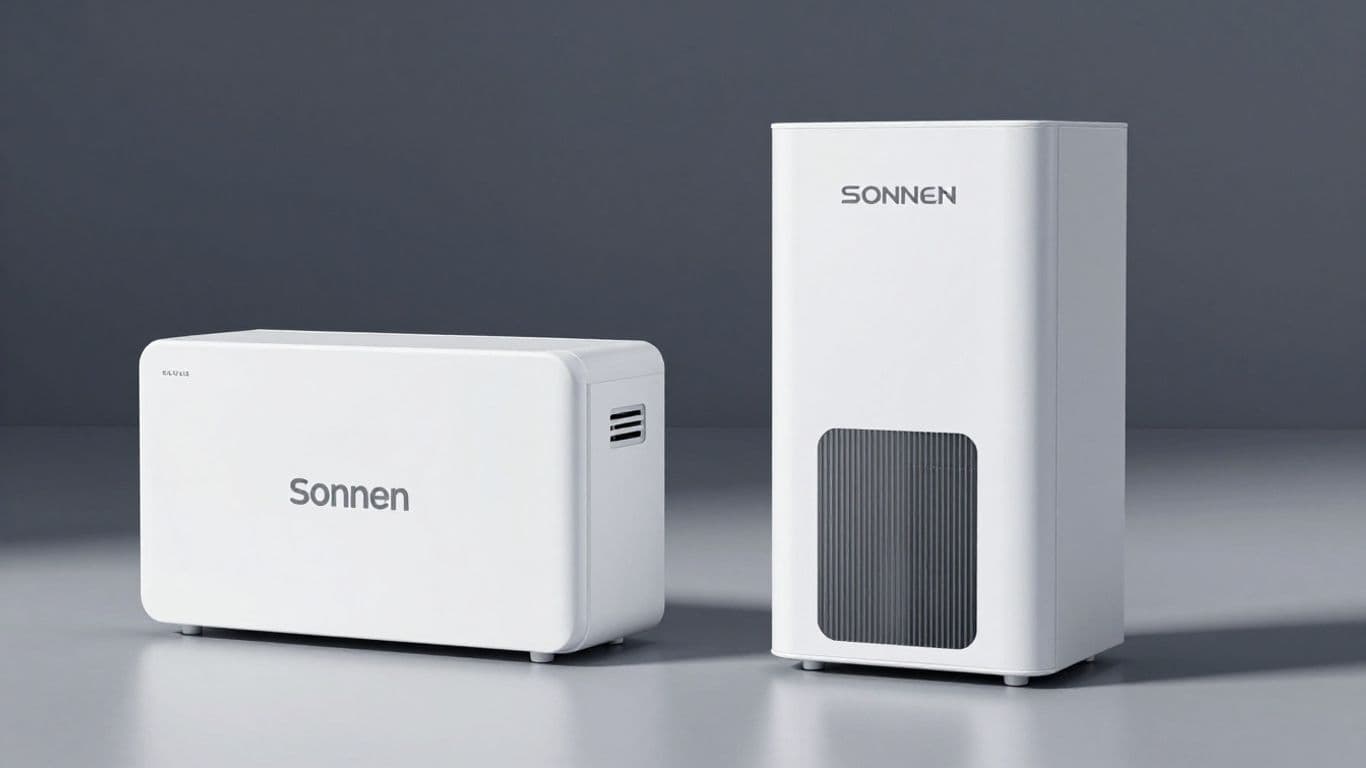
Choosing a home battery is not just about how many kilowatt-hours it stores. Power output, warranty terms, installation needs, and how you plan to use the system all matter. This comparison looks at the Sonnen Core and Tesla Powerwall II to help Southern California homeowners make a practical backup and self-consumption decision.
Key takeaways
- Tesla Powerwall II stores more energy: 13.5 kWh compared with the Sonnen Core’s 10 kWh.
- Sonnen offers stronger cycle coverage: up to 10,000 cycles, while Powerwall II may be limited to 2,800 cycles for some time-of-use applications.
- Powerwall II has slightly more continuous power: 5 kW versus 4.8 kW.
- Sonnen is lighter and modular, which may reduce installation labor.
- The best choice depends on your home, solar system, and battery use.
Sonnen Core vs. Tesla Powerwall II at a glance
Both batteries are AC-coupled systems. That means they can often be added to an existing solar installation without replacing rooftop equipment or rewiring the entire system. The battery and inverter work together inside the unit, and multiple units can be connected to increase system size.
| Specification | Sonnen Core | Tesla Powerwall II |
|---|---|---|
| Usable capacity | 10 kWh | 13.5 kWh |
| Continuous power | 4.8 kW | 5 kW |
| Peak or surge power | 8.6 kW | 7 kW |
| Solar AC input | Up to 6 kW | Up to 7.6 kW |
| Warranty | Up to 10 years/10,000 cycles; terms may extend to 12 years | 10 years; time-of-use use may be limited to 2,800 cycles |
| Equipment cost | Roughly comparable | Roughly comparable |
| Installation cost | Potentially lower due to modular design | Potentially higher due to weight and handling |
| Equipment cost per kWh | Not provided; likely competitive | Not provided; likely competitive |
The video did not provide exact purchase or installation prices, so a true dollar-per-kilowatt-hour calculation is not possible. Homeowners should ask for a complete installed price rather than comparing battery hardware alone. At Helios Energy Global, transparent system pricing is important because labor, permits, electrical upgrades, and backup-panel work can change the final number.
Power: which battery can handle more?
The Powerwall II has a small advantage in continuous output, at 5 kW compared with 4.8 kW for the Sonnen Core. That difference is minor for many homes, but it can matter when starting equipment with a large motor.
The Sonnen Core has the higher listed surge rating, at 8.6 kW versus 7 kW. Even so, battery chemistry and equipment settings can affect real-world motor starting. A home with central air conditioning, a well pump, or septic equipment should have those loads reviewed before choosing a battery.
For a typical suburban home connected to public water and sewer, either system can support important loads such as:
- Refrigerator and freezer
- Internet and home office equipment
- Lighting
- Television and basic outlets
- Bedroom circuits
- Microwave, depending on what else is running
Neither battery should be expected to power every appliance indefinitely during an outage. A well-designed system starts with a clear backup-load plan.
Capacity: how long will the battery last?
Powerwall II provides 13.5 kWh of usable storage, about 35% more than the Sonnen Core’s 10 kWh. That extra capacity can make a meaningful difference during a long outage, particularly if the home is carefully conserving energy.
The Sonnen Core may still provide roughly 18 to 24 hours for essential suburban loads, depending on household consumption. Solar production can recharge either battery during the day, although cloudy weather, shading, and high daytime demand will reduce the amount of energy available.
If your main goal is emergency backup, estimate your daily critical-load consumption first. If you want to run larger loads or last longer without sun, Powerwall II’s larger capacity may justify its additional installation complexity.
Warranty and daily cycling
Warranty terms become especially important when a battery is used every day for time-of-use savings. In that setup, the battery charges when electricity is cheaper and discharges during expensive peak periods.
Sonnen stands out in the comparison with coverage of up to 10,000 cycles. That makes it a strong fit for homeowners who expect frequent daily cycling. Powerwall II has a 10-year product warranty, but the comparison notes a 2,800-cycle limit for certain time-of-use applications. The exact warranty terms should always be reviewed for the intended use.
For occasional outage backup, the cycle difference may not matter as much. For daily self-consumption or rate shifting, it deserves close attention.
Installation and design considerations
The Sonnen Core uses a modular design, with no single component weighing more than 90 pounds. That can make delivery and installation easier, potentially reducing labor costs and allowing more flexibility in placement.
The Powerwall II is a sealed unit weighing more than 250 pounds. It requires more people and specialized handling equipment, which can increase installation time and labor requirements. Its advantage is a clean, compact appearance and tight integration with the Tesla app and other Tesla products.
A professional installer should also confirm wall strength, clearances, weather exposure, electrical-panel space, and local permitting requirements. Helios Energy Global approaches these decisions through custom system design, with attention to both performance and the appearance of the finished installation.
Which battery should you choose?
Choose the Sonnen Core if you:
- Expect to cycle the battery frequently for time-of-use savings.
- Value a longer stated cycle warranty.
- Have a moderate backup load.
- Want a lighter, modular system that may be simpler to install.
- Prefer lithium iron phosphate chemistry, which is widely viewed as a safety-focused option.
Choose the Tesla Powerwall II if you:
- Need more stored energy for longer outages.
- Have slightly higher continuous power needs.
- Own a Tesla vehicle and want one app for energy management.
- Have a solar system that may benefit from the higher AC input rating.
- Prefer Tesla’s integrated product platform and streamlined design.
There is no universal winner. The right battery depends on your backup circuits, solar array, utility rate plan, expected cycling, and available installation space. A transparent proposal should show these details clearly instead of treating every home as the same.
What this means for CA homeowners under NEM 3.0
Under California’s NEM 3.0 structure, exporting solar power to the grid is generally less valuable than using that energy in the home. A battery can store excess daytime production and return it during evening hours, when household demand rises and solar output falls.
That makes self-consumption a central reason to consider storage, not just outage protection. Sonnen’s longer cycle coverage may appeal to homeowners who plan to charge and discharge daily. Powerwall II’s larger capacity may be more useful for homes with higher evening demand or longer backup needs.
Before deciding, compare the battery’s usable capacity, power rating, warranty, and total installed cost with your actual electricity use. A custom design from Helios Energy Global can help balance backup protection, self-consumption, aesthetics, and long-term value without adding features your home does not need.
Keep reading
Dyson's Farming Secret: How They Cracked Vertical Farming Profitability
The world of vertical farming has been a tough one, with many companies struggling to turn a profit despite significant investment. However, the innovative approach of Dyson, a company known for its engineering prowess, might just have found the key to making it work. This isn't just about growing strawberries; it's about a smarter, more sustainable way to produce food. Key Takeaways * Energy Costs are the Biggest Hurdle: Traditional vertical farms use massive amounts of electricity for ligh
ReadTesting Nvidia's Secret Self-Driving Car in San Francisco Chaos: Should Tesla Be Worried?
Last weekend, I found myself sitting in the back of a Mercedes CLA—right in the heart of San Francisco—with a system nobody outside the NVIDIA team had ever tried. While the CLA wasn’t a new car, what powered it was: NVIDIA’s not-yet-public self-driving platform. They invited me (and luckily, didn’t ask for an NDA), so here’s what went down. Key Takeaways * NVIDIA’s system handled chaotic city traffic surprisingly well. * It’s a mix of vision, radar, and, in higher levels, even lidar. * Co
ReadPowering the Future: What Emerging Energy Shifts Mean for Your Home
Energy infrastructure is changing fast, moving toward massive grid-scale systems. While headlines focus on large networks, the real story for homeowners is how these shifts change your own power stability. It is no longer just about generating electricity; it is about how you store and manage it in your own home throughout the day. The evolution of energy infrastructure We are seeing a major push toward larger, more capable charging and storage networks. While these systems are often associat
ReadReady to design your system?
Free quote, transparent pricing, owner-reviewed design.