How much does it cost to install solar panels in California? (2026 labor & permit breakdown)
Installation labor in California runs about $0.50–$0.85 per watt, with permits and interconnection adding $500–$2,000 — the full breakdown of the install side of a solar quote, utility by utility.
By Taylor Crouse — Founder, Helios Energy GlobalUpdated
Quick answer
- Installation labor runs $0.50–$0.85 per watt in California — $3,000–$5,100 on a typical 6 kW job — with permits and interconnection adding $500–$2,000 depending on your city.
- The rest of the install side is installer overhead: design, project management, insurance, and warranty reserves. Equipment (panels, inverter, racking) is a separate ~28–38% of the project.
- All-in with equipment, a typical California installation lands at $2.50–$3.50 per watt — roughly $15,000–$21,000 for a common 6 kW system before incentives. The solar panel cost page is our canonical breakdown of that all-in number.
- There is no federal tax credit available for solar installed in 2026 — the 30% credit expired December 31, 2025.
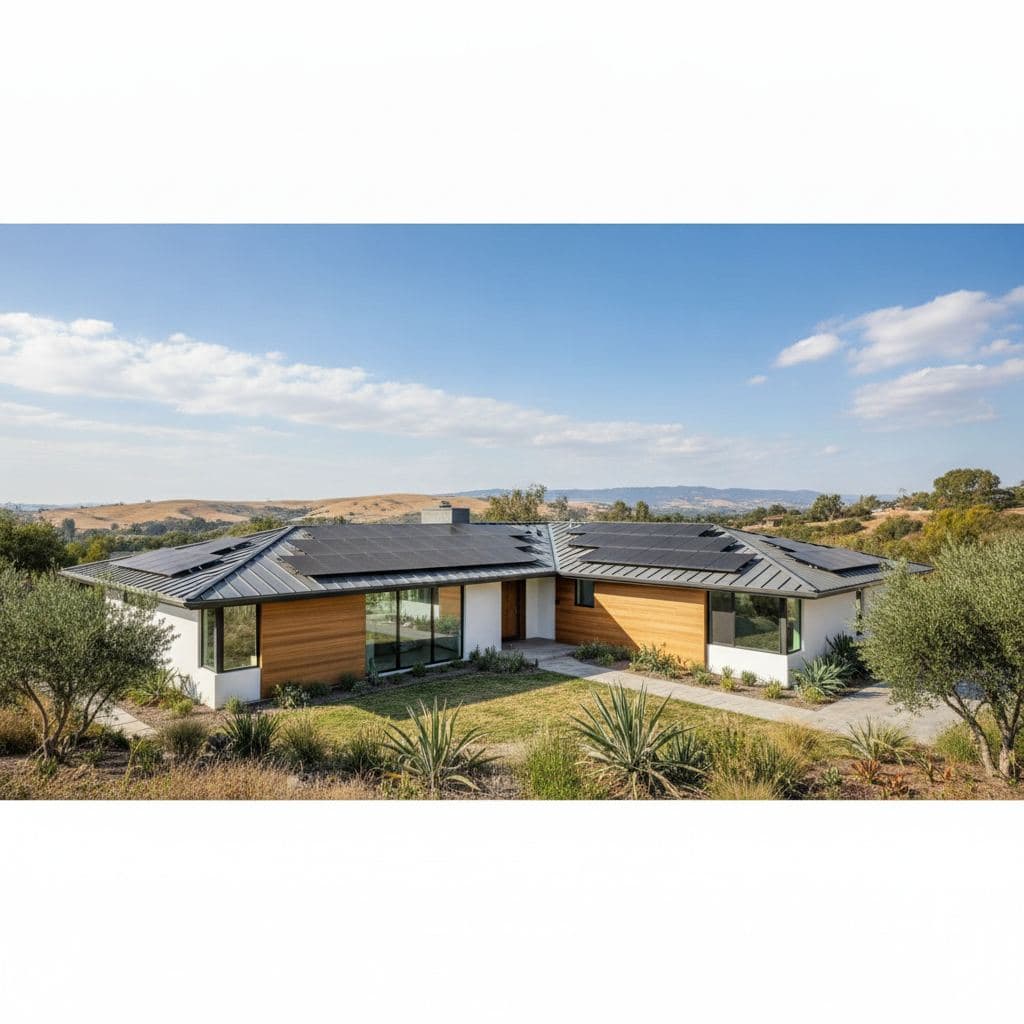
A 6 kW solar system in Southern California costs roughly $15,000–$21,000 installed, depending on your roof type, equipment tier, and which utility serves your home. Break that down and you're looking at equipment (panels, inverter, racking) making up about 55–65% of the total, with labor, permits, and overhead splitting the rest.
Last verified: August 2026 by Helios Energy Global.
This page focuses on what installation actually costs and why — the labor, permit, and overhead components that vary most by location. For a deeper look at how panel brand and system size affect the price-per-watt number itself, see our full price-per-watt guide.
What makes up the total installation price?
Every solar quote you receive bundles several distinct cost categories into one number. Understanding each line item lets you compare quotes honestly and spot where a low bid may be cutting corners.
| Cost Component | Typical Range (6 kW system) | % of Total | Notes |
|---|---|---|---|
| Solar panels (equipment) | $4,200 – $6,500 | 28 – 38% | Varies by brand tier and wattage |
| Inverter(s) | $1,200 – $2,800 | 8 – 15% | String vs. microinverters; microinverters cost more |
| Racking & mounting hardware | $600 – $1,200 | 4 – 7% | Roof type affects this — see roof compatibility guide |
| Labor (installation crew) | $3,000 – $5,100 | 18 – 28% | $0.50 – $0.85/watt; see county breakdown below |
| Electrical & wiring | $400 – $900 | 3 – 5% | Panel upgrades can add $1,500 – $3,500 extra |
| Permits & inspections | $300 – $1,200 | 2 – 6% | Highly city-dependent (see below) |
| Utility interconnection fee | $75 – $800 (estimate) | <5% | SCE and LADWP fees differ |
| Installer overhead & margin | $1,500 – $3,500 | 10 – 18% | Includes design, project management, warranty reserve |
| Total (6 kW, estimate) | $15,000 – $21,000 | 100% | Before any incentives |
All figures are estimates based on 2026 Southern California market conditions. Your actual quote will vary.
Labor costs by Southern California county
Labor is the most geographically variable cost in a solar quote. Prevailing wages, crew travel time, and local installer competition all shift the number. The ranges below are for a standard pitched-roof install; flat roofs, steep pitches, or two-story homes typically add 10–20%.
- Los Angeles County: $0.55 – $0.80/watt. The most competitive installer market in the state keeps labor rates relatively contained despite high cost of living.
- Orange County: $0.60 – $0.85/watt. Slightly higher than LA due to fewer large installers operating in the market.
- Ventura County: $0.55 – $0.80/watt. Similar to LA County; Thousand Oaks and Simi Valley are well-served by local crews.
- San Bernardino County: $0.50 – $0.75/watt. Lower labor costs inland; longer drive times from coastal crews can offset some savings.
- Riverside County: $0.50 – $0.75/watt. Coachella Valley heat means crews often work early shifts; scheduling can affect timelines.
What drives labor cost on your specific job:
- Roof pitch and complexity — A 4:12 pitch is straightforward; a 7:12+ pitch requires safety equipment and slower work.
- Attic access — Easy attic access cuts conduit-run time significantly.
- Electrical panel location — A panel on the opposite side of the house from the array adds wire run and labor hours.
- Number of roof penetrations — Fewer is better; a well-designed layout minimizes penetrations and leak risk.
- Crew size and certification — NABCEP-certified crews command a modest premium but typically produce cleaner installs and fewer inspection failures.
Permit fees by city type in Southern California
Permit costs are set by individual cities and counties, not by the state. They range from under $300 in streamlined cities to over $1,200 in jurisdictions with complex review processes. Here's how the landscape breaks down:
Low-cost permit cities (typically $300–$500): Many cities in Los Angeles County — including Santa Monica, Torrance, and Burbank — have adopted the state's SolarApp+ streamlined permitting system, which cuts review time and fees. Expect same-day or next-day permit issuance.
Mid-range permit cities ($500–$900): Cities like Pasadena, Long Beach, and most of Orange County fall here. Plan check is typically 5–15 business days.
Higher-cost permit jurisdictions ($900–$1,200+): Some coastal cities with design-review overlays or older building departments can push permit costs higher. Malibu and some hillside zones in LA are examples.
Utility interconnection fees:
- SCE (Southern California Edison): Interconnection application fees are typically under $100, but the process can take 4–10 weeks for standard residential systems. NEM 3.0 (the Net Billing Tariff) applies to SCE customers — read how NEM 3.0 affects your bill math.
- LADWP: LADWP is a municipal utility and is not on NEM 3.0. It maintains retail-rate net metering, which significantly changes the economics for LA city customers. Interconnection fees are typically modest. See our guide on solar vs. battery under NEM 3.0 for a side-by-side comparison.
- Other municipal utilities (Pasadena PWP, Riverside RPU, Anaheim APU, Glendale, Burbank): Each runs its own net metering program. Fees and timelines vary — your installer should pull the current interconnection schedule for your specific utility.
What installers mark up — and why
The overhead-and-margin line in the table above ($1,500–$3,500 on a 6 kW job) covers real costs that homeowners sometimes push back on. Here's what's inside it:
- System design and engineering: A licensed engineer stamps the structural and electrical drawings. This isn't optional — the city requires it.
- Project management: Someone coordinates the permit application, utility interconnection, inspection scheduling, and your installation date. On a typical residential job, this is 8–15 hours of staff time.
- Warranty reserve: Reputable installers set aside a portion of revenue to fund future warranty claims (workmanship warranties typically run 10–25 years).
- Customer acquisition cost: Marketing, sales staff, and proposal software are real expenses. High-pressure, door-to-door sales operations tend to have higher customer acquisition costs — which show up in your quote.
- Insurance and licensing: California requires contractors to carry liability insurance and hold a C-10 (electrical) or C-46 (solar) license. These aren't cheap.
What a suspiciously low quote usually means: Either the equipment tier is lower than quoted, the labor crew is unlicensed or under-insured, the warranty is thinner than advertised, or the company won't be around in five years to honor it. Always verify the contractor's CSLB license number before signing.
How to read the installation line items in a real quote
Most residential solar proposals present a single system price, not an itemized breakdown. Here's how to decode it:
Ask for the equipment spec sheet separately. Panel model number, inverter model, and racking brand should all be named. Look them up. A Tier 1 panel from a bankable manufacturer has a different 25-year degradation profile than a no-name module.
Ask what the labor line includes. Does it cover a main panel upgrade if needed? Trenching for a ground mount? Battery wiring rough-in if you want to add storage later? These are common add-ons that inflate the final price if not scoped upfront.
Check the production estimate methodology. A quote should show estimated annual kWh production, not just system size. Ask if it was modeled in PVWatts or similar software, using your actual address and roof azimuth. An east-facing array in Riverside produces meaningfully less than a south-facing array in Santa Monica. Use our custom design tool to get a production estimate for your specific roof.
Understand the net billing math before you sign. If you're an SCE customer on NEM 3.0, a larger system doesn't automatically mean more savings — export rates are much lower than retail. If you're an LADWP customer, retail-rate net metering makes oversizing relatively more attractive. This is one of the most important localization points in any SoCal solar decision.
What the national data says about 2026 pricing pressure
SEIA and Wood Mackenzie's Q2 2026 Solar Market Insight report (July 30, 2026) recorded U.S. residential installations of 1,179 MW in the first quarter — up 6% year over year but down 15% from the prior quarter — and forecast a roughly 21% contraction in residential solar for 2026 now that the 25D homeowner credit has expired, with recovery from 2027 "fueled by TPO tax-credit eligibility and momentum in prepaid TPO offerings." For a California homeowner that cuts two ways: installers are competing harder for fewer cash jobs, which keeps labor pricing honest, while third-party-owned and prepaid-lease structures — which can still capture the commercial credit — are where most of the 2026 price advantage lives.
Financing options and what they do to the effective cost
Cash purchase: You pay the full $15,000–$21,000 (for a 6 kW system) upfront. No interest, maximum long-term savings, and you own the system outright.
Solar loan: Most installers work with lending partners offering 10–25 year terms. Interest rates in 2026 vary — ask for the APR, not just the monthly payment. A low monthly payment with a high APR can cost significantly more over the loan life than the cash price.
Prepaid lease / PPA: You pay a lump sum upfront (typically around 30% of the system's purchase price) or a fixed monthly rate, and the installer owns the system. You don't own the equipment, which matters for home resale and any future incentives. These structures can make sense for homeowners who don't want maintenance responsibility, but read the escalator clauses carefully.
No federal tax credit in 2026: The 30% federal residential clean energy credit expired December 31, 2025. There is no federal income tax offset available for solar systems installed in 2026. Any quote or salesperson implying otherwise is giving you outdated information. California's SGIP battery incentive program is currently waitlisted for residential applicants — it is not reliably available to factor into your budget.
Frequently asked questions about solar installation cost in California
How much does it cost to install solar panels on a 2,000 sq ft house in California?
System size depends on your electricity usage, not your home's square footage — but a 2,000 sq ft Southern California home typically uses 600–900 kWh/month, pointing to a 5–8 kW system. At $2.50–$3.50/watt, that's roughly $12,500–$28,000 installed before incentives. Your actual number depends on your utility, roof orientation, and shading.
Is there still a federal tax credit for solar in 2026?
No. The 30% federal residential solar tax credit expired on December 31, 2025. There is no federal income tax credit available for residential solar systems installed in 2026. Do not make financial decisions based on a quote that assumes this credit.
How long does solar installation take in Southern California?
The physical installation of panels on your roof typically takes 1–2 days for a standard residential system. The full timeline — from signed contract to system turned on — is usually 6–14 weeks, with most of that time spent on permit processing and utility interconnection. SCE interconnection can take 4–10 weeks; LADWP timelines vary.
Does NEM 3.0 change how much I should spend on installation?
Yes, significantly if you're an SCE customer. Under NEM 3.0's Net Billing Tariff, solar export is credited at a much lower rate than retail — which means a larger system doesn't necessarily mean proportionally larger savings. Pairing solar with a battery to self-consume more of your production changes the math. Read our NEM 3.0 explainer before sizing your system. LADWP customers are not on NEM 3.0 and benefit from retail-rate net metering.
What's the difference between the solar panel cost and the installation cost?
The panels themselves are typically 28–38% of your total project cost. "Installation cost" in the broad sense includes panels, inverter, racking, labor, permits, interconnection, and installer overhead — everything needed to go from bare roof to operating system. Our solar panel cost guide breaks down the equipment portion specifically.
Can I get solar installed cheaper by buying panels myself and hiring a contractor?
Rarely, in practice. Installers buy panels at significant volume discounts unavailable to homeowners, and California requires a licensed C-10 or C-46 contractor for the electrical work. A contractor willing to install homeowner-supplied equipment may also void manufacturer warranties and can create complications with the permit and utility interconnection process.
What should I watch out for when comparing installation quotes?
Three things: (1) Make sure each quote specifies the same panel model and inverter type — comparing a microinverter system to a string inverter system isn't apples-to-apples. (2) Check whether a main panel upgrade is included or excluded. (3) Verify the contractor's CSLB license at cslb.ca.gov before signing anything.
Next steps
- Book a free consultation and custom design — get a transparent quote specific to your roof, utility, and usage, with no obligation.
- Run a quick savings estimate with our design tool — see estimated production and bill offset for your address.
- Read our full price-per-watt guide — deeper dive on how panel brand and system size move the per-watt number.
- Learn how NEM 3.0 affects your solar ROI — essential reading for SCE customers before sizing a system.
- Compare solar-only vs. solar + battery under NEM 3.0 — especially relevant if you're on SCE or SDG&E.
- Explore battery storage options and costs — 2026 pricing and what to expect from a paired solar + storage system.
- Check if your roof is ready — roof material and pitch affect both installation cost and timeline.
Sources
- EIA Electricity Sales & Revenue Data
- NREL U.S. Solar Photovoltaic System Cost Benchmark
- CPUC Net Billing Tariff (NEM 3.0)
- DSIRE – California Solar Incentives
- SCE Time-of-Use Rate Schedule
- LADWP Solar Incentive Program
- California Energy Commission – Tracking Solar
- Los Angeles County Building & Safety – Permit Fees
- SEIA / Wood Mackenzie — Solar Market Insight Report Q2 2026 — July 30, 2026
- Public Advocates Office (CPUC) — Q2 2026 Electric Rates Report — July 2026
More guides
How much do solar panels cost in Orange County in 2026?
A typical Orange County home solar system runs $18,000–$30,000 installed before any incentives, depending on system size, roof type, and whether you're on SCE or Anaheim Public Utilities.
ReadBest Solar Companies in Santa Monica, CA (2026): Honest Rankings for Local Homeowners
A straight-talking, numbers-first guide to the best solar installers serving Santa Monica in 2026 — with honest utility context, real price ranges, and no expired-credit hype.
ReadCan Solar Panels Power Your Air Conditioner in 2026?
Yes — a properly sized solar system (typically 8–14 kW for a central AC home in SoCal) can offset most or all of your air conditioning load, but TOU peak timing and your utility determine how much you actually save.
ReadGet a free consultation and custom design.
No pressure, no obligation — the owner reviews every design we send.