Should You Replace Your Roof Before or With Solar in 2026?
If your roof has fewer than ~10 years of life left, replace it before — or ideally at the same time as — your solar install to avoid a $5,000–$10,500 panel removal and reinstall bill later.
By Taylor Crouse — Founder, Helios Energy GlobalPublished
Quick answer
- If your roof has fewer than ~10 years of useful life remaining, replace it first — or coordinate both projects simultaneously — before going solar.
- Doing a panel removal and reinstall after the fact costs $250–$350 per panel ($5,000–$7,000 for a 20-panel system; $7,500–$10,500 for 30 panels on tile or steep roofs).
- A coordinated same-time project shares one permit sequence and one labor mobilization, typically saving $3,000–$6,000 compared to doing them separately.
- Modern solar panels carry a 25-year product warranty; a new roof installed at the same time gives you a matched service life with no mid-term disruption.
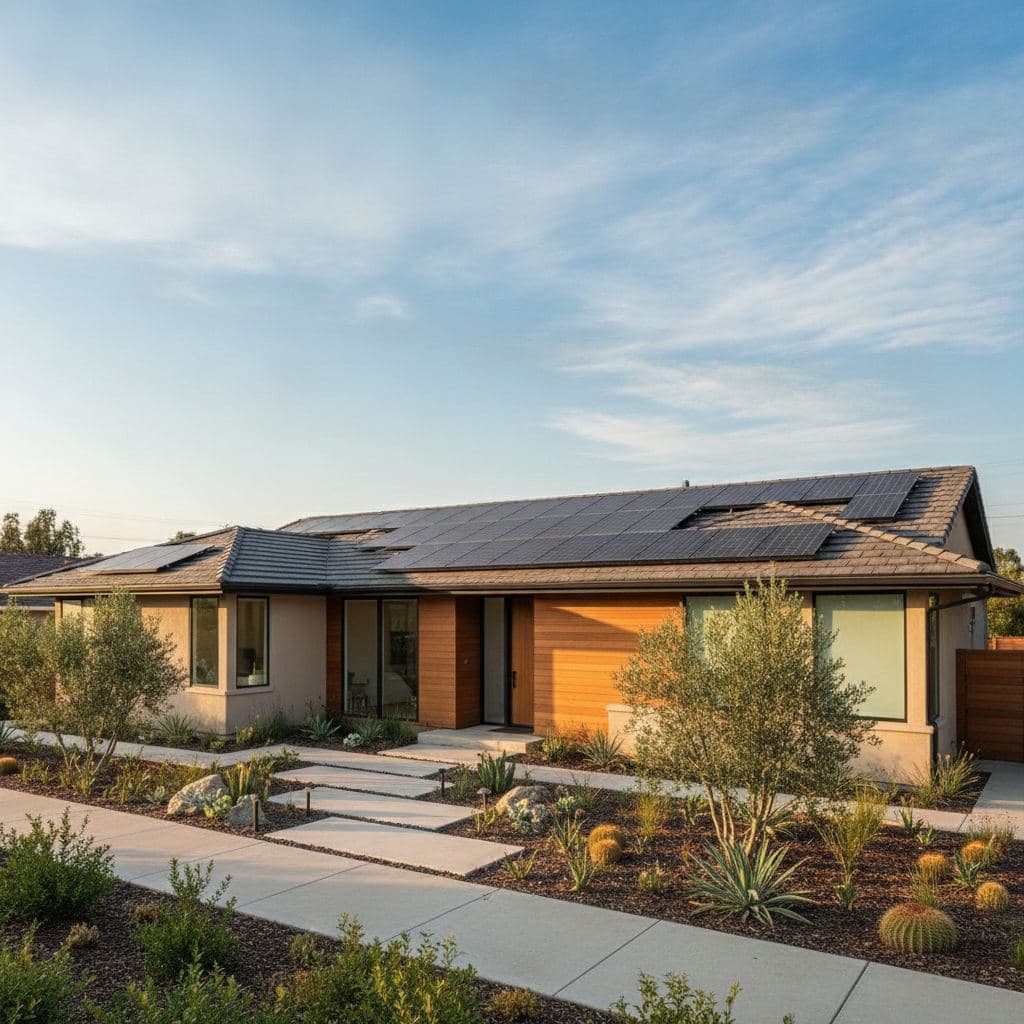
If your roof has fewer than roughly 10 years of life left, the math is clear: replace it before or alongside your solar system, not after. Doing it in the wrong order means paying $5,000–$10,500 to have panels removed, the roof replaced, and the panels reinstalled — a cost that disappears entirely when both projects are coordinated from the start.
Last verified: October 2026 by Helios Energy Global.
The core timing decision: roof age is everything
The single most important number is how many years your roof has left — not how old it is, but how much service life remains. A 12-year-old architectural shingle roof in Southern California's mild climate may have 15+ years left. A 20-year-old 3-tab shingle roof may have two or three.
Standard 3-tab asphalt shingles typically last about 15 to 25 years; architectural/dimensional shingles about 25 to 35 years. Concrete and clay tile — common across Southern California — can last 40 to 100+ years, though the underlayment beneath them usually needs replacement every 20–25 years regardless.
The ~10-year rule of thumb: If your roof has fewer than approximately 10 years of remaining life, plan a replacement before or with your solar install. Here's why that number matters: solar panels are designed for a 25-year service life. Per Tesla's photovoltaic module limited warranty (effective June 2, 2026), modules are warranted free from defects in design and materials for 25 years from installation date. If your roof fails at year 12 of a 25-year panel warranty, you are paying for a full panel detach-and-reset out of pocket — because the roof failure is not a solar warranty event.
What happens if you ignore the timing
Here's the sequence nobody wants to live through:
- You install solar on a 15-year-old roof.
- Five years later, the roof leaks.
- A roofing contractor tells you the panels need to come off first.
- You call a solar company for a detach-and-reset quote.
- You pay $5,000–$10,500 — on top of the roofing cost.
The average cost to remove solar panels runs $250–$350 per panel, or $4,000–$10,000 for a 20-panel system; the cost for removal alone falls at the low end, while removal and reinstallation falls at the high end. At Helios, our licensed solar detach-and-reset work runs $250–$350 per panel — approximately $5,000–$7,000 for a 20-panel system, $7,500–$10,500 for 30 panels, with tile roofs and steep pitches at the top of the range.
The numbers: separate vs. coordinated projects
| Scenario | Typical added cost | Notes |
|---|---|---|
| Reroof first, then solar (separate mobilizations) | ~$0–$1,500 extra | Minimal if done within a few months; permits may overlap |
| Solar first, reroof later (detach & reset required) | $5,000–$10,500 | Estimate; tile/steep roofs at top of range |
| Coordinated same-time project | Savings of ~$3,000–$6,000 vs. separate | One permit sequence, one labor mobilization |
| Main panel upgrade (if needed) | $3,000–$5,000 | Best done once, at the same time |
| Solar system cost (6–15 kW) | $15,000–$52,500 | ~$2.50–$3.50/W before incentives (see full cost guide) |
All figures are estimates. Exact costs depend on system size, roof material, pitch, and story count.
The savings from coordination come from two places: permit consolidation (a combined roofing-and-solar permit pull is typically one fee and one inspection sequence, not two) and labor mobilization (crane or lift equipment, crew travel, and staging costs are shared across both trades rather than duplicated).
How Helios coordinates a combined roof-and-solar project
Helios holds a C-10 electrical/solar contractor license. All roofing work on a combined project is performed by our vetted, licensed roofing partner contractors, with Helios coordinating the full job as a single project from design through final inspection. You deal with one point of contact, one project timeline, and one set of permits.
The sequence on a coordinated project typically looks like this:
Design phase — Helios sizes the solar system and, through our roofing partners, specifies the roof material and layout simultaneously. This matters because panel placement affects which roof sections need the longest service life.
Permit phase — Roofing and solar permits are pulled together or in rapid sequence, avoiding the weeks-long gap that occurs when you hire two separate contractors independently.
Roofing phase — Our licensed roofing partners complete the new roof. On a re-roof, California's 2025 Building Energy Efficiency Standards note that roof area covered by building-integrated photovoltaic panels is not required to meet the cool roof requirements — but the exposed sections must comply with Title 24 cool roof standards. Cool roof requirements adopted by the California Energy Commission apply to re-roofing of existing buildings for which permit applications were filed on or after January 1, 2026.
Solar installation phase — Helios installs the solar system on the fresh roof surface, with new flashing and penetrations done once, correctly, from day one.
Inspection and interconnection — One final inspection covers both trades where the AHJ allows it.
Warranty alignment: why 25 years on 25 years matters
The most underappreciated benefit of coordinating both projects is warranty alignment. Tesla's photovoltaic module warranty (effective June 2, 2026) covers modules free from defects for 25 years from installation date. Most tier-1 panel manufacturers offer the same 25-year performance guarantee. A quality architectural shingle or tile roof installed at the same time gives you a matched service envelope: both the roof and the panels reach the end of their design lives together, with no forced mid-term disruption.
Contrast that with installing solar on a roof that's already 10 years old. Even if the roof has 15 years left, you'll be replacing it at year 15 of a 25-year panel warranty — squarely in the middle of your solar system's productive life, and paying the full detach-and-reset cost to do it.
What about the new 2025 California Energy Code cool roof rule?
If you're re-roofing in 2026, your new roof must comply with California's 2025 Energy Code cool roof requirements. When you replace your roof in California, Title 24 Part 6 requires compliance with cool roof material standards — solar reflectance and thermal emittance minimums based on your climate zone — as well as attic insulation upgrades if existing insulation is below current minimum R-values. Our roofing partners handle this compliance automatically; it's built into every material specification they provide.
The practical upside: cool roofs reflect more heat, which keeps your attic cooler, which reduces your air conditioning load — a benefit that compounds with your solar production.
Southern California specifics: SCE vs. LADWP vs. other utilities
The financial urgency of getting your roof-solar timing right varies by utility, because your payback period determines how long your panels need to work uninterrupted.
SCE territory (most of LA County, Orange County, Inland Empire): SCE's average rate runs around 34–35¢/kWh, with peak pricing of 48–58¢/kWh during the 4–9 PM window under NEM 3.0 (the Net Billing Tariff). Under NEM 3.0, export credits are much lower than retail rate, making self-consumption — and therefore system uptime — more critical than ever. A detach-and-reset that takes your system offline for 2–4 weeks during peak summer months is a real financial hit. See our NEM 3.0 explainer for how this affects your design.
LADWP territory (City of Los Angeles): LADWP is a municipal utility, not on NEM 3.0. LADWP still offers retail-rate net metering, with an effective blended rate of approximately 26–31¢/kWh. The financial case for avoiding a future detach-and-reset is somewhat lower per kWh, but still meaningful — $5,000–$10,500 is $5,000–$10,500 regardless of your utility. If you're in LADWP territory and considering both a roof and solar, read our solar + roof coordination page for LADWP-specific design considerations.
Other Southern California munis (Pasadena PWP, Burbank, Glendale, Anaheim APU, Riverside RPU): These utilities each run their own net metering programs and are not subject to NEM 3.0. Rates and export credit structures vary; ask your Helios designer to run the numbers for your specific utility before you finalize your project scope.
Roof types and solar compatibility
Not all roofs are equal when it comes to solar. Here's how the most common Southern California roof types factor into the timing decision:
Composition/architectural shingles — The easiest surface for solar mounting. If the shingles are fewer than 10 years old and in good condition, solar can go on now. If they're 15+ years old, plan a replacement first or simultaneously. See our roof types guide for more.
Concrete or clay tile — Extremely durable (40–100+ years for the tile itself), but the underlayment typically needs replacement every 20–25 years. Tile roofs require tile removal and reinstallation around each solar mount point — work that our roofing partners handle as part of a coordinated project. If the underlayment is approaching end of life, do it now.
Flat/low-slope (TPO, modified bitumen) — Common on Spanish-style and mid-century homes. Typical lifespan is 15–25 years. Flat roofs often allow ballasted solar mounting (no penetrations), which can simplify a future reroof — but a coordinated project is still the cleaner path.
Wood shake — Increasingly rare in Southern California due to fire risk. If you have wood shake, a roof replacement is almost certainly the right first step before solar.
Frequently asked questions about replacing your roof before solar
Can I install solar on a roof that's 15 years old?
Yes, if a licensed roofing inspector confirms the roof has sufficient remaining life — typically 10+ years — to outlast or match the solar system's warranty period. If the roof is borderline, a coordinated replacement is almost always cheaper than a future detach-and-reset. Have Helios assess both in the same site visit.
How much does it cost to remove and reinstall solar panels for a reroof?
At Helios, solar detach-and-reset (our own licensed work) runs $250–$350 per panel — roughly $5,000–$7,000 for a 20-panel system and $7,500–$10,500 for 30 panels. Steep roofs, tile roofs, and multi-story homes require extra safety equipment and labor time , which pushes costs toward the top of that range.
Does a new roof qualify for any tax incentive in 2026?
The 30% federal residential solar tax credit expired December 31, 2025. There is no federal tax credit for a residential solar or roofing purchase in 2026. California's SGIP battery incentive program has residential budgets that are currently waitlisted in 2026. Never make a project decision based on an incentive that isn't confirmed in writing for your specific project.
Will my solar installer handle the roofing, or do I need to hire separately?
With Helios, you don't need to hire separately. All roofing work on a combined project is performed through our vetted, licensed roofing partner contractors, coordinated by Helios as a single project. You get one point of contact, one timeline, and one permit sequence — not two independent contractors trying to coordinate around each other.
What is the "cool roof" requirement and does it affect my reroof?
California's cool roof requirements apply to re-roofing of existing buildings where permit applications were filed on or after January 1, 2026. In practical terms, this means your new roof shingles or tiles must meet minimum solar reflectance and thermal emittance values for your climate zone. Our roofing partners specify compliant materials automatically. Roof area covered by building-integrated photovoltaic panels is not required to meet the cool roof requirements under the 2025 standards — so the area under your panels is exempt.
How long does a coordinated roof-plus-solar project take?
A typical coordinated project in Southern California runs 4–8 weeks from signed contract to permission-to-operate, depending on permit turnaround at your local AHJ and utility interconnection queue. Doing the projects separately — with independent contractors — often adds 4–12 weeks of scheduling friction on top of that.
Is there a way to know if my roof is too old for solar without a full inspection?
A rough rule: if your roof was installed before 2005 (more than ~20 years ago), assume it needs replacement before solar. If it was installed between 2005 and 2015, get a professional assessment — the answer depends on material type, maintenance history, and Southern California's UV exposure. Helios includes a basic roof condition review in every site assessment at no charge.
Next steps
- Book a free consultation and custom design — Helios will assess your roof condition and solar potential in the same visit, and coordinate with our roofing partners if a replacement is needed.
- Explore our solar + roof coordination page — project scope, sequencing, and what to expect from a combined project.
- See full solar system cost ranges — $2.50–$3.50/W installed, with all-in system totals by size.
- Learn how NEM 3.0 affects your SCE solar design — critical reading before you finalize system size.
- Browse battery storage options — adding a battery at the same time as your roof and solar is the most cost-efficient approach.
- View Helios service locations across Southern California
Sources
- Tesla Photovoltaic Module Limited Warranty (USA), Effective June 2, 2026 — June 2, 2026
- CEC 2025 Building Energy Efficiency Standards – Nonresidential Compliance Manual (CEC-400-2025-008) — June 2025
- Santa Clara City – CEC 2025 Energy Code Cool Roof Requirements for Residential Buildings (Last Revised 02/06/2026) — February 6, 2026
- HomeGuide – Cost to Remove Solar Panels (2026) — January 2026
More guides
Best Solar Companies in North Tustin, CA (2026): Honest Rankings for SCE + NEM 3.0 Foothill Homes
North Tustin runs on SCE under NEM 3.0, sits in a High Fire Threat District, and has some of the largest custom-home rooftops in Orange County. Here's how to pick a solar company that actually knows the territory.
ReadThe 10 Best Solar Companies in El Cajon, CA (2026): East County Heat, SDG&E Rates, and the Battery Question Answered
El Cajon homeowners face the nation's highest major-utility rates from SDG&E and real East County heat. This guide ranks the 10 best solar installers serving the city in 2026, explains NEM 3.0, and shows you how to read a quote without getting burned.
ReadBest Solar Companies in Yucaipa, CA (2026): An Honest Guide for Inland Empire Homeowners
Yucaipa sits in one of Southern California's sunniest inland corridors, served by Southern California Edison under NEM 3.0. This guide ranks the 10 best solar installers for 2026 and explains exactly what local homeowners need to know before signing anything.
ReadGet a free consultation and custom design.
No pressure, no obligation — the owner reviews every design we send.