Powerwall 3 vs FranklinWH aPower 2 vs Enphase IQ 10C for SCE TOU Rates (2026)
On SCE TOU-D-PRIME, a 7 kW battery system can shift roughly $57–$76/month in summer peak-hour charges — here's which of the three leading batteries does it best.
By Taylor Crouse — Founder, Helios Energy GlobalPublished
Quick answer
- SCE TOU-D-PRIME charges approximately ~61¢/kWh at peak (4–9 PM) vs. ~23¢/kWh off-peak — a ~38¢/kWh spread that a battery can fully exploit.
- A 7 kW usable discharge during the 5-hour peak window avoids roughly $57–$76 in summer peak charges per day of full discharge (at ~23–38¢ effective spread, cycling ~5 kWh of that 7 kW in a typical household).
- Powerwall 3: 13.5 kWh usable / 11.5 kW continuous — best single-unit whole-home power; FranklinWH aPower 2: 15 kWh / 10 kW — most capacity per unit, inverter-agnostic; Enphase IQ 10C: 10 kWh / 7.08 kW — tightest Enphase ecosystem fit, 15-year warranty.
- Installed costs (no federal credit in 2026): Powerwall 3 ~$14,500–$18,500 per unit; aPower 2 ~$16,000–$18,500 per unit; IQ 10C ~$12,000–$16,000 per unit (estimates, vary by site).
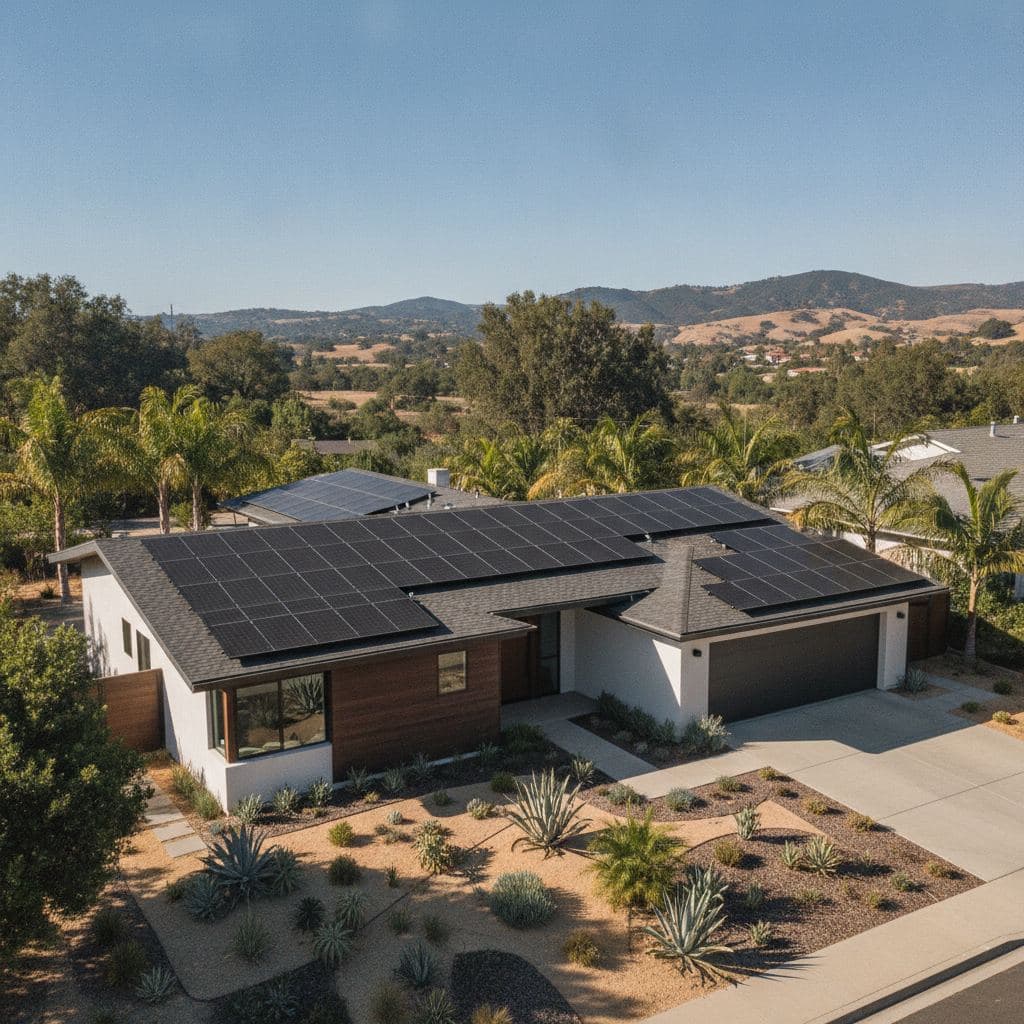
On SCE's TOU-D-PRIME plan, the gap between peak and off-peak electricity is roughly 38¢/kWh — about $0.61 at peak vs. $0.23 off-peak — meaning every kilowatt-hour your battery covers during the 4–9 PM window is worth nearly triple what it would cost to charge overnight. For a home with a 7 kWh net peak load, that translates to roughly $57–$95/month in avoided summer peak charges if the battery covers the full window, depending on how much of that load falls squarely in peak hours. The question isn't whether a battery pays on SCE TOU-D-PRIME — it's which battery's specs and scheduling tools make the math work best for your specific home.
Last verified: September 2026 by Helios Energy Global.
Why SCE TOU-D-PRIME is the highest-stakes rate plan for batteries
TOU-D-PRIME is reserved specifically for customers with electrification upgrades like EV charging, solar panels, battery storage, and heat pump HVAC systems. If you went solar after April 2023, you are on it — no choice. Solar Billing Plan customers are required to be on the TOU-D-PRIME rate.
TOU-D-PRIME from SCE is a time-of-use plan: electricity costs the most during peak hours (4 p.m.–9 p.m.) at about $0.61/kWh and the least off-peak at about $0.23/kWh. That ~38¢/kWh spread, confirmed by Energy Advisor's dataset compiled from SCE's residential tariff effective January 1, 2026, is the financial engine behind every battery calculation below.
The plan comes with a 79-cent daily basic charge (~$24 in a 30-day month) and has lower per-kWh rates, but TOU-D-PRIME does not have a baseline credit, so the charges are the same regardless of how much electricity is consumed throughout the month. That flat structure actually favors battery owners: there's no baseline credit to lose, and the only lever left is shifting consumption out of the 4–9 PM window.
The solar timing problem on SCE. Your panels generate their peak power from roughly 9 AM to 3 PM — well before the peak window opens. Under NEM 3.0 (the CPUC Net Billing Tariff that applies to SCE), export credits during off-peak hours are significantly below retail. The fix is to store that midday solar in a battery and discharge it precisely from 4 to 9 PM. All three batteries reviewed here can do that. The differences are in how much they store, how much power they can deliver, and how reliably their software executes the timing.
Spec-by-spec comparison for SCE TOU-D-PRIME
| Spec | Tesla Powerwall 3 | FranklinWH aPower 2 | Enphase IQ Battery 10C |
|---|---|---|---|
| Usable capacity (per unit) | 13.5 kWh | 15 kWh | 10 kWh |
| Continuous output | ~11.5 kW | 10 kW | 7.08 kW |
| Peak/surge output | ~11.5 kW (rated) | 15 kW (10 sec) | 14.16 kW (3 sec) |
| Battery chemistry | NMC | LFP | LFP |
| Round-trip efficiency | ~97.5% | ~96% | ~90% AC / ~96% DC |
| Inverter included | Yes — integrated solar inverter | No — AC-coupled via aGate hub | Yes — integrated microinverters |
| Inverter compatibility | Tesla system only (DC-coupled) | Any brand (AC-coupled) | Enphase ecosystem only |
| Warranty | 10 years / unlimited cycles | 15 years / 60 MWh throughput | 15 years / 6,000 cycles |
| Installed cost est. (1 unit, 2026) | ~$14,500–$18,500 | ~$16,000–$18,500 | ~$12,000–$16,000 |
| Max units per system | 4 Powerwall 3 units | 15 aPower units per aGate | Stackable (40+ kWh) |
| SGIP eligibility | Yes (waitlisted 2026) | Yes (waitlisted 2026) | Yes (waitlisted 2026) |
All costs are estimates for Southern California installs in 2026. No federal tax credit applies — Section 25D expired December 31, 2025. SGIP residential budget is waitlisted; do not count on it in near-term planning.
Tesla Powerwall 3 — the whole-home TOU workhorse
Powerwall 3 provides up to 11.5 kW AC of continuous power per unit and has the ability to start heavy loads rated up to 185 LRA, meaning a single unit can support the power needs of most homes.
For SCE TOU-D-PRIME, that 11.5 kW continuous rating matters more than the 13.5 kWh of stored energy. During a hot Southern California evening — AC running, EV charging, oven on — a single Powerwall 3 can handle the load without tripping into a low-power mode. The 13.5 kWh capacity covers roughly 5–6 hours of a moderate whole-home load before needing solar recharge the next morning.
TOU scheduling. Tesla's app lets you set a "Time-Based Control" mode that charges the battery from solar (or cheap overnight grid power) and reserves discharge for the 4–9 PM window. This is the exact behavior TOU-D-PRIME rewards. The scheduling is reliable and automatic once configured.
The catch. The integrated solar inverter with 6 MPPTs accepts up to about 20 kW of DC solar, eliminating a separate inverter on new installs. One unit runs $14,500–$18,500 installed in 2026, with a 10-year warranty. If you already have a non-Tesla string inverter or microinverters, retrofitting a Powerwall 3 requires an AC-coupling configuration — confirm compatibility with your installer before assuming a direct swap.
Two-unit scenario. For homes with EVs, pool pumps, or central AC above 3 tons, two Powerwall 3 units ($24,000–$30,000 installed, estimated) give you 27 kWh of storage — enough to cover the full 4–9 PM window even on a high-demand summer day, while maintaining enough reserve for a PSPS event overnight.
FranklinWH aPower 2 — the capacity leader, inverter-agnostic
With an industry-leading 15-year warranty, 15 kWh capacity, and 10 kW continuous output power, the aPower 2 delivers unrivaled performance to power your entire home day and night, during outages, and even for complete off-grid living.
The extra 1.5 kWh over the Powerwall 3 sounds small, but on a 5-hour TOU peak window it's meaningful: that's roughly one additional hour of a 1.5 kW baseline load (fridge, lights, router, TV) at no grid cost. More importantly, the LFP battery technology in the aPower 2 provides enhanced safety due to its inherently stable chemistry. LFP also tolerates daily deep cycling better than NMC, which matters when you're running a charge-discharge cycle every single day to hit the 4–9 PM window.
The aGate hub advantage. With 15 kWh of usable capacity, 10 kW of continuous power output, LFP chemistry, and a unique energy management hub that works with any inverter brand, the aPower 2 is challenging every assumption about what a residential battery should be. If you have an existing SolarEdge, Enphase, SMA, or any other string or microinverter system, the aPower 2 slots in as an AC-coupled battery without replacing your solar equipment. That makes it the strongest retrofit option among the three.
TOU scheduling. The FranklinWH app and aGate hub support time-based charge/discharge scheduling. You configure the battery to charge from solar during the day and discharge exclusively during the 4–9 PM window. The interface is less polished than Tesla's but functionally equivalent for TOU optimization.
Warranty edge. FranklinWH offers a 15-year warranty on the aPower 2 with a 60 MWh throughput guarantee — one of the most comprehensive residential battery warranties on the market, five years longer than the Tesla Powerwall 3. The 60 MWh throughput guarantee means the battery is warranted to deliver at least 60,000 kWh of total energy output over 15 years.
The catch. Continuous output is 10 kW vs. the Powerwall 3's 11.5 kW. For most SCE homes that's sufficient, but if you have a large central AC (3.5–5 tons) plus an EV charger running simultaneously, the Powerwall 3's extra headroom is noticeable.
Enphase IQ Battery 10C — the Enphase ecosystem's best TOU tool
The IQ Battery 10C provides a total usable energy capacity of 10 kWh and delivers 7.08 kW of continuous power, easily supporting heavy loads such as HVAC units and pool pumps. It is an all-in-one, AC-coupled storage system that integrates 240 V and 120 V microinverters, providing backup functionality and removing the need for additional neutral-forming hardware.
At 10 kWh, the 10C is the smallest of the three per unit — but it's also the most modular. A modular architecture allows for easy expansion as energy needs evolve. Two units give you 20 kWh and 14.16 kW of combined continuous output, which comfortably covers a whole-home SCE peak-shift load.
Why it's the right pick for existing Enphase homes. For homes with existing Enphase microinverters, the 10C is almost always the right pick. The Enphase IQ System Controller handles TOU scheduling natively through the Enlighten app, and the per-panel monitoring lets you see exactly how much solar energy is charging the battery versus going to the grid — critical for optimizing your NEM 3.0 export strategy on SCE.
Efficiency note. Round-trip efficiency is approximately 90% AC / up to 96% DC. The 90% AC round-trip is slightly lower than the Powerwall 3's 97.5%, which means for every 10 kWh you push in from the grid overnight, you get back about 9 kWh. On a TOU-D-PRIME plan where off-peak power costs ~23¢ and peak costs ~61¢, that efficiency loss is still a strong net positive — but it's worth noting in your payback math.
Warranty. The IQ 10C carries a 15-year product warranty with a 6,000-cycle guarantee (whichever comes first). That matches the FranklinWH aPower 2's 15-year term and beats the Powerwall 3's 10-year warranty by five years.
The 7 kWh peak-shift math for SCE TOU-D-PRIME
Here's the real-world bill-shift calculation for a typical SCE home with a 7 kWh net load during the 4–9 PM peak window (after solar offsets what it can in real time):
Scenario: Home on TOU-D-PRIME. Solar charges battery from 9 AM–3 PM. Battery discharges 7 kWh between 4–9 PM. No grid draw during peak.
| Without battery | With battery (7 kWh shifted) | |
|---|---|---|
| Peak-hour grid draw | 7 kWh × ~$0.61 = $4.27/day | ~$0 |
| Off-peak recharge cost | — | 7 kWh ÷ 0.97 efficiency × |
| Net daily savings (summer) | — | ~$2.61/day |
| Monthly savings (30 days) | — | ~$78/month |
Estimate only. Assumes summer TOU-D-PRIME peak rate ~61¢/kWh and off-peak ~23¢/kWh per Energy Advisor's dataset from SCE's 2026 tariff. Recharge via solar costs $0 in most cases — the $1.66 figure applies only if you're charging from the grid overnight. Most solar homeowners will see savings closer to the full $4.27/day avoided peak cost.
If your solar fully charges the battery each day at zero marginal cost, the avoided peak charge of $4.27/day × 30 days = **$128/month in summer** — minus the fixed $0.79/day base services charge that applies regardless. That's a compelling number, and it's why batteries pencil out faster on SCE than on almost any other Southern California utility.
Whole-home vs. partial backup during SCE PSPS events
Public Safety Power Shutoffs (PSPS) in SCE territory — particularly in the Santa Monica Mountains, Malibu, Altadena, and inland foothills — are a second reason Southern California homeowners add batteries. The three units behave very differently when the grid goes down.
Powerwall 3: whole-home backup, one unit
Powerwall 3 provides up to 11.5 kW AC of continuous power per unit and has the ability to start heavy loads rated up to 185 LRA. That means a single Powerwall 3 can start and run a central AC system, which most competing batteries cannot do alone. A single Powerwall 3 holds 13.5 kWh of usable capacity. The average U.S. home uses 28–30 kWh per day, so a single unit covers roughly 10–12 hours at normal usage — or 24+ hours if you shed non-essential loads.
FranklinWH aPower 2: whole-home backup, more capacity
Peak power hits 15 kW for 10 seconds — rated to start a 5-ton air conditioner (185 A LRA surge capability) while running other loads. The 15 kWh usable capacity gives you roughly an extra 90 minutes of runtime versus the Powerwall 3 at the same load. The aPower 2 also accepts generator input through the aGate hub — a meaningful advantage during multi-day PSPS events common in SCE's high fire-threat districts.
Enphase IQ 10C: partial backup scales to whole-home
A single IQ 10C at 10 kWh and 7.08 kW continuous covers essential loads — fridge, lights, router, phone charging, and a window AC unit — but may not start a large central AC on its own. Peak performance hits 14.16 kVA for 3 seconds and 11.33 kVA for 10 seconds, making it ideal for whole-home backup when stacked. Two units (20 kWh, ~14 kW combined continuous) provide genuine whole-home coverage. The modular approach lets you start with one unit and add a second later.
PSPS bottom line: If whole-home backup in a single unit is the priority, Powerwall 3 or aPower 2 are the cleaner choices. If you have Enphase solar and want to start smaller, one IQ 10C covers the essentials and scales.
Which battery wins for SCE TOU-D-PRIME?
There is no universal winner — but there is a right answer for each home type:
- New solar + battery system, no existing inverter: Powerwall 3. The integrated solar inverter, 11.5 kW continuous output, and seamless TOU scheduling make it the cleanest single-unit solution. Installed cost runs $14,500–$18,500 for one unit in Southern California.
- Existing non-Enphase solar (SolarEdge, SMA, Fronius, etc.): FranklinWH aPower 2. The aGate hub's inverter-agnostic design means you don't replace your existing equipment. The 15 kWh capacity and 15-year warranty are the best in class for a retrofit.
- Existing Enphase microinverter system: Enphase IQ Battery 10C. The 10C wins on warranty length, ecosystem integration if you have Enphase solar, silent operation, and modular scaling. One unit handles partial backup and TOU shifting; two units provide whole-home coverage.
- High-load homes (3.5+ ton AC, EV, pool pump): Powerwall 3 × 2, or aPower 2 × 2. The extra continuous power headroom matters when multiple large loads run simultaneously during a PSPS event.
For more on how these batteries compare in a broader context, see our full three-way battery comparison guide and our SCE-specific battery guide.
Frequently asked questions about home batteries for SCE TOU rates
What is the SCE TOU-D-PRIME peak rate in 2026?
TOU-D-PRIME from SCE charges about $0.61/kWh during peak hours (4 p.m.–9 p.m.) and about $0.23/kWh off-peak , per Energy Advisor's dataset compiled from SCE's residential tariff effective January 1, 2026. These figures can change with CPUC approval — always confirm on your actual SCE bill or at sce.com.
Do I have to be on TOU-D-PRIME if I go solar with SCE?
Yes, if you applied for solar after NEM 2.0 closed in April 2023. SCE's Solar Billing Plan replaced NEM 2.0 for new solar customers in April 2023. If you applied for solar after NEM 2.0 closed, you're generally on the Solar Billing Plan and required to be on TOU-D-PRIME.
Is there a federal tax credit for home batteries in 2026?
No. There is no federal tax credit for standalone batteries in 2026 since Section 25D expired December 31, 2025. There is no federal credit for solar systems purchased in 2026 either. California's SGIP residential budget is waitlisted in 2026 — do not factor it into near-term payback calculations.
Can one battery cover the full 4–9 PM peak window on SCE?
It depends on your home's load. A typical Southern California home draws 1.5–3 kW during the evening (excluding AC and EV). A 13.5–15 kWh battery can cover 5–9 hours at that load, comfortably spanning the full peak window. Add central AC (2–4 kW) and an EV charger (7+ kW) and a single battery may run short — two units are recommended for high-load homes. See our batteries page for sizing guidance.
Which battery works with my existing solar system on SCE?
The FranklinWH aPower 2 works with any inverter brand via its aGate hub — the best choice for retrofit installs with SolarEdge, SMA, or other non-Tesla equipment. The Enphase IQ 10C works exclusively within the Enphase ecosystem. The Powerwall 3 is DC-coupled and works best as part of a new Tesla solar system, though AC-coupling configurations exist for some retrofit scenarios.
How does SGIP affect the payback on these batteries in 2026?
California's Self-Generation Incentive Program (SGIP) residential budget is waitlisted in 2026. All three batteries — Powerwall 3, aPower 2, and IQ 10C — are SGIP-eligible in principle, but you should not plan your payback math around a rebate that is not currently funded. Calculate your return using TOU bill savings alone; SGIP, if it reopens, would be upside.
What happens to my battery during a PSPS event if I have SCE?
All three batteries island automatically when the grid goes down, keeping your backed-up loads running from stored energy and solar (if the sun is up). The Powerwall 3 and aPower 2 both support whole-home backup from a single unit; the IQ 10C covers essential loads with one unit and scales to whole-home with two. For multi-day PSPS events, the aPower 2's generator integration gives it an edge. Learn more on our SCE net metering page.
Next steps
- Powerwall 3 cost — the installed price for one unit, what moves it, and what is included
- Enphase battery cost in Southern California — the installed price for one IQ Battery 10C with controller, what moves it, and the IQ Meter Collar
- Book a free consultation and custom design — we'll model your SCE bill, size the right battery, and show you the peak-shift math for your specific home.
- See our SCE battery guide — the full ranking of home batteries for SCE territory.
- Understand your SCE net metering options — how NEM 3.0 export credits interact with your battery strategy.
- Explore all battery options — specs, sizing, and pricing for every battery we install.
- Compare solar system designs — see how panel placement affects how much solar charges your battery before 4 PM.
- Full three-way battery comparison guide — broader context beyond the SCE TOU angle.
Sources
- SCE TOU-D-PRIME Rate Schedule — whydidmybillspike.com Energy Advisor (compiled from SCE tariff effective 2026-01-01) — June 18, 2026
- Tesla Powerwall 3 Datasheet (US) — Tesla Energy Library — January 2025
- FranklinWH aPower 2 Product Page — FranklinWH.com — February 2025
- Enphase IQ Battery 10C Product Page — Enphase.com — January 2026
- SCE TOU-D-4-9PM Rates 2026 — temeculasolarsavings.com — August 17, 2026
More guides
Best Solar Companies in Vista, CA (2026): Honest Rankings for SDG&E Homeowners
Vista's ~46¢/kWh SDG&E rates and same-day SolarAPP+ permits make it one of SoCal's most compelling solar markets — if you pick the right installer. Here are the 10 best solar companies serving Vista in 2026, ranked honestly.
ReadSolar financing options in California: cash vs loan vs lease vs PPA in 2026
With the federal 30% credit gone, a prepaid lease is the only 2026 path to roughly 30% off; cash still wins in municipal utility territory.
ReadBest Solar Companies in Chino Hills, CA (2026): Honest Ratings for Homeowners
A straight-talking, numbers-first guide to the best solar installers serving Chino Hills in 2026 — covering SCE net billing, battery strategy, and what local roofs actually cost to go solar.
ReadGet a free consultation and custom design.
No pressure, no obligation — the owner reviews every design we send.