Best Solar Companies in Chatsworth, CA (2026): Top 10 Installers, Real Prices + How to Choose
A deep 2026 guide to going solar in Chatsworth: our ranked top 10 installers, real local pricing, why LADWP changes the net-metering math, battery strategy, and a full quote checklist for Valley homeowners.
Updated
Quick answer
- Chatsworth is usually LADWP territory, not SCE. Because it's in the City of Los Angeles, most homes are served by LADWP, a municipal utility with its own net metering and interconnection rules — so the statewide "NEM 3.0" talking points you hear do not apply the same way here.
- It's a larger-system market. Big roofs and high summer cooling loads mean Chatsworth systems often land bigger than the California average — frequently in the 8–12 kW range.
- Pricing is competitive for LA. Expect roughly $2.50–$3.50 per watt before incentives for a straightforward install, with most solar-only projects landing around $22,000–$32,000 before any battery.
- Batteries still matter — just for different reasons. In LADWP territory the case for storage leans toward backup, resilience, EV charging, and future electrification rather than reacting to the investor-utility Net Billing Tariff.
- The property details drive the price. Tile roofs, hillside shade, detached structures, long conduit runs, and older main panels can all move a quote more than the panel brand does.
- The federal tax credit is gone. The 30% residential credit expired December 31, 2025, so 2026 sticker prices are close to final prices. Written, gross-price quoting matters more than ever.
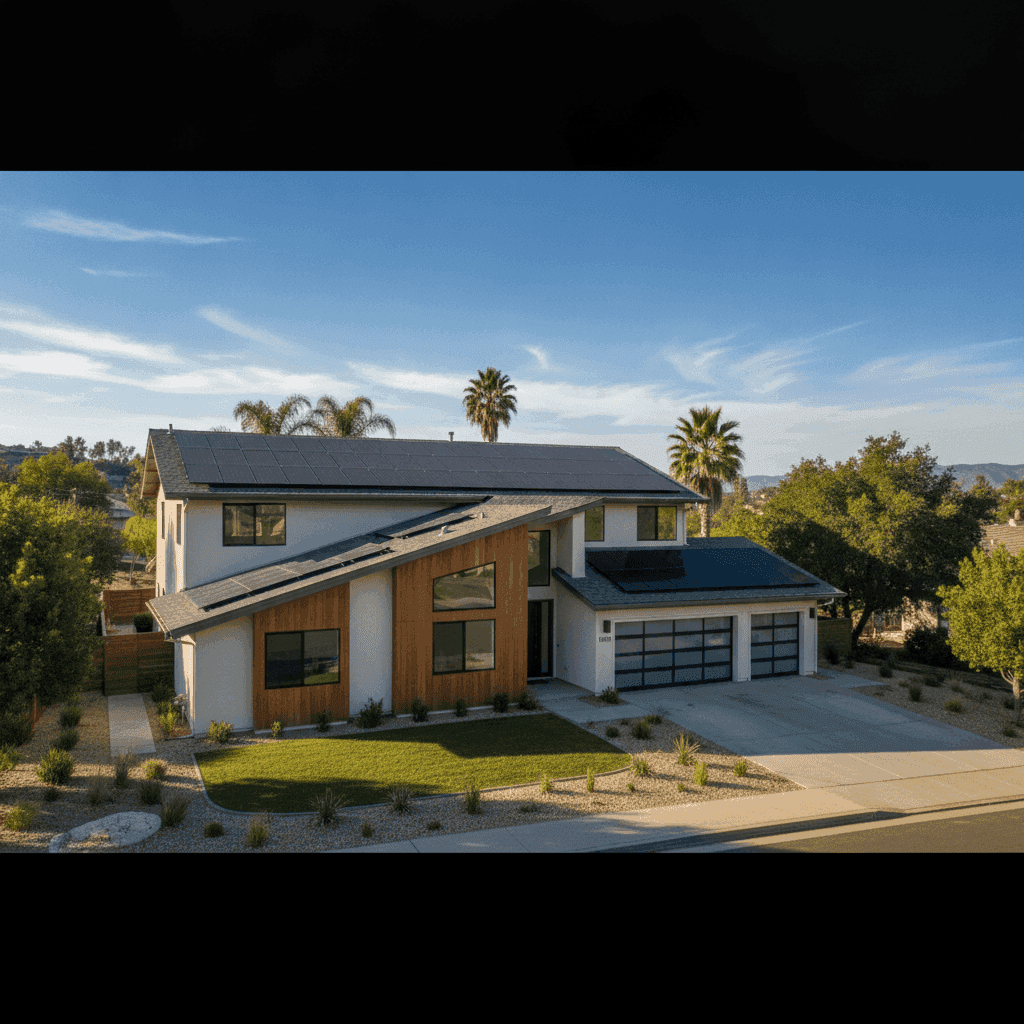
Chatsworth is one of the more interesting places to go solar in Los Angeles, and it rarely gets treated that way. It sits at the northwest corner of the San Fernando Valley, technically inside the City of Los Angeles, but it does not behave like a dense urban solar market. You get big roofs, larger lots, horse properties, hillside homes, mature shade trees, long driveways, detached garages and ADUs, older electrical panels, and brutal Valley summers that push air conditioning hard.
That mix is exactly why the installer matters more here than in a cookie-cutter tract neighborhood. A solar system in Sherman Oaks, Westchester, or Silver Lake can fall under the same City of Los Angeles permitting and the same LADWP utility, but the actual design problems in Chatsworth are different. This guide ranks the companies worth considering, shows real local pricing, and gives you a checklist so you can judge any quote — including ours — on the merits.
Last verified: September 2026 by Helios Energy Global.
Top 10 best solar companies in Chatsworth (2026)
A 2026 note on who is still standing. Residential solar has been through a brutal consolidation, and several companies that appear on older "best of" lists no longer exist. SunPower filed Chapter 11 in August 2024 and the brand now belongs to a different legal entity; Sunnova filed in June 2025; Freedom Forever filed in April 2026. Companies that have shut down or are in restructuring have been removed from the ranking below — a workmanship warranty is only worth the company standing behind it. Full detail in our statewide ranking of California solar companies.
This is our roundup as a local installer, focused on residential solar for Chatsworth homeowners. We've put ourselves first because this is our service area and we know the LADWP playbook — but it's our opinion, not a paid placement, and you should verify any company's California license, reviews, and current service area before signing.
At-a-glance ranking
- Helios Energy Global — Best for full-service, LADWP-aware design with in-house crews
- Solar Optimum — Best for an established Glendale-based SoCal track record
- Semper Solaris — Best for coordinated solar-and-roofing projects
- LA Solar Group — Best for a Los Angeles–based solar-and-battery quote
- Sunlux — Best for a focused Southern California residential installer
- Sunrun — Best for lease/PPA shoppers who want the largest national provider
- Tesla — Best for battery-first buyers who want a single-brand ecosystem
- Palmetto — Best for a national installer with app-based monitoring
- Forme Solar — Best for homeowners who also want solar repair expertise
- Infinity Energy — Best for a regional solar-plus-storage option
1. Helios Energy Global
Because this guide lives on the Helios site, we'll be direct: this is our team, and we rank ourselves #1 because Chatsworth is exactly the kind of market where design beats a fast sales pitch. A Chatsworth system shouldn't be sized off last year's bill and a satellite photo — it should be designed around real usage, LADWP net metering, summer cooling load, roof condition, detached structures, future EV charging, and whether the panel needs an upgrade. Best for: homeowners who want a full-service partner and an transparent quote that's easy to compare. What we handle: rooftop solar, battery storage, EV-charger planning, and the electrical upgrades that Valley homes often need. The owner reviews every system before it goes out. Review snapshot: 209 Google reviews, 4.9★ average.
2. Solar Optimum
A long-running, Glendale-based installer with a deep Southern California history and broad equipment options. Why it fits Chatsworth: established installers tend to handle LA-area permitting smoothly. What to ask: who runs the LADWP interconnection, and whether the battery is designed for backup or bill management.
3. Semper Solaris
A California solar-and-roofing company, veteran-owned, that handles combined roof-and-solar work. Why it fits Chatsworth: roof condition matters here, where tile roofs and older homes are common. What to ask: who performs the roofing scope and how the roof warranty interacts with the solar warranty.
4. LA Solar Group
A Los Angeles–based installer that offers solar and battery options and knows City of LA project flow. Why it fits Chatsworth: local experience helps with LADBS permits and LADWP interconnection. What to ask: whether crews are in-house or subcontracted, and what post-install service looks like.
5. Sunlux
A Southern California installer focused on residential solar and storage. Why it fits Chatsworth: a regional footprint can mean a more tailored design for larger lots. What to ask: how they model shade, and whether the production estimate is realistic for your roof.
6. Sunrun
The largest residential solar company in the U.S., leaning toward lease and power-purchase-agreement financing. Why it fits Chatsworth: scale and standardized processes. What to ask: for the total lease/PPA cost over the full term, including the annual escalator — not just the first monthly payment.
7. Tesla
Tesla Solar and Powerwall, ordered online with standardized pricing and a strong battery ecosystem. Why it fits Chatsworth: many homeowners here are battery shoppers as much as solar shoppers. What to ask: who manages the local install and service, and whether the roof design is flexible enough for your layout.
8. Palmetto
A national installer with a California presence and an app-based monitoring and service model. Why it fits Chatsworth: transparent digital tooling. What to ask: who handles the install locally and how service works after permission to operate (PTO).
9. Forme Solar
A SoCal installer that also handles solar repair and troubleshooting. Why it fits Chatsworth: repair experience signals they understand what fails on real roofs. What to ask: how they handle detached structures and long conduit runs.
10. Infinity Energy
A regional installer offering solar, storage, and related home-energy upgrades. Why it fits Chatsworth: a one-stop option for homeowners planning broader electrification. What to ask: brands installed, and how battery backup loads are chosen.
Rankings reflect our opinion as of 2026 and are not paid placements. Always confirm a company currently serves Chatsworth and holds an active California (CSLB) license before signing.
Why Chatsworth solar is different from a generic LA install
1. It's LADWP territory, not SCE
This is the single most important local fact. Many homeowners hear "NEM 3.0" and assume it's everywhere — but the CPUC's Net Billing Tariff (NEM 3.0) governs the investor-owned utilities: SCE, PG&E, and SDG&E. Chatsworth is in the City of Los Angeles, so most homes are served by LADWP, a municipal utility that sets its own net metering and interconnection rules. A good Chatsworth installer should be able to explain LADWP net metering, the LADWP interconnection and PTO process, what happens if a panel upgrade is needed, and how a battery affects the timeline — without leaning on generic NEM 3.0 scripts.
2. Batteries matter, but for different reasons
In SCE/PG&E/SDG&E territory, the Net Billing Tariff made batteries far more important because export credits dropped sharply. LADWP is its own animal, so in Chatsworth the battery conversation should be specific. Storage here is usually about backup power, outage resilience, home-office continuity, refrigeration and medical equipment, EV-charging strategy, evening usage, and future electrification — not simply reacting to export rates. A battery isn't mandatory for every home, but it should be discussed honestly. (If you want the statewide framing, see our guide on solar vs. battery under NEM 3.0 — just remember the export math differs under LADWP.)
3. Large lots and detached structures change everything
Chatsworth has horse properties, ADUs, workshops, barns, and guest houses, often with long distances between roof planes and the main panel. That affects conduit length, trenching, equipment placement, battery location, backup-load design, permit complexity, and cost. A cheap quote that ignores those details isn't cheap — it's incomplete.
4. Heat and A/C usage are real
The northwest Valley gets hot, and a home that looks moderate on annual kWh can have serious summer peaks once central AC runs hard. Good design looks at seasonal usage and summer peaks, HVAC load, future EV charging, and whether usage is likely to rise — not just a flat annual average.
5. Roof type and micro-neighborhood matter
Chatsworth has several solar personalities: hillside and Chatsworth Lake–adjacent homes where shade, pitch, and fire-access rules matter; horse-property and large-lot areas where detached structures and long runs drive cost; older central-Chatsworth homes that may need a panel or roof evaluation; and larger Porter Ranch–adjacent homes where bigger systems and batteries make more sense.
Real prices: what solar costs in Chatsworth
Chatsworth is a larger-system market, but pricing stays competitive for Los Angeles. As a planning benchmark, expect roughly $2.50–$3.50 per watt before incentives for a straightforward install — premium equipment, tile work, battery storage, a panel upgrade, or long conduit runs push toward the top of that range.
Illustrative pre-incentive cash prices (estimates, not quotes):
| System Size | Low Estimate | High Estimate | Notes |
|---|---|---|---|
| 6 kW | $14,400 | $19,500 | Smaller homes or partial offset |
| 8 kW | $19,200 | $26,000 | Common mid-size Chatsworth home |
| 10 kW | $24,000 | $32,500 | Larger homes with heavy AC use |
| 12 kW | $28,800 | $39,000 | High-usage homes or EV charging |
| 15 kW | $36,000 | $48,750 | Horse properties, ADUs, pool + EV |
These are a way to pressure-test what an installer puts in front of you, not a substitute for a real design. For a full breakdown of the math, see our 10kW solar system cost guide for California.
What pushes a Chatsworth quote higher: battery and backup-panel scope, tile-roof work, a main-panel upgrade, LADWP interconnection complexity, detached garages/ADUs/barns, long conduit runs and trenching, EV-charger integration, pool equipment and high summer usage, tree shading, premium equipment, and financing fees buried in loan quotes.
Solar-only or solar + battery in Chatsworth?
A solar-only system can absolutely make sense in LADWP territory — the right answer depends on how your home uses power and what you want the system to do.
Solar-only may be enough if you mainly want bill reduction, your roof produces well, your usage aligns with daytime production, the system is sized realistically, your panel is ready, and you don't have major outage concerns.
Solar + battery may be the better fit if you want backup power, work from home, have medical equipment, want refrigeration and Wi-Fi during outages, charge an EV, have high evening usage, or are planning to electrify more of the house.
The mistake to avoid: letting anyone sell you a battery on generic NEM 3.0 talking points without explaining LADWP. A real battery proposal shows which loads are backed up, how long the battery lasts in an outage, whether it's whole-home or critical-load backup, where it mounts, whether it's sized for savings or backup or both, and how it interacts with LADWP interconnection.
How to choose the right solar company in Chatsworth
Start with your actual usage. Pull 12 months of kWh before comparing quotes, then factor future load: EV charging, pool equipment, heat-pump HVAC, an electric water heater, an ADU, and any battery-backup goals. Our savings designer can help you model it.
Ask for a LADWP-aware design. Ask every installer: Have you completed LADWP interconnections? What does PTO look like and how long does it take? Is my system size in the right LADWP category? Does a battery change the process? Will my panel need an upgrade, and who handles the paperwork?
Compare annual production, not just system size. Two 10 kW systems can produce different amounts depending on roof orientation, shade, layout, inverter choice, and tilt. Compare estimated annual kWh, not just kW.
Confirm roof condition early. Panels can last 25+ years; if your roof won't, deal with it first. Ask whether tile needs special handling, which sections are near end-of-life, and what roof-penetration warranty is included.
Separate cash price from financed price. A financed quote can hide dealer fees that make the monthly payment look attractive while raising total cost. Always ask for the cash price, the financed price, the loan term and APR, and the total repayment amount.
How to compare Chatsworth quotes without getting tricked
- Compare price-per-watt and annual kWh together — the cheapest per-watt isn't best if it produces less.
- Ask for a cash price as your clean baseline.
- Get exact panel and inverter model numbers — reject vague "premium" or "Tier 1" labels.
- Demand a shade and production explanation; Chatsworth trees, rooflines, and hillside exposure change output.
- Ask about roof penetrations and waterproofing, especially on tile.
- Clarify the battery goal — backup, savings, and self-consumption are not the same thing.
- Confirm real LADWP and City of LA permitting experience.
- Get service commitments in writing.
Chatsworth quote checklist
Before signing with anyone, ask: What's the exact system size in kW and estimated annual kWh? Which roof planes are used and why? How was shade modeled? Does the design account for LADWP net metering, and who handles interconnection? Does a battery change the scope? Where will conduit be visible and where will the battery mount? Are detached structures involved?
Is the price cash or financed? What panel and inverter models are included? Is a main-panel upgrade included or separate? How does the quote handle EV charging and pool loads? Which loads are backed up in an outage? Who handles service after PTO, and what's the workmanship warranty? Does the project need extra fire-access or LADBS review?
Final verdict: the best solar company in Chatsworth
For most Chatsworth homeowners, the best company isn't the lowest quote — it's the one that can show you a clean design, realistic production estimates, LADWP-aware planning, clear battery logic, a practical roof plan, transparent pricing, real warranty coverage, and responsive service after install. That's why we rank Helios #1 here: this is a market where the installer has to understand the house, the bill, the roof, the utility, and the long-term relationship.
Get two or three proposals and compare the right things — system size, annual production, equipment, battery logic, warranty, roof scope, LADWP assumptions, and post-install support.
A good Chatsworth solar system shouldn't feel like a generic product pasted onto a roof. It should feel designed for the home, the property, and how the family actually uses power.
Frequently asked questions about solar in Chatsworth
How much do solar panels cost in Chatsworth in 2026?
Most straightforward installs run about $2.50–$3.50 per watt before incentives, so a typical 8–12 kW Chatsworth system lands roughly $20,000–$42,000 before adding a battery. Tile roofs, main-panel upgrades, and long conduit runs to detached structures push toward the higher end. There is no federal tax credit in 2026, so the pre-incentive price is close to your final price.
Does NEM 3.0 apply in Chatsworth?
Usually not the way people assume. NEM 3.0 (the Net Billing Tariff) applies to SCE, PG&E, and SDG&E customers. Chatsworth is in the City of Los Angeles, so most homes are served by LADWP, a municipal utility with its own net metering rules — a different conversation than SCE territory.
Do I need a battery with solar in Chatsworth?
Not always. Under LADWP, a battery is less about export math and more about backup power, outage resilience, EV charging, high evening usage, and future electrification. Many homes do fine solar-only; others benefit from storage. It should be sized around your actual loads, not sold on generic talking points.
Is solar worth it in Chatsworth?
For most homes with good sun and meaningful summer AC usage, yes — high LA-area electricity rates do most of the work. The bigger variable is design quality and whether your roof and electrical panel are ready, not whether solar "works" in Chatsworth.
How long does LADWP solar interconnection and PTO take?
It varies by project and current LADWP volume. Ask any installer how many LADWP interconnections they have completed and what timelines they are seeing, since an out-of-area company can be slower with City of Los Angeles permitting and LADWP paperwork.
How do I check if a Chatsworth solar installer is licensed?
Look the company up on the CSLB website and confirm an active C-46 (solar) or C-10 (electrical) license, that the business name matches, and that there are no unresolved complaints — before you sign anything.
What size solar system do I need for a Chatsworth home?
It depends on your 12-month kWh usage, summer AC peaks, and future loads like EV charging or a heat pump. Chatsworth homes often need larger systems — commonly 8–12 kW — because of bigger roofs and heavy summer cooling.
Next steps
- Book a free consultation and custom design — no pressure, no obligation
- Model your savings
- See 10kW solar system costs in California
- How battery storage works
More guides
Can you add a battery to an existing solar system in California? Yes — here's how it works in 2026
Yes — almost any existing solar system can take a battery, you keep your NEM 1.0/2.0 status, and installed costs run roughly $14,000-$18,500 per unit.
ReadBest Solar Companies in Agoura Hills, CA (2026): Honest Rankings for Local Homeowners
A no-hype, numbers-first guide to the top solar installers serving Agoura Hills in 2026 — covering SCE net billing, battery value, real pricing, and what to ask before you sign.
ReadThe 10 Best Solar Companies in Fallbrook, CA (2026): Fire Country, Acreage Homes, and SDG&E's ~46¢/kWh Rates
Fallbrook's rural acreage, well pumps, ag loads, and serious PSPS fire-shutoff risk make solar + battery a different engineering problem than a tract-home install. Here's how to find the right company for it.
ReadGet a free consultation and custom design.
No pressure, no obligation — the owner reviews every design we send.