Testing Nvidia's Secret Self-Driving Car in San Francisco Chaos: Should Tesla Be Worried?
Last weekend, I found myself sitting in the back of a Mercedes CLA—right in the heart of San Francisco—with a system nobody outside the NVIDIA team had ever tried. While the CLA wasn’t a new car, what powered it was: NVIDIA’s not-yet-public self-driving platform. They invited me (and luckily, didn’t ask for an NDA), so here’s what went down. Key Takeaways * NVIDIA’s system handled chaotic city traffic surprisingly well. * It’s a mix of vision, radar, and, in higher levels, even lidar. * Co
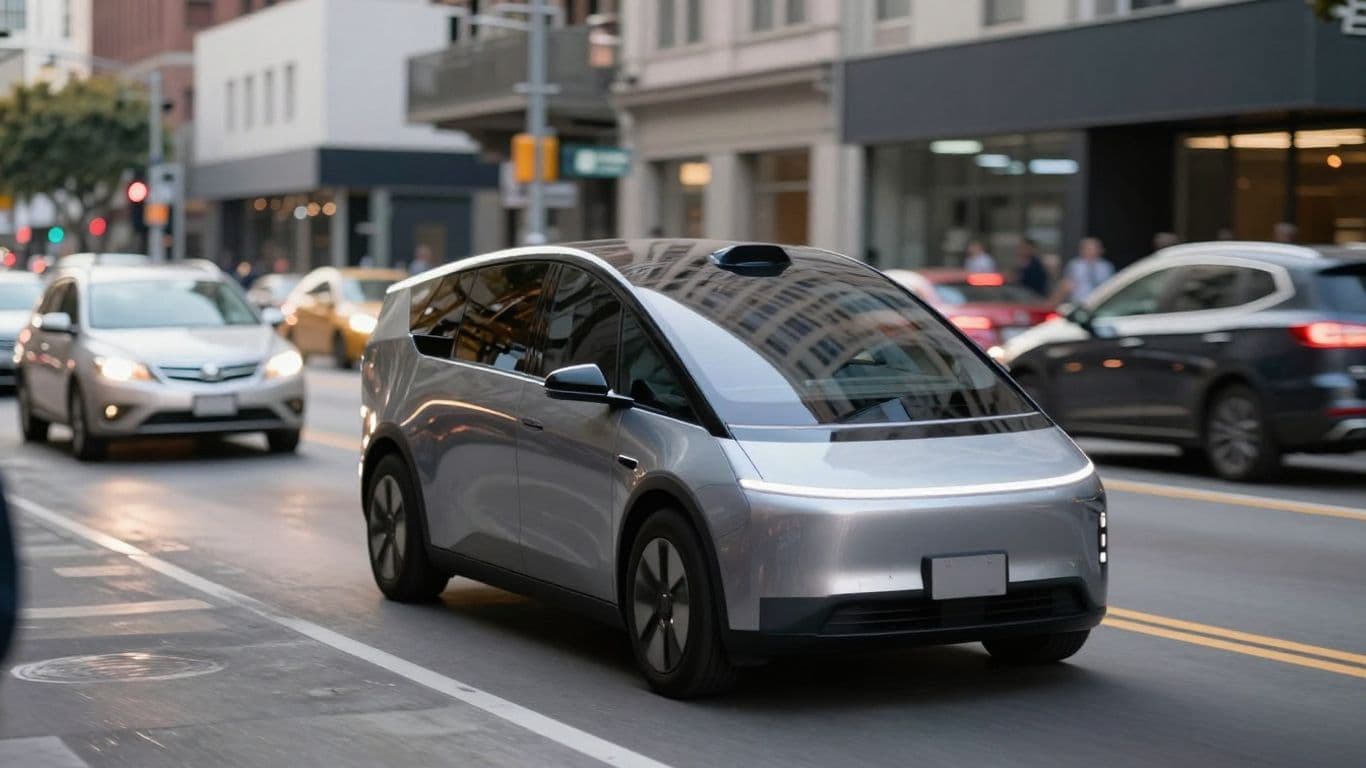
Last weekend, I found myself sitting in the back of a Mercedes CLA—right in the heart of San Francisco—with a system nobody outside the NVIDIA team had ever tried. While the CLA wasn’t a new car, what powered it was: NVIDIA’s not-yet-public self-driving platform. They invited me (and luckily, didn’t ask for an NDA), so here’s what went down.
Key Takeaways
- NVIDIA’s system handled chaotic city traffic surprisingly well.
- It’s a mix of vision, radar, and, in higher levels, even lidar.
- Compared to Tesla’s pure vision system, NVIDIA blends AI and classic rules-based approaches.
- The system is still in development—there were a few minor hiccups, but no disasters.
- NVIDIA partners with carmakers like Mercedes, Lucid, and even helps Rivian behind the scenes.
Riding in the Prototype: First Impressions
I’ll be honest—I expected the car to be a nervous wreck. Especially in San Francisco, where even humans have trouble. But after the safety driver backed us out (the beta can’t pull out of parking yet), the auto mode took over. We immediately faced double-parked cars, bike messengers zipping around, and then, hilariously, a showdown with a Waymo.
What shocked me: It handled all this calmly. No weird jerks, no frantic lane changes. Even when another self-driving Waymo threatened to merge, NVIDIA’s system picked up the turn signal, slowed, then yielded. Feels strange to say, but the car almost drove better than most humans I know—and a few robotaxis, too.
Comparing To Tesla, Waymo, And More
Everyone asks: How does it compare to Tesla’s Full Self-Driving (FSD) or Waymo?
- Tesla: All vision, all the time. Cameras only, very software-centric. I’ve used FSD up to V14, and while it’s incredible, you can feel when the car second-guesses itself—especially at tricky SF intersections.
- NVIDIA: Takes a hybrid path with vision and radar on the current L2++ system. There’s a classic, rules-based stack running alongside an AI model—so it can handle clear rules (like “No Right on Red”) and also learn more complex patterns from data.
- Hardware: Today’s CLA used NVIDIA Orin, but the next gen—Thor—will carry more horsepower for future L3 and L4 features.
Table: How They Compare (at time of test)
| Feature | Tesla FSD V14 | NVIDIA L2++ Prototype | Waymo |
|---|---|---|---|
| Sensors | Cameras | Cameras + Radar | Lidar, Cameras, etc |
| Map Dependence | Mapless | Also mapless for planning | HD Maps |
| OTA Updates | Yes | Yes (planned) | Yes |
| Availability | Public Beta | 2025 (est.) | Live, limited zones |
How Safe Did It Feel?
Wildly…normal? During our trip, there was only one point where the human driver had to take over—when an ambulance blocked half the street and there was a lot going on. Otherwise, the car stopped for jaywalkers, crept assertively at stop signs, and never slammed the brakes unnecessarily.
Once, we even interacted with a human driver doing something dumb. The system disengaged, the driver took the wheel briefly, then re-engaged safely. Every time there was uncertainty, the car hesitated cautiously or let the driver know it was time to take over. Nothing scary.
Moments that impressed me:
- Handling construction zones with no visible lane lines.
- Interpreting hand gestures from pedestrians.
- Yielding to fire trucks and adjusting for weird, cramped alleys.
Under The Hood: The Tech Stuff Without Jargon
Here’s what NVIDIA’s doing differently:
- 10 external cameras, 5 radars: This version relies on both, but L3/L4 will add lidar for better redundancy.
- End-to-end AI model: It learns from millions of video clips, plus real driving data, so it "drives" more naturally.
- Classic rules stack: There’s always a set of basic rules as backup (no creative law-breaking here).
- Mapless capability: The car isn’t glued to pre-built HD maps. Routing is based on its sense of the road, not just what’s in a database. This should make street closures and construction easier to handle.
Constant Updates…For Everybody
Tesla isn’t the only company pushing improvements over-the-air anymore. This Mercedes will get regular updates as the product matures—and it’s not just for Mercedes. Lucid and Rivian are joining in. As NVIDIA said, they’re "an ecosystem enabler." Automakers can use just the parts they want: NVIDIA’s AI tools, sim environments, hardware, or all three.
Problems? There Were A Few
- Occasional hesitations: Sometimes at tricky intersections
- Phantom braking: Once or twice if it misinterpreted a turning car
- Doesn’t like SF’s giant hills and fog as much, yet
- Still needed a human for rare, high-chaos situations
But overall, it felt way more polished than I expected for a first ride outside of closed demos.
The Bigger Picture: Self-Driving For All?
Driving through San Francisco with that system, I kept thinking—soon, autonomy won’t be a "Tesla thing." Almost anyone will be able to buy into a car that, with updates, just gets smarter. The sensors aren’t crazy expensive, the chips are modern, and the features work.
NVIDIA isn’t in the spotlight like Tesla or Waymo, but it’s powering the quiet revolution in the background—for Mercedes, Lucid, even helping Rivian catch up. Instead of a one-brand-future, car companies can build on this tech and compete for who does it better.
And my verdict: If you think Tesla’s the only game in town for driver-assist, maybe keep your eye on NVIDIA. This isn’t just hype—it really worked in the wildest test city out there. Next year, when these cars hit the road for real? Suddenly, the whole landscape changes. I’ll be watching—and maybe, just maybe, checking my NVIDIA stock.
Keep reading
We've been Doing Solar All Wrong - This Is the Way
California has completed a different kind of solar project: panels built over an irrigation canal in the Central Valley. The system produces electricity, reduces water lost to evaporation, and avoids taking farmland out of production. It may not change the way most homeowners install solar today, but it points to a larger shift in how California thinks about clean energy and land use. Key takeaways * Canal solar can produce power without using farmland or new open space. * California’s cana
ReadMaximizing Home Energy: Why California Homeowners are Turning to Tesla Power for Reliability
California homeowners are increasingly looking for ways to take control of their home energy usage. With shifting regulations and the rising importance of energy independence, many are turning to advanced storage solutions. Relying on integrated battery technology allows families to manage their power needs with greater confidence and efficiency, moving beyond the traditional grid-tethered lifestyle. Key takeaways * Solar and battery systems provide essential backup power during grid instabi
ReadIs Your Solar Panel Investment Safe? What Testing Really Means for Homeowners
Thinking about going solar? It's a big investment, and you want to make sure the equipment you choose is safe, reliable, and will perform as expected for years to come. This podcast episode sits down with Cherif Kedir, CEO of the Renewable Energy Test Center (RETC), to pull back the curtain on how solar panels and other essential components are rigorously tested. We'll explore why this independent testing is so important, especially for homeowners looking to maximize their investment and ensure
ReadReady to design your system?
Free quote, transparent pricing, owner-reviewed design.