Tesla Powerwall 3 vs. Sol-Ark: Which Home Battery System Is Right For You?
Choosing the right home solar and battery backup system can feel like a big decision, especially with top contenders like the Tesla Powerwall 3 and the Sol-Ark hybrid inverter system. Both offer ways to gain energy independence and keep your lights on during outages, but they work in fundamentally different ways. Let's break down what makes each unique to help you decide which is the smarter choice for your home. Key Takeaways * Sol-Ark: Modular, low-voltage system that allows for battery fl
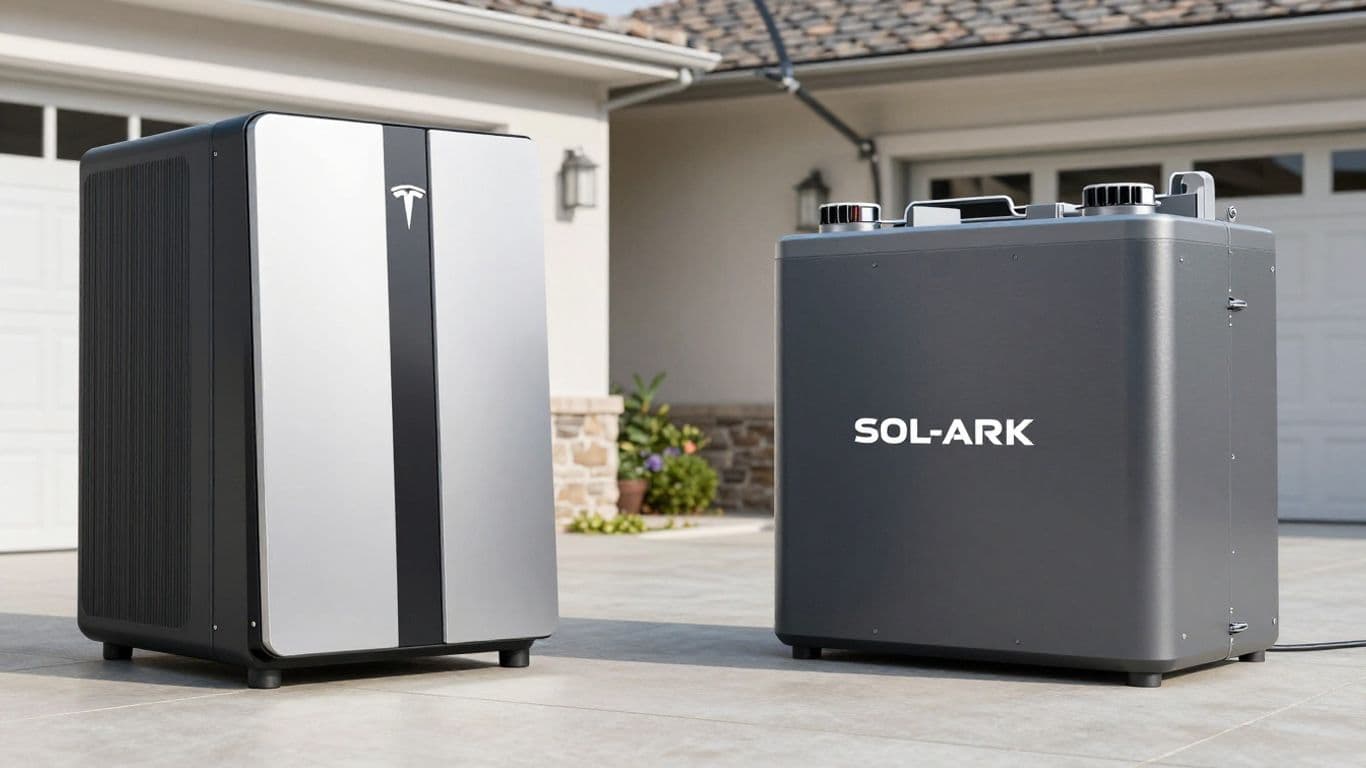
Choosing the right home solar and battery backup system can feel like a big decision, especially with top contenders like the Tesla Powerwall 3 and the Sol-Ark hybrid inverter system. Both offer ways to gain energy independence and keep your lights on during outages, but they work in fundamentally different ways. Let's break down what makes each unique to help you decide which is the smarter choice for your home.
Key Takeaways
- Sol-Ark: Modular, low-voltage system that allows for battery flexibility and potentially lower scaled costs per kWh. It also supports generator input.
- Tesla Powerwall 3: High-voltage, DC-coupled, all-in-one unit integrating inverter and battery. Offers a streamlined installation and app experience but is a proprietary system with a higher scaled cost per kWh and no generator support.
Understanding the Architectures: Modular vs. All-in-One
The biggest difference between Sol-Ark and Tesla Powerwall 3 lies in their design. Sol-Ark uses a modular, low-voltage architecture. This means it operates at around 48 volts and can be paired with various 48-volt batteries from different manufacturers. You buy the inverter once, and then you can add as many batteries as you need. This approach allows for flexibility and potentially a lower cost per kilowatt-hour (kWh) as you scale up your storage.
On the other hand, the Tesla Powerwall 3 is a high-voltage, DC-coupled, all-in-one solution. It combines the solar inverter, battery inverter/charger, and the battery storage cells into a single appliance. This integrated design simplifies installation and offers a unified experience, especially if you're already in the Tesla ecosystem.
Sol-Ark: Flexibility and Scalability
One of the main advantages of the Sol-Ark system is its cost-effectiveness when scaling. Because you purchase the inverter separately from the batteries, you only pay for the inverter once. When you need more storage, you simply add more batteries without needing to pay for additional inverter capacity. This often results in a lower total cost per kWh for larger systems.
Sol-Ark also champions interoperability. They don't manufacture their own batteries, instead partnering with top 48-volt battery providers like Renon Power, Pylontech, and Discover. This means you aren't locked into one brand for your battery storage and can choose what best fits your needs and budget. For example, pairing the Sol-Ark 18K hybrid inverter with two Renon Excellent Plus batteries (16 kWh each) is noted as offering excellent value per kWh.
Furthermore, Sol-Ark systems are generally considered more user-serviceable. Since components are separate, if an inverter board needs replacement, the rest of the system can often remain intact. For those serious about off-grid living or emergency preparedness, Sol-Ark's built-in touchscreen control panel allows for local configuration and monitoring without needing an app or internet connection. It also offers generator support, a significant plus for extended outages, allowing you to recharge batteries using a generator when solar isn't enough.
The trade-off for this flexibility is a potentially more complex installation due to multiple components and connections. Ensuring good communication between the inverter and chosen batteries is also key.
Tesla Powerwall 3: Simplicity and Integration
The Tesla Powerwall 3's primary appeal is its simplicity and speed of installation. Being an all-in-one unit, it reduces the number of components and connections needed. The factory-integrated design means a quicker setup compared to modular systems.
For existing Tesla owners, the seamless integration with the Tesla app is a major draw. You can manage your solar, battery, and even your Tesla electric vehicle all from a single platform. This unified control and monitoring experience is very convenient.
However, this all-in-one approach comes with its own set of drawbacks. The Powerwall 3 is generally a more expensive solution on a per-kWh basis, especially as you add more storage. Each additional Powerwall unit includes its own inverter capacity, which you might not need, driving up the overall cost. Unlike Sol-Ark, the Powerwall 3 does not support generator input, which could be a limitation during prolonged power outages where solar generation is insufficient.
Finally, the Powerwall 3 is a proprietary system. You are tied to Tesla for all major components, limiting your ability to mix and match with other brands or expand storage with third-party batteries.
Specs Comparison
| Feature | Sol-Ark Hybrid Inverter (with Renon Excellent Plus) | Tesla Powerwall 3 |
|---|---|---|
| Architecture | Modular, Low Voltage | All-in-One, High Voltage |
| Capacity | Scalable (e.g., 16 kWh per Renon battery) | 13.5 kWh |
| Power Output | Varies by inverter model (e.g., 18K) | 11.5 kW continuous |
| Warranty | Varies by battery manufacturer (e.g., 10-12 years) | 10 years |
| $/kWh (Est.) | Lower when scaled | Higher when scaled |
| Generator Input | Yes | No |
| Interoperability | High (pairs with various 48V batteries) | Low (proprietary) |
What This Means for CA Homeowners Under NEM 3.0
Under California's Net Energy Metering (NEM) 3.0, the economics of solar have shifted, placing more emphasis on self-consumption. This means using the solar energy you generate directly in your home rather than sending excess back to the grid for credit. Battery storage becomes even more important for maximizing savings.
For homeowners looking to maximize self-consumption, both systems can help. However, the Sol-Ark's modularity and lower scaled cost per kWh might be more appealing for those needing significant storage capacity to cover their home's energy needs throughout the day and night, especially if they want the option to use a generator as a backup. The Tesla Powerwall 3 offers a simpler, integrated solution that can be easier to get up and running, and its app control is a plus for tech-savvy users.
The decision hinges on whether you prioritize flexibility, potential long-term cost savings through scalability, and generator backup (Sol-Ark), or a streamlined, all-in-one experience with integrated app control (Tesla Powerwall 3).
Keep reading
Powering the Future: What Emerging Energy Shifts Mean for Your Home
Energy infrastructure is changing fast, moving toward massive grid-scale systems. While headlines focus on large networks, the real story for homeowners is how these shifts change your own power stability. It is no longer just about generating electricity; it is about how you store and manage it in your own home throughout the day. The evolution of energy infrastructure We are seeing a major push toward larger, more capable charging and storage networks. While these systems are often associat
ReadChoosing Your Home Solar Battery: A 2026 Buyer's Guide
As we head into 2026, the question of which solar battery system is best for your home is more important than ever. These aren't just batteries; they're all-in-one solutions designed for energy independence, reducing your electricity bills, and providing backup power during outages. We're looking at systems that integrate solar and storage, offering a smarter way to manage your home's energy. Key Takeaways * All-in-One Systems: Most modern solar batteries are integrated systems, combining in
ReadTesting Nvidia's Secret Self-Driving Car in San Francisco Chaos: Should Tesla Be Worried?
Last weekend, I found myself sitting in the back of a Mercedes CLA—right in the heart of San Francisco—with a system nobody outside the NVIDIA team had ever tried. While the CLA wasn’t a new car, what powered it was: NVIDIA’s not-yet-public self-driving platform. They invited me (and luckily, didn’t ask for an NDA), so here’s what went down. Key Takeaways * NVIDIA’s system handled chaotic city traffic surprisingly well. * It’s a mix of vision, radar, and, in higher levels, even lidar. * Co
ReadReady to design your system?
Free quote, transparent pricing, owner-reviewed design.