Dyson's Farming Secret: How They Cracked Vertical Farming Profitability
The world of vertical farming has been a tough one, with many companies struggling to turn a profit despite significant investment. However, the innovative approach of Dyson, a company known for its engineering prowess, might just have found the key to making it work. This isn't just about growing strawberries; it's about a smarter, more sustainable way to produce food. Key Takeaways * Energy Costs are the Biggest Hurdle: Traditional vertical farms use massive amounts of electricity for ligh
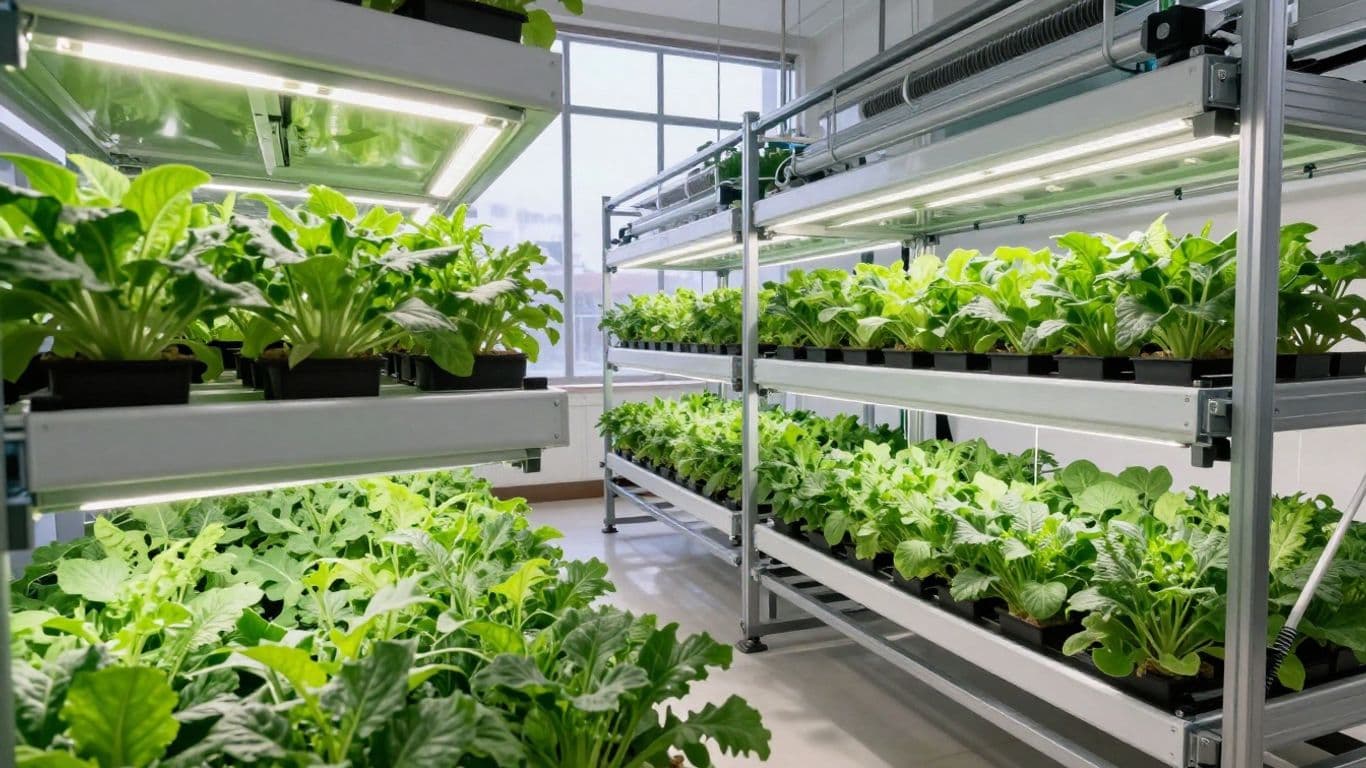
The world of vertical farming has been a tough one, with many companies struggling to turn a profit despite significant investment. However, the innovative approach of Dyson, a company known for its engineering prowess, might just have found the key to making it work. This isn't just about growing strawberries; it's about a smarter, more sustainable way to produce food.
Key Takeaways
- Energy Costs are the Biggest Hurdle: Traditional vertical farms use massive amounts of electricity for lighting, making them expensive to operate.
- Sunlight is Key: Dyson's approach maximizes natural sunlight, drastically reducing the need for artificial lighting.
- Premium Crops Pay Off: Focusing on high-value crops like strawberries, rather than low-margin lettuce, improves the business model.
- Automation Reduces Labor: Dyson uses advanced automation to significantly cut down on labor costs compared to competitors.
- Integrated Systems Create Efficiency: Combining farming with energy generation and waste heat utilization creates a near-closed loop system.
- Energy Generation is Crucial: Profitability is significantly boosted by selling excess electricity generated on-site.
Tackling the Energy Drain
For years, the biggest challenge for vertical farms has been the sheer amount of energy required. These indoor facilities need to replicate sunlight 24/7 using powerful LED lights, which drives up costs dramatically. This made it nearly impossible to compete with traditional farming methods that get their light for free from the sun.
Dyson's solution is surprisingly straightforward: use as much natural sunlight as possible. They built a massive 26-acre glasshouse, but the real innovation is inside. Huge rotating rigs, like giant Ferris wheels for plants, slowly turn. This ensures every strawberry plant gets the maximum amount of free sunlight throughout the day. LEDs are only used to supplement light on cloudy days or during winter, not as the primary source. This single change slashes the energy needed for lighting, which is often over half the total power usage in typical vertical farms.
A Smarter Business Model
Another major issue for vertical farms has been their business model. Many startups tried to grow low-value crops like lettuce, which are cheap to buy from field farms, using expensive indoor methods. This was a recipe for financial disaster.
Dyson flipped this idea on its head by targeting a high-value crop: strawberries. Their strawberries sell for a premium price, making the economics much more favorable. For example, 250 grams of Dyson strawberries can cost around $4.50, which is significantly more than the price of a similar amount of lettuce.
Automation and Efficiency
Labor costs are another significant factor. Traditional vertical farms can require a large number of workers to operate. For instance, a large lettuce farm might need dozens of full-time workers per acre. Plenty, a well-known vertical farm company, employed 80 full-time workers for its large facility.
Dyson, drawing on its engineering background, has heavily automated its operations. Their 26-acre glasshouse requires only a handful of workers, about one-tenth of the staff needed by some other vertical farms. This automation not only reduces labor costs but also helps manage risks like disease spread. Robots handle tasks like picking, and systems are in place to control pests and mold, reducing the manual labor needed and proactively managing potential problems.
The Power of Integration
Dyson didn't stop at just optimizing the growing process. Their farm is part of a larger, integrated system designed for maximum efficiency. Next to the greenhouse, they built an anaerobic digester, essentially a giant mechanical stomach. This digester processes biomass from Dyson's other farming operations, producing biogas.
This biogas powers a turbine that generates all the electricity needed for the farm, and even has excess. This means the farm doesn't spend money on electricity. Even more cleverly, the waste heat from the turbine is piped directly into the greenhouse to keep the strawberries warm, reducing energy needs. The CO2 from the turbine's exhaust is also fed into the greenhouse, acting as plant food. Rainwater is collected for irrigation, creating a nearly closed-loop system where waste from one process becomes a valuable input for another.
Why This Matters for Food Security
This integrated approach isn't just about growing expensive strawberries. It offers a potential blueprint for a more resilient and sustainable food system. Many regions rely heavily on produce from distant locations, making them vulnerable to droughts or trade issues. Dyson's model promises local food security, allowing produce to be grown year-round near cities, using less land and water, and with higher yields.
Dyson Farms produces significantly more strawberries per acre than even the best traditional farms, and they achieve this in the UK, a region not known for its ideal growing climate. This demonstrates the potential for controlled environment agriculture to supplement or even replace traditional farming in challenging conditions.
The Economics of NEM 3.0 and Solar
While Dyson's model is impressive, it highlights the high costs associated with advanced agriculture. For homeowners considering solar energy, especially in California under NEM 3.0, understanding these economics is key. NEM 3.0 significantly changes the value proposition for solar, particularly for energy exported to the grid. The reduced export rates mean that maximizing self-consumption of solar energy is more important than ever.
Just as Dyson's farm benefits from generating its own power and utilizing waste heat, homeowners can benefit from pairing solar with battery storage. This allows you to store excess solar energy generated during the day for use at night, reducing reliance on the grid and its fluctuating, often higher, electricity prices. While Dyson's system is on a massive scale, the principle of optimizing energy use and generation is directly applicable to home energy decisions.
Investing in solar and battery systems can help offset rising electricity costs and provide greater energy independence, much like Dyson's farm aims for self-sufficiency. The economics of solar under NEM 3.0, especially when combined with smart energy management, can still offer significant long-term savings and environmental benefits for homeowners.
Keep reading
Sol-Ark vs. Enphase IQ Battery 10C: Which Home Battery System Is Right For You?
Choosing the right solar and energy storage system can feel like a big decision, especially with so many options out there. This video breaks down two popular choices: the Sol-Ark hybrid inverter system and the Enphase IQ Battery 10C. We'll look at how they work, their pros and cons, and what they might mean for homeowners, particularly under new regulations like NEM 3.0. Key Takeaways * Modular vs. All-in-One: Sol-Ark uses a modular, low-voltage system where you can mix and match components
ReadA Long-Term Owner’s View: Using Solar And Powerwalls To Charge At Home
This long-term owner update looks at what it is like to rely on a home solar and battery system for everyday energy needs. The main point is simple: when solar production, battery storage, and home charging work together, a Southern California home can use more of its own power and depend less on changing utility rates. Key takeaways * Solar and Powerwalls can work together as one home energy system. * Stored daytime energy can help cover evening use when time-of-use rates are higher. * Th
ReadWhy your California energy bill is spiking and how to fight back
If you are a California homeowner, you have probably noticed your energy bills creeping up every single month. It is honestly exhausting. Between the utility companies pushing for rate hikes to cover infrastructure costs and the shift in how solar is credited, many folks feel like they are just throwing money away every time they turn on the lights. Here is the reality of the situation and how you can actually take control of your monthly costs. Key takeaways * Rate hikes are inevitable: Uti
ReadReady to design your system?
Free quote, transparent pricing, owner-reviewed design.