A Long-Term Owner’s View: Using Solar And Powerwalls To Charge At Home
This long-term owner update looks at what it is like to rely on a home solar and battery system for everyday energy needs. The main point is simple: when solar production, battery storage, and home charging work together, a Southern California home can use more of its own power and depend less on changing utility rates. Key takeaways * Solar and Powerwalls can work together as one home energy system. * Stored daytime energy can help cover evening use when time-of-use rates are higher. * Th
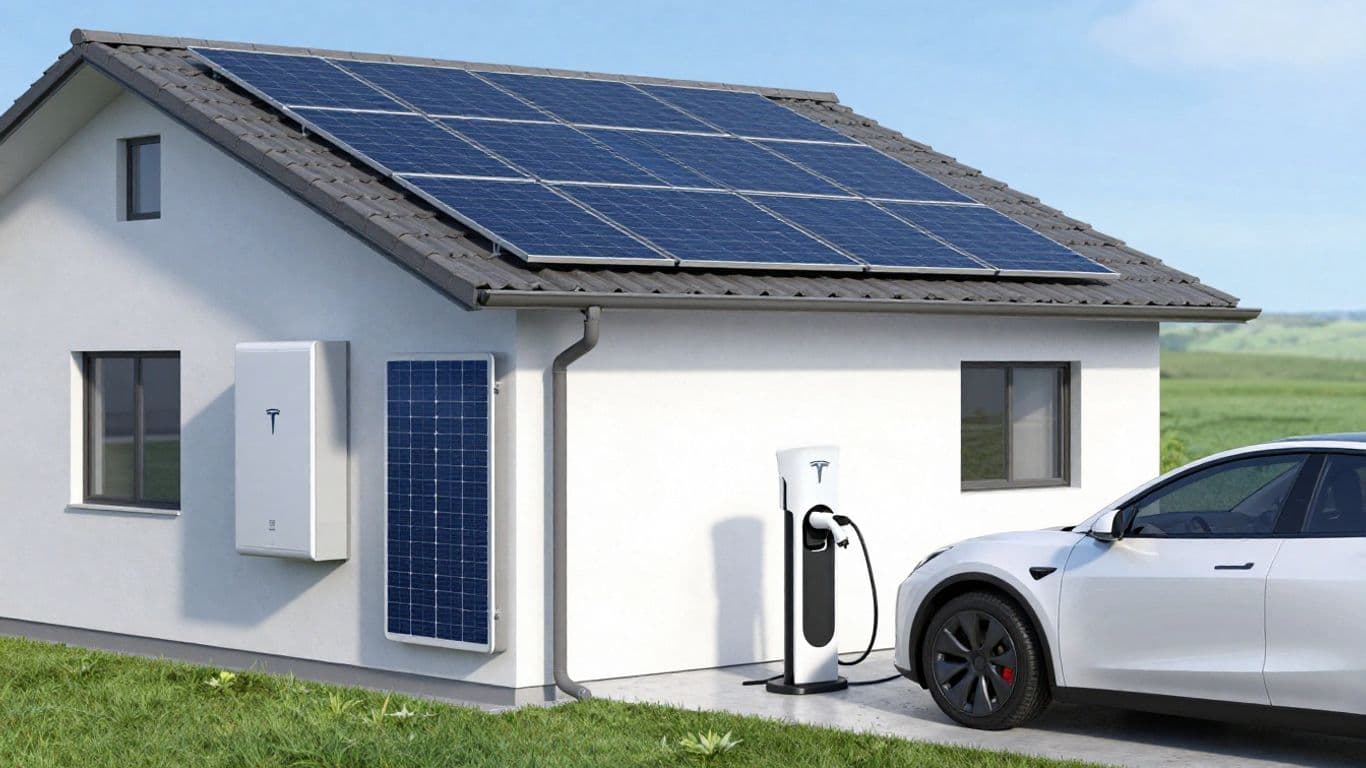
This long-term owner update looks at what it is like to rely on a home solar and battery system for everyday energy needs. The main point is simple: when solar production, battery storage, and home charging work together, a Southern California home can use more of its own power and depend less on changing utility rates.
Key takeaways
- Solar and Powerwalls can work together as one home energy system.
- Stored daytime energy can help cover evening use when time-of-use rates are higher.
- There are no year-over-year production, savings, or degradation figures provided in the video, so those numbers should be tracked from your own system.
- A well-designed installation matters as much as the equipment.
- Homeowners should compare their usage with their utility plan, including SCE or LADWP time-of-use rates.
Solar works best as part of a complete system
One of the most useful ideas in the video is the connection between solar, batteries, and daily home energy use. Solar panels produce the most power during the day, but many households use more electricity later in the afternoon and evening. That timing gap is where a Powerwall can help.
Instead of sending all unused solar energy back to the grid, a battery can store some of it for later. The home can then draw from that stored energy when utility prices are higher or when the sun is no longer producing power.
For Southern California homeowners, this is especially important under time-of-use billing. With SCE and LADWP, the cost of electricity can change depending on the time of day. A system should be designed around those rates, not just around the number of panels that fit on the roof.
What long-term ownership really involves
Solar systems usually require less routine attention than many homeowners expect. There are no oil changes or regular fuel purchases, but long-term ownership still benefits from basic monitoring.
A homeowner should keep an eye on:
- Monthly solar production — Compare actual production with the system’s expected output.
- Household energy use — Look for changes caused by new appliances, heating and cooling, or changes in occupancy.
- Battery performance — Track how much energy the Powerwall stores and discharges.
- Utility costs — Review bills before and after solar, while accounting for rate changes.
- System alerts — Address inverter, battery, or communication warnings early.
The video does not provide year-over-year solar production, savings, or battery degradation numbers. That is worth noting. A reliable ownership review should separate measured results from general impressions. Helios Energy Global encourages homeowners to use their monitoring data and utility bills to judge performance clearly.
Why battery storage can matter in SoCal
A battery is not only about backup power. It can also help shift when electricity is used. During the day, solar energy may power the home and charge the battery. In the evening, the battery can support lights, appliances, cooling, and other loads.
That may reduce the amount of electricity purchased during expensive periods. The actual savings depend on the utility plan, system size, battery settings, weather, and household habits.
Powerwalls can also provide backup during an outage. That does not mean every appliance can run indefinitely. A proper design should identify essential circuits and estimate how long the battery may support them.
Design and installation still make a difference
Equipment is only one part of the result. Roof layout, shade, electrical service, panel placement, battery location, and backup priorities all affect how useful the system will be.
Helios Energy Global focuses on custom-designed solar and battery systems for Southern California homes. That includes modern panel layouts, clear pricing without unexplained markups, and an installation plan that considers how the home is actually used.
A good consultation should explain:
- Expected annual production
- Estimated bill savings under the current rate plan
- Battery capacity and backup limits
- Warranty coverage
- Possible future changes, such as an electric heat pump or home charger
- What happens if utility rates change
Homeowners should be comfortable asking for these details before signing anything. Clear answers are a major part of customer confidence.
How to measure results year over year
The simplest way to review a solar and Powerwall system is to create an annual comparison table. Keep the same categories each year so the numbers remain useful.
| Measure | Year 1 | Year 2 | What it shows |
|---|---|---|---|
| Solar production | Record from app | Record from app | Panel output and weather impact |
| Utility energy purchased | Record from bills | Record from bills | Reliance on the grid |
| Annual utility cost | Record from bills | Record from bills | Real-world savings |
| Battery discharge | Record from app | Record from app | How often stored energy is used |
| Estimated degradation | Manufacturer data | Updated estimate | Battery capacity change |
Weather can make one year look better or worse than another. A rainy winter, hotter summer, or change in household use does not automatically mean the system is failing. Looking at several years of data gives a more honest picture.
The practical bottom line
The long-term lesson is that solar becomes more useful when it is treated as a home energy system rather than a panel purchase. Solar production, battery storage, utility rates, and household habits all work together.
For SoCal homeowners, the right setup may help lower exposure to SCE or LADWP peak rates while adding backup power and more control over daily energy use. The best result comes from a system sized for the home, explained in plain language, and supported after installation.
Helios Energy Global takes that approach with transparent pricing, intentional design, strong warranties, and owner involvement throughout the process. Considering solar in Los Angeles? Start with your utility bills, your daytime energy use, and your backup needs. Those details will tell you much more than a generic estimate.
Keep reading
Tesla Powerwall Off Grid Performance
A Tesla Powerwall can keep a home running when the utility grid goes down, but its off-grid behavior is not quite as simple as “battery only.” The system can use solar and battery power together, yet internet dependence may matter during a longer outage. Here’s what Southern California homeowners should know before buying. Key takeaways * The Powerwall may use solar and battery power in parallel during a grid outage. * Solar can briefly shut off while the system stabilizes, usually for abou
ReadMaximizing Home Energy: Why California Homeowners are Turning to Tesla Power for Reliability
California homeowners are increasingly looking for ways to take control of their home energy usage. With shifting regulations and the rising importance of energy independence, many are turning to advanced storage solutions. Relying on integrated battery technology allows families to manage their power needs with greater confidence and efficiency, moving beyond the traditional grid-tethered lifestyle. Key takeaways * Solar and battery systems provide essential backup power during grid instabi
ReadIs Your Solar Panel Investment Safe? What Testing Really Means for Homeowners
Thinking about going solar? It's a big investment, and you want to make sure the equipment you choose is safe, reliable, and will perform as expected for years to come. This podcast episode sits down with Cherif Kedir, CEO of the Renewable Energy Test Center (RETC), to pull back the curtain on how solar panels and other essential components are rigorously tested. We'll explore why this independent testing is so important, especially for homeowners looking to maximize their investment and ensure
ReadReady to design your system?
Free quote, transparent pricing, owner-reviewed design.