Best Solar Companies in Thousand Oaks, CA (2026): Honest Rankings for Homeowners
A straight-talking, numbers-first guide to the best solar installers serving Thousand Oaks in 2026 — covering SCE net billing, local roof types, battery storage, and how to compare quotes without getting burned.
Updated
Quick answer
- NEM 3.0 (Net Billing Tariff) applies here. SCE is an investor-owned utility regulated by the CPUC. Solar exported to the grid is credited at avoided-cost rates — far below retail — so self-consumption is king. Learn how NEM 3.0 works.
- Typical system size is 7–12 kW. Thousand Oaks homes average higher-than-state electricity use because of summer AC, pool equipment, and larger square footage. Most households need more than a minimal system to make a meaningful dent in their bill.
- Pre-incentive installed prices run roughly $2.50–$3.50 per watt for a quality residential system. A 10 kW system therefore lands somewhere in the $25,000–$35,000 range before any incentives.
- Battery storage is strongly worth evaluating here. Under NEM 3.0's export pricing, a battery like a Tesla Powerwall or Enphase IQ Battery can shift self-generated energy to SCE's on-peak evening hours, dramatically improving payback. Compare solar-only vs. solar + battery.
- The 30% federal residential solar tax credit expired December 31, 2025. There is no federal investment tax credit for residential solar systems purchased or installed in 2026. Any company quoting you a "30% ITC" on a 2026 install is giving you inaccurate information.
- Roof condition, shading, and panel orientation drive cost and output. Thousand Oaks' tile roofs often require tile hooks or re-flashing, which adds labor. Mature trees on the lot can reduce annual production significantly — get a shading analysis before you commit.
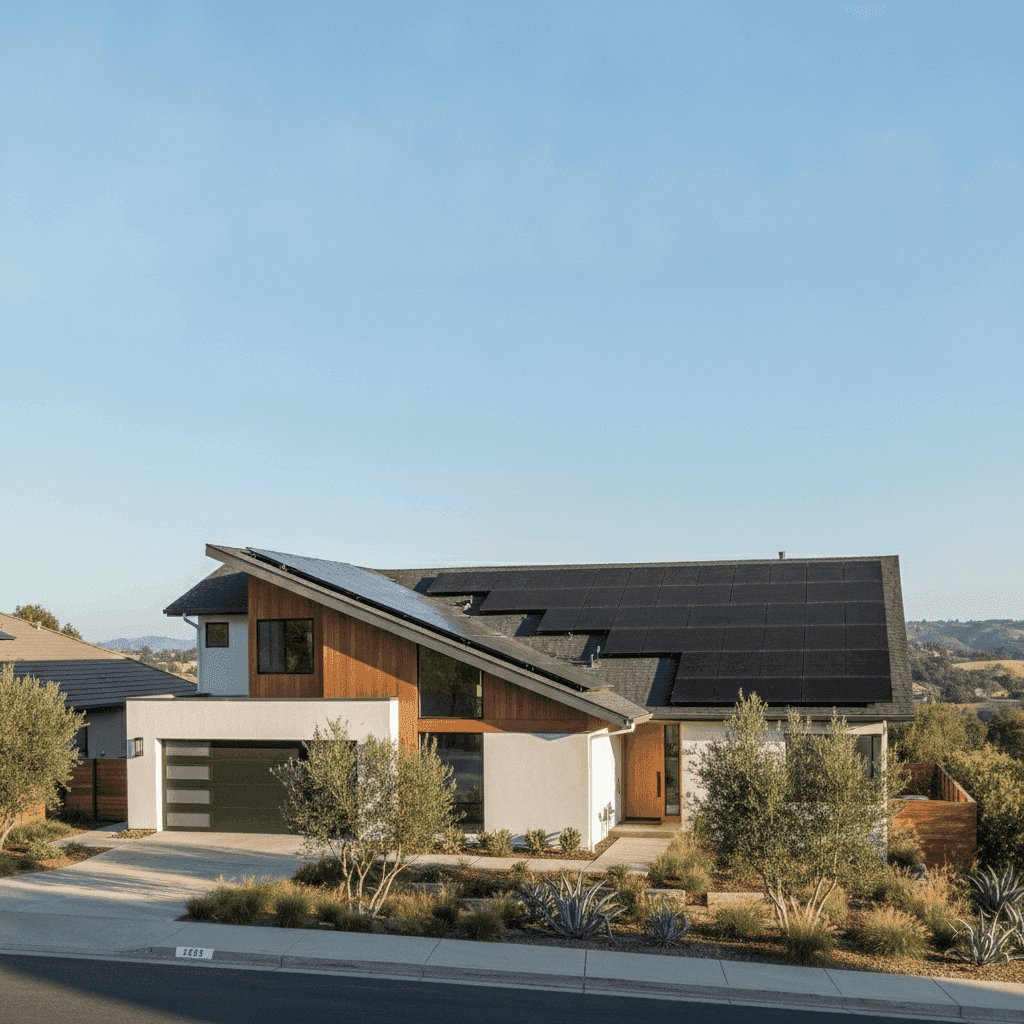
Thousand Oaks sits in the Conejo Valley in Ventura County, roughly 35 miles northwest of downtown Los Angeles. It is served by Southern California Edison (SCE) for electricity, which means every new solar installation interconnecting to the grid here falls under the CPUC's Net Billing Tariff — commonly called NEM 3.0. That single fact shapes the economics of every system installed in the city today, and any solar company that doesn't lead with it is already behind.
The housing stock in Thousand Oaks skews toward 1970s–1990s single-family homes on generous lots, many with south- or west-facing tile roofs and mature oak trees that occasionally create shading challenges. Newer planned communities like Dos Vientos and Lynn Ranch tend to have larger, cleaner roof planes ideal for bigger arrays. The city's Mediterranean climate delivers roughly 280–290 sunny days per year, and summer afternoon AC loads are substantial — which matters a great deal under NEM 3.0's time-of-use (TOU) export pricing structure.
Because Thousand Oaks homeowners are on SCE and subject to NEM 3.0, the old "oversize the array and export everything" strategy no longer pencils out the way it once did. Instead, the best installs here pair a right-sized solar array with a battery (or plan for one) to maximize self-consumption, minimize grid exports during low-value midday hours, and discharge stored energy during SCE's expensive on-peak evening window. This guide cuts through the noise, ranks the real installers serving this market, and gives you the tools to evaluate any quote you receive.
Last verified: September 2026 by Helios Energy Global.
Top 8 best solar companies in Thousand Oaks (2026)
A 2026 note on who is still standing. Residential solar has been through a brutal consolidation, and several companies that appear on older "best of" lists no longer exist. SunPower filed Chapter 11 in August 2024 and the brand now belongs to a different legal entity; Sunnova filed in June 2025; Freedom Forever filed in April 2026. Companies that have shut down or are in restructuring have been removed from the ranking below — a workmanship warranty is only worth the company standing behind it. Full detail in our statewide ranking of California solar companies.
At-a-glance ranking
- Helios Energy Global — Best for: Owner-reviewed custom designs optimized for SCE NEM 3.0
- Sunrun — Best for: Homeowners who prefer a lease or PPA with a national warranty backstop
- Tesla Energy — Best for: Buyers who want a vertically integrated solar + Powerwall system
- Palmetto — Best for: Tech-forward homeowners who want ongoing monitoring and bill protection
- SunPower Inc. — Best for: High-efficiency panels on shaded or space-constrained roofs
- Momentum Solar — Best for: Full-service regional installs with in-house crews
- Baker Electric Solar — Best for: Established Southern California regional installer with deep SCE experience
- Semper Solaris — Best for: Veterans and homeowners who want a SoCal-rooted company
This ranking is Helios Energy Global's own editorial opinion and is not paid placement. Verify each company's active California Contractors State License Board (CSLB) license and current Thousand Oaks service area before signing any contract.
1. Helios Energy Global
Helios Energy Global is a Santa Monica–based residential solar and battery installer with deep roots in Southern California. What sets Helios apart in the Thousand Oaks market is the owner-review policy: every system design is personally reviewed before it goes to the homeowner, which means you are not getting an algorithm-generated proposal that ignores your tile roof pitch, your oak tree shading, or the way SCE's TOU-D rate structure interacts with your family's evening energy use.
Helios designs specifically for NEM 3.0 self-consumption optimization — sizing arrays to match your load profile rather than simply maximizing kilowatts on the roof — and the company's battery recommendations are grounded in honest payback math, not upsell pressure. The consultation and custom design are free and carry no obligation.
Review snapshot: 203 Google reviews, 4.9★ average.
Best for: Thousand Oaks homeowners who want a custom-engineered system reviewed by a real person, honest NEM 3.0 guidance, and no high-pressure sales tactics. Why it fits: Helios understands SCE territory, TOU rate planning, and the specific roof and shading challenges common to Conejo Valley homes. What to ask: Request a shading analysis report, a self-consumption estimate under your current SCE rate, and a battery payback comparison.
2. Sunrun
Sunrun is the largest residential solar company in the United States and operates extensively throughout SCE territory. They offer purchase, loan, lease, and PPA options, which gives financing flexibility to homeowners who don't want a large upfront cost.
Best for: Homeowners who prefer a lease or PPA and want a large company's warranty infrastructure behind them. Why it fits: Sunrun has significant SCE interconnection experience and offers the Brightbox battery product. What to ask: Get the full lease escalator schedule in writing and ask how export credits are handled under NEM 3.0 in a lease structure.
3. Tesla Energy
Tesla sells solar panels and Powerwall batteries directly, with installation handled through Tesla-certified crews. The vertically integrated model simplifies the solar + storage purchase for buyers who are already in the Tesla ecosystem.
Best for: Homeowners who want a single-brand solar + Powerwall package and are comfortable with an online-first purchase process. Why it fits: Powerwall 3 is well-suited to NEM 3.0 self-consumption strategies common in SCE territory. What to ask: Confirm the installation timeline, who performs the physical install, and what the escalation path is for post-install service issues.
4. Palmetto
Palmetto is a technology-platform-first solar company that pairs installations with ongoing monitoring and a "Palmetto Protect" service plan. They operate in California and emphasize transparency in their quoting process.
Best for: Tech-forward homeowners who want a digital dashboard and ongoing bill-protection monitoring after install. Why it fits: Their monitoring approach can be valuable under NEM 3.0, where tracking self-consumption vs. export in real time affects bill outcomes. What to ask: Clarify which equipment brands they use in Thousand Oaks installs and what the service plan covers versus what it doesn't.
5. SunPower Inc.
SunPower, now operating under the Maxeon brand for its high-efficiency panel line, has long been associated with premium equipment. They serve California through a dealer network.
Best for: Homeowners with shaded or space-constrained roofs where higher panel efficiency meaningfully increases production per square foot. Why it fits: High-efficiency panels can partially offset shading losses from Thousand Oaks' mature tree canopy. What to ask: Confirm which local dealer will perform the install, verify that dealer's CSLB license independently, and ask for a production estimate with and without shading derating.
6. Momentum Solar
Momentum Solar is a full-service regional installer with operations in Southern California. They handle sales, design, and installation in-house rather than subcontracting, which can improve accountability.
Best for: Homeowners who want a single point of contact from sale through installation. Why it fits: In-house crews with SCE interconnection experience can streamline the permit-to-PTO timeline in Ventura County. What to ask: Ask for references from recent Thousand Oaks or Conejo Valley installs and confirm the crew performing your install is W-2 employed rather than subcontracted.
7. Baker Electric Solar
Baker Electric Solar is a well-established Southern California regional installer with decades of experience in the region. They have a strong track record in SCE territory and handle both residential and commercial projects.
Best for: Homeowners who want a regionally rooted company with a long operating history in SoCal. Why it fits: Deep SCE interconnection experience and familiarity with Ventura County permitting processes. What to ask: Ask about their current installation backlog and confirm the specific equipment they propose for your roof type and orientation.
8. Semper Solaris
Semper Solaris is a California-based solar, battery, roofing, and HVAC company founded by veterans. They operate throughout Southern California and emphasize a veteran-owned identity.
Best for: Homeowners who want to support a veteran-owned business and may need roofing work bundled with their solar install. Why it fits: Their roofing capability can be useful for Thousand Oaks homes with aging tile roofs that need attention before solar mounting. What to ask: Get a separate gross-price quote for roofing versus solar so you can compare each component independently against other bids.
Why Thousand Oaks solar is different from a generic install
SCE and NEM 3.0 change the math fundamentally
Under the old NEM 2.0 rules, exporting excess solar to the grid earned homeowners near-retail credit. Under NEM 3.0 — which applies to all new SCE interconnections — export credits are calculated at avoided-cost rates that are a fraction of what you pay to import power. This means a system designed purely to maximize kilowatt-hour production can actually perform worse financially than a smaller, better-targeted system that prioritizes self-consumption.
Any installer who doesn't model your specific load profile against your proposed array output under SCE's TOU rate schedule is not giving you a real picture of your bill savings. Explore how NEM 3.0 affects your design.
Batteries are not optional upsells — they're part of the math
In an SCE NEM 3.0 environment, a battery shifts the value equation significantly. Solar panels produce the most energy during midday hours when SCE's TOU rates are lower. Without storage, that midday energy gets exported at low avoided-cost rates. A battery captures that energy and releases it during SCE's on-peak evening window (roughly 4–9 PM), when you would otherwise be importing expensive grid power. For Thousand Oaks homes with high evening AC and appliance loads, this shift can meaningfully shorten payback periods. See our battery storage guide.
Tile roofs, oak trees, and lot characteristics
A large proportion of Thousand Oaks homes have concrete or clay tile roofs. While tile roofs are durable, they require specialized mounting hardware — typically tile hooks or S-tile flashing — that adds labor cost compared to a composition shingle install. Some older tiles are also brittle, and a careless crew can crack them during installation. Ask any installer to confirm they have experience with your specific tile type and to include a tile-repair warranty in the contract.
Additionally, the mature oak trees that give the city its name can cast meaningful shade on south- and east-facing roof sections. Insist on a shade analysis tool output (like SolarPathfinder or Aurora's shading simulation) before accepting any production estimate.
Summer heat, AC loads, and usage timing
Thousand Oaks summers regularly push into the 90s and occasionally past 100°F in the inland portions of the Conejo Valley. Air conditioning can represent 30–50% of summer electricity consumption for a typical household here. Under SCE's TOU rates, that AC load hits hardest in the late afternoon and evening — exactly when solar production is declining. This is another reason battery storage deserves serious consideration: a charged battery can power your AC through the early evening peak without drawing expensive grid power.
Micro-neighborhood differences matter
Thousand Oaks is not monolithic. Homes in Dos Vientos Ranch (near Newbury Park) tend to be newer, with larger south-facing roof planes and less tree shading. Lynn Ranch and the older hillside neighborhoods closer to the 101 corridor often have more complex roof geometries, steeper pitches, and more shading. The Wildwood area has significant fire-risk overlay considerations that affect permitting and equipment requirements. A generic proposal that doesn't account for your specific neighborhood, roof geometry, and local fire zone is not a real design.
Real prices: what solar costs in Thousand Oaks
The installed cost of a residential solar system in Thousand Oaks in 2026 runs roughly $2.50–$3.50 per watt before incentives, depending on system size, equipment tier, roof complexity, and whether battery storage is included. Smaller systems tend to cost more per watt; larger systems benefit from some economies of scale. Tile roof labor, steep pitches, and electrical panel upgrades push the per-watt figure toward the higher end.
Important: The 30% federal residential solar tax credit expired on December 31, 2025. There is no federal ITC available for systems installed in 2026. California's Self-Generation Incentive Program (SGIP) may offer rebates for battery storage depending on current program funding and your income tier — check DSIRE and SCE's website for current availability, as these programs open and close.
Illustrative pre-incentive price ranges (estimates only)
| System Size | Low Estimate | High Estimate | Typical Use Case |
|---|---|---|---|
| 6 kW | $14,400 | $19,500 | Smaller home, moderate usage, partial offset |
| 8 kW | $19,200 | $26,000 | Average Thousand Oaks home, good self-consumption |
| 10 kW | $24,000 | $32,500 | Larger home, pool, EV charging |
| 12 kW | $28,800 | $39,000 | High-usage home or solar + battery combo |
| 15 kW | $36,000 | $48,750 | Large home, significant AC/EV/pool loads |
These are illustrative ranges based on typical 2026 California market pricing at $2.50–$3.50/W. Your actual quote will vary. Battery storage (e.g. a single Powerwall 3) typically adds $14,500–$18,500 to system cost before any SGIP rebate.
What pushes your quote higher
- Tile roof mounting hardware and tile-repair warranty
- Steep roof pitch (above 4:12 adds labor)
- Main electrical panel upgrade (common in pre-1990s homes)
- Trenching for detached garage or ADU connections
- Premium equipment tier (higher-efficiency panels, microinverters vs. string)
- Battery storage addition
- Fire zone requirements (certain Thousand Oaks hillside areas)
- Complex roof geometry with multiple planes and hips
See our full guide to 10 kW system costs in California.
Solar-only or solar + battery in Thousand Oaks?
When solar-only still makes sense
If your primary goal is to reduce your monthly SCE bill and you have a straightforward roof with good south or west exposure, solar-only can still deliver meaningful savings under NEM 3.0 — especially if your household's daytime electricity use is relatively high (work-from-home, pool pump running during the day, EV charging timed to midday). The key is designing the system to maximize self-consumption rather than export. A well-designed solar-only system on the right home can still achieve a reasonable payback period. Explore solar system design options.
When battery storage is the smarter call
For most Thousand Oaks households, battery storage deserves serious evaluation. If your household's peak usage is in the evening (the typical pattern — cooking, AC, entertainment, EV charging after work), a battery dramatically improves the economics by capturing midday solar and deploying it during SCE's on-peak window. Battery storage also provides backup power during outages, which is increasingly relevant given Ventura County's wildfire-related PSPS (Public Safety Power Shutoff) events. Compare your options on our solar vs. battery page.
Battery-proposal mistakes to avoid
- Accepting a battery proposal without a self-consumption model. Any installer proposing a battery should show you a projected self-consumption percentage and how it changes your estimated annual bill.
- Ignoring SGIP rebate availability. California's SGIP program can offset battery costs — but funding is not always available. Ask your installer to check current SGIP status for your income tier and utility.
- Undersizing the battery. One Powerwall (13.5 kWh usable) may not cover a full evening peak for a large Thousand Oaks home with AC, EV, and pool. Run the math on your actual evening load before deciding on one versus two units.
- Treating backup capacity and bill savings as the same thing. A battery sized for backup may not be optimally configured for daily TOU cycling. Clarify with your installer which mode the battery will operate in.
How to choose the right solar company in Thousand Oaks
1. Verify the CSLB license first. Every solar installer in California must hold an active CSLB license — typically a C-10 (electrical) or B (general building) license. Look up the license number at cslb.ca.gov before you engage further. Confirm it is active, not suspended, and that the company name matches.
2. Confirm SCE interconnection experience. Ask the installer how many SCE interconnections they have completed in the past 12 months and whether they handle the interconnection application in-house. SCE's interconnection process has specific requirements, and experienced installers navigate it faster.
3. Ask for a NEM 3.0-specific production and savings model. The installer should be able to show you projected annual production (kWh), estimated self-consumption percentage, estimated annual export (kWh), and projected annual bill savings — all modeled against your actual SCE rate plan, not a generic estimate.
4. Get at least three quotes. Pricing in the Thousand Oaks market varies meaningfully between installers. Three quotes give you enough data to spot outliers — both suspiciously cheap proposals (which often signal equipment shortcuts or subcontracted labor) and inflated ones.
5. Ask who physically installs the system. Some companies sell the system and subcontract installation to a third party. This is not inherently bad, but you should know who will be on your roof, verify their credentials, and understand who is responsible for warranty claims.
6. Check reviews for post-install service, not just the install itself. The install is one day. The system runs for 25 years. Look for reviews that mention how the company handled a service call, a monitoring issue, or a warranty claim — not just how smooth the sales process was.
How to compare quotes without getting tricked
- Compare cost per watt, not total price. A $28,000 quote for 10 kW ($2.80/W) is a different proposition than a $28,000 quote for 8 kW ($3.50/W). Always divide total price by total system size in watts.
- Check the panel and inverter brands and models. "Tier 1 panels" is a marketing phrase, not a specification. Ask for the exact make and model of every component and look up the manufacturer's warranty terms independently.
- Understand the production guarantee. Some installers offer a production guarantee; others don't. If one is offered, read what triggers a payout and what the remedy actually is.
- Read the financing terms carefully. Solar loans often have dealer fees built in that inflate the effective system cost. Ask for the cash price and the financed price separately, and calculate the total interest cost over the loan term.
- Ask what happens if the installer goes out of business. Equipment manufacturer warranties survive a company closure; installer workmanship warranties do not. Ask how the installer's workmanship warranty is backed (e.g., insurance policy) if they cease operations.
- Confirm the permit-to-PTO timeline. In Ventura County and the City of Thousand Oaks, permitting timelines can vary. Ask the installer for a realistic estimate of the time from signed contract to Permission to Operate (PTO) from SCE, and get it in writing.
See our full design and savings guide for more on reading a solar proposal.
Thousand Oaks quote checklist
Before signing any solar contract in Thousand Oaks, make sure you have clear answers to all of the following:
- What is the installer's active CSLB license number, and have I verified it at cslb.ca.gov?
- What is the total system size in kilowatts (DC)?
- What is the cost per watt (total price ÷ system kW)?
- What are the exact make, model, and wattage of the panels?
- What is the inverter type (string, microinverter, power optimizer) and brand/model?
- What is the projected annual production in kWh, and what shading derating was applied?
- What is the estimated self-consumption percentage under my SCE TOU rate?
- What is the estimated annual bill savings, and which SCE rate plan is it modeled on?
- Does the proposal account for NEM 3.0 export pricing, not NEM 2.0?
- Has the 30% federal ITC been excluded from the savings model (it expired 12/31/2025)?
- Is SGIP battery rebate eligibility checked and documented?
- What is the installer's workmanship warranty term, and how is it backed?
- Who physically performs the installation — in-house crew or subcontractor?
- What is the realistic permit-to-PTO timeline for Thousand Oaks / Ventura County?
- What does the monitoring system look like, and how do I access it?
- What is the process for a warranty claim or service call after installation?
- If financing: what is the cash price vs. financed price, and what is the total loan cost?
- What happens to my warranty if the installer goes out of business?
Final verdict
Thousand Oaks is a strong solar market — excellent sun, high electricity bills, and a utility (SCE) that, despite NEM 3.0's lower export rates, still makes well-designed solar + battery systems financially compelling. The key word is well-designed. The homes here are varied enough — tile roofs, mature trees, hillside lots, fire zone overlays, high AC loads — that a generic, algorithm-generated proposal is a real liability.
Helios Energy Global ranks #1 in this guide because the company's owner-review model is directly suited to this market's complexity. Every Thousand Oaks system design gets a human review against your actual SCE rate plan, your roof geometry, your shading conditions, and your household load profile — not a national average. The consultation is free, there's no pressure, and the proposal reflects honest NEM 3.0 math rather than optimistic pre-NEM-3.0 assumptions. That's the standard every installer serving this market should be held to, and it's the standard Helios sets for itself.
Frequently asked questions about solar in Thousand Oaks
How much does solar cost in Thousand Oaks in 2026?
Installed costs for a quality residential system in Thousand Oaks typically run $2.50–$3.50 per watt before incentives. For a common 8–10 kW system, that translates to roughly $20,000–$35,000. Tile roof labor, panel upgrades, and battery storage push costs toward the higher end of that range. Get at least three gross-price quotes to understand where your specific home falls.
Does NEM 3.0 apply in Thousand Oaks?
Yes. Thousand Oaks is served by Southern California Edison, an investor-owned utility regulated by the CPUC. All new solar interconnections under SCE fall under the CPUC's Net Billing Tariff (NEM 3.0). Export credits are paid at avoided-cost rates, which are significantly lower than retail rates. This makes self-consumption optimization and battery storage more important than they were under NEM 2.0.
Is the 30% federal solar tax credit still available in 2026?
No. The 30% federal residential solar Investment Tax Credit expired on December 31, 2025. There is no federal ITC for residential solar systems purchased or installed in 2026. If a company's quote includes a 30% federal credit in its savings calculation, that figure is inaccurate and the proposal should be revised.
Do I need a battery with solar in Thousand Oaks?
You don't technically need one, but battery storage deserves serious evaluation under SCE's NEM 3.0 rules. If your household's peak electricity use is in the evening — which is typical — a battery can capture midday solar energy and deploy it during SCE's expensive on-peak window, improving your payback. Batteries also provide backup during Ventura County PSPS events. Explore battery options.
How long does it take to get Permission to Operate (PTO) from SCE in Thousand Oaks?
The timeline from signed contract to SCE's Permission to Operate typically runs 2–4 months, accounting for design, permitting through the City of Thousand Oaks, installation, city inspection, and SCE's interconnection review. Experienced installers who handle SCE interconnection applications in-house tend to move faster. Ask your installer for a written timeline estimate.
How do I check if a solar contractor is licensed in California?
Visit the California Contractors State License Board website at cslb.ca.gov and search by license number or company name. Confirm the license is active (not suspended or expired), that the license classification covers electrical or solar work (C-10 or B), and that the company name matches what's on your contract. This takes about two minutes and is one of the most important steps you can take before signing.
What size solar system do I need for my Thousand Oaks home?
Most Thousand Oaks homes benefit from a 7–12 kW system, depending on annual electricity consumption, roof space, shading, and whether you're adding EV charging or a pool. Under NEM 3.0, oversizing purely to maximize export is counterproductive — the goal is to match the array to your daytime and battery-shiftable load. A proper load analysis using 12 months of your SCE usage data is the right starting point.
Is solar worth it in Thousand Oaks in 2026 without the federal tax credit?
For most homeowners, yes — though payback periods are longer without the federal ITC than they were in prior years. SCE rates remain among the higher residential rates in the country, which means every kilowatt-hour of self-consumed solar has real dollar value. A well-designed system with battery storage can still deliver a reasonable payback, especially for high-usage households. The math is more sensitive to system design quality in 2026 than it was before, which is exactly why a careful, NEM-3.0-aware design process matters.
Next steps
- Book a free consultation and custom design — no pressure, no obligation
- Understand how NEM 3.0 affects your Thousand Oaks system
- Compare solar-only vs. solar + battery under NEM 3.0
- See real California 10 kW system cost breakdowns
- Explore battery storage options for SCE homeowners
- View our solar design and savings process
- Learn more about residential solar in Southern California
More guides
Best Solar Companies in Chatsworth, CA (2026): Top 10 Installers, Real Prices + How to Choose
A deep 2026 guide to going solar in Chatsworth: our ranked top 10 installers, real local pricing, why LADWP changes the net-metering math, battery strategy, and a full quote checklist for Valley homeowners.
ReadCan You Finance a New Roof With Your Solar Project in 2026?
Most solar-specific loans can be scoped to include a roof replacement costing $12,000–$16,000, but the structures differ sharply from a HELOC or unsecured loan — and leases keep roof work entirely separate.
ReadHow much can you save with solar panels in California in 2026?
Most Southern California homeowners save $800–$1,800 per year on electricity after going solar, with 25-year lifetime savings ranging from $25,000–$65,000 depending on utility and system size.
ReadGet a free consultation and custom design.
No pressure, no obligation — the owner reviews every design we send.