Why the World’s Biggest Hydrogen Plant Isn’t Making Hydrogen—And Why Homeowners Should Care About Energy Economics
In the heart of the Saudi desert, an $8.4 billion project is nearly finished—a gleaming mega-factory powered by sunlight and wind. But here's the twist: despite all the buzz, this plant (the NEOM Green Hydrogen Project) isn’t really exporting hydrogen at all. It's shipping ammonia, instead, and there’s a reason why that matters more than you might think for the world—and for homeowners watching California’s solar changes unfold. Key Takeaways * The world’s largest “hydrogen” plant is actuall
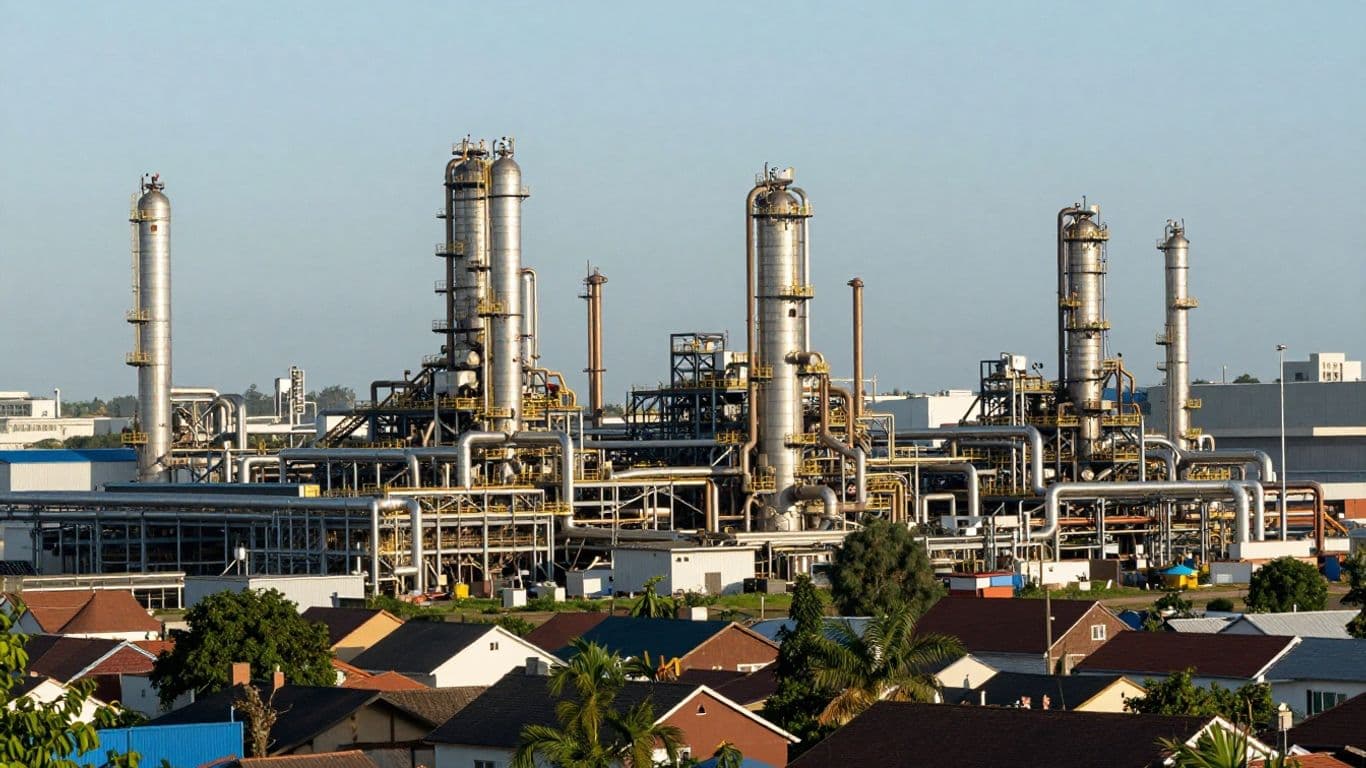
In the heart of the Saudi desert, an $8.4 billion project is nearly finished—a gleaming mega-factory powered by sunlight and wind. But here's the twist: despite all the buzz, this plant (the NEOM Green Hydrogen Project) isn’t really exporting hydrogen at all. It's shipping ammonia, instead, and there’s a reason why that matters more than you might think for the world—and for homeowners watching California’s solar changes unfold.
Key Takeaways
- The world’s largest “hydrogen” plant is actually making ammonia for easier, safer export and storage.
- Hydrogen is very hard and costly to transport due to its chemical properties—ammonia solves most of these problems.
- Despite impressive headlines, there’s a ton of energy loss in turning clean electricity into exportable fuels.
- Global investment is betting that scale and cheap solar can make up for these losses, but none of this is certain yet.
What’s Really Being Built in the Desert?
In Oxagon, a futuristic city-in-the-making on Saudi Arabia’s coast, the NEOM Green Hydrogen Project is nearly complete. On paper, it’s supposed to be a world leader in green hydrogen production. By 2027, they’ll be churning out 600 tons of pure hydrogen daily—at least, that’s how it starts.
But the stuff actually going on giant tankers isn’t hydrogen. It’s green ammonia: 3,400 tons per day. Ammonia is easier to package, move, and store. And this isn’t a side note—it’s the model for almost every big clean fuel project around the globe right now.
Why Is Everyone Betting on Ammonia?
Shipping energy is hard. If you want to send California’s extra solar power halfway across the planet, you can’t just lay an extension cord to Japan. The answer used to be: let’s ship hydrogen, since it packs so much energy by weight and it burns cleanly. Trouble is, transporting hydrogen turns out to be a nightmare.
Here’s why:
- Hydrogen is the smallest and lightest element. To become a liquid, it has to be cooled to -253°C, almost absolute zero.
- Special ships needed. There are only a handful in the world. The biggest carries about 87 tons. For comparison, a regular LNG (gas) ship carries over 70,000 tons.
- It’s always trying to escape. Even top-of-the-line tanks lose several percent of hydrogen just on a two-week trip.
Ammonia, on the other hand:
- Becomes a liquid at -33°C, way easier to manage with basic refrigeration.
- Already has a mature, global industry supporting it (thanks, fertilizer!).
- Is much denser by volume, so you need less tank space for the same amount of energy.
| Hydrogen (Liquid) | Ammonia (Liquid) | |
|---|---|---|
| Storage Temp | -253°C | -33°C |
| Avg. Ship Load | ~87 tons | 72,000+ tons |
| Boil-off Loss | 1–7%/trip | Negligible |
What’s the Science Behind Ammonia?
Ammonia’s chemical formula is NH₃—one part nitrogen, three parts hydrogen. Making green ammonia means you start with green hydrogen (from clean power) and add nitrogen (plucked from the air) using a process called Haber-Bosch.
Why go through all these steps? It’s all about practicality. Worldwide, energy needs to move. Ammonia is simply easier for that. But converting between forms burns up a lot of energy.
How Much Energy Is Really Lost?
Every time you turn solar or wind power into fuel, then ship it, then turn it back into something useful, you lose a chunk.
Here’s what happens with shipping liquid hydrogen (best case scenario):
- Start with 100% electricity
- Electrolysis (split water): 80% left
- Liquefy hydrogen: 60% left
- Shipping/storage: 59% left
- Convert back via fuel cell: 36% remains
For ammonia, it’s a bit better, but still not great:
- By the time you’ve made hydrogen, turned it into ammonia, shipped it, and broken it back into hydrogen, you’re left with about 39% of your original energy. That means over half the energy is lost.
Why Take This Huge Loss? The Big Bet
If you’re thinking, “That sounds insanely wasteful,” you’re not wrong. But with solar and wind prices dropping, a lot of countries are betting that cheap enough electricity will make it work. It’s less about technical brilliance and more about making the math work at scale.
Different places have different incentives:
- Japan: Has almost no native energy, so clean imported fuel is critical.
- Saudi Arabia: Wants to shift from exporting oil to exporting clean energy.
- US & EU: Pouring in subsidies for green hydrogen, supporting these mega-projects.
But here’s the catch: only a fraction of the 2030 hydrogen projects globally have the funding locked in. In 2023, global hydrogen spending was less than what the world spends on solar every three days. Most projects are on hold, delayed, or quietly canceled.
What Does This Mean for Homeowners—Especially in California?
Let’s relate this to the residential solar and home battery world, especially with NEM 3.0 now the law of the land in California. Whether you’re thinking of panels, batteries, or your next electric car, today’s lesson is clear: the farther energy travels and the more times it’s converted, the more you lose.
- Local solar plus battery: Keeps most of your energy. Your rooftop puts power in your house, and you use it directly.
- Exporting solar into the grid under NEM 3.0: You get paid less for what you send out, and even more is lost as energy bounces around, is converted, and metered.
- These big hydrogen/ammonia projects: Most energy is lost before it’s even converted to something useful at the far end.
Why It Still Matters
All these global experiments in hydrogen are aiming to solve the hardest energy problems—shipping, steel, chemicals, and fuel where literal electricity wires can’t go. But for regular folks, especially in California, the lesson is simple: if you can keep your energy local—right on your roof, stored in your battery—you’re winning the efficiency game. The fewer hands your electrons pass through, the more value you keep.
And with NEM 3.0 tipping the market away from grid export, there’s never been a better moment to focus on maximizing self-consumption at home. Let the world chase solutions for heavy industry—for your house, the answer is still direct, local clean energy.
Keep reading
Tesla's Bold Move: Aiming to Be America's Top Solar Panel Maker
Tesla has announced ambitious plans to significantly boost its solar panel manufacturing capacity in the United States, aiming to become the country's largest producer by the end of 2028. This move could dramatically reshape the domestic solar market, especially as the industry adapts to new incentives and supply chain considerations. Tesla's Manufacturing Ambitions Currently, the U.S. has about 65 megawatts of solar panel manufacturing capacity. Tesla's goal is to add an additional 100 gigaw
ReadLunar AI: The Smartest Home Battery System That Saves You Money
This video dives into the Lunar AI system, a home battery solution designed to maximize savings for homeowners. It explains how the system uses smart software to optimize energy usage, storage, and export, potentially paying for itself faster than other options on the market. How Lunar AI Works The Lunar AI system is all about making your home's energy hardware, like solar panels and battery storage, work harder for you. The main goal is to get the best possible return on your investment. Lun
ReadA smarter path to solar: Why homeowners are changing their strategy
The landscape of residential solar has shifted significantly over the last few years. What was once defined by aggressive door-to-door sales and complex, opaque financing is slowly being replaced by a more grounded, educated approach. For Southern California homeowners, navigating this change requires looking past the shiny sales pitches and focusing on long-term reliability and energy autonomy. ### Key takeaways * Transparency matters: Avoid systems bundled with hidden dealer fees that inflat
ReadReady to design your system?
Free quote, transparent pricing, owner-reviewed design.