Supersonic Travel Is Back: What Homeowners Need to Know About the Future of Flight
Supersonic passenger jets are making a comeback, and the excitement is palpable. Companies like Boom Supersonic are developing new aircraft, aiming to bring back the thrill of flying faster than the speed of sound. This isn't just about speed; it's about making supersonic travel accessible and practical for more people. Key Takeaways * Faster Travel: Supersonic jets promise significantly reduced travel times on long-haul routes. * Economic Viability: The focus is on making tickets affordabl
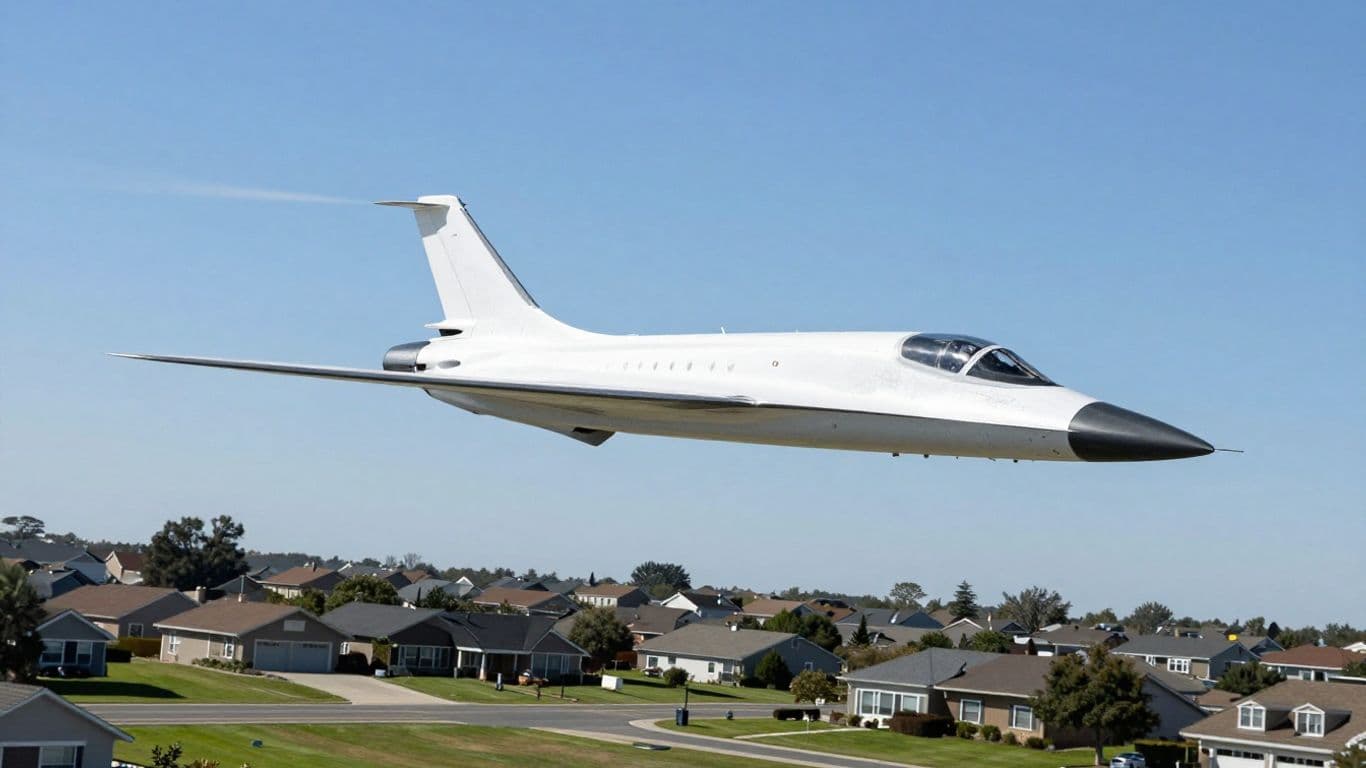
Supersonic passenger jets are making a comeback, and the excitement is palpable. Companies like Boom Supersonic are developing new aircraft, aiming to bring back the thrill of flying faster than the speed of sound. This isn't just about speed; it's about making supersonic travel accessible and practical for more people.
Key Takeaways
- Faster Travel: Supersonic jets promise significantly reduced travel times on long-haul routes.
- Economic Viability: The focus is on making tickets affordable, comparable to current business class fares.
- Efficiency and Sustainability: New designs prioritize fuel efficiency and compatibility with sustainable aviation fuels.
- Technological Advancements: Innovations in materials, engine design, and flight systems are making this possible.
The Return of Supersonic Flight
For those who missed out on the Concorde era, the dream of flying faster than sound is becoming a reality again. Companies are working on commercial supersonic airliners, aiming to cut down travel times dramatically. The goal isn't just to fly fast, but to do so in a way that makes economic sense for airlines and travelers alike.
What's Different This Time?
The new generation of supersonic jets, like Boom's Overture, are designed with lessons learned from the past. While the Concorde was a marvel, its high operating costs and limited capacity meant it was out of reach for most. The Overture aims to be different. It will fly at a slightly slower Mach 1.7 compared to Concorde's Mach 2, but with a focus on efficiency and simplicity. This means more seats filled and potentially lower ticket prices, making supersonic travel more accessible.
Engineering for the Real World
Building a supersonic jet involves overcoming significant engineering challenges. For instance, seeing clearly out of the cockpit at high speeds and angles of attack is difficult. The solution involves advanced external vision systems using cameras and high-definition displays, providing pilots with a clear view, especially during critical phases like landing. This technology is being tested and refined on experimental aircraft like the XB-1.
Vertical Integration and Smart Design
Companies are adopting a strategy of vertical integration, meaning they handle more aspects of development in-house. This allows for faster iteration and problem-solving. Instead of reinventing the wheel, the focus is on integrating existing, certified technologies in new ways. This approach helps manage costs and complexity. For example, supersonic inlets, crucial for engine performance at high speeds, are being refined based on real-world testing.
The Engine Factor
Developing a new engine, like Boom's Symphony, is a major undertaking. These engines are designed for efficiency and are built to be compatible with sustainable aviation fuels from the start. This forward-thinking approach is key to making supersonic travel more environmentally friendly in the future. The design incorporates advanced materials, similar to those used in current commercial jets, but often in greater quantities to handle the demands of supersonic flight.
Testing and Certification
Rigorous testing is essential. "Iron Bird" simulators, which are full-scale mock-ups of aircraft systems, allow engineers to test hydraulics, flight controls, and landing gear under realistic conditions. These systems are put through thousands of cycles to gather data needed for certification by aviation authorities. This meticulous process ensures the safety and reliability of the aircraft.
Overcoming Regulatory Hurdles
Historically, supersonic flights were restricted over land due to sonic booms. However, advancements in understanding atmospheric conditions and flight dynamics are paving the way for "boomless cruise" technology. This could open up new overland routes, making supersonic travel practical for a wider range of destinations. The focus remains on achieving efficient flight across oceans, but the potential for overland routes is an exciting prospect.
The Economic Reality: Connecting to Homeowner Decisions
While the engineering behind supersonic jets is fascinating, the ultimate success hinges on economics. Just like homeowners consider the cost-effectiveness of solar panels or home batteries, the viability of supersonic travel depends on its price point. The goal is to offer tickets at a price comparable to current business class fares. This economic model is crucial for airlines to operate profitably and for travelers to see the value. This mirrors the NEM 3.0 environment in California, where homeowners must carefully weigh the upfront costs of solar and battery systems against long-term savings and energy independence.
The decision to invest in these technologies, much like choosing to fly supersonic, requires a clear understanding of the financial benefits and the evolving economic landscape. If supersonic travel can achieve its goal of accessible pricing, it could fundamentally change how we view long-distance travel, much like solar has changed how we view home energy consumption. The key takeaway for homeowners considering energy investments, and for travelers dreaming of faster journeys, is that practical economics often drive innovation and adoption.
Simulators and Training
Pilot training is another critical area. Advanced, full-motion simulators are used to train pilots on normal procedures and emergency scenarios in a safe environment. These simulators provide a realistic flying experience, helping pilots build the skills and confidence needed to operate complex aircraft. These training tools will likely be sold to airlines, further integrating the technology into the aviation ecosystem.
Keep reading
Choosing Your Home Solar Battery: A 2026 Buyer's Guide
As we head into 2026, the question of which solar battery system is best for your home is more important than ever. These aren't just batteries; they're all-in-one solutions designed for energy independence, reducing your electricity bills, and providing backup power during outages. We're looking at systems that integrate solar and storage, offering a smarter way to manage your home's energy. Key Takeaways * All-in-One Systems: Most modern solar batteries are integrated systems, combining in
ReadTesting Nvidia's Secret Self-Driving Car in San Francisco Chaos: Should Tesla Be Worried?
Last weekend, I found myself sitting in the back of a Mercedes CLA—right in the heart of San Francisco—with a system nobody outside the NVIDIA team had ever tried. While the CLA wasn’t a new car, what powered it was: NVIDIA’s not-yet-public self-driving platform. They invited me (and luckily, didn’t ask for an NDA), so here’s what went down. Key Takeaways * NVIDIA’s system handled chaotic city traffic surprisingly well. * It’s a mix of vision, radar, and, in higher levels, even lidar. * Co
ReadHow to Download Your Green Button Data for NEM 3.0 Solar Planning
If you are a California homeowner considering solar, you have likely heard about NEM 3.0. It is a major shift in how utilities credit for solar power, making accurate system design more critical than ever. To build a system that actually saves you money, you need to understand your exact energy usage patterns by downloading your Green Button interval data. Key takeaways for NEM 3.0 * Data is power: Your utility bill is only a summary; your Green Button interval data provides the specific usa
ReadReady to design your system?
Free quote, transparent pricing, owner-reviewed design.