Qcells AI: Streamlining Solar Projects for Homeowners and Developers
At the RE Plus conference in Las Vegas, Joe Oria of Solar Surge sat down with Young Chun Park from Qcells to discuss the company's significant investment in solar software and artificial intelligence. Qcells aims to simplify the entire solar project lifecycle, from initial design to ongoing operation, by integrating hardware and software solutions. Key Takeaways * Qcells is developing integrated software solutions to address fragmentation in the solar project design and operation process. *
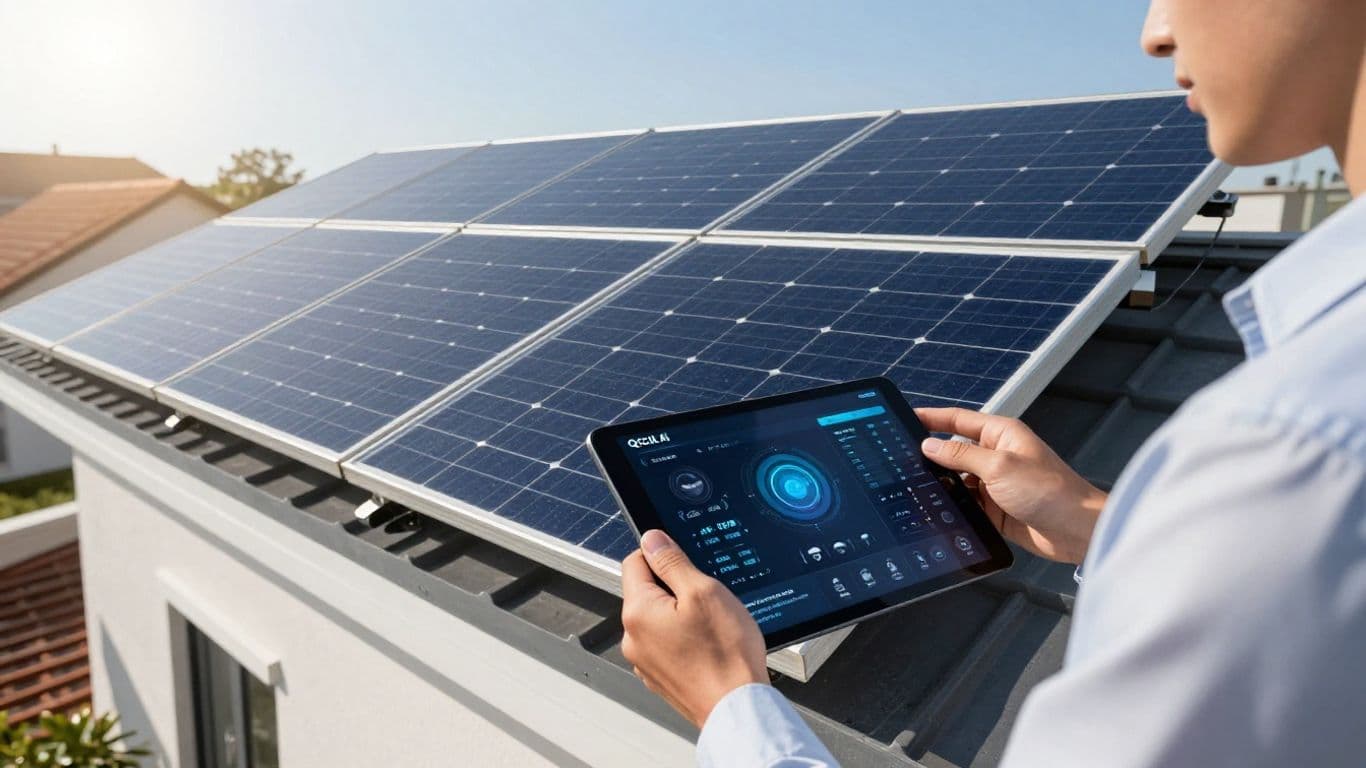
At the RE Plus conference in Las Vegas, Joe Oria of Solar Surge sat down with Young Chun Park from Qcells to discuss the company's significant investment in solar software and artificial intelligence. Qcells aims to simplify the entire solar project lifecycle, from initial design to ongoing operation, by integrating hardware and software solutions.
Key Takeaways
- Qcells is developing integrated software solutions to address fragmentation in the solar project design and operation process.
- Their AI-powered platform offers more reliable, outcome-based simulations and guarantees for savings and revenue.
- The software benefits both project developers and installers by streamlining workflows and reducing manual data handling.
- Qcells is working towards autonomous, agentic operations for solar systems, integrating AI at the edge for on-site optimization.
- The goal is a fully integrated ecosystem where hardware and software work together seamlessly.
Simplifying the Solar Project Journey
Many in the solar industry face challenges with fragmented design tools, financial modeling, and a disconnect between project design and actual operational outcomes. This often leads to complicated manual data transfers between different software. Qcells is tackling this by creating a more unified approach.
Their philosophy centers on providing more accountable, outcome-based software simulations upfront. This allows project developers to offer more reliable proposals to customers. Furthermore, the system aims to ensure that the projected outcomes, like savings or revenue, are actually delivered during the operation phase.
Qcells' Software Solutions: Insight and Predict
To achieve this, Qcells has developed products like Qcells Insight and Qcells Predict. These solutions use the same optimization engines for both the design and operation stages, unlike systems that require separate tools. This means developers get a clear picture of potential savings and revenues right from the design phase, and these benefits can be realized during the system's active life.
Who Benefits from Qcells Software?
Qcells' software platform is designed for several key users:
- Installation Partners: Streamlining their design and installation processes.
- Project Developers: Providing more accurate financial modeling and project planning.
- Commercial, Industrial (CI) and Residential Spaces: Offering solutions tailored for different scales of solar installations.
- Homeowners/System Owners: Allowing them to monitor their solar system's performance directly.
Moving Beyond Manual Processes
Currently, many companies rely heavily on tools like Excel and manual data handling to bridge the gaps between different stages of a solar project. This process is prone to errors, version control issues, and significant costs associated with data handover. Qcells aims to eliminate these inefficiencies through automation and AI, making the transition between stages more informed and less labor-intensive.
The Future: Autonomous and Integrated Operations
Qcells is looking ahead to integrate more AI capabilities directly at the edge of their systems. This will enable autonomous, on-site generation and optimization. The vision is for agentic operations, where systems can manage themselves efficiently. This approach ensures that even with an air gap for security, autonomous functions can operate smoothly. The ultimate goal is a fully integrated ecosystem where Qcells' hardware and software work in perfect harmony, providing a seamless experience for asset managers and operators.
What This Means for CA Homeowners Under NEM 3.0
For California homeowners navigating the complexities of NEM 3.0, Qcells' focus on AI-powered monitoring and optimization is particularly relevant. NEM 3.0 emphasizes self-consumption, meaning homeowners are incentivized to use as much of their generated solar power as possible on-site, rather than exporting it to the grid for credit. Qcells' software, with its predictive capabilities and focus on maximizing system output and efficiency, can help homeowners better manage their energy usage.
By providing clearer insights into energy generation and consumption patterns, these tools can assist homeowners in aligning their energy use with peak solar production times, thereby increasing their self-consumption rates and making the most of their solar investment under the new net energy metering rules.
Keep reading
We've been Doing Solar All Wrong - This Is the Way
California has completed a different kind of solar project: panels built over an irrigation canal in the Central Valley. The system produces electricity, reduces water lost to evaporation, and avoids taking farmland out of production. It may not change the way most homeowners install solar today, but it points to a larger shift in how California thinks about clean energy and land use. Key takeaways * Canal solar can produce power without using farmland or new open space. * California’s cana
ReadMaximizing Home Energy: Why California Homeowners are Turning to Tesla Power for Reliability
California homeowners are increasingly looking for ways to take control of their home energy usage. With shifting regulations and the rising importance of energy independence, many are turning to advanced storage solutions. Relying on integrated battery technology allows families to manage their power needs with greater confidence and efficiency, moving beyond the traditional grid-tethered lifestyle. Key takeaways * Solar and battery systems provide essential backup power during grid instabi
ReadIs Your Solar Panel Investment Safe? What Testing Really Means for Homeowners
Thinking about going solar? It's a big investment, and you want to make sure the equipment you choose is safe, reliable, and will perform as expected for years to come. This podcast episode sits down with Cherif Kedir, CEO of the Renewable Energy Test Center (RETC), to pull back the curtain on how solar panels and other essential components are rigorously tested. We'll explore why this independent testing is so important, especially for homeowners looking to maximize their investment and ensure
ReadReady to design your system?
Free quote, transparent pricing, owner-reviewed design.